 Chunlei Mining Machinery
Shipment of a 150–200 TPD CIP Gold Processing Line to Tanzania
After years in the gold mining equipment industry, I’ve noticed that many clients start by asking: “What equipment do I need for a 200-ton-per-day gold mine?“
However, once the project actually gets underway, the issues go far beyond just a single crusher or ball mill.
Once the ore leaves the mine, it must undergo crushing, grinding, classification, leaching, carbon adsorption, loaded carbon treatment, and final gold sludge recovery. If particle size isn’t properly controlled at the initial stages, leaching efficiency suffers; similarly, if grinding and classification equipment aren’t matched correctly, both production output and power consumption will be affected.
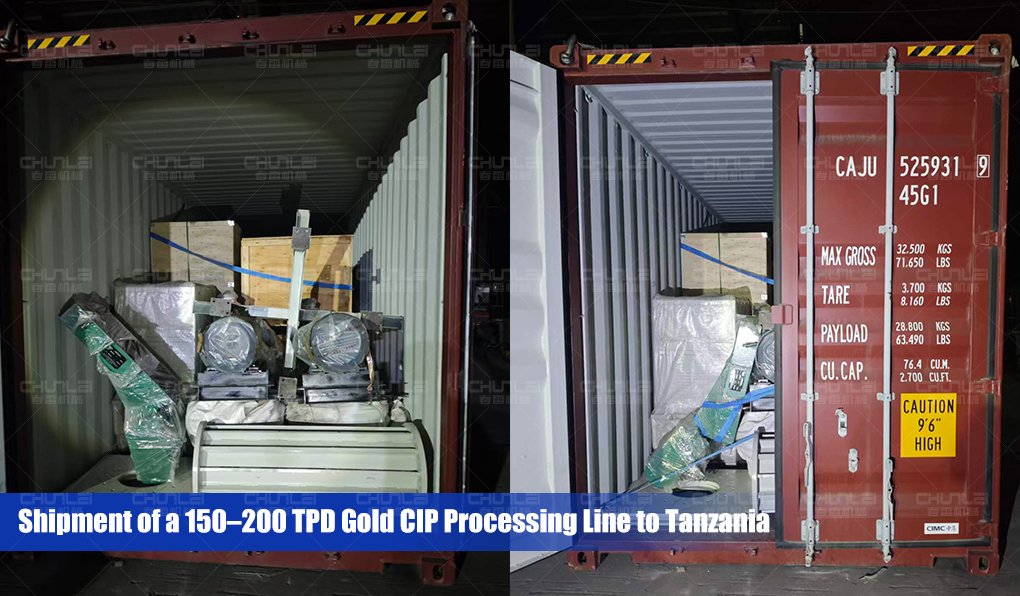
We currently have a batch of gold processing equipment en route to Tanzania. Designed for a processing capacity of approximately 150–200 TPD, the project utilizes the CIP (Carbon-in-Pulp) process.
The equipment and auxiliary components have already been packed, secured, and loaded into containers. For African mining projects, this step might seem like a mere logistical detail, but it is actually crucial—whether the equipment arrives safely at the site and can be installed smoothly directly impacts the project’s commissioning timeline.
Project Overview
- Processing Capacity: Approx. 150–200 tonnes per day (TPD)
- Project Location: Tanzania
- Mineral Processed: Gold ore
- Core Process: CIP (Carbon-in-Pulp)
- Project Goal: To establish a complete gold processing circuit, ranging from run-of-mine (ROM) crushing and grinding to leaching, carbon adsorption, and gold sludge recovery.
A key point to note here is:
The 150–200 TPD figure represents the design processing capacity; actual production output is not necessarily fixed at a specific tonnage.
Actual throughput is influenced by various factors, including ore hardness, feed particle size, clay content, gold dissemination size, grinding fineness, and equipment operating time.
Therefore, when undertaking similar projects, we do not simply select equipment models based solely on a “200 TPD” rating; instead, we first evaluate the specific ore characteristics.
Why does this project utilize the CIP process?
The core concept of CIP is: first, grind the ore finely to fully liberate the gold → then perform leaching → and finally, use activated carbon to adsorb the gold from the solution.
The primary difference between CIP and CIL lies in the point at which the carbon is introduced.
- CIP: Leaching typically occurs first, followed by the carbon adsorption stage.
- CIL: Leaching and carbon adsorption take place within the same continuous process flow.
For gold ores suitable for cyanide leaching, both CIP and CIL are common recovery methods. CHUNLEI’s gold processing solutions also incorporate crushing, grinding, classification, and CIP/CIL leaching as key stages in the overall processing workflow.
However, not all gold ores are suitable for direct CIP processing.
If the gold exists primarily as coarse native gold, gravity separation may be more valuable; if the gold is closely associated with sulfides, flotation or pre-treatment might be required.
How is a 150–200 TPD gold processing line configured?
A complete 150–200 TPD CIP (Carbon-in-Pulp) gold processing flow can be summarized as follows:
Run-of-mine ore → Crushing → Fine ore storage → Ball milling → Classification → Leaching → Carbon adsorption → Gold-loaded carbon → Desorption & electrolysis → Gold sludge → Smelting
If the ore contains significant amounts of coarse native gold, a gravity separation stage may be added prior to the grinding and leaching stages, depending on test results.
A similar publicly documented 150 TPD gold mining project in Tanzania also utilized a process flow comprising crushing and screening, grinding and classification, gravity separation, cyanidation leaching, carbon adsorption, desorption and electrolysis, and smelting.
Detailed List of Production Line Equipment and Functions
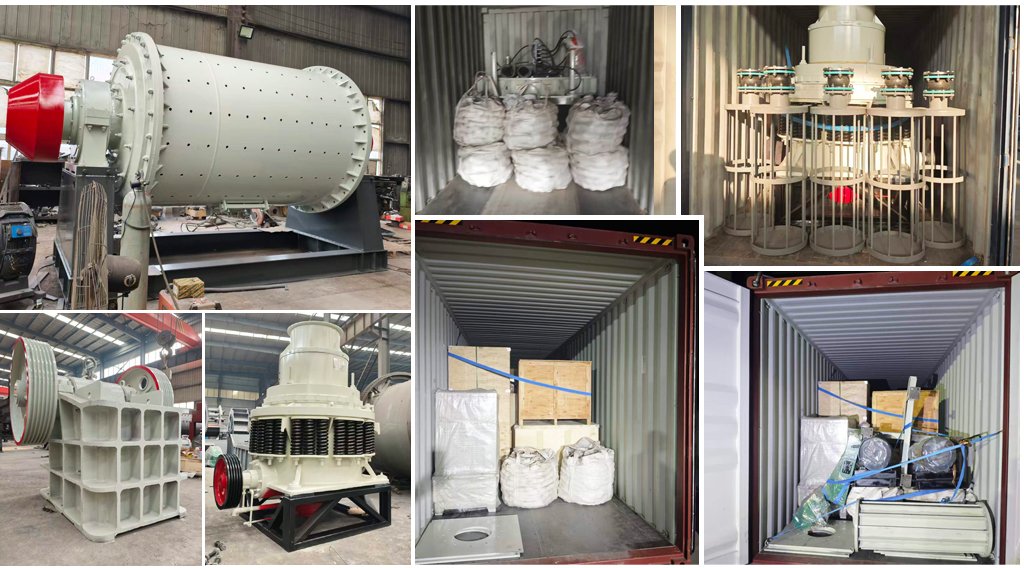
The process equipment framework for this 150–200 TPD CIP gold extraction production line.
| Product Name | Quantity |
| Hopper | 1unit |
| Vibrating feeder | 1unit |
| PE500×750 Jaw crusher | 1unit |
| Belt conveyor | 3unit |
| PYD900 Spring cone crusher | 1unit |
| GZ3 Electromagnetic vibrating feeder | 1unit |
| Belt-type iron remover | 1unit |
| Ball mill | 1unit |
| Medium-chromium alloy steel balls | 20tons |
| P250 Hydrocyclone cluster | 1unit |
| Slurry pump | 3unit |
| Leaching tank drive assembly (excluding tank shell) | 7unit |
| Agitation tank | 1unit |
| Carbon screen and carbon lifter | 6sets |
| nzSF-15 Thickener (hydraulic lifting mechanism; excluding tank shell) | 1 unit |
| Plate-and-frame filter press | 2 unit |
| 1000kg High-temperature, high-pressure cyanide-free desorption-electrolysis unit (with acid washing equipment) | 1unit |
| Medium-frequency gold smelting furnace | 1unit |
If you have a relevant project and would like to inquire about a detailed equipment list, please contact a CHUNLEI engineer; we will provide the most professional production line solution based on the characteristics of your ore and other factors.
Why must equipment be matched as a complete set?
This is an issue easily overlooked when undertaking gold mining projects.
Many clients prefer to request price quotes for individual items:
- “How much is a jaw crusher?”
- “How much is a ball mill?”
- “How much is a CIP tank?”
While the price of individual equipment is certainly important, a production line is not merely the sum of individual equipment costs.
For example:
If the upstream crusher has a capacity of only 80 tons per day, but the downstream ball mill is configured for 200 tons per day, the ball mill will be underutilized (starved of feed).
Conversely, if the upstream crushing volume is too high and the downstream grinding and leaching capacities cannot keep pace, material will accumulate.
Therefore, what truly requires matching is the sequence of capacities:
Crushing → Grinding → Classification → Leaching → Carbon Adsorption → Downstream Gold Recovery
This is why comprehensive gold mining projects are typically designed based on the entire process flow, rather than simply purchasing a few standalone machines. CHUNLEI’s gold mining project solutions adopt an integrated approach that encompasses everything from ore testing and process design to equipment configuration.
Equipment Container Loading and Shipment
The equipment destined for Tanzania has been successfully loaded into the container.
The following process was employed for the equipment:
Crating/Packaging → Protection → Securing → Container Loading
For mining equipment, packaging involves far more than simply “stuffing the machine into the container.”
Given the prolonged transit and multiple loading/unloading operations involved in ocean freight, the following factors must be addressed:
- Equipment securing
- Center of gravity
- Moisture protection
- Impact protection
- Protection of vulnerable components
- Crate reinforcement
- Container space utilization
Special care was taken to ensure adequate protection for critical items such as motors, gear reducers, control units, and precision components.
Why Choose Chunlei for Your Mineral Processing Project?
The Tanzania project—spanning everything from equipment containerization to on-site installation—represents the complete journey of a gold mining project from design to actual implementation.
For a gold mine with a capacity of 150–200 TPD (tonnes per day), the production line cannot simply be viewed as:
“Buying a crusher, a ball mill, and a few CIP tanks.”
A truly sound approach follows this sequence:
Ore characteristics → Process testing → Crushing → Grinding & classification → Leaching → Carbon adsorption → Desorption & electrowinning → Gold sludge/bullion → Tailings treatment
Every stage must be properly integrated and compatible with the others.
Especially for mining projects in Tanzania and elsewhere in Africa, factors such as equipment transport, site conditions, spare parts supply, and ongoing maintenance must be considered from the very beginning.
If you are planning a gold mining project with a capacity of around 150, 180, or 200 TPD, do not rush to ask, “Which machine is the cheapest?”
Instead, start by providing the following details:
- Daily processing capacity
- Maximum raw ore particle size
- Type of gold ore
- Raw ore grade
- Ore hardness/grindability
- Target grinding fineness
- Whether gravity separation is required
- Whether CIP/CIL processing is used
- Project location (country)
With this data, we can accurately determine the appropriate configuration for jaw crushers, ball mills, classifiers, leaching tanks, and downstream gold recovery equipment.
How to Reach Us
📩 Email: info@miningmachinerys.com
🌍 Website: https://www.chunleimining.com/
📱 24/7 Online Support: Chat with our mining experts directly on our website
Latest Cases

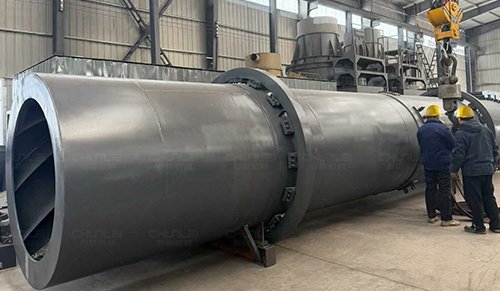
1800×12m Rotary Dryer Shipped to Philippines: Boosting Ore Dehydration Efficiency
5081800×12m Rotary Dryer Shipped to Philippines Chunlei Machinery, a leading supplier of mineral processing equipment, is proud to announce the successful shipment of a 1800×12m Industrial Rotary Dryer to the Philippines. This custom-engineered …
-
Custom-made Jaw Crushers and Cone Crushers have been completed.
497Custom-made Jaw Crushers and Cone Crushers have been completed. We are thrilled to announce the successful completion and commissioning of a fully customized crushing solution for our valued overseas client. This project underscores our commi…
-
Custom-Engineered Wet Pan Mills Packed for Global Delivery
503Custom-Engineered Wet Pan Mills Packed for Global Delivery We are proud to announce that a batch of custom-engineered wet pan mill machinery has successfully completed final quality inspection and has been professionally packed for shipment…
-
Successful Delivery! Ball Mill1830×4500 Officially Shipped to Uzbekistan
487Successful Delivery! Ball Mill1830×4500 Officially Shipped to Uzbekistan A high-efficiency, energy-saving ball mill meticulously manufactured by CHUNLEI has been shipped to Uzbekistan for a major local mineral processing project. Below, we …
loading…
已经是到最后一篇内容了!
Related Products
-
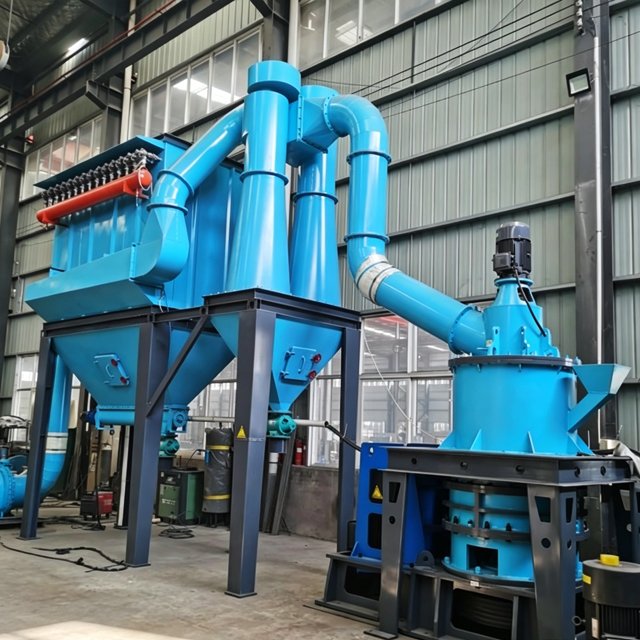
Ultrafine Powder Grinding Mill
397The Ultrafine Powder Grinding Mill (a medium-speed, micro-powder mill featuring a three- or four-ring design) is a high-efficiency, low-consumption processing unit developed by CHUNLEI’s R&D team through extensive innovation, testing, a…
-
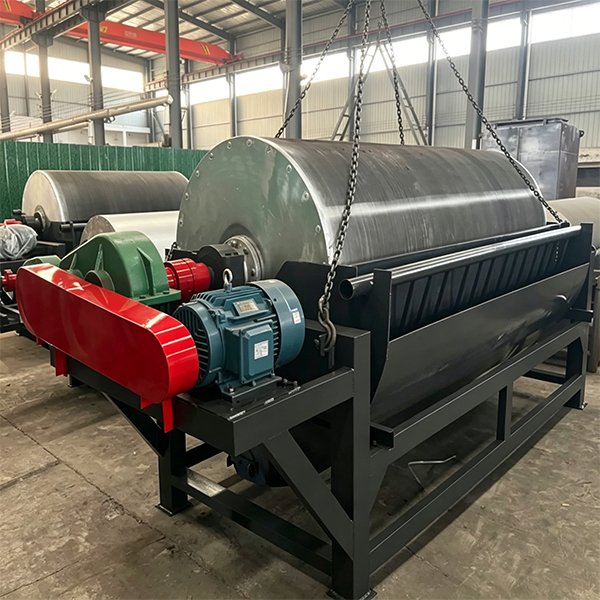
Magnetic Separator
396Magnetic separators are highly efficient separation devices widely used in mineral processing. They utilize magnetic fields to precisely separate magnetic particles from non-magnetic materials, meeting the needs of various mineral processin…
-
Ball Mill
397Maximize gold recovery and reduce grinding costs with CHUNLEI gold ball mill. Our equipment ranges in capacity from 0.5 tons/hour to 200 tons/hour and is suitable for a variety of ores, including gold, copper, iron, and quartz. Energy-effic…
-
Ceramic Ball Mill
623The ceramic ball mill is a core piece of equipment designed for grinding high-purity non-metallic minerals and chemical raw materials. Featuring linings and grinding media made of alumina or zirconia ceramics, it is …
loading…
已经是到最后一篇内容了!