 Chunlei Mining Machinery
5 Facts About Dolomite That Clear Up Common Confusions
Dolomite is a term that often leads to head-scratching. Is it a rock, a mineral, or something else entirely? How does it differ from familiar stones like limestone or marble? And is it safe? If you’re searching for clear, accurate answers, you’ve come to the right place. Here’s your straightforward guide to understanding dolomite in under two minutes.
What Exactly Is Dolomite?
Dolomite is both a mineral and a rock—a dual identity that causes much of the confusion.
- As a mineral: Dolomite is a calcium magnesium carbonate (CaMg(CO₃)₂). It often contains traces of iron, manganese, or other elements, which can influence its color.
- As a rock: Geologists refer to rock primarily composed of the mineral dolomite as dolostone (a less ambiguous term). This sedimentary rock often includes impurities like calcite, quartz, or feldspar.
Characteristics of Dolomite
- Dual Identity: Dolomite is both a mineral (calcium magnesium carbonate, CaMg(CO₃)₂) and a sedimentary rock (dolostone).
- Hardness: 3.5–4 on the Mohs scale (harder than limestone, softer than quartz).
- Appearance: Often white, gray, or pink; crystals are typically curved (saddle-shaped).
- Reaction to Acid: Weak or no fizz (unlike limestone, which reacts strongly).
- Formation: Forms in shallow marine environments via the alteration of limestone by magnesium-rich groundwater (dolomitization).
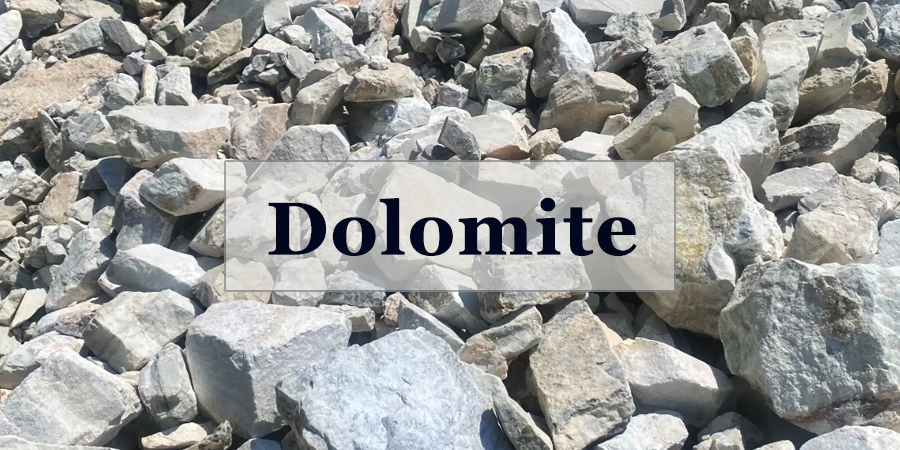
dolomite is a versatile, durable carbonate material with distinct chemical and physical properties that set it apart from similar rocks like limestone and marble.
Where Is Dolomite Found?
Dolomite rock forms in ancient, warm, shallow marine environments, similar to limestone. It’s created over time when magnesium-rich groundwater alters original calcium carbonate deposits—a process called dolomitization.
Major dolomite deposits are found worldwide, including in the Midwestern United States, Ontario (Canada), Switzerland, and the Italian Alps. The famous Dolomites mountain range in Italy is a majestic natural example of this rock.
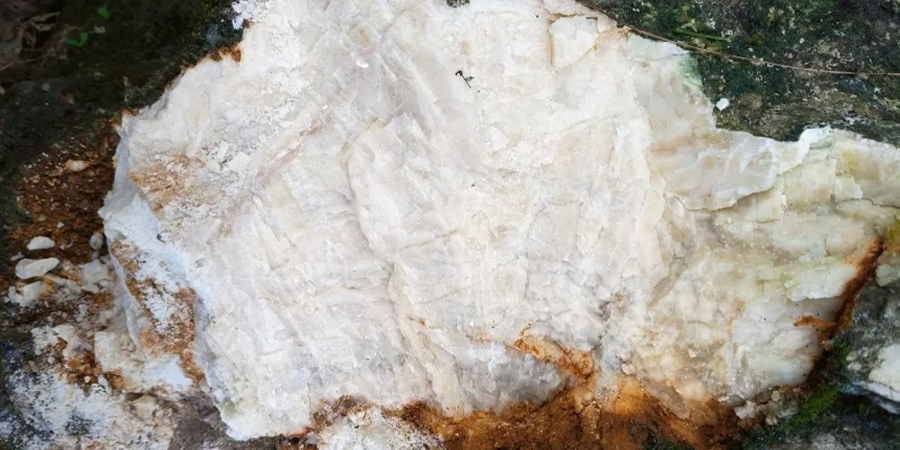
Dolomite vs. Limestone: Key Differences
While often found together and used similarly, dolomite and limestone are not the same.
A rock with a composition between the two is called dolomitic limestone.
| Feature | Dolomite (Rock) | Limestone |
| Primary Mineral | Dolomite (CaMg(CO₃)₂) | Calcite (CaCO₃) |
| Hardness (Mohs) | 3.5 – 4 (Harder) | 3 (Softer) |
| Reaction with Acid | Weak or no fizz | Vigorous fizz |
| Typical Impurities | Less common | More clay, silt, sand |
Dolomite vs. Marble: Don’t Mix Them Up
No, dolomite is not marble. Marble is a metamorphic rock formed when limestone or dolostone is recrystallized under intense heat and pressure. Dolomite is a sedimentary rock. However, some marbles contain dolomite minerals and are sold as “dolomitic marble.”
In construction, the term “marble” is often used broadly for various polished stones, including dolomite, used for countertops, tiles, and window sills.
- Dolomite is a sedimentary rock with a specific mineral composition.
- Marble is its metamorphic counterpart—if the original rock was dolomite, it becomes dolomitic marble after metamorphism.
- The main difference lies in their origin and texture: dolomite forms chemically in water, while marble forms physically under heat and pressure, resulting in a recrystallized, often polished appearance.
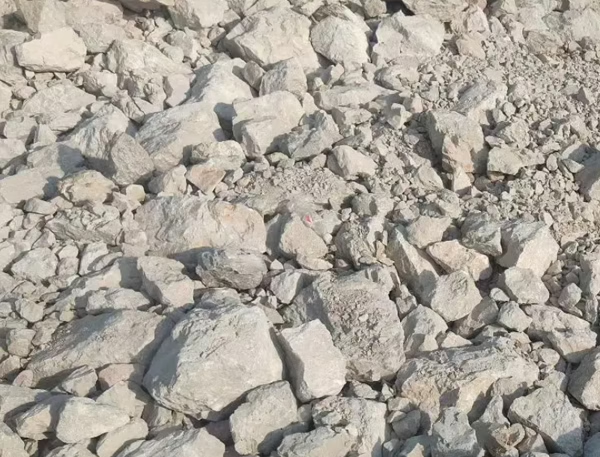
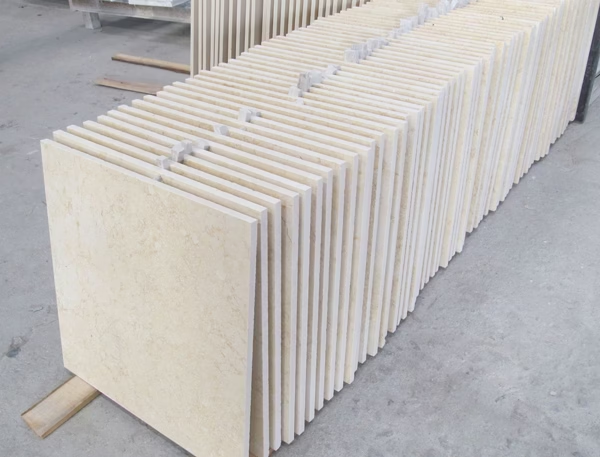
| Feature | Dolomite | Marble |
|---|---|---|
| Rock Type | Sedimentary rock (formed by deposition and chemical alteration). | Metamorphic rock (formed by recrystallization under heat/pressure). |
| Primary Composition | Mineral dolomite [CaMg(CO₃)₂]. | Mineral calcite [CaCO₃], but can be dolomitic marble if dolomite-rich. |
| Formation Process | Dolomitization: magnesium-rich water alters limestone. | Metamorphism: limestone or dolostone is subjected to heat and pressure. |
| Hardness (Mohs) | 3.5–4. | 3–5 (softer if calcite; harder if dolomitic). |
| Acid Test | Weak or no reaction with cold hydrochloric acid. | Calcite marble fizzes vigorously; dolomitic marble reacts weakly. |
| Typical Appearance | Often granular, earthy; crystals may be curved/saddle-shaped. | Distinctive crystalline, sugary texture; often veined and takes a high polish. |
| Common Use | Construction aggregate, cement, agricultural lime, industrial source of MgO. | Prized as dimension stone for sculpture, countertops, flooring, and architecture. |
Is Dolomite Harmful? Understanding the Risks
Dolomite itself is valuable for construction and industry, but processed forms like dolomite sand and powder require caution.
- Dolomite Sand for Beaches: Using crushed dolomite as beach sand (e.g., Manila Bay project) is ecologically problematic. It is less stable than natural quartz sand, can erode quickly, and may harm marine ecosystems by altering water chemistry and smothering habitats.
- Dolomite Powder for Health: Dolomite powder is not safe as a dietary supplement. It can contain trace amounts of crystalline silica (a respiratory hazard) and heavy metals like lead or arsenic. Safer calcium/magnesium supplements are available.
Is dolomite harmful to humans?
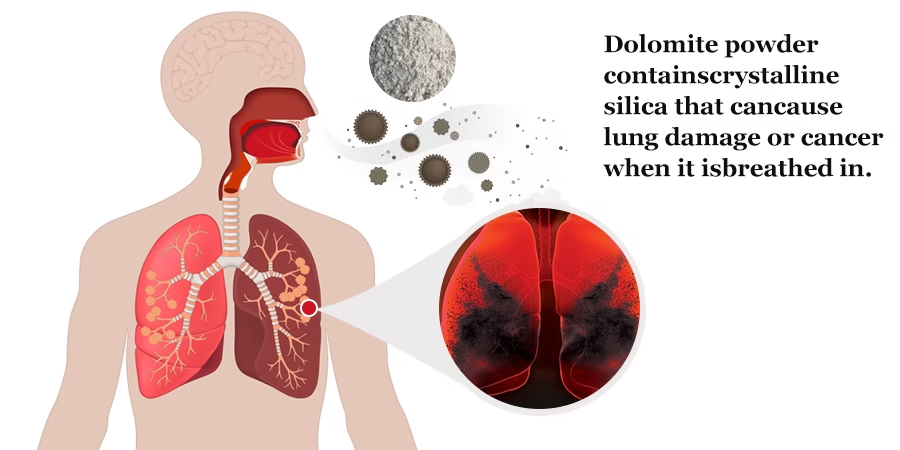
The answer is it depends on the form and exposure. In its bulk, solid state (e.g., as countertops, construction aggregate), dolomite is generally not harmful and is safely used in industry and architecture. The primary concerns arise with processed fine particles.
Key Risks:
- Respiratory Hazard: Inhaling fine crystalline silica dust (often present in crushed dolomite) can cause silicosis, lung scarring, and is a known carcinogen.
- Heavy Metals: Natural deposits may contain traces of hazardous metals like lead, arsenic, or mercury, which pose risks if inhaled or ingested in powder form.
- Conclusion: Occupational exposure without proper PPE (masks, ventilation) is dangerous. It is not safe as a home-sourced dietary supplement.
Conclusion
Dolomite possesses dual characteristics as both a mineral and a rock. In the construction industry, it is harder and more durable than limestone, making it a vital industrial raw material. However, its application requires careful consideration, particularly when processed into sand powder, where attention must be paid to environmental impacts and human health concerns.
Latest News

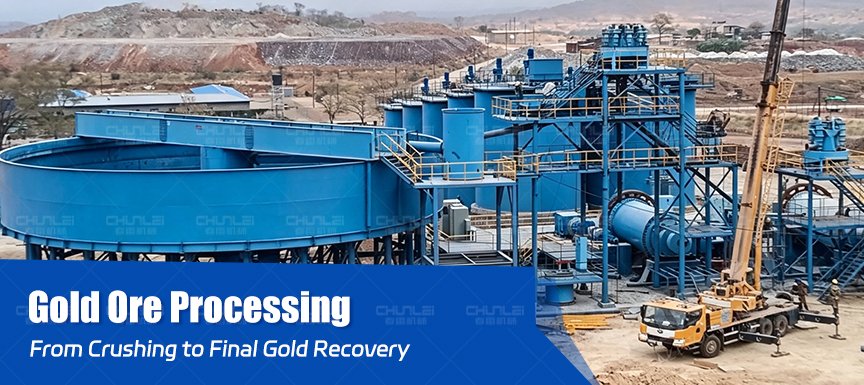
Gold Ore Processing: From Crushing to Final Gold Recovery
800A gold processing plant is not merely a simple assembly of crushers, ball mills, and gold recovery equipment; rather, the goal is to determine the optimal process flow based on factors such as mineral composition, gold particle size,…
-
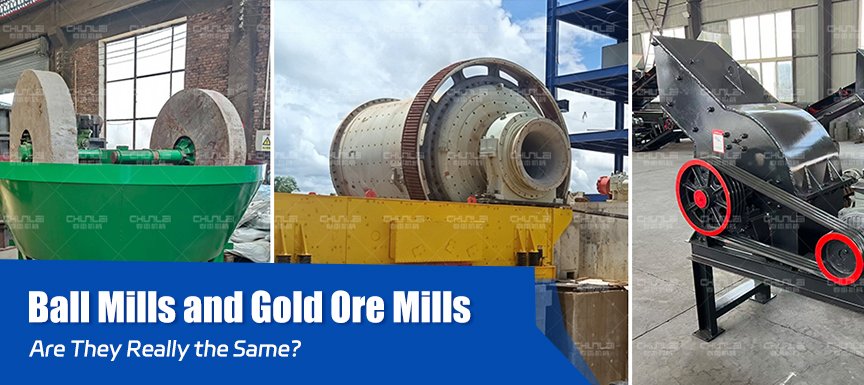
Ball Mills and Gold Ore Mills: Are They Really the Same?
800When searching for gold ore grinding equipment, customers often encounter various terms such as “Ball Mill,” “Gold Mill,” “Gold Milling Machine,” and “Gold Ore Grinding Machine.” Many buyers assume that a “Gold Mill” is a specialized mill de…
-
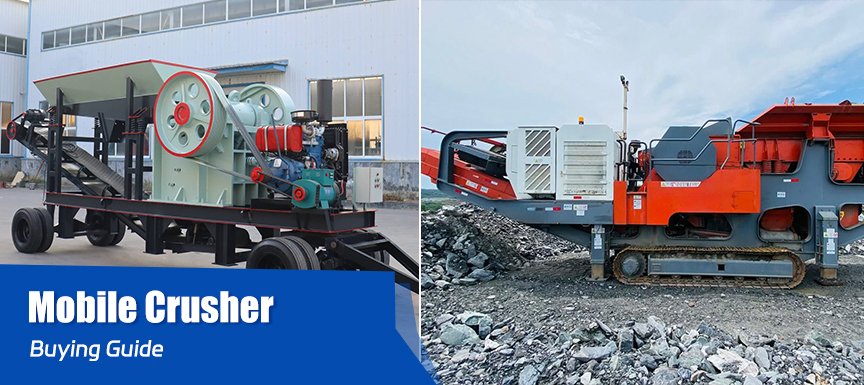
Mobile Crusher Buying Guide: Wheeled or Tracked?
800Many customers focus solely on portability when purchasing a mobile crusher, viewing it merely as the acquisition of a single piece of equipment. In reality, selecting the wrong model can lead to either insufficient output or excessive wear and…
-
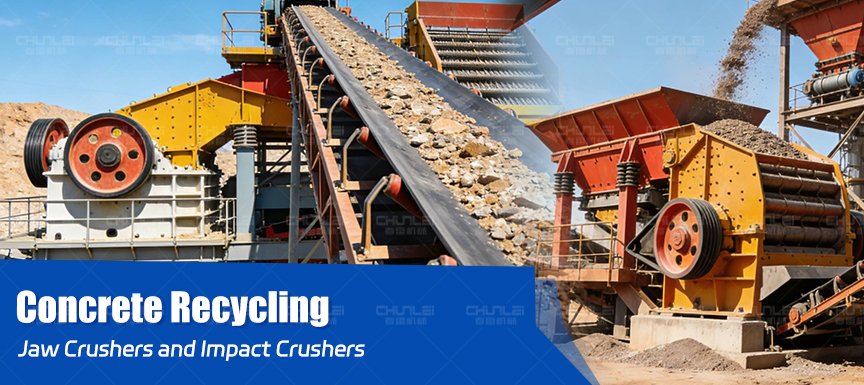
Jaw Crushers and Impact Crushers: Turnkey Solutions for Concrete Recycling
800Demolishing old buildings and roads generates vast amounts of waste concrete; direct landfilling not only consumes valuable space but also incurs high transportation costs. The real challenge lies in transforming this waste concrete into reusab…
loading…
已经是到最后一篇内容了!