 Chunlei Mining Machinery
Mobile Crusher Buying Guide: Wheeled or Tracked?
Many customers focus solely on portability when purchasing a mobile crusher, viewing it merely as the acquisition of a single piece of equipment. In reality, selecting the wrong model can lead to either insufficient output or excessive wear and tear.
Therefore, when choosing a mobile crusher, one must consider factors such as material hardness, feed size, clay content, product specifications, screening efficiency, and circulating load—rather than focusing exclusively on price and tonnage.
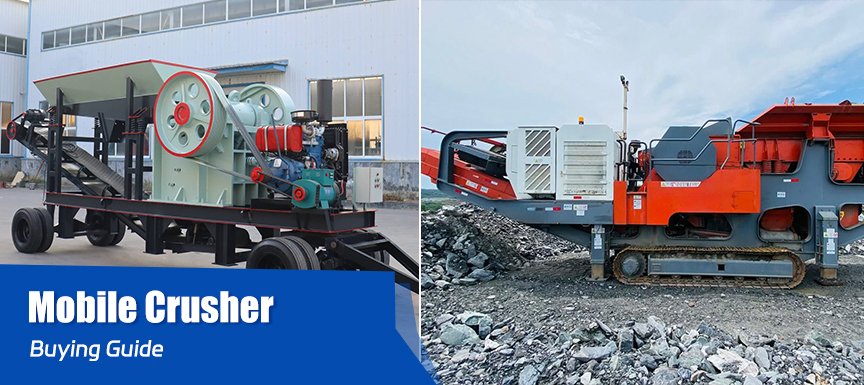
Is a mobile crusher actually the right fit for your project?
The greatest value of a mobile crusher isn’t simply that the equipment can move, but rather that it can be driven directly to wherever crushing is needed.
A mobile solution is often worth considering if your project involves:
- Frequent changes in worksite location;
- A mining face that constantly advances;
- A need to process construction waste directly on-site;
- Conditions unsuitable for constructing a permanent foundation;
- Long distances for raw material transport, resulting in high hauling costs;
- A project with a limited lifespan (e.g., a few years), making a permanent production line impractical.
Mobile equipment allows you to bring the crushing process directly to the site, thereby eliminating the need for back-and-forth material transport and the construction of permanent foundations.
However, if you are operating in a fixed mining area with no plans to relocate in the near future, you should also evaluate a stationary production line. Compare factors such as equipment investment, transportation, maintenance, and long-term operating costs before making your final decision.
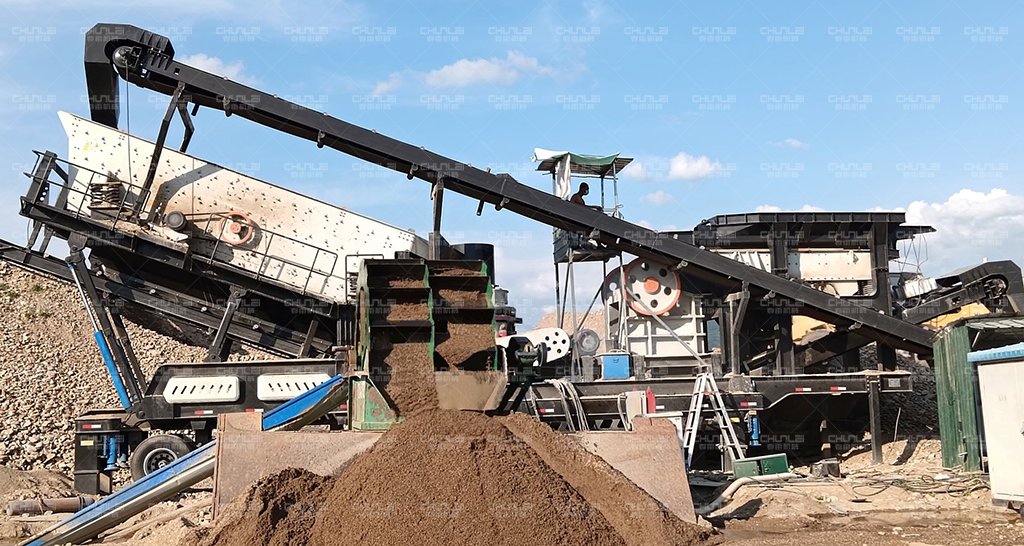
Check 5 key parameters before purchasing
1. What material is being processed?
Soft stone, limestone, concrete, and granite place different demands on crushers. For highly hard or abrasive materials, in particular, the cost of wear parts is a critical factor.
Different crushers operate in different ways:
| Material Type | Common Configurations |
| Granite, Basalt | Mobile Jaw Crusher + Mobile Cone Crusher |
| River Pebbles | Mobile Jaw Crusher + Cone Crusher |
| Limestone | Mobile Jaw Crusher + Impact Crusher |
| Concrete | Mobile Jaw Crusher + Impact Crusher |
| Construction Waste | Mobile Jaw Crusher/Impact Crusher + Screening Unit |
| Hard Ores (Gold, Iron, etc.) | Mobile Jaw Crusher + Cone Crusher |
Mobile jaw crushers are primarily used for the primary crushing of hard rock; mobile impact crushers are employed for the secondary crushing and shaping of materials with low to medium hardness, such as limestone, concrete, and asphalt; while mobile cone crushers are mainly used for the secondary and tertiary crushing of hard rock.
2. What is the maximum feed size?
When purchasing equipment, you cannot simply state a capacity requirement like “100 tons per hour”; you must also inform the manufacturer of the maximum feed size in millimeters.
For example:
- Maximum feed: 300 mm
- Maximum feed: 500 mm
- Maximum feed: 700 mm
Even with the same capacity of 100 t/h, the requirements for the crusher differ significantly depending on whether the feed size is 200 mm or 600 mm.
This is particularly true for mobile jaw crushers, where the feed size directly determines the specifications of the feed opening, the crushing chamber, and the machine as a whole.
3. What is the actual required output?
There is a crucial concept here:
Rated output ≠ Actual stable output.
For instance, if a project aims for a stable output of 200 t/h of finished product, but the equipment’s long-term operational utilization rate is only 80%, a simple preliminary estimate can be calculated as follows:
Required rated capacity ≈ Target finished product output ÷ Estimated utilization rate
Example:
200 ÷ 0.80 = 250 t/h
This serves merely as a starting point for equipment selection; the final determination must also take into account factors such as material hardness, feed size, reduction ratio, screening capacity, and the volume of recirculating material.
4. What is the required final particle size?
First, determine the target specifications—such as 0–5 mm, 5–10 mm, or 10–20 mm. If high-quality particle shape is also required, consider whether an impact crusher or shaping equipment is needed, as well as whether a closed-circuit screening process is necessary.
This is because the final product specifications determine:
- The number of crushing stages required;
- Whether screening is needed;
- Whether material recirculation is required;
- Whether to use a jaw crusher, impact crusher, or cone crusher;
- Whether shaping or sand making is required.
If the goal is simply to break large stones into coarse material, a single mobile jaw crusher may suffice; however, if the requirement is to produce multiple specifications of qualified aggregate directly on-site, a combination of mobile crushing and mobile screening should be considered.
5. How frequently does the project require the equipment to be moved?
Questions such as “Where will the equipment be moved?”, “How often?”, and “What are the ground conditions like?” determine whether you should choose a tracked or wheeled model.
If the equipment is simply being transported from one project site to another, the primary considerations are road transport and relocation costs.
If the equipment needs to be moved within a quarry on a daily or even weekly basis, the focus should be on its ability to move around the site under its own power.
How do you choose between mobile jaw, impact, and cone crushers?
When selecting a mobile crusher, don’t look at the price first; instead, consider its role in the production line—specifically, the type of feed material it handles and the desired output product. Simply put: jaw crushers handle “large-block primary crushing,” impact crushers are better suited for “medium-soft materials and shaping,” and cone crushers are ideal for “secondary and tertiary crushing of hard materials.”
| Type | Primary Function | Suitable Materials | Typical Stage of Use | Product Characteristics | Best Suited For |
| Mobile Jaw Crusher | Coarse crushing of large blocks | Granite, basalt, ore, concrete, limestone, etc. | Primary crushing | Coarser particle size; average particle shape | Mining, quarries, construction waste |
| Mobile Impact Crusher | Medium-to-fine crushing & shaping | Limestone, concrete, construction waste, softer rock | Secondary/Tertiary crushing | Good particle shape; high proportion of cubical particles | Sand and gravel aggregates, concrete recycling, road construction |
| Mobile Cone Crusher | Medium-to-fine crushing | Hard materials (granite, basalt, river pebbles, iron ore, etc.) | Secondary/Tertiary crushing | Uniform particle size; suitable for continuous production | Hard-rock mining, long-term aggregate projects |
How exactly do you decide?
① Large feed size and hard material → Consider a mobile jaw crusher
For example, large chunks of granite or basalt from mine blasting, or oversized waste concrete, are typically first crushed by a mobile jaw crusher before being passed to downstream equipment. Its advantages include the ability to handle large feed sizes, a simple structure, and suitability for primary (coarse) crushing.
② Material is not extremely hard, and particle shape is a priority → Consider a mobile impact crusher
If you are processing materials of low-to-medium hardness—such as limestone, concrete, or construction waste—and require a high-quality particle shape, an impact crusher is usually the better choice. It utilizes high-speed impact crushing, making it easier to produce cubical aggregates.
③ Hard, abrasive material requiring secondary or tertiary fine crushing → Consider a mobile cone crusher
After hard materials like granite, basalt, or river pebbles have undergone primary crushing in a jaw crusher, a mobile cone crusher can be used for subsequent medium and fine crushing. It is better suited for continuous production involving hard rock and for projects demanding high wear resistance and stability.
How do you choose between tracked and wheeled crushers?
When choosing between tracked and wheeled mobile crushers, the main factors to consider are how the equipment needs to move, the site’s road conditions, and the frequency of relocation. Don’t simply focus on which type is “more advanced”; the right choice depends on the specific operating conditions.
Tracked vs. Wheeled Mobile Crushers
| Comparison Item | Crawler-type Mobile Crusher | Wheeled Mobile Crusher |
| Mobility Method | Self-propelled via tracks | Towed or self-propelled via tires |
| Relocation Frequency | Suitable for frequent relocation | Suitable for relatively fixed work sites |
| Site Adaptability | Suitable for mines, uneven ground, and complex terrain | Better suited for sites with good road conditions |
| Gradeability | Generally good | Relatively limited by road conditions |
| Need for Transport Vehicles | Can usually move independently for short-distance on-site transfers | Long-distance relocation usually requires towing or transport |
| Setup/Preparation | Can quickly begin operations upon arrival | Generally flexible, though towing and site conditions must be considered |
| Typical Applications | Mine working faces, quarries, construction waste | Sand and gravel yards, roadworks, relatively flat sites |
| Core Advantages | Maneuverability and adaptability to complex terrain | Convenient for highway transport and multi-site operations |
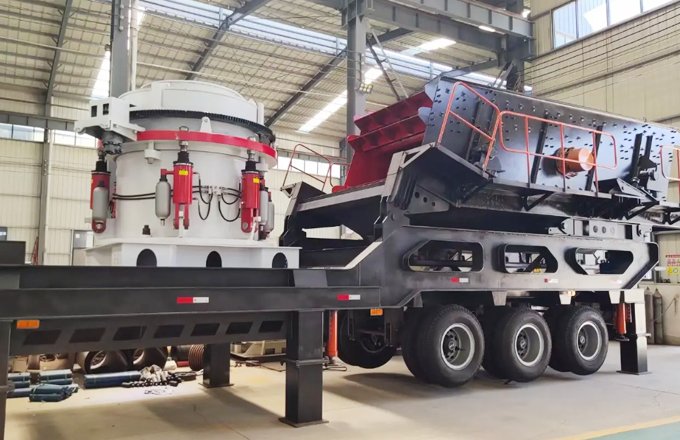
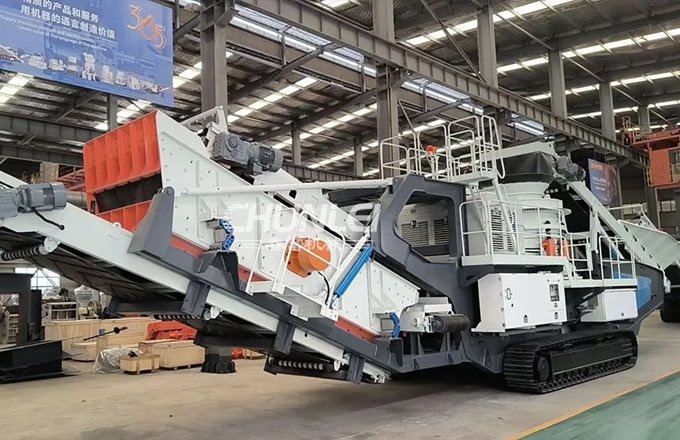
Should you buy a single mobile crusher or a complete mobile crushing line? It depends on your production goals.
If the objective is simply to reduce large ore chunks for subsequent processing by stationary equipment, a single mobile jaw crusher may suffice.
However, if you require on-site production of specific fractions—such as:
- 0–5 mm;
- 5–10 mm;
- 10–20 mm;
then you should consider a mobile screening unit.
How do you determine the capacity for a mobile crusher?
You cannot simply rely on the maximum output rating specified for the equipment model; when selecting a machine, it is advisable to first calculate the required hourly tonnage (t/h) for the project and then work backward to select the appropriate equipment.
Do not purchase based solely on “maximum capacity.”
For example, suppose a project requires processing 1,000 tons per day with a planned operating time of 10 hours:
1,000 ÷ 10 = 100 t/h
However, this does not mean that a mobile crusher with a nominal capacity of 100 t/h is the perfect fit.
Actual production is subject to factors such as uneven feeding, variations in raw material, downtime for cleaning, and equipment adjustments; therefore, it is standard practice to build in a margin of safety when selecting equipment.
If a customer requires:
500 t/h of raw material → three finished product sizes: 0–5 mm, 5–10 mm, and 10–20 mm
Then you cannot simply select a mobile crusher based on the “500 t/h” figure.
This is because the process involves multi-stage crushing, screening, and material recirculation; the equipment must be matched to the capacity of the entire mobile crushing production line.
Ultimately, the key to selecting the right capacity for a mobile crusher is not “how many tons the machine can handle,” but rather “how many tons of qualified product the entire production process actually needs to output per hour.”
What factors influence the price of mobile crushers?
It primarily depends on six aspects:
- Crusher type: Prices vary between jaw, impact, and cone crushers.
- Processing capacity: Higher capacity usually means larger equipment and a higher price.
- Crawler vs. wheeled: Differences in chassis structure and configuration lead to price variations.
- Screening requirements: Units equipped with screening, conveying, and material return systems cost more.
- Power configuration: Diesel, electric, or hybrid (diesel-electric) drives affect costs.
- Automation features: More advanced features—such as PLC control and remote monitoring—usually result in a higher price.
Why do price quotes for mobile crushers vary so much between manufacturers?
Although they all appear to be “mobile crushers,” their actual configurations can differ significantly. The main differences lie in these areas:
- Equipment configuration: Differences in crusher models, engines, hydraulic systems, and conveyors naturally lead to price differences.
- Capacity: There is a significant cost difference between equipment with a capacity of 100 t/h and 300 t/h, even if both are mobile crushers.
- Chassis type: Crawler and wheeled models differ in structure and mobility systems.
- Brand and components: The brand and quality of core components—such as engines, motors, and bearings—affect the price.
- Level of automation: Features like PLC control, remote control, and intelligent monitoring add to the cost.
- Scope of equipment: Some quotes cover only the crusher, while others include feeding, screening, conveying, and material return systems.
Therefore, when comparing mobile crusher prices, do not look solely at the quoted figure; it is best to compare equipment models, capacities, configurations, and included components item by item.
Common Misconceptions When Purchasing Mobile Crushers
Misconception 1: Focusing solely on maximum capacity
A rating of “max. 600 t/h” does not guarantee your project will actually achieve that output.
Actual production is influenced by factors such as material characteristics, feed conditions, screening capabilities, and circulating loads.
Misconception 2: Bigger equipment is always better
If your actual requirement is only 80–100 t/h, purchasing oversized equipment leads to low utilization rates and unnecessarily high investment and transportation costs.
Misconception 3: Using impact crushers for hard rock
While impact crushers excel with materials like limestone and concrete, processing highly hard or abrasive materials can cause rapid wear on blow bars and impact liners.
Misconception 4: Focusing only on the crusher unit and ignoring screening
If the goal is to sell aggregates of various specifications, screening capacity is a critical factor determining the production line’s actual output.
Misconception 5: Focusing only on purchase price and ignoring operating costs
Long-term costs are significantly affected by expenses such as diesel, electricity, wear parts, maintenance, transportation, and site-to-site relocation.
Misconception 6: Overlooking transport dimensions
For mobile equipment, the ability to move around the site is not the only requirement.
You must also verify:ns before selecting equipment helps you avoid common pitfalls more effectively than simply comparing price quotes.
- Transport length;
- Transport width;
- Transport height;
- Total machine weight;
- Whether a low-bed trailer is required;
- Local road transport restrictions.
Transport dimensions and weights vary significantly between models, so it is essential to check these against local transport conditions before purchasing.
FAQ
Q1: Are mobile crushers suitable for long-term projects?
A: Yes, but it depends on whether the project requires frequent relocation. If the mine site is fixed for the long term, it is advisable to compare the long-term investment and operating costs against those of a stationary production line.
Q2: What are the differences between mobile jaw, impact, and cone crushers?
A: Jaw crushers are primarily used for primary crushing and handling large material blocks; impact crushers are suitable for secondary/tertiary crushing and aggregate shaping; cone crushers are better suited for the secondary and tertiary crushing of hard rock.
Q3: How do I choose between tracked and wheeled mobile crushers?
A: Tracked models are preferable if the site terrain is complex and the machine needs to move frequently under its own power; wheeled models are usually more convenient if the primary need is relocating between different project sites.
Q4: Is bigger always better when it comes to mobile crushers?
A: No. Equipment selection should be based on actual feed material, target output, material properties, and finished product specifications. Oversized equipment increases investment and operating costs, while undersized equipment may fail to meet production targets.
Q5: What parameters do I need to provide when purchasing a mobile crusher?
A: At a minimum, you should provide the material name, maximum feed size, target output, finished product particle size, material hardness/abrasiveness, site conditions, and frequency of relocation. Having this information ensures much more accurate equipment selection.
Conclusion
The true value of mobile crushers lies in their ability to operate in close proximity to the material source and the construction site, thereby eliminating unnecessary transportation costs and the need for permanent foundation construction.
However, “mobility” is not the right solution for every project.
For hard rock, a combination of a jaw crusher and a cone crusher is recommended; for materials of low to medium hardness—such as limestone or concrete—a jaw crusher paired with an impact crusher is a suitable choice. If the project requires multiple finished product specifications, mobile screening units and material recirculation systems can be added to the configuration. If you are unsure which model to select, please contact CHUNLEI’s engineers, we will provide the most appropriate solution tailored to your specific requirements.
Latest News

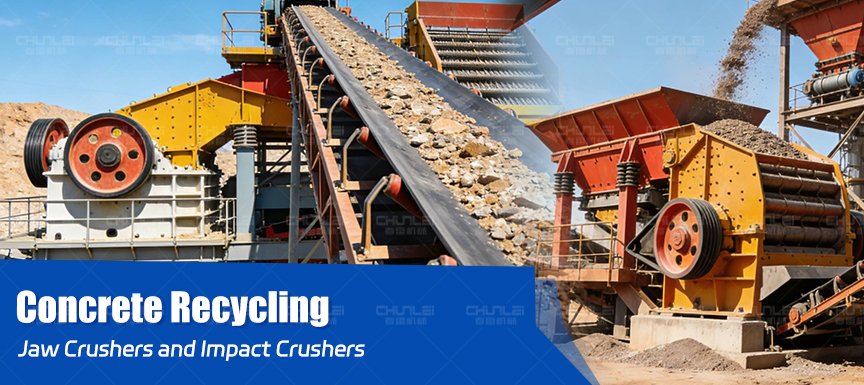
Jaw Crushers and Impact Crushers: Turnkey Solutions for Concrete Recycling
800Demolishing old buildings and roads generates vast amounts of waste concrete; direct landfilling not only consumes valuable space but also incurs high transportation costs. The real challenge lies in transforming this waste concrete into reusab…
-
A Comprehensive Analysis of Ball Mill Energy Consumption Per Ton
800In mineral processing plants, ball mills are significant consumers of electricity. When calculating costs, many clients focus solely on motor power; however, this figure alone does not reveal the actual electricity consumed per ton of ore proce…
-
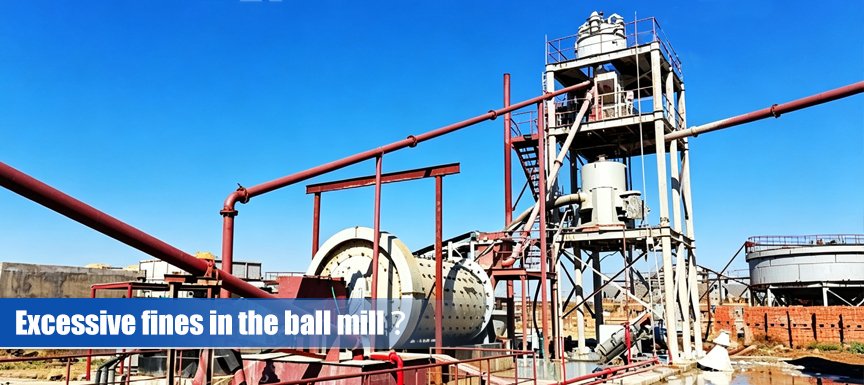
Why Does A Ball Mill Produce Excessive Fines?
800The production of excessive fines in a ball mill—a phenomenon known as over-grinding—often leads to various downstream issues, such as increased power consumption, greater difficulty in subsequent mineral processing, and accelerated wear of com…
-
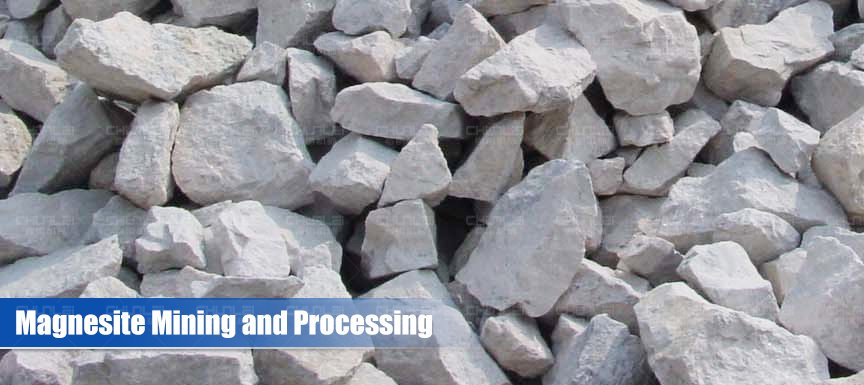
Magnesite Mining and Processing: 2026 Profitability Strategy
800Investing in magnesite is a high-demand venture within the refractory raw materials market. Profitability, however, does not hinge solely on the size of reserves; it requires comprehensive planning that integrates mineralogical analysis, benefi…

loading…
已经是到最后一篇内容了!