 Chunlei Mining Machinery

How can the recovery rate of tin from high-sludge oxidized alluvial tin ores be effectively improved?
When dealing with oxidized alluvial tin ores containing high levels of sludge (fine clay/silt), many processing plants initially consider adding more jigs or shaking tables, or increasing the processing capacity of their existing equipment.
In actual operations, however, it is common to find that even after adding more equipment and increasing throughput, the tin recovery rate shows no significant improvement—and in some cases, the concentrate grade even declines.
The problem often lies not in the quantity of equipment, but in shortcomings elsewhere: inadequate desliming at the front end, issues with the mineral particle size distribution, or a failure to effectively recover fine-grained cassiterite during the later stages of the process.
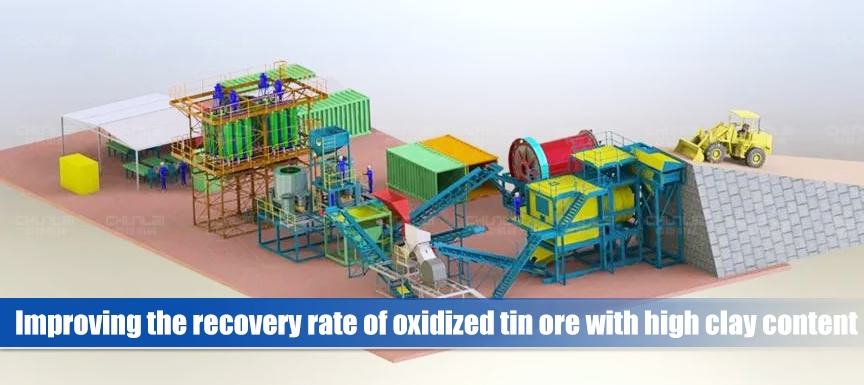
Where does the mud in oxidized sand tin mines mainly come from?
The main valuable mineral of oxidized sand tin ore is usually Cassiterite (SnO₂). Cassiterite has a high density and is suitable for recovery by gravity separation.
However, during the long-term weathering, transportation and deposition process, placer tin ore is usually mixed with different types of clay, fine mud and light gangue.
Common sources of mud include:
- Kaolin: It is easy to form fine mud, which affects the dispersion state of the slurry.
- Montmorillonite: It easily swells when exposed to water, increasing the viscosity of the slurry.
- Quartz fine powder: When the particle size is fine, it is easy to enter the concentrate or tailings.
- Iron oxide: may grow symbiotically or continuously with cassiterite, affecting the sorting effect.
- Weathered mud and surface-attached mud: wrapped on the surface of cassiterite particles, affecting effective sorting.
Mud is not necessarily all waste. Some fine mud also contains fine grains of cassiterite. If a large amount of mud is removed directly, valuable tin may be discharged together.
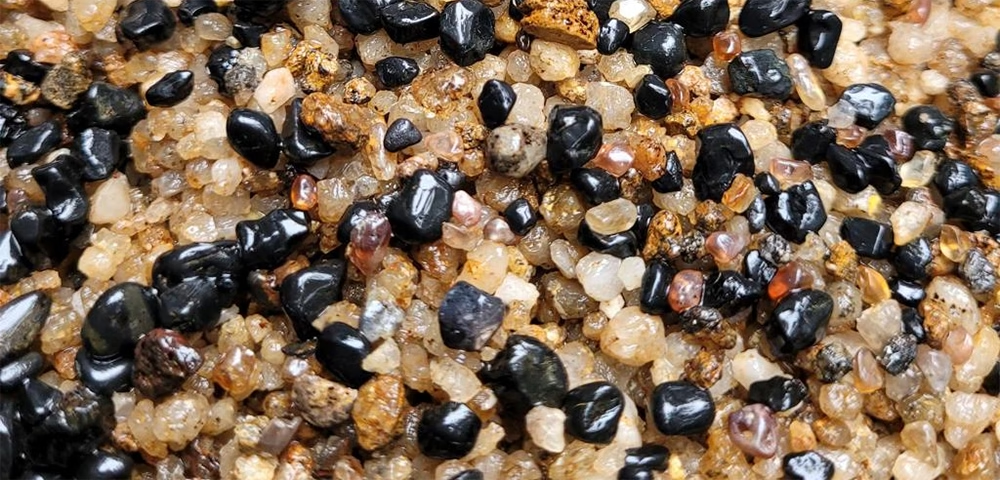
Why does a high clay/sludge content reduce tin recovery rates?
In the process of tin ore beneficiation, a high content of clay or fine sludge is a common issue that negatively impacts recovery rates—particularly when dealing with alluvial tin deposits or highly weathered tin ores.
Many processing plants find that, despite a decent tin grade in the raw ore, the final concentrate yield remains unsatisfactory after washing, screening, and gravity separation. This is frequently due to an excessive amount of clay or fine sludge within the ore.
Why does an abundance of sludge make tin extraction more difficult?
The primary reason is that fine sludge tends to coat cassiterite (tin ore) particles, interfering with mineral separation and hindering the proper operation of processing equipment. Even though cassiterite has a high density, this does not guarantee that it can be effectively recovered.
Six main reasons why high clay/sludge content reduces tin recovery:
1. Sludge coats cassiterite, hindering mineral liberation
In some tin ores, clay and fine sludge readily adhere to the surfaces of cassiterite particles, forming a “sludge film.”
This impedes the separation of cassiterite from gangue minerals, preventing the cassiterite from being fully exposed and thereby reducing the efficiency of subsequent gravity separation processes.
2. Increased fine sludge leads to tin loss
Although cassiterite is dense, the effectiveness of gravity-based separation is significantly compromised when particles are extremely fine.
Fine-grained cassiterite, in particular, can easily end up in the tailings or overflow along with the sludge, resulting in the loss of tin.
3. Sludge interferes with the performance of gravity separation equipment
Gravity separation equipment—such as jigs, spiral concentrators, and shaking tables—requires specific feed particle sizes and slurry conditions.
An excessive amount of sludge disrupts the stratification and settling of particles, making it difficult to effectively separate cassiterite from gangue.
4. Instability in slurry density and flow dynamics
A high clay/sludge content can increase the viscosity of the slurry, reducing its fluidity.
This often leads to issues such as uneven slurry distribution and hindered particle settling, which negatively affect both the processing capacity of the equipment and the stability of the separation process.
5. Entrainment of fine particles lowers the grade of the tin concentrate
Beyond hindering the recovery of cassiterite, high sludge content can also lead to the entrainment of fine gangue particles, which end up in the final concentrate. This increases the impurity content in the concentrate, leading to a decline in concentrate grade and making subsequent cleaning stages more difficult.
6. Increase equipment burden and production costs
High mud content will also increase the pressure of ore washing, desliming, concentration and tailings treatment.
If the front-end desliming is insufficient, subsequent gravity separation equipment will be prone to problems such as reduced processing capacity and unstable sorting effects.
The specific impact of high mud content on tin ore beneficiation
High mud content will affect the tin ore recovery rate by encapsulating the mud, losing fine-grained cassiterite, interfering with gravity separation and reducing the fluidity of the slurry.
| Processing Stage | Key Issues | Impact on Mineral Processing |
| Washing Stage | Difficulty in dispersing clay and mineral slimes | Adversely affects subsequent screening performance |
| Screening Stage | Fine slimes clog screen apertures | Reduces screening efficiency |
| Gravity Separation Stage | Disruption of particle stratification | Lowers cassiterite recovery rate |
| Desliming Stage | Loss of fine-grained cassiterite along with mineral slimes | Increases tin metal loss |
| Cleaning/Refining Stage | Entrainment of gangue minerals by slimes | Lowers concentrate grade |
| Tailings Management | Difficulty in settling fine slimes | Increases treatment costs |
How can the recovery rate of tin ore be improved when the slime content is high?
For tin ores with a high slime content, simply increasing the number of jigs or shaking tables is not an effective solution. Instead, the issue of slimes must be addressed first; subsequently, appropriate mineral processing equipment should be selected based on the particle size of the cassiterite.
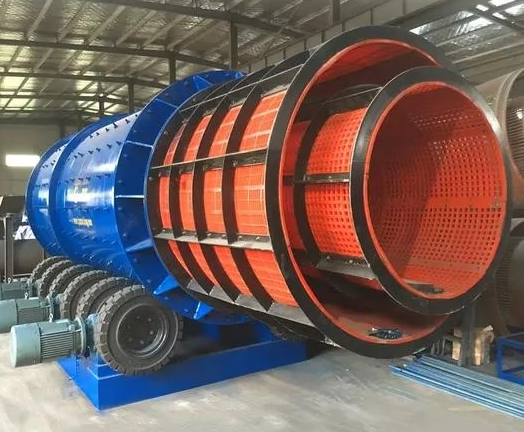
1.Enhance ore washing and scrubbing
For ores with a high clay content, ore washers or scrubbing equipment can be employed to thoroughly disperse clay aggregates and reduce the extent to which mineral particles are encapsulated by clay.
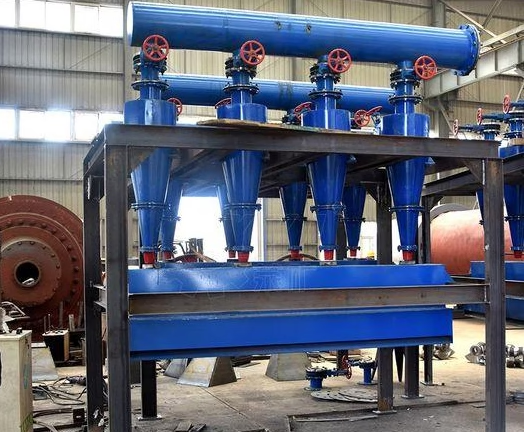
2.Rational Desliming
Determine the desliming particle size based on grain-size analysis. Use hydrocyclones or classification equipment to remove a portion of the deleterious fine-grained slime, while ensuring the recovery of any fine-grained cassiterite contained therein.
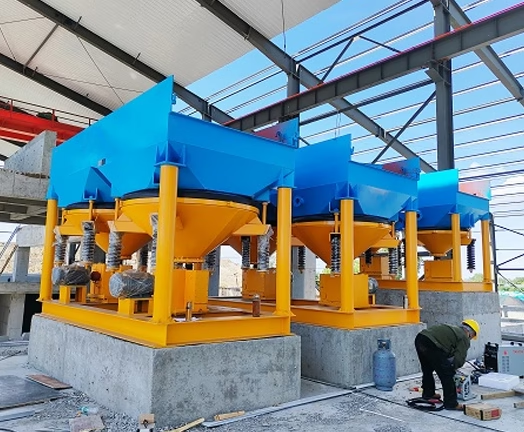
3.Gravity separation of coarse-grained cassiterite using jigs
For liberated coarse-grained cassiterite, a jig can be employed for pre-concentration, allowing for the early recovery of the majority of the coarse-grained tin minerals.
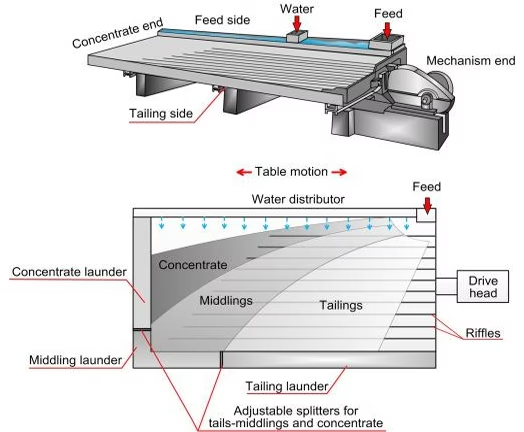
4.Fine-grained cassiterite can be recovered through precision gravity separation.
For fine-grained cassiterite suitable for gravity concentration, equipment such as spiral chutes, shaking tables, or centrifugal concentrators may be employed to minimize the loss of fine cassiterite into the tailings.
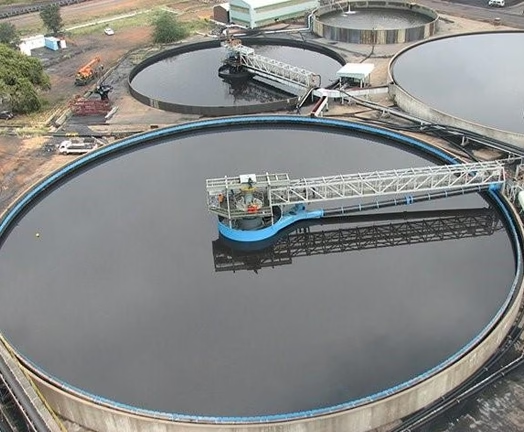
5.Carry out slime recovery and water circulation
Sampling and testing of the desliming overflow is carried out to determine whether it contains recyclable cassiterite, and the concentration, return water and fine mud recovery systems are properly configured.
What requires special attention during the mineral processing of tin ores?
A high clay/sludge content does not necessarily mean that all the fine-grained material (slimes) is waste.
Some of these slimes may still contain significant amounts of fine-grained cassiterite (tin ore). If they are removed and discarded—even though this might improve conditions for subsequent gravity separation—it could lead to substantial losses of tin metal.
Therefore, before finalizing a desliming strategy, it is recommended to conduct the following assessments:
- Particle size analysis of the raw ore: To determine the distribution of tin metal across different size fractions.
- Tin content analysis of the slimes: To evaluate whether the desliming overflow contains recoverable cassiterite.
- Mineral liberation analysis: To determine if the cassiterite particles are encapsulated by clay.
- Desliming tests: To establish an appropriate particle size cutoff for desliming and to determine the required desliming efficiency.
- Comparative mineral processing tests: To evaluate concentrate grade and tin recovery rates both with and without a desliming step.
For tin ores with high clay content, it is advisable to perform thorough ore analysis and mineral processing tests before configuring equipment such as ore washers, desliming units, jigs, and shaking tables. This ensures that while the clay/sludge is effectively managed, the tin is not inadvertently discarded along with it.
Which ore properties must be tested prior to mineral processing?
Before designing a beneficiation flowsheet for clay-bearing oxidized alluvial tin ore, it is recommended that at least the following tests be conducted.
| Test Items | Key Testing Content | Why Conduct Testing? | Impact on Mineral Processing |
| 1.Chemical Composition | Content of valuable elements, associated elements, and harmful impurities | Determines ore grade and comprehensive utilization value | Defines processing objectives and concentrate quality requirements |
| 2.Mineral Composition | Types and content of valuable minerals and gangue minerals | Identifies which minerals should be recovered | Determines the selection of processes such as gravity separation, flotation, or magnetic separation |
| 3.Mineral Dissemination Size | Particle size and distribution of valuable minerals | Assesses the association between valuable minerals and gangue | Determines the required grinding fineness |
| 4.Degree of Mineral Liberation | Extent to which valuable minerals are liberated as individual particles at various size fractions | Evaluates the ease of mineral separation | Informs grinding and separation conditions |
| 5.Ore Hardness | Resistance of the ore to breakage and abrasion | Assesses the ease of crushing and grinding the ore | Influences the selection of crushers and ball mills, as well as energy consumption |
| 6.Grinding Characteristics | Grinding time, grinding fineness, and specific energy consumption | Determines the energy required to achieve the target particle size | Dictates the specifications and production capacity of grinding equipment |
| 7.Particle Size Composition | Particle size distribution of the raw ore and the content of each size fraction | Determining the proportions of coarse and fine ore particles | Informing the selection of screening, classification, and separation equipment |
| 8.Density and Density Differential | Densities of valuable minerals versus gangue minerals | Assessing the feasibility of separation based on density differences | Influencing the selection of jigs, shaking tables, and spiral concentrators |
| 9.Magnetic Properties | Magnetic susceptibility of minerals and differences in their magnetic responses | Assessing the feasibility of separation via magnetic fields | Determining the type of magnetic separator and the required magnetic field strength |
| 10.Flotation Characteristics | Surface properties of minerals, floatability, and response to chemical reagents | Assessing the feasibility of recovery via flotation | Determining the appropriate flotation reagents and process flow |
| 11.Slime Content and Sliming Characteristics | Slime content in the raw ore, proportion of fine slimes, and tendency to form slimes upon contact with water | Assessing the ore’s propensity to generate slimes | Informing the design of ore washing, scrubbing, desliming, and pre-treatment strategies |
| 12.Moisture Content and Hydration Characteristics | Moisture content of the raw ore, water absorption capacity, and dewatering performance | Assessing the difficulty of ore handling and dewatering | Influencing the selection of equipment for feeding, conveying, thickening, and filtration |
How do pre-processing test results guide the selection of equipment?
The ultimate goal of ore testing is not merely to obtain a collection of data, but to translate that data into practical process flows and equipment configurations.
Below is a simple breakdown of these correlations:
| Findings/Observations | Process Design Direction | Potential Equipment |
| High clay content in raw ore | Incorporate ore washing and desliming stages | Ore washers, scrubbers, hydrocyclones |
| High ore hardness | Enhance crushing and grinding capacity | Jaw crushers, cone crushers, ball mills |
| Liberation of valuable minerals at coarse grain sizes | Prioritize coarse-particle recovery | Jigs, dense-medium separation equipment |
| Fine-grained dissemination of valuable minerals | Optimize grinding and fine-particle recovery | Ball mills, classifiers, shaking tables, flotation machines |
| Significant density differences among minerals | Consider gravity separation | Jigs, spiral chutes, shaking tables |
| Significant magnetic property differences among minerals | Consider magnetic separation | Magnetic separators |
| Minerals exhibit good floatability | Consider flotation processes | Flotation machines, reagent dosing systems |
| Difficulty in dewatering the concentrate | Optimize the dewatering process | Thickeners, filters |
Before finalizing the selection of crushers, ball mills, jigs, shaking tables, magnetic separators, or flotation machines, conduct testing on representative ore samples and perform mineral processing trials. This approach helps mitigate the risk of selecting the wrong equipment, prevents unnecessary investment, and lays a solid foundation for improving concentrate grade and metal recovery rates.
How can the recovery rate of clay-rich oxidized tin placer deposits be improved?
High clay content is a common challenge in the beneficiation of oxidized tin placer deposits. Clay and fine slimes within the ore tend to coat cassiterite (tin oxide) particles and interfere with the performance of gravity separation equipment. This often leads to the loss of fine cassiterite particles along with the slimes, ultimately reducing both the grade and the recovery rate of the final tin concentrate.
Improving recovery rates requires more than just relying on jigs or shaking tables; it is essential to prioritize upstream processes—specifically ore washing, desliming, and classification—followed by the selection of appropriate recovery equipment tailored to specific particle size fractions.
Key optimization strategies include:
- Enhanced ore washing and scrubbing: Utilize ore washers or scrubbers to break up clay aggregates, ensuring that encapsulated cassiterite particles are fully liberated.
- Effective desliming: Employ spiral classifiers or hydrocyclones to remove excess fine slimes, thereby minimizing their interference with downstream gravity separation. Care must be taken to control the desliming cut-point to prevent the loss of fine cassiterite particles.
- Classification and size-specific processing: Separate the ore into different size fractions for targeted treatment; use jigs for coarse cassiterite, and spiral chutes or shaking tables for finer fractions.
- Improved recovery of fine cassiterite: For ultra-fine cassiterite particles that are difficult to capture via conventional gravity separation, consider using equipment such as centrifugal concentrators.
- Implementation of middlings reprocessing: Conduct sampling and analysis of tailings and middlings to identify the specific size fractions where significant tin loss occurs. If necessary, incorporate additional scavenging or reprocessing stages.
Recommended process equipment configuration:
| Mineral Processing Stage | Recommended Equipment | Primary Function |
| Ore Washing and Scrubbing | Ore washers, scrubbers | Dispersing clay, liberating cassiterite |
| Desliming and Classification | Hydrocyclones | Controlling slime content |
| Coarse-Grained Recovery | Jigs | Recovering coarse-grained cassiterite |
| Fine-Grained Recovery | Spiral chutes, shaking tables | Recovering fine-grained cassiterite |
| Ultrafine-Grained Recovery | Centrifugal concentrators | Reducing losses of fine-grained cassiterite |
| Tailings Treatment | Scavenging equipment | Increasing overall recovery rate |
For oxidized sand tin ore containing heavy mud, the focus of mineral processing is not to blindly add equipment, but to control the washing intensity, desliming particle size and classification accuracy. It is recommended to conduct ore particle size analysis, sludge content detection and mineral processing test first, and then determine the equipment combination to avoid cassiterite being discharged with the sludge before it is recovered.
Comparison of Two Common Process Configurations
For oxidized tin ores with high clay content, the primary challenge in mineral processing often lies not in the gravity separation itself, but in the preceding stages of ore washing and desliming. If the ore slimes are not managed effectively, it can lead to reduced screening efficiency, instability in the jig bed, and the potential loss of fine-grained cassiterite.
In actual production, two process configurations are commonly employed: ore washing/desliming followed by gravity separation, and ore washing/desliming followed by classification and staged gravity separation.
| Compare items | Configuration 1: Ore washing and desliming + gravity separation | Configuration 2: Ore washing and desliming + classification and segmentation |
| Process flow | Ore washing → screening and desliming → jigging → shaking table | Ore washing→screening and desliming→grading→gravity separation of coarse and fine particles |
| Core equipment | Washing machine, vibrating screen, jig, shaker | Washing machine, desliming equipment, grading equipment, jig, shaker |
| Applicable ore | Placer tin ore with high mud content but relatively concentrated particle size | Placer tin ore with high mud content and complex particle size composition |
| Handling characteristics | The process is relatively simple and the equipment investment is small | Select equipment according to granularity, making the sorting more targeted |
| Main advantages | Low investment, simple operation and management | It is beneficial to improve the recycling effect of cassiterite of different particle sizes. |
| Things to note | Fine-grained cassiterite is easily lost with the slime | The process is complex and requires reasonable control of the classification granularity. |
Which configuration should be chosen?
If the ore has a high clay content but the cassiterite particle size is relatively uniform, “Configuration 1” is the preferred choice: first, improve the feed conditions through ore washing and desliming, then recover the cassiterite using jigs and shaking tables.
If the ore contains both coarse and fine cassiterite particles—resulting in a more complex particle size distribution—”Configuration 2″ is recommended. In this setup, coarse particles can be recovered via jigging (gravity separation), while the fine fraction can be processed using spiral chutes, shaking tables, or centrifugal gravity separators—depending on the results of prior testing—to minimize the loss of fine cassiterite.
Practical Cases and Data: How to Evaluate the Effectiveness of Desliming and Fine-Particle Recovery?
Assessing the success of desliming and fine-particle recovery requires looking beyond whether the tailings have become “cleaner”; the critical factor is whether valuable tin minerals are being effectively recovered. In actual production, this can be evaluated by analyzing pulp parameters before and after desliming, the recovery rate of fine-grained cassiterite, and the grade of the tailings.
Key indicators to monitor include:
- Desliming Efficiency: Compare pulp density, slime content, and particle size distribution before and after the desliming process to determine if argillaceous (clay-like) minerals have been effectively separated.
- Fine-Particle Recovery Rate: Assess whether fine-grained cassiterite is being successfully recovered following processing by equipment such as shaking tables or centrifugal concentrators.
- Tailings Grade: A significant decrease in the tin grade of the tailings indicates a reduction in the loss of valuable minerals.
- Overall Recovery Rate: Compare tin concentrate production, grade, and recovery rates before and after process modifications to determine whether the entire operation has truly improved.
Recommendations: It is advisable to conduct sampling and chemical analysis both before and after process changes, supplemented by particle size analysis and metal balance calculations. Do not focus solely on the performance of individual pieces of equipment; the ultimate measure of success is whether the overall tin recovery rate has increased, tailings losses have decreased, and the costs associated with any new equipment are justified.
FAQ on Processing High-Slime Oxidized Alluvial Tin Ores
Q: Can oxide sand tin ore with large mud content be directly beneficiated with a jig?
A: It is not recommended to enter the jig directly. When the raw ore contains a large amount of mud, the fine mud can easily affect the stratification of the mineral particles and reduce the recovery rate of cassiterite. It usually needs to be washed, scrubbed, screened and deslimed first, and then gravity separation equipment such as jigs are selected according to the particle size.
Q: Oxidized sand tin ore contains a large amount of mud, why does it affect the tin recovery rate?
A: The main reason is that fine mud can easily wrap cassiterite particles and affect mineral sorting; at the same time, too much fine mud will interfere with the stratification effect of the gravity separation equipment, causing some fine-grained cassiterite to enter the tailings and be lost.
Q: Should placer tin ore with heavy mud content be washed or desludged first?
A: Generally, the ore is washed or scrubbed first to fully disperse the clay agglomerates, and then fine mud is removed through screening and classification. The specific sequence needs to be determined based on mud type, clay content and cassiterite particle size.
Q: What kind of ore washing equipment is suitable for mud-containing oxide sand tin ore?
A: Common equipment includes drum washers, trough washers, spiral washers and scrubbing machines. For ores with high clay content and a large number of mud clumps, it is necessary to focus on the scrubbing ability of the equipment to prevent the mud clumps from entering subsequent sorting without being fully dissociated.
Q: Will desliming cause the loss of cassiterite?
A: It is possible. Some cassiterite particles are very fine and are easily discharged together with the sludge. If the desliming particle size control is unreasonable, tin metal loss will occur. It is recommended to conduct particle size screening and desliming tests first to determine the reasonable desliming particle size, and conduct sampling and testing of the desliming overflow.
Q: What kind of mineral processing equipment is suitable for oxidized sand tin ore with large mud content?
A: Usually a combination of washing machine, vibrating screen, classification equipment, desliming equipment, jig, spiral chute and shaker is used. For coarse-grained cassiterite, jig can be given priority, while for fine-grained cassiterite, spiral chute or shaker can be considered. The specific configuration depends on the ore particle size composition and dissociation conditions.
Q: After desliming the oxidized sand tin ore, does it need to be re-sorted?
A: Yes. Desliming is mainly to improve the conditions of selected materials, but not to directly complete the separation of cassiterite and gangue. The deslimed material usually needs to be recycled through gravity separation equipment such as jigging, shaking tables, and spiral chutes.
Q: Why is the tin content in the tailings of muddy tin ore still very high after jig processing?
A: Common reasons include: the selected sludge is not processed cleanly, the fine-grained cassiterite is not fully recovered, the jigging parameters are unreasonable, and part of the cassiterite in the raw ore has not been fully dissociated. It is recommended to check the particle size composition and tin grade of the tailings to determine the specific loss links.
Q: Does the flotation process need to be used for oxidized sand tin ore containing heavy mud?
A: Not necessarily. Oxidized sand tin ores usually give priority to washing, desliming and gravity separation. If fine-grained cassiterite is difficult to effectively recover through conventional gravity separation, further fine-grained cassiterite flotation tests can be carried out before deciding whether to add a flotation process.
Q: How to improve the grade of tin concentrate from placer tin ore with high mud content?
A: We can start from three aspects: first, strengthen the washing and desliming to reduce the interference of clay and fine mud; second, optimize the ore feeding particle size and operating parameters of the gravity separation equipment; third, increase the selection link to reduce the light gangue in the concentrate. We should not only pursue the concentrate grade, but also consider the tin recovery rate.
Q: How to deal with the ore washing wastewater during the beneficiation process of mud-containing oxidized sand tin ore?
A: Sedimentation tanks, thickeners and mud treatment systems are usually used for solid-liquid separation. The clarified water can be returned to the ore washing system for recycling, and the precipitated slime will be concentrated and dehydrated according to its properties to reduce new water consumption and tailings pond pressure.
Q: How should the beneficiation equipment for oxidized sand tin ore containing heavy mud be configured?
A: You cannot select equipment simply based on raw ore processing capacity. It is necessary to first understand the mud content of the raw ore, cassiterite particle size, mineral composition, selection concentration and target recovery rate, and then determine the model and processing capacity of the ore washing, screening, desliming, gravity separation and dehydration equipment through mineral processing tests.
Q: Can oxide sand tin ore with high mud content be directly beneficiated without desliming?
A: If the mud content of the raw ore is low and the mud quality has little impact on the separation, you can conduct experiments to evaluate whether to directly process the ore. However, for high clay and high fine mud ores, it is usually recommended to set up pre-washing and desliming links, otherwise it will easily affect the processing capacity and mineral processing indicators of subsequent equipment.
Q: How to judge whether the beneficiation process of mud-containing oxide sand tin ore is reasonable?
A: Focus on checking the grade and yield of raw ore, concentrate and tailings, calculating the tin metal recovery rate, and detecting the tin loss in the desliming overflow. Only by establishing a complete metal balance can we judge whether the washing, desliming and gravity separation links are truly effective.
Q: What tests need to be done before beneficiation of oxidized sand tin ore containing heavy mud?
A: It is recommended to carry out multi-element analysis of raw ore, mineral composition analysis, particle size screening analysis, cassiterite dissociation analysis, ore washing and scrubbing test, desliming test and gravity separation test. Use these data to determine a reasonable process flow to avoid improper equipment selection and loss of tin resources.
Conclusion
Processing alluvial tin ore with a high clay/silt content is entirely feasible, provided that ore washing, desliming, and the recovery of fine particles are handled effectively.
To improve your tin recovery rate, keep the following points in mind:
- Prioritize ore washing: Remove mud and clay from the surface of the ore.
- Implement proper desliming: Avoid the premature disposal of tin-bearing fine slimes.
- Separate by particle size: Use a jig for coarse particles; for fine particles, select equipment such as a shaking table, spiral chute, or centrifugal concentrator based on test results.
- Reprocess tailings: Recover as much valuable tin as possible from the tailings.
- Base equipment selection on testing: Determine the appropriate process and machinery according to the specific characteristics of your ore.
Ultimately, the successful processing of clay-rich alluvial tin ore depends not just on the equipment itself, but on the overall design and logic of the entire process.
Do you have high-clay tin ore and aren’t sure how to process it? Reach out to us! Provide a sample of your ore along with the relevant assay data, and we will analyze the process and recommend the ideal equipment configuration for your needs.
Latest News

What is the difference between sulfide tin ores and oxide tin ores?
800Those involved in tin ore processing have likely encountered this scenario: the raw ore has a decent tin content, yet after crushing, grinding, and beneficiation, the concentrate grade remains low, while a significant amount of tin is lost to t…
-
What equipment is required for the beneficiation of alluvial tin ore?
800Having worked in alluvial tin ore processing for many years, I have found that such deposits are indeed often easier to process than primary (lode) tin deposits. Through long-term natural weathering and the action of flowing water, much of the …
-
Why are alluvial tin deposits the easiest type of tin deposit to process?
800For grinding operators or gravity separation technicians, the greatest concern is not low ore grade, but rather fine mineral dissemination. In the case of primary (hard-rock) tin deposits, if the chosen beneficiation process is unsuitable, reco…
-
A Comprehensive Guide to Types of Tin Ore and Mineral Processing Techniques
800Tin ore beneficiation is not merely a matter of crushing and grinding the ore before feeding it into a jig or a shaking table. Even within a single tin mining project, the optimal beneficiation process can vary significantly depending on factor…
loading…
已经是到最后一篇内容了!