 Chunlei Mining Machinery

How can the mineral processing method be preliminarily determined based on the appearance of tin ore?
When you receive a batch of tin ore samples, what should you look at first? Is it the color, the particle size, or the clay content?
While these visual characteristics can provide some initial insights, relying solely on the naked eye is not enough to determine the most suitable beneficiation process. Tin ores vary significantly in terms of mineral composition, particle size, and the degree of mineral liberation. For instance, some alluvial (placer) tin ores can be processed effectively through washing, screening, and gravity separation; in contrast, primary (lode) tin ores typically require crushing, grinding, classification, and potentially even flotation.
Choosing the wrong process not only inflates equipment investment costs but can also lead to significant tin loss in the tailings, directly reducing your recovery rate.
So, once you have a tin ore sample, how do you conduct a preliminary assessment of its type? And how should you go about selecting the right equipment and process? Below, we will walk you through the process step-by-step, covering aspects such as color, particle size, mineral composition, and equipment matching.
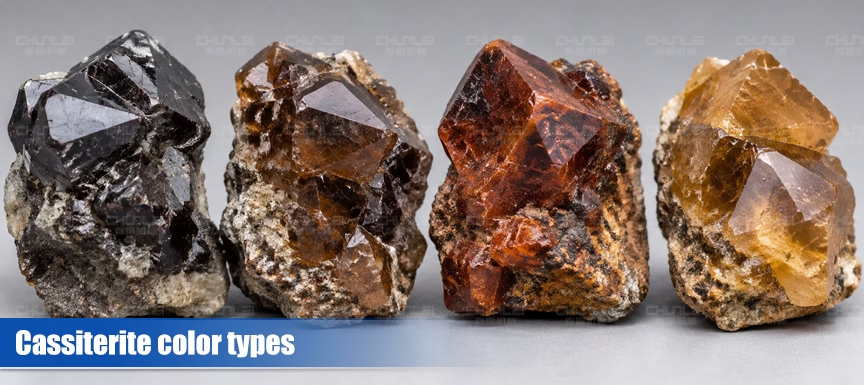
What does a tin mine usually look like? How to initially identify cassiterite?
Before discussing the mineral processing process, we must first understand the most important valuable mineral in tin ore – Cassiterite (chemical formula SnO₂).
Cassiterite is the most important industrial tin-containing mineral in nature and has the characteristics of high density and high hardness. However, the color and appearance of cassiterite will vary depending on the origin of the deposit and the geological environment.
What are the common colors of cassiterite?
Cassiterite does not only have a black appearance, common colors include:
| Color | Physical Characteristics | Key Points for Initial Observation |
| Black | Black or brownish-black grains | Surface luster, grain morphology |
| Dark brown | Dark brown or brownish-black masses | Mineral boundaries and distribution |
| Reddish-brown | Reddish-brown or rust-colored grains | Presence of iron oxides |
| Yellowish-brown | Yellow to brownish-yellow crystals | Streak, hardness, and mineral composition |
| Gray | Gray or dark gray grains | Presence of tin and associated minerals |
It should be noted that you cannot judge whether an ore is tin ore based on its color alone.
For example, minerals such as magnetite, hematite, and wolframite may also appear black or dark brown.
Therefore, color can only be used as a basis for preliminary observation and cannot replace mineral identification.
2. What are the key physical properties of cassiterite?
When identifying cassiterite, one can look at its color, as well as its density, hardness, streak, and luster.
- Streak: White to light brown; this is an important characteristic for distinguishing it from other minerals.
- Hardness: 6–7 on the Mohs scale—relatively hard and resistant to wear.
- Density: Approximately 6.8–7.1 g/cm³; as a high-density mineral, it is well-suited for gravity separation.
- Luster: Adamantine to submetallic; fracture surfaces often exhibit a greasy luster.
- Cleavage and Fracture: Cleavage is indistinct; fractures are conchoidal or irregular.
- Brittleness: It is brittle and prone to shattering upon impact; during mineral processing, care must be taken to avoid over-grinding and the loss of fine particles (slimes).
These characteristics are useful for the preliminary identification of cassiterite.
For instance, the density of cassiterite is significantly higher than that of common gangue minerals like quartz or feldspar. It is precisely this density difference that makes gravity separation a crucial method in the processing of tin ores.
However, other heavy minerals may also possess high densities and could potentially end up in the concentrate alongside the cassiterite during gravity separation. Therefore, mineralogical analysis is still required to confirm the exact mineral composition.
3. Why does the appearance of cassiterite influence the choice of mineral processing methods?
The appearance of cassiterite directly influences the selection of mineral processing methods, as its color, grain size, morphology, and surface condition often reflect the mineral’s dissemination characteristics, degree of liberation, and the extent of any “sliming” (formation of fine, clay-like particles).
- Color and Luster: These can assist in the preliminary identification of the mineral type, though they cannot serve as the sole basis for determining processing methods.
- Grain Size: Coarse-grained cassiterite is generally suitable for gravity separation, whereas fine-grained cassiterite may require techniques such as shaking table separation, centrifugal concentration, or flotation.
- Grain Morphology: Platy, fine, or irregularly shaped grains can affect separation efficiency, necessitating adjustments to equipment and operational parameters.
- Surface Condition: If the surface of the cassiterite is coated with clay or argillaceous (muddy) material, the ore typically requires washing and desliming beforehand to prevent interference with subsequent separation stages.
In short: Observing the appearance of cassiterite helps in making an initial assessment of ore characteristics and the general direction for mineral processing; however, the final process must be determined based on mineralogical analysis, particle size distribution (sieve analysis), and actual mineral processing tests.
How can different types of tin ore be distinguished by their appearance?
When purchasing tin ore or developing an ore-processing strategy, many clients initially assess the type of ore based on its color, luster, shape, and grain size. In fact, different types of tin ore do exhibit distinct visual characteristics. For instance, the primary valuable mineral in oxidized tin ores is typically cassiterite, which often appears black, brownish-black, or dark brown and displays a distinct metallic or adamantine luster. Sulfide-based tin ores, by contrast, may appear grayish-black, steel-gray, or brassy in color. Alluvial (placer) tin deposits, meanwhile, generally consist of loose, granular material formed through weathering and transport by water. However, visual appearance serves only as a preliminary indicator; it cannot definitively determine the tin grade or the precise mineral composition. A conclusive assessment requires further investigation, including mineralogical identification, chemical analysis, and ore-processing tests.
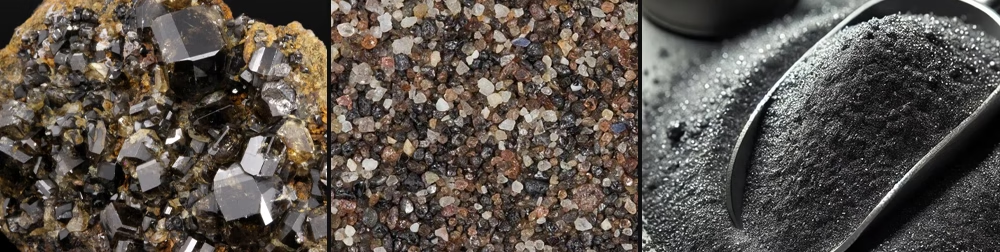
Comparison of the Appearance Characteristics of Different Types of Tin Ore
| Tin Ore Type | Typical Appearance/Color | Form and Particle Characteristics | Key Identification Features |
| Oxide Tin Ore | Black, brownish-black, dark brown | Massive, granular, or finely disseminated | Primary valuable mineral is typically cassiterite; characterized by high density and a distinct luster |
| Sulfide Tin Ore | Steel-gray, grayish-black, brassy yellow | Massive, vein-like, or disseminated | Often associated with sulfide minerals such as pyrite, chalcopyrite, and sphalerite |
| Primary Tin Ore | Grayish-white, grayish-black, brown; uneven coloration | Hard, rock-like; often features quartz veins and mineral dissemination | Tin minerals are tightly bonded to the host rock, typically requiring crushing and grinding for liberation |
| Placer Tin Ore | Black, dark brown, grayish-black | Loose, sandy, granular, or gravelly | Cassiterite, having undergone natural weathering and transport, is often mixed with quartz sand, clay, and other heavy minerals |
| Mixed Tin Ore | A mixture of black, brown, and grayish-white | Massive, granular, or sandy | May contain both oxide and sulfide tin minerals; requires comprehensive analysis of the mineral composition |
Visual assessment is useful for the preliminary screening of ore, but it should not serve as the sole basis for selecting processing equipment. For alluvial (placer) tin ore, the focus should be on washing, screening, and gravity separation processes. For primary oxidized tin ore, crushing, grinding, and gravity separation are typically required. For sulfidic tin ore, a combined process involving both flotation and gravity separation may be necessary, depending on the specific composition of the sulfide minerals.
Ultimately, the equipment configuration must be determined based on actual ore samples and test results; this prevents the procurement of unsuitable equipment, which could otherwise negatively impact the grade and recovery rate of the tin concentrate.
Determining Mineral Processing Methods Based on 5 Visual Characteristics of Tin Ore
Identifying the general type of ore is not enough; one must also examine its specific characteristics.
The following five aspects are particularly important for the preliminary selection of a mineral processing method.
1. Observe the ore color: A preliminary step in identifying the type of tin ore
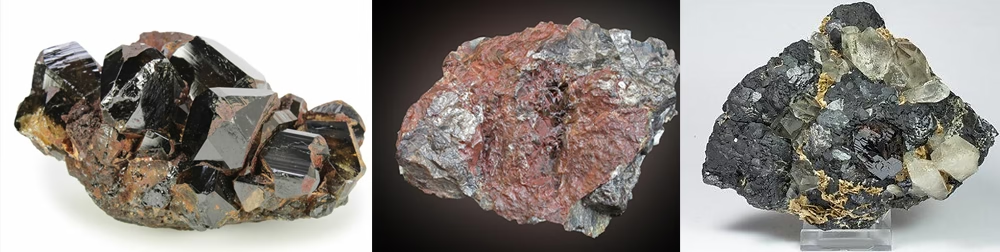
The coloration of tin ore is quite complex; its appearance can vary depending on the specific combination of minerals present.
| Appearance/Color | Potential Mineral Characteristics | Preliminary Mineral Processing Approach |
| Black, dark brown | May contain cassiterite | Gravity separation preferred |
| Reddish-brown, brownish-yellow | Likely tin oxides or iron-bearing minerals | Gravity separation; magnetic separation as a supplementary method if necessary |
| Brass-yellow, golden-yellow | May contain sulfides such as pyrite or chalcopyrite | Consider sulfide flotation |
| Greyish-black, dark grey | May contain a variety of metallic minerals | Requires mineralogical analysis for determination |
Mineral Processing Recommendations:
If the sample contains noticeable high-density mineral grains that are black or brownish-tan, it is advisable to check specifically for the presence of cassiterite.
If the sample is associated with sulfides such as pyrite, chalcopyrite, or sphalerite, the separation of these sulfides from the cassiterite must be taken into account.
Please note: A black color does not necessarily indicate the presence of cassiterite; therefore, the tin grade cannot be determined based on color alone.
2. Observe the particle size: Is the cassiterite coarse or fine?
Particle size is one of the important factors affecting the choice of tin ore beneficiation process.
If cassiterite exists as coarse monomer dissociated particles, gravity separation can usually be given priority and a complicated grinding process is not necessarily required.
However, if the tin mineral particles are very fine, or are still wrapped within the gangue minerals, further grinding and classification may be required.
| Particle characteristics | Preliminary process direction | Equipment to consider |
| Coarse-grained and dissociated | Direct reselection | Jig |
| Medium size particles | Gravity enrichment | Spiral chute, shaker |
| Fine grained cassiterite | Fine grain re-selection | Centrifugal concentrator, shaking table |
| Very fine or micro-grained cassiterite | Assessment and enhanced sorting | Strengthen gravity separation equipment and flotation equipment |
Generally speaking, jigs are better suited for processing coarser particles within a specific size range, while spiral chutes and shaking tables can handle fine-to-medium-sized minerals; there is some overlap in their respective application ranges.
Actual performance depends on factors such as mineral density, particle shape, feed conditions, and equipment parameters.
Selection advice: Do not automatically opt for a ball mill simply because the ore appears hard. First, verify whether the cassiterite has been sufficiently liberated.
3. Observe the mud content: Is the ore thick and muddy?
This is a very important feature when judging the sand tin ore beneficiation process.
Some tin ore samples look like ordinary sand and gravel, but when water is added, large amounts of clay and fine mud appear.
Different mud conditions have a great impact on mineral processing equipment.
| Physical Characteristics | Potential Issues | Preliminary Processing Approach |
| Loose ore, low clay content | Easy to screen and sort | Screening + Jigging |
| Clay coating on surfaces | Cassiterite may be covered by clay | Ore washing + Scrubbing |
| Significant slurry formation upon adding water | Fine slimes interfere with gravity separation | Ore washing + Desliming |
| Severe argillization (clay formation), fine particle size | Cassiterite may report to the fine slime fraction | Classification + Fine-particle recovery |
Mineral Processing Recommendations:
If the ore has a high clay content, the first step should generally be to consider ore washing and scrubbing.
If there is a significant amount of fine-grained clay (slimes), equipment for classification and desliming will also be required.
However, it should not be assumed that a higher clay content automatically necessitates its removal. Some fine-grained material may contain fine cassiterite (tin oxide) particles; discarding this material directly would result in a loss of tin.
Therefore, it is advisable to conduct a particle size and tin grade analysis before proceeding with desliming.
4. Examine the ore structure: Determine whether the cassiterite has been liberated.
This characteristic is crucial, yet it is also the aspect most frequently overlooked by the average client.
In simple terms, it involves checking whether the cassiterite has separated from other minerals.
- Distinct, individual grains: The cassiterite is separate from gangue minerals (such as quartz or sandstone), which may make the ore well-suited for direct gravity separation.
- Partially intergrown: The cassiterite remains partially bonded to gangue minerals, necessitating grinding to achieve liberation.
- Intimately intergrown: The cassiterite is embedded within other minerals; this typically requires further crushing and grinding before separation can take place.
| Ore Structure | Preliminary Process Approach |
| Good liberation of cassiterite | Ore washing + screening + gravity separation |
| Partial intergrowth of cassiterite | Crushing or grinding + classification + gravity separation |
| Fine dissemination and significant intergrowth of cassiterite | Staged grinding + staged separation |
| Complex association of multiple minerals | Gravity separation + flotation or other auxiliary separation methods |
Mineral dressing suggestions:
If cassiterite has been fully dissociated, there is no need to blindly add grinding equipment.
If cassiterite and gangue are closely connected, a reasonable grinding fineness needs to be determined through grinding tests.
If it is ground too coarsely, the cassiterite may not be dissociated; if it is ground too finely, it may produce a large amount of fine particles of cassiterite that are difficult to recover.
5. Examine ore distribution: Determine whether to employ a single-process or a combined-process approach.
The occurrence of tin ore varies, and the mineral processing flow will differ accordingly.
| Appearance and Ore Characteristics | Potential Ore Type | Preliminary Processing Approach |
| Loose sand and gravel; cassiterite distributed within the sandy layers | Alluvial/Placer Tin Ore | Ore washing + screening + gravity separation |
| Tin minerals contained within hard rock | Primary (Hard-rock) Tin Ore | Crushing + grinding + gravity separation |
| Cassiterite associated with sulfides | Complex Polymetallic Tin Ore | Sulfide flotation + cassiterite recovery |
| Uneven distribution of cassiterite with complex associated minerals | Complex Associated Ore | Staged grinding + combined beneficiation processes |
Mineral processing recommendations:
For alluvial tin deposits, gravity separation is generally the preferred initial approach.
For primary (lode) tin deposits, the process must begin with crushing, grinding, and mineral liberation.
If the ore contains other valuable metals—such as copper, lead, or zinc—alongside tin, a comprehensive recovery strategy should be adopted, rather than focusing solely on tin concentrate.
Quickly determine the mineral processing approach for tin ore based on 5 visual characteristics.
By combining these 5 characteristics, you can create a preliminary assessment table.
| Observed characteristics | Prioritized equipment or processes |
| Black, tan high-density particles | Cassiterite identification + gravity selection test |
| More coarse-grained cassiterite | Screening + Jig |
| More fine-grained cassiterite | Shaking table + fine particle gravity separation equipment |
| High mud content | Ore washing + scrubbing + graded desliming |
| Cassite and gangue grow together | Crushing + Grinding + Classification |
| More associated sulfides | Sulfide flotation + cassiterite recovery |
How can mineral processing equipment be selected based on the appearance of tin ore?
Different types of tin ore exhibit distinct variations in color, particle size, morphology, and mineral composition. When selecting equipment, one can make an initial assessment based on appearance, then refine the choice of processing technology by analyzing the ore’s specific properties and particle size distribution.
For instance, for tin ore that is dark in color, coarse-grained, and sandy in texture, equipment for washing, screening, and jigging should be prioritized. If the ore contains a high proportion of fine-grained cassiterite or significant amounts of clay, additional equipment—such as desliming units, spiral chutes, or shaking tables—will be required. In the case of massive primary tin ore, processes like crushing, grinding, and classification are typically necessary to ensure the thorough liberation of the cassiterite. It should be noted that appearance serves only as a preliminary reference for equipment selection; one cannot determine the tin grade or the final processing outcome based solely on color.
| Tin ore appearance characteristics | Possible ore types or characteristics | Recommended mineral processing equipment | Equipment configuration ideas |
| Black, gray-black, sandy particles | Placer tin ore, which may contain more dissociated cassiterite | Washing machine, vibrating screen, jig | The ore is first washed and screened, and then coarser particles of cassiterite are recovered through a jig. |
| Black fine sand with uneven particle size | Fine-grained placer tin ore, possibly fine-grained cassiterite | Spiral chute, shaker, centrifugal concentrator | Classify according to particle size and use gravity separation equipment to improve the recovery rate of fine-grained cassiterite |
| Yellow, brown or reddish brown, lumpy | Highly weathered tin oxide ore | Jaw crusher, cone crusher, ball mill, jig | Crushing and grinding according to the particle size of the embedded cloth, and then gravity selection |
| Gray black, dense and hard, lumpy | Primary tin ore may be associated with quartz, sulfide and other minerals | Jaw crusher, ball mill, spiral classifier, shaker | First crush and grind the ore to fully dissociate the cassiterite and gangue, and then sort |
| Black ore mixed with yellow and golden minerals | May contain sulfide minerals such as pyrite and chalcopyrite | Ball mill, flotation machine, shaker, magnetic separator (configuration depends on mineral properties) | Conduct mineral analysis first, and then determine the separation and recovery process of sulfide minerals and cassiterite. |
| The ore is lighter in color and contains a large amount of clay or mud mass. | Tin ore with high mud content requires high washing and desliming requirements. | Drum washing machine, scrubbing machine, vibrating screen, desliming bucket | Scrub, wash and deslim first to reduce the impact of slime on subsequent gravity separation. |
| Black fine powder or extremely fine particles, it is difficult to distinguish cassiterite with the naked eye | Fine-grained cassiterite may be difficult to recover by traditional gravity separation. | Fine particle shaking table, centrifugal concentrator, flotation machine (determined by testing) | Focus on analyzing the particle size and degree of dissociation of cassiterite and selecting a suitable fine particle recycling process |
When selecting equipment, you should pay special attention to three issues:
- Particle size: For coarse-grained cassiterite, a jig is a suitable choice; for fine-grained cassiterite, consider using shaking tables, spiral chutes, or centrifugal concentrators.
- Clay content: If the ore surfaces are coated with clay or contain clay lumps, it is advisable to first incorporate ore washing, scrubbing, and desliming equipment.
- Mineral composition: If the ore contains associated sulfides, magnetic minerals, or complex gangue, gravity separation alone will not suffice. Depending on the mineralogical analysis, auxiliary processes such as flotation or magnetic separation may be required.
Advice for buyers: Do not determine the entire mineral processing plant configuration based solely on photographs of the ore. It is recommended to provide tin ore samples, along with data on particle size distribution, tin grade, and mineral composition; conducting beneficiation tests is also advisable. This ensures the proper selection and combination of equipment for crushing, grinding, washing, gravity separation, and other auxiliary processes—helping to avoid issues such as insufficient processing capacity, loss of cassiterite, or suboptimal recovery rates after the equipment has been purchased.
Comparison of Three Common Tin Ore Beneficiation Processes
| Comparison Category | Placer Tin Ore | Primary Tin Ore | Complex Associated Tin Ore |
| Ore Characteristics | Cassiterite is primarily found in sand and gravel, having undergone weathering, transport, and deposition. | Cassiterite coexists with gangue minerals such as quartz, feldspar, and sulfides. | Cassiterite is associated with minerals containing copper, lead, zinc, iron, tungsten, etc. |
| Primary Mode of Occurrence | Mainly as granular or fine-grained cassiterite. | Mostly present as primary cassiterite embedded within the ore matrix. | Cassiterite is intimately associated with various other valuable minerals. |
| Key Beneficiation Challenges | High content of clay and slimes; fine-grained cassiterite is prone to loss. | High ore hardness and fine dissemination of cassiterite make liberation difficult. | Complex mineral composition complicates separation and leads to mutual interference. |
| Typical Process Flow | Ore washing → Screening → Desliming → Jigging → Shaking table / Spiral chute → Concentrate dewatering | Crushing → Grinding → Classification → Gravity separation → Cleaning → Tailings reprocessing | Crushing → Grinding → Classification → Flotation (preliminary sulfide removal) → Gravity separation → Magnetic separation / Cleaning → Comprehensive Recovery |
| Core Mineral Processing Equipment | Ore washers, trommel screens, jigs, spiral chutes, shaking tables | Jaw crushers, cone crushers, ball mills, classifiers, jigs, shaking tables | Crushers, ball mills, flotation machines, jigs, shaking tables, magnetic separators |
| Primary Separation Methods | Primarily gravity separation | Mainly gravity separation, supplemented by flotation when necessary | Combined use of gravity separation, flotation, and magnetic separation |
| Key Performance Indicators | Cassiterite recovery rate, desliming efficiency, concentrate grade | Grinding fineness, degree of mineral liberation, concentrate grade | Overall tin recovery rate, recovery rate of associated metals, concentrate quality |
| Process Selection Priorities | Minimizing the loss of fine-grained cassiterite and improving effective separation efficiency | Controlling grinding fineness to prevent over-grinding and the “sliming” (excessive pulverization) of cassiterite | Optimizing the sequence of separation stages based on mineral properties to achieve the comprehensive recovery of multiple metals |
Tin Ore Appearance and Mineral Processing FAQ
Q1: Does a metallic luster on the surface of an ore sample guarantee that it is cassiterite (tin ore)?
A: Not necessarily. While cassiterite typically exhibits an adamantine or submetallic luster, certain iron-bearing, tungsten-bearing, or other metallic minerals can display a similar appearance. Determining whether a sample is cassiterite requires an assessment of its hardness, density, and crystal morphology, alongside professional laboratory analysis.
Q2: What minerals are commonly associated with tin ore?
A: Common associated minerals include quartz, feldspar, mica, pyrite, chalcopyrite, magnetite, hematite, and wolframite. Since these associated minerals can affect the liberation of cassiterite, the efficiency of the separation process, and the quality of the final concentrate, it is essential to understand the mineralogical composition before beginning beneficiation.
Q3: Why might an ore sample feel heavy, yet have a low tin content?
A: A high density (or “heaviness”) does not equate to a high tin content. Some ores contain dense minerals—such as magnetite, hematite, or various sulfides—that increase the overall weight of the sample. Accurate determination of tin content requires chemical analysis and mineralogical identification.
Q4: Why is it sometimes impossible to recover tin from certain particles after the ore has been crushed?
A: This is often because the cassiterite has not been sufficiently liberated from the gangue minerals, meaning the two remain physically attached (as “composite particles”). Alternatively, the crushing/grinding size may be inappropriate, causing some cassiterite to end up in the fine-slime fraction or within coarse-grained tailings. It is necessary to adjust crushing, grinding, and classification parameters based on the degree of mineral liberation.
Q5: What problems arise if the raw ore contains a high proportion of clay or “slimes” during the tin beneficiation process?
A: A high clay/slime content increases slurry viscosity, leads to particle agglomeration, and reduces separation efficiency. It can also interfere with the proper operation of equipment such as jigs and shaking tables. Typically, additional steps—such as ore washing, scrubbing, and desliming—are required; however, care must be taken during desliming to ensure that fine cassiterite particles are not lost in the overflow.
Q6: Why is classification (sizing) necessary in tin ore processing?
A: Cassiterite particles of different sizes behave differently in water flow and gravitational fields. Processing a mixture of various particle sizes often leads to inadequate separation of coarse particles and reduced recovery rates for fine particles. By using screening or classification to separate the ore into distinct size fractions—and subsequently treating these with appropriate equipment such as jigs, spiral concentrators, or shaking tables—separation efficiency can be significantly improved.
Q7: What are the common reasons for tin concentrate failing to meet grade requirements?
A: Common causes include incomplete separation of gangue minerals, a high degree of mineral intergrowth, suboptimal settings for processing equipment, or improper control of feed particle size and pulp density. Concentrate quality can be improved by adjusting classification size ranges, optimizing gravity separation parameters, incorporating additional cleaning stages, or employing auxiliary processes such as magnetic separation.
Q8: How should tin-rich tailings be handled?
A: First, it is necessary to determine the form in which the tin exists within the tailings—whether as coarse intergrown particles, fine cassiterite grains, or in some other state. If the tin is present as unliberated (intergrown) particles, regrinding followed by further processing may be effective. If it exists as fine cassiterite, techniques such as fine-particle gravity separation or centrifugal concentration could be considered. The specific approach should be determined based on sieve analysis of the tailings and targeted mineral processing tests.
Q9: Is it necessary to include magnetic separation equipment in a tin processing plant?
A: Not necessarily. Magnetic separation is primarily used to remove magnetic minerals (such as magnetite) or associated minerals that exhibit distinct magnetic properties. If the raw ore contains significant magnetic impurities, magnetic separation can serve as an auxiliary purification step. However, the decision to install magnetic separators should be based on an analysis of the minerals’ magnetic properties and the results of mineral processing tests.
Q10: Why is it essential to conduct mineral processing tests before constructing a tin ore processing line?
A: Tin ores vary significantly in terms of mineral composition, grain size distribution (liberation characteristics), clay content, and overall amenability to processing. Simply replicating the equipment configuration of another processing plant often leads to issues such as low recovery rates, failure to meet concentrate grade requirements, or excessively high operating costs. Through laboratory tests or scaled-up continuous trials, it is possible to pre-determine process flows, equipment specifications, processing capacities, and projected mineral processing performance metrics, thereby reducing project investment risks.
Conclusion
When evaluating tin ore, one must look beyond mere color; it is essential to consider factors such as particle size, clay content, the degree of weathering, and the presence of associated minerals.
Different types of tin ore require different beneficiation methods. The processing approaches for alluvial (placer) tin ore and primary (lode) tin ore can differ significantly. The specific choice of processes—such as washing, crushing, grinding, gravity separation, or flotation—depends entirely on the characteristics of the ore.
Our recommendation is to analyze the ore first, then determine the appropriate processes and equipment. This approach ensures higher tin recovery rates and lower production costs.
If you have tin ore that requires processing, please feel free to contact us. We can help analyze the properties of your ore and recommend a suitable beneficiation solution!
Latest News

Which types of tin ore are the most difficult to process?
800Not all tin ores are easy to process. For some alluvial (placer) tin deposits, a simple combination of washing, screening, and gravity separation is often sufficient to produce a high-quality tin concentrate. Primary (lode) tin deposits, howeve…
-
How can the recovery rate of tin from high-sludge oxidized alluvial tin ores be effectively improved?
800When dealing with oxidized alluvial tin ores containing high levels of sludge (fine clay/silt), many processing plants initially consider adding more jigs or shaking tables, or increasing the processing capacity of their existing equipment. I…
-
What is the difference between sulfide tin ores and oxide tin ores?
800Those involved in tin ore processing have likely encountered this scenario: the raw ore has a decent tin content, yet after crushing, grinding, and beneficiation, the concentrate grade remains low, while a significant amount of tin is lost to t…
-
What equipment is required for the beneficiation of alluvial tin ore?
800Having worked in alluvial tin ore processing for many years, I have found that such deposits are indeed often easier to process than primary (lode) tin deposits. Through long-term natural weathering and the action of flowing water, much of the …
loading…
已经是到最后一篇内容了!