 Chunlei Mining Machinery
How to Choose a Ball Mill: The Ultimate 2026 Guide for Gold & Mineral Miners
Choosing the right ball mill is one of the most critical decisions for any mining operation—it directly impacts your grinding efficiency, gold recovery rate, and long-term operating costs. Whether you’re a small-scale artisanal miner in Zimbabwe or managing a medium-sized processing plant, this step-by-step guide will walk you through how to select a ball mill that matches your ore type, capacity needs, and budget.
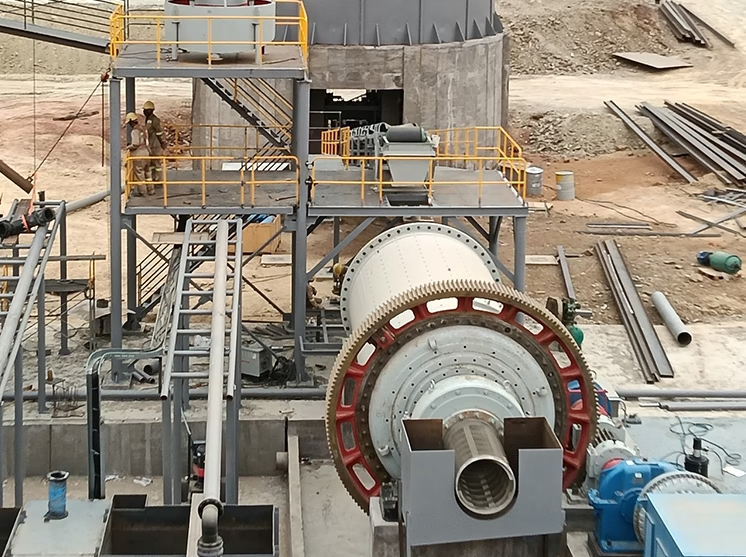
In this article, we will introduce:
First, Understand Your Core Requirements
Before comparing models or prices, answer these 4 foundational questions—they will narrow down your options immediately:
What Type of Ore Are You Processing?
Different ores have distinct hardness and abrasiveness, which dictate the ball mill design:
- Soft minerals (e.g., limestone, kaolin): Can use smaller, energy-efficient mills with ceramic balls for finer grinding.
- Gold ore / Copper ore: Medium-hardness ores → wet grinding ball mills are most common (ideal for downstream leaching/CIP processes).
- Hard rock (e.g., granite, iron ore): Require high-chrome grinding media and reinforced mill shells to resist wear.
What Is Your Required Daily Processing Capacity?
Capacity is measured in tons per hour (TPH) or tons per day (TPD). Match the mill size to your actual output:
- Small-scale miners (1–5 TPD): Choose a small ball mill (e.g., Φ900×1800 or Φ1200×2400)—compact, easy to operate, and fits limited space.
- Medium operations (10–50 TPD): Opt for medium ball mills (Φ1500×3000 to Φ2100×3600)—balances capacity and energy use.
- Large plants (50+ TPD): Need custom large-scale mills with automated controls and continuous feeding systems.
Wet Grinding vs. Dry Grinding: Which Is Better?
This is a key choice for miners:
| Grinding Type | Best For | Pros | Cons |
|---|---|---|---|
| Wet Grinding | Gold/copper ore, leaching processes | Higher efficiency, finer particle size, less dust | Requires water access, adds dewatering steps |
| Dry Grinding | Minerals sensitive to moisture, arid regions | No water needed, simpler downstream processing | Higher energy use, more dust pollution |
For most Zimbabwean gold miners, wet grinding is the standard choice—it unlocks more gold particles for leaching.
What Is Your Budget & Operating Cost Limit?
- Initial investment: Larger mills cost more upfront, but smaller mills may require frequent replacements. Long-term costs: Focus on energy consumption (kWh/ton) and wear parts lifespan (liners, grinding balls)—these make up 60–70% of total operating costs.
Key Technical Factors to Evaluate When Choosing a Ball Mill
Once you’ve defined your needs, dig into these technical details to pick the best model:
Mill Size & Speed
- Diameter (Φ) & Length (L): Larger diameter mills grind coarser material faster; longer length mills produce finer powder. Rotational Speed: Optimal speed is 70–80% of critical speed—too slow = inefficient grinding; too fast = balls stick to the shell, reducing impact.
Grinding Media Selection
The balls inside the mill determine grinding performance:
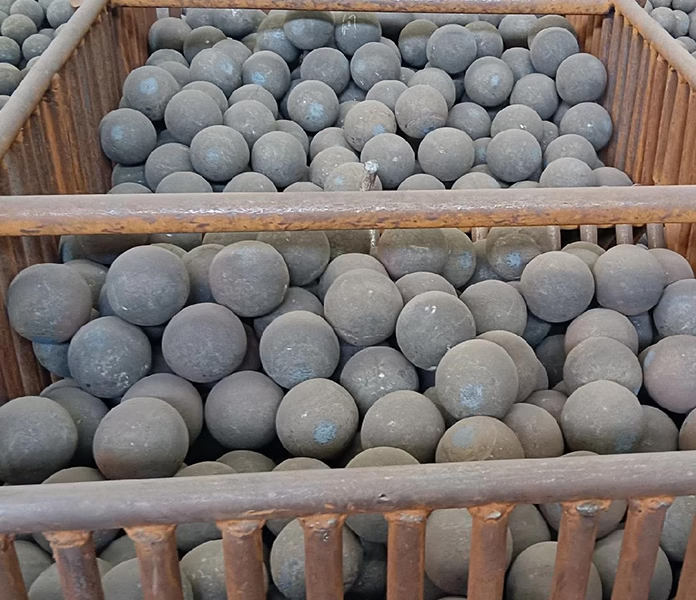
- Steel balls: Durable, high impact—ideal for hard ores (gold, copper).
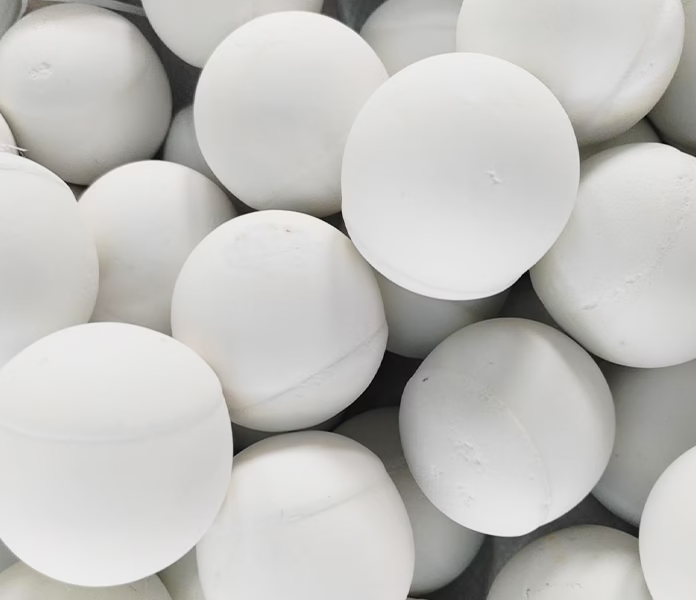
- Ceramic balls: Lighter, non-contaminating—perfect for soft minerals or when metal contamination is a concern.
- Stainless steel balls: Used for specialty minerals requiring corrosion resistance.
Liner Material & Design
Liners protect the mill shell and transfer energy to the balls:
- Rubber liners: Lightweight, quiet, and wear-resistant—great for small mills and wet grinding.
- High-manganese steel liners: Extremely durable for heavy-duty, hard-rock grinding.
- Lifter bars: Ensure balls are lifted to the optimal height for maximum impact.
Discharge Method
- Overflow discharge: Produces fine particles, ideal for wet grinding (most common for gold mining).
- Grid discharge: Faster grinding, better for coarser particles and dry processing.
Red Flags to Avoid When Selecting a Ball Mill Supplier
Not all ball mills are created equal—avoid these common pitfalls:
- Vague pricing: Reputable suppliers provide transparent quotes, including shipping, installation, and warranty costs.
- Oversized mills for small operations: Wastes energy and increases maintenance costs.
- Cheap, low-quality liners/media: Lead to frequent breakdowns and higher long-term costs.
- No local after-sales support: Critical for miners in remote areas like Zimbabwe—delays in repairs can halt production for weeks.
How CHUNLEI Mining Helps You Choose the Perfect Ball Mill
At CHUNLEI Mining, we specialize in tailoring ball mill solutions for African mining conditions, with over 30 years of experience serving miners in Zimbabwe and across the continent. Here’s how we support you:
Free Ore Testing & Process Analysis
Send us a sample of your ore, and our engineers will:
- Test its hardness and grindability.
- Recommend the optimal mill size, speed, and media type.
- Simulate your production line to predict efficiency and recovery rates.
Customized Ball Mill Models
We offer a full range of ball mills for every miner:
- Small ball mills (starting at $7,000): Perfect for artisanal and small-scale gold mines.
- Medium/large mills: Custom-built for medium to large operations, with automated controls and energy-saving designs.
- Wet/dry grinding options: Adaptable to your local climate and processing needs.
Full After-Sales Support
- 24/7 online technical support.
- On-site installation and commissioning for large projects.
- Spare parts supply chain covering Zimbabwe and Southern Africa.
Final Checklist: How to Choose a Ball Mill for Your Mine
✅ Define your ore type, capacity, and grinding method (wet/dry).
✅ Match mill size to your actual production needs (avoid over-sizing).
✅ Prioritize energy efficiency and wear-resistant components.
✅ Choose a supplier with proven experience in your region and industry.
✅ Request a free ore test and customized quote before making a decision.
Get Your Custom Ball Mill Quote Today
If you’re ready to choose the right ball mill for your mining operation, contact CHUNLEI Mining for:
- A free, no-obligation quote tailored to your capacity and ore type.
- A detailed technical specification sheet for our ball mill models.
- A free copy of our guide: “The Miner’s Handbook to Ball Mill Efficiency & Gold Recovery”.
How to Reach Us
📩 Email: info@miningmachinerys.com
🌍 Website: https://www.chunleimining.com/
📱 24/7 Online Support: Chat with our mining experts directly on our website
Let’s build a ball mill solution that maximizes your gold recovery and minimizes your operating costs—request your quote today.) and complete gold ore processing production lines—meeting all your needs from ore crushing, grinding to gold separation.
Get Your Exact Customized Price Today
Latest News

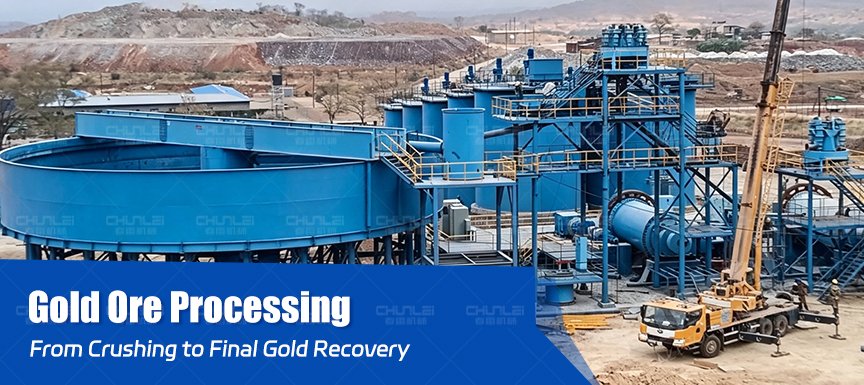
Gold Ore Processing: From Crushing to Final Gold Recovery
800A gold processing plant is not merely a simple assembly of crushers, ball mills, and gold recovery equipment; rather, the goal is to determine the optimal process flow based on factors such as mineral composition, gold particle size,…
-
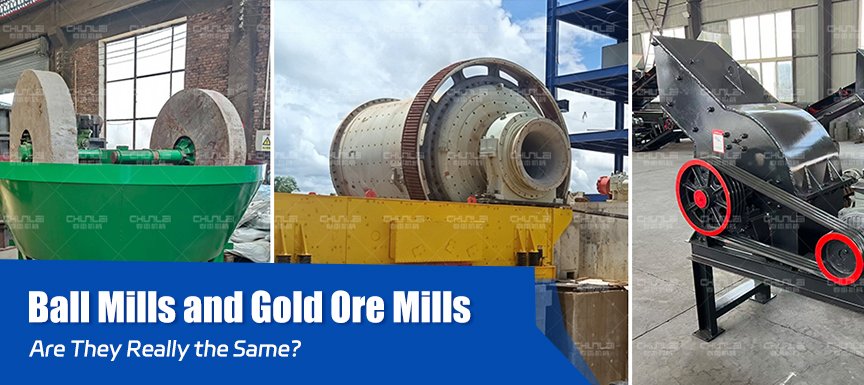
Ball Mills and Gold Ore Mills: Are They Really the Same?
800When searching for gold ore grinding equipment, customers often encounter various terms such as “Ball Mill,” “Gold Mill,” “Gold Milling Machine,” and “Gold Ore Grinding Machine.” Many buyers assume that a “Gold Mill” is a specialized mill de…
-
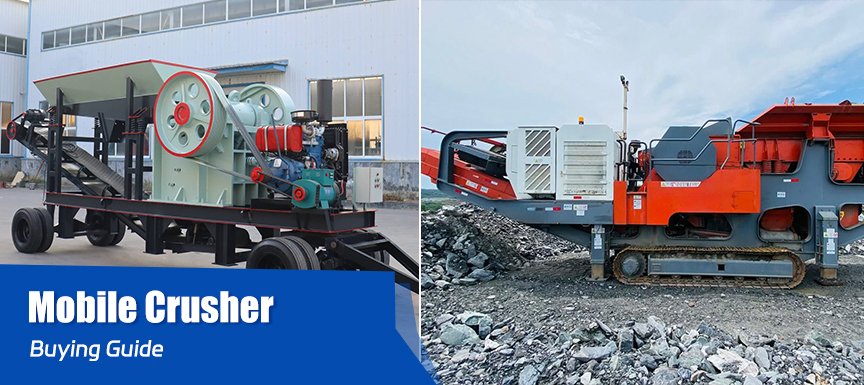
Mobile Crusher Buying Guide: Wheeled or Tracked?
800Many customers focus solely on portability when purchasing a mobile crusher, viewing it merely as the acquisition of a single piece of equipment. In reality, selecting the wrong model can lead to either insufficient output or excessive wear and…
-
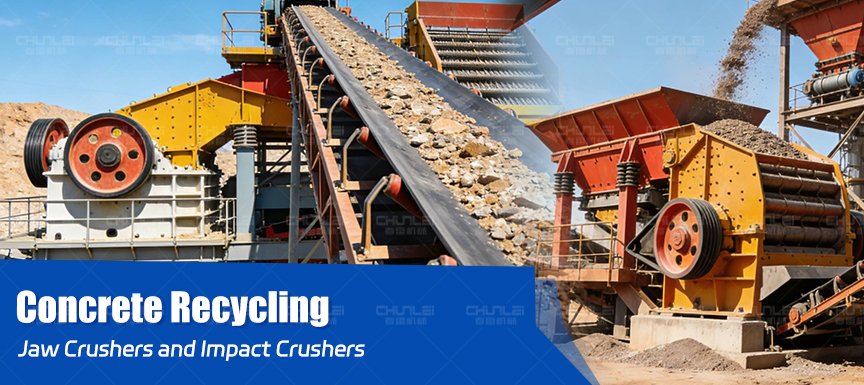
Jaw Crushers and Impact Crushers: Turnkey Solutions for Concrete Recycling
800Demolishing old buildings and roads generates vast amounts of waste concrete; direct landfilling not only consumes valuable space but also incurs high transportation costs. The real challenge lies in transforming this waste concrete into reusab…
loading…
已经是到最后一篇内容了!