 Chunlei Mining Machinery
Solving Fluorspar Processing Challenges: How to Select Key Equipment?
Fluorspar is a vital mineral in nature, playing a crucial role in key sectors such as metallurgy, chemical engineering, and ceramics. Transforming raw ore into high-value concentrate requires precisely matched processing equipment and workflow.
For years, we have dedicated ourselves to helping global clients build efficient, stable fluorite production lines. We understand the critical importance of seamless coordination across every stage of the complete chain: crushing, grinding, flotation, and concentration.
This article systematically outlines the entire process from raw ore to concentrate, along with the primary equipment involved. Our goal is to maximize the value of every ton of fluorite resources you possess.
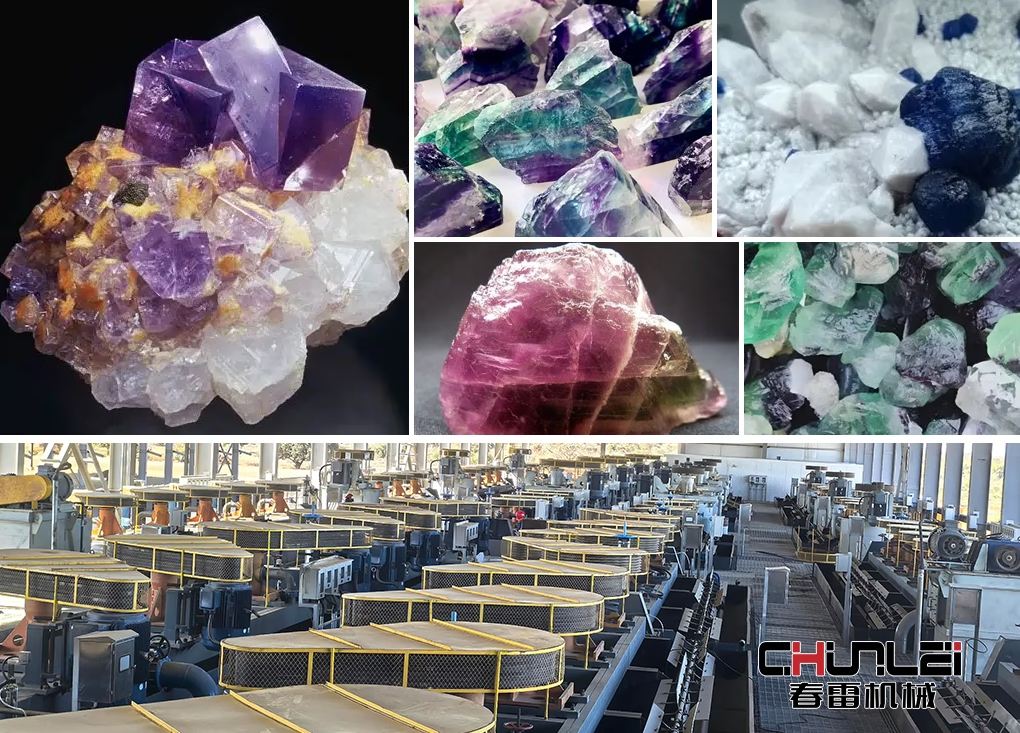
The Importance of Proper Equipment Selection in Fluorite Processing
Selecting the right fluorite processing equipment is the cornerstone of project success. It determines product quality and directly impacts profitability. A project’s success is often determined at the equipment selection stage. Incorrect equipment selection inevitably leads to low recovery rates, excessive energy consumption, inconsistent product quality, and increased maintenance costs and labor expenses down the line.
Conversely, a professional and prudent choice ensures smooth production flow, enhanced efficiency, and consistent product quality across the entire production line, maximizing the value of every ton of ore processed.
The Importance of Ore Properties and Production Targets in Equipment Selection
We must accurately assess the physical and chemical characteristics of the ore and the market value of the finished product when selecting equipment. This directly determines the technical route for fluorite processing, and thorough preliminary analysis is key to controlling project risks and avoiding issues later on.
From raw material hardness and characteristics to product particle size and purity requirements, coupled with investment scale and environmental regulations—all these factors dictate equipment selection. Neglecting any aspect may result in mismatched equipment and processes, compromising production line efficiency and potentially jeopardizing the entire project.
Primary Mineral Processing
The mineral composition of ore forms the foundation of mineral processing, dictating the processing method. Accurate identification of fluorite ore’s characteristic components—including various associated gangue minerals (such as calcite (CaCO₃), quartz (SiO₂), barite (BaSO₄), and sulfides)—is essential for designing an efficient and economical mineral processing flow.
- Core Challenge: Separating Fluorite from Calcite. Overlapping physical and chemical properties—such as density and hardness—make conventional gravity separation difficult. Specific inhibitors are required to achieve effective separation.
- Impact of Other Associated Minerals: Quartz, with its distinct density difference from fluorite, can be separated using standard gravity methods. Sulfides, however, may interfere with flotation processes, consuming reagents and affecting final product quality. They typically require prior removal through pre-flotation or magnetic separation.
- Grinding Size: This is a critical factor determining the grinding stage, directly impacting subsequent separation efficiency. It also serves as the core basis for mill selection, power configuration, and grinding media choice.
- Surface Property Analysis: Different gangue minerals possess unique chemical characteristics, which form the basis for flotation reagent design. For example, activated calcite may increase reagent consumption and inhibit fluorite flotation.


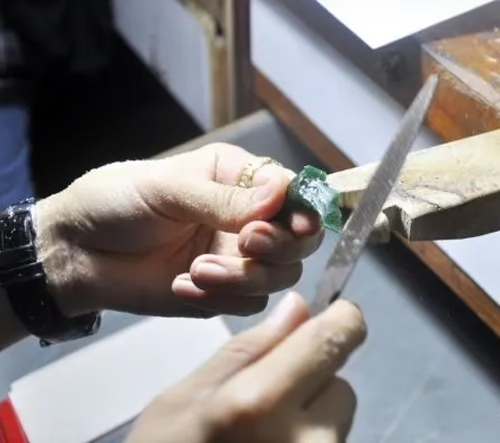
Product Grade and Recovery Rate
The positioning of the final product determines the process flow and solution for fluorite processing. Differences in product fineness, purity, impurity content, and physicochemical properties across various applications necessitate the clarification of all parameters at the project’s outset to ensure the correct selection of production equipment.
- Metallurgical Grade: Balancing efficiency and cost, typically requires 65%-85% calcium fluoride (CaF₂), with strict upper limits on harmful impurities like sulfides, silica, and calcium carbonate. When ore grades are high and mineral composition simple, gravity separation equipment (e.g., jigs, shaking tables) is the preferred solution.
- Ceramic Grade: Demands strict control over both purity and physicochemical properties, requiring CaF₂ content exceeding 90%. Extremely stringent limits apply to product whiteness and coloring impurities like sulfides and iron oxides. Typically relies on flotation processes, necessitating dedicated fluorite flotation machines and agitation tanks. Subsequent concentration, filtration, and drying stages must strictly control moisture content and prevent secondary contamination.
- Acid Grade: Presents significant challenges in purity and advanced processing. Calcium fluoride (CaF₂) content must exceed 97%, while silica, calcium carbonate, and sulfide content must be below 0.1%-0.5%. This necessitates a dedicated acid-grade fluorite production line requiring specialized equipment and stringent chemical requirements.
Production Capacity and Budget
Target production capacity and investment budget determine the scale of fluorite beneficiation, serving as key factors in determining return on investment. Striking a balance between achieving optimal throughput and avoiding cost overruns is crucial.
- Throughput: Defining throughput is fundamental to efficiency. The requirement of “tons per hour” directly dictates the specifications of crushers, mills, and flotation machines. Under-specified equipment constrains overall capacity, while over-specification inflates costs and wastes resources.
- Cost: Many clients rush to select suppliers based on low initial equipment prices, unaware these may conceal high operational and maintenance costs. While high-efficiency equipment demands greater upfront investment, it ultimately reduces long-term operational expenses, enhances recovery rates, and boosts economic returns. Therefore, evaluating Total Cost of Ownership (TCO) requires looking beyond purchase price to include future operational costs.
- Scalability: Forward-thinking project planning must account for future expansion. Does the initial mineral processing line feature modular design? Is it conducive to subsequent growth? Does it facilitate future upgrades? Such scalable design ensures long-term growth needs are met at minimal cost.
Fluorite Processing: Core Equipment for Each Stage
Selecting fluorite processing equipment hinges on matching crushing, grinding, and beneficiation processes to your target product fineness and production scale.
Core Equipment Configuration System:
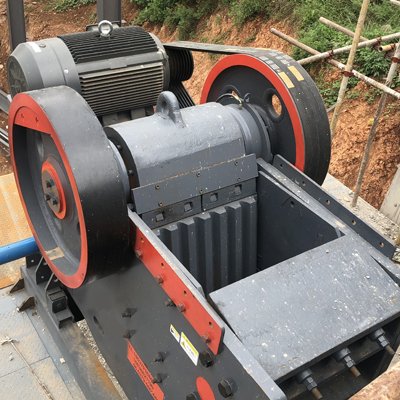
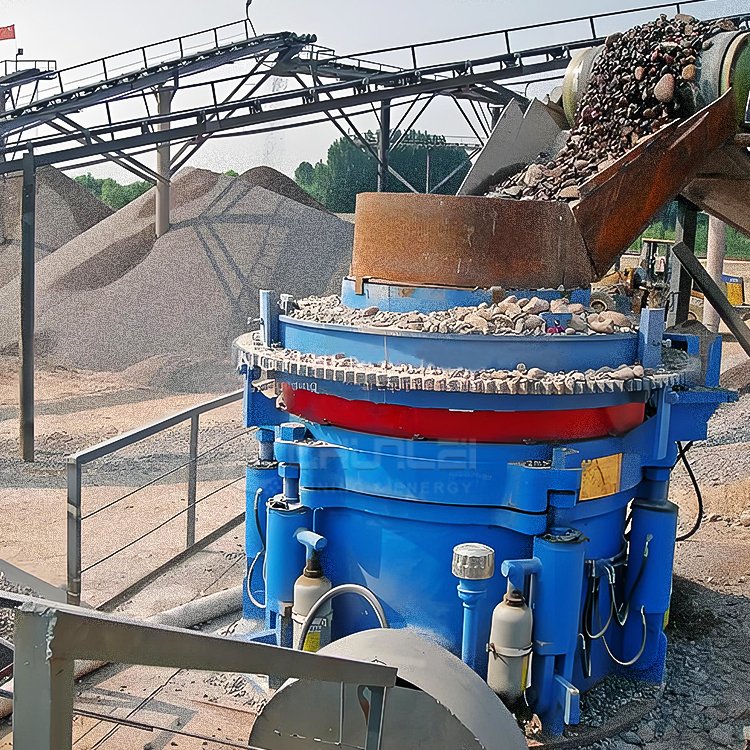
- Crushing Stage – A multi-stage crushing system comprising jaw crushers and cone crushers establishes the particle size foundation for subsequent separation.
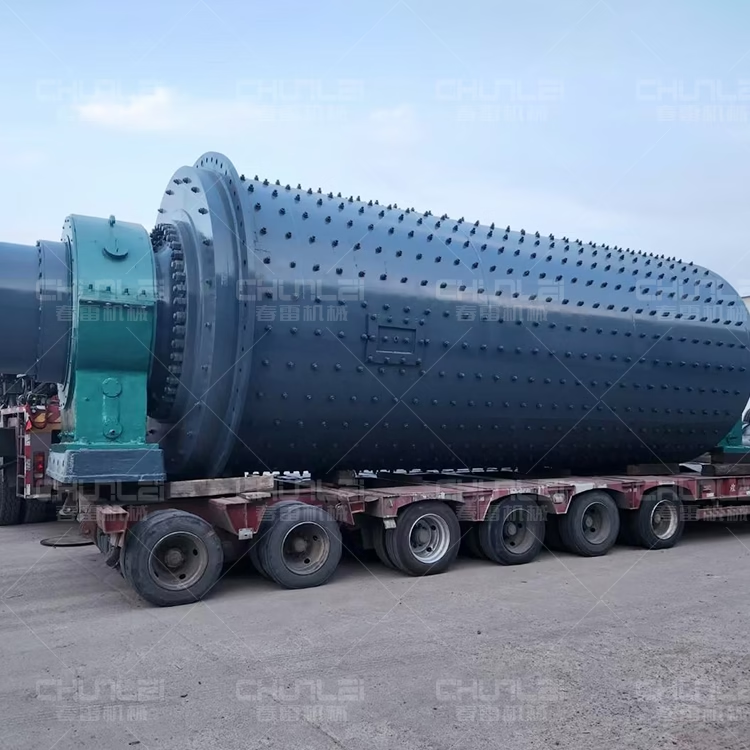
- Grinding and Classification – A closed-circuit system integrating ball mills and classification equipment ensures mineral liberation meets separation requirements
- Separation Core – Specially designed flotation units paired with precise reagent dosing achieve efficient separation and enrichment of target minerals
- Dewatering and Drying – A combination of high-efficiency thickeners and filtration/dewatering equipment guarantees final product moisture content meets specifications”
| Processing Stages | Target Product/Function | Core Equipment Options (Based on Fineness/Process Requirements) | Key Features/Applications |
| Crushing Stage | Crush raw ore to a smaller particle size | Jaw Crusher, Cone Crusher | Primarily used for coarse and medium crushing, preparing material for grinding. |
| Grinding Stage | Grind particles into powder | Raymond Mill | Suitable for coarse powder processing at 80-325 mesh. |
| High-Pressure Suspended Roller Mill | Suitable for slightly wider particle size ranges at 30-425 mesh. | ||
| Ultrafine Grinding Mill | Suitable for ultrafine powder processing at 400-1800 mesh. | ||
| Vertical Mill | Reliable structure, high production efficiency, easy to adjust and operate. Suitable for large-scale processing. | ||
| Mineral Processing and Purification | Improve the grade of fluorite concentrate | Flotation Machine | Enriches fluorite through flotation while separating gangue minerals like quartz and calcite. Often requires use with a mixing tank. |
How to Choose the Right Fluorite Processing Equipment for Your Needs?
- Define Your Requirements: Before purchasing equipment, clearly identify your production scale, target product fineness, budget, and requirements for automation and environmental compliance.
- Prioritize Equipment Quality and After-Sales Support: Select manufacturers offering reliable equipment and comprehensive after-sales service to ensure stable production line operation and minimize downtime losses.
- Consider Environmental Compliance: Ensure selected equipment meets local environmental standards, particularly regarding dust control, noise levels, and wastewater treatment.
- Conduct Site Visits and Comparisons: If feasible, visit equipment manufacturers to observe machinery in operation and compare product performance, pricing, and case studies across different suppliers.
Conclusion
Selecting optimal fluorite processing equipment involves more than just individual machine configurations. It requires a deep understanding of ore characteristics, precise process planning, and striking the right balance between budget, efficient recovery, and environmental sustainability. Customized system solutions maximize efficiency and profitability.
As a global partner in mineral processing, CHUNLEI specializes in providing customized fluorite beneficiation equipment and comprehensive process solutions. Contact us today to jointly design a complete production line for your fluorite beneficiation system.
Latest News

Gravity Concentration vs. Flotation for Gold: Which Process Should You Choose?
800In gold beneficiation projects, many mining engineers face a critical question: Why does the final gold recovery rate consistently fall short of expectations, even when grinding fineness and reagent regimes are strictly maintained according t…
-
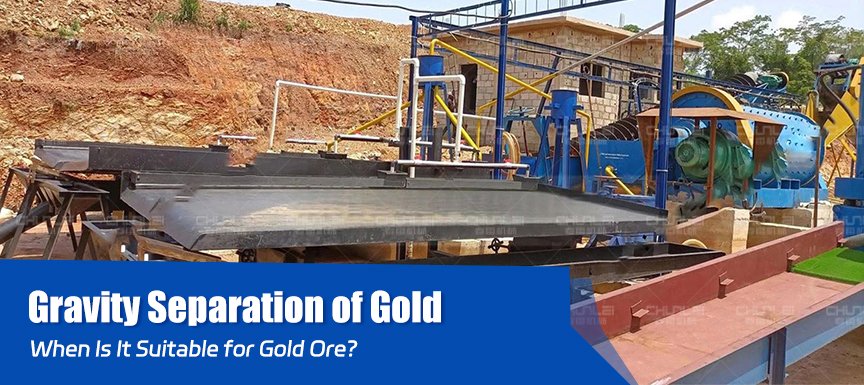
Gravity Separation for Gold: When Is It Suitable for Gold Ore?
800Many people immediately associate “gold ore” with gravity separation, yet not all gold deposits are suitable for recovery using gravity methods alone. Gravity separation is appropriate for liberated native gold or other heavy minerals that ex…
-
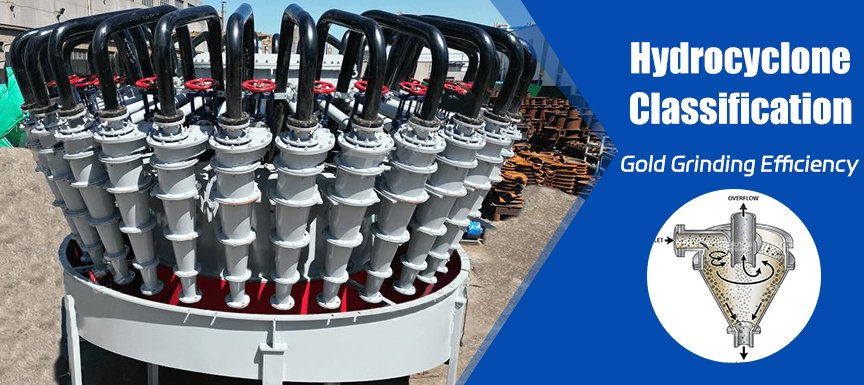
How Classification Affects Gold Grinding Efficiency
800In gold ore grinding circuits, attention is often focused primarily on ball mill capacity, power consumption, and grinding media; however, in actual operation, classification plays an equally critical role in determining grinding efficiency. …
-
Gold Ore Crushing and Grinding: What Equipment Do You Need?
800When designing a gold ore processing line, my clients often ask which crushers and mills to purchase. However, the equipment selection should actually be based on a thorough understanding of the ore characteristics. Issues in many projects do…
loading…
已经是到最后一篇内容了!