 Chunlei Mining Machinery
How Classification Affects Gold Grinding Efficiency
In gold ore grinding circuits, attention is often focused primarily on ball mill capacity, power consumption, and grinding media; however, in actual operation, classification plays an equally critical role in determining grinding efficiency.
While the ball mill is responsible for grinding the ore to the desired fineness, classification equipment determines whether the particles meet specifications. Inefficient classification can lead to the recycling of already sufficiently fine material back into the mill, resulting in over-grinding and increased energy consumption; conversely, if coarse particles prematurely advance to downstream processing, insufficient liberation of gold minerals may occur, thereby compromising recovery rates.
Therefore, the ability of classification equipment to consistently discharge compliant fine-grained product while returning coarse particles to the grinding circuit is a factor that cannot be overlooked.
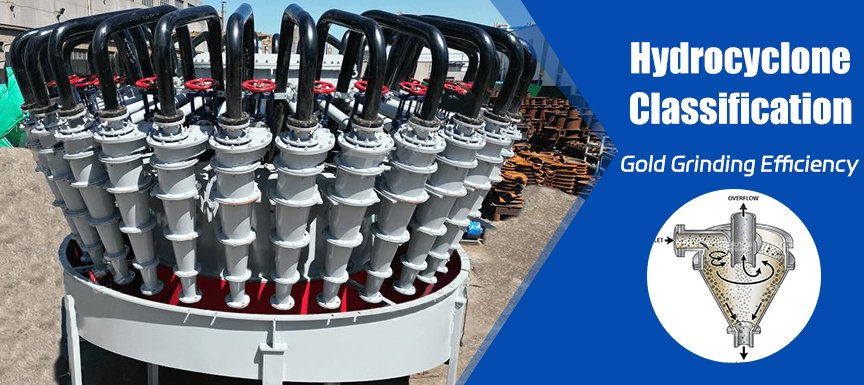
What Is Classification in Gold Grinding?
In a closed-circuit grinding system, ore discharged from the ball mill enters the classification equipment. Based on particle settling characteristics, size, and slurry conditions, the classifier separates the material into a relatively fine overflow and a relatively coarse underflow.
The process can be summarized as follows:
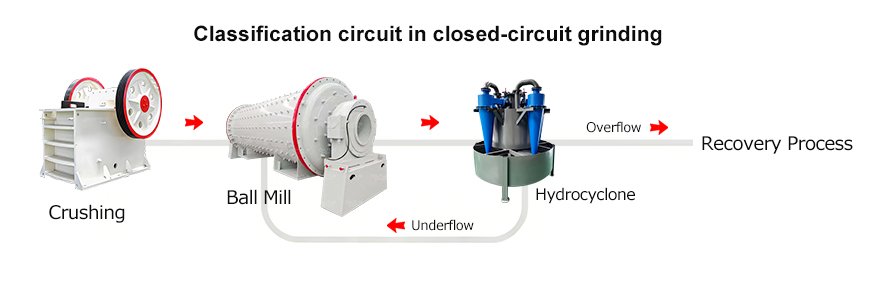
Material that has been sufficiently ground exits the grinding circuit, while material requiring further grinding is returned to the mill.
This is why closed-circuit grinding offers better control over product particle size compared to single-stage open-circuit grinding. A closed-circuit setup combining a ball mill with a hydrocyclone is a common configuration for wet grinding.
Why Classification Is Important for Gold Grinding Efficiency?
1. Controlling Final Grind Size
For gold ore, “finer is not necessarily better.”
The key is to determine exactly how fine the gold-bearing minerals must be ground to achieve proper liberation without generating excessive amounts of useless, ultra-fine sludge.
For instance, if testing establishes a target P80 for downstream flotation or leaching, the classification equipment must consistently control the particle size range of the material proceeding to the next stage.
2. Minimizing Unnecessary Over-grinding
If classification efficiency is low, fine particles that have already reached the target size may be returned to the ball mill along with the coarse particles, thereby increasing the circulating load.
Consequences may include:
- Increased ball mill load
- Higher circulating load
- Increased grinding energy consumption
- Generation of more fine sludge
- Deterioration of conditions for downstream flotation or leaching
For ores containing native gold, over-grinding can also drive some gold minerals into an ultra-fine size fraction, making subsequent recovery more difficult.
Therefore, effective classification is not about grinding the ore as finely as possible, but rather ensuring that particles of the desired size exit the grinding circuit promptly.
How Hydrocyclone Classification Works with a Ball Mill
Hydrocyclones are common classification devices used in closed-circuit grinding circuits for gold mines.
The basic process flow is:
Ball Mill Discharge → Pump Box → Hydrocyclone → Overflow + Underflow
Overflow
Relatively fine particles exit via the overflow at the top of the cyclone and typically proceed to downstream processes such as:
- Gravity concentration
- Flotation
- Leaching
- Thickening
Underflow
Relatively coarse particles exit via the underflow and are typically returned to the ball mill for further grinding.
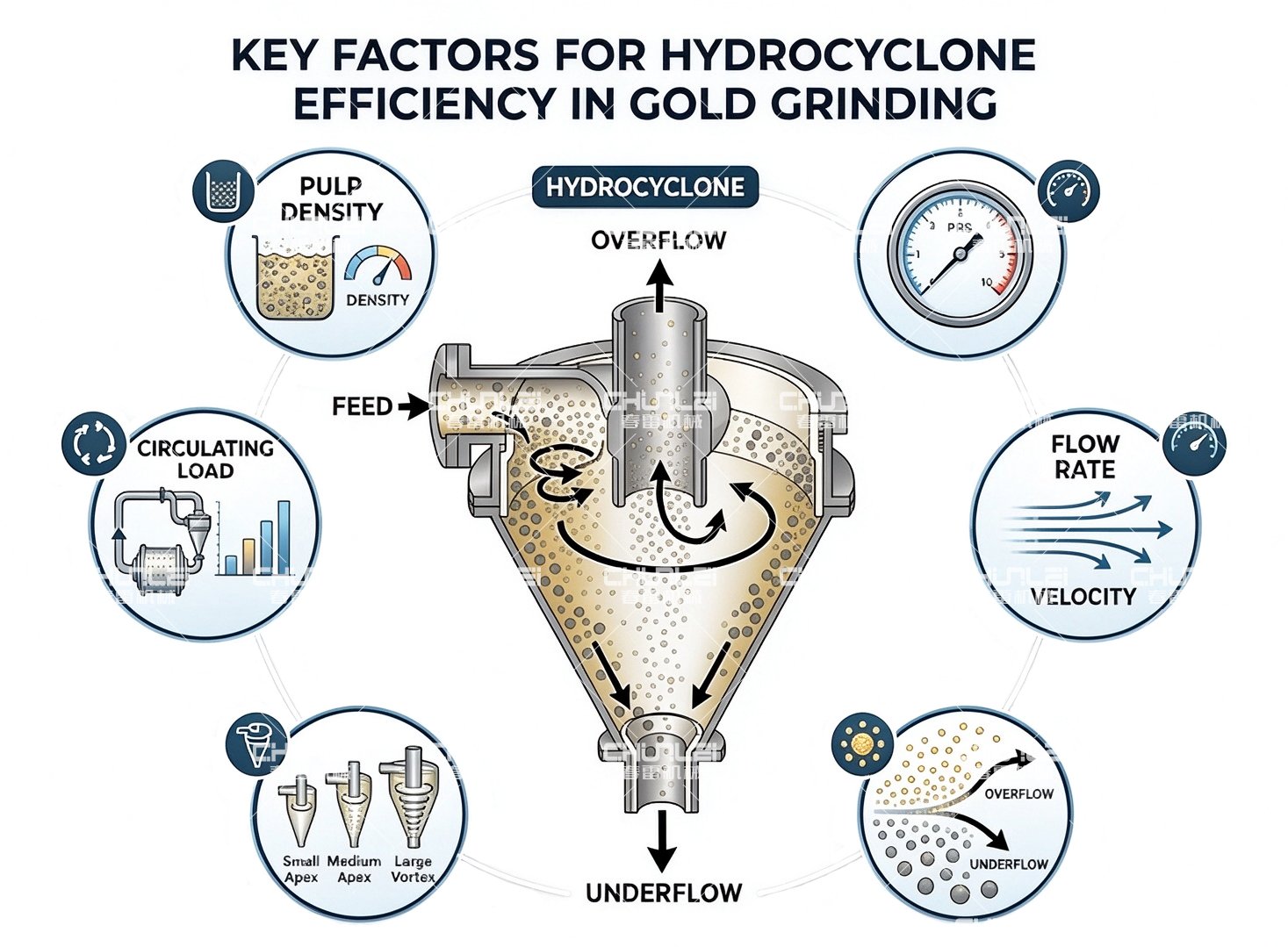
The actual classification performance of a hydrocyclone is influenced by factors such as slurry concentration, flow rate, pressure, particle characteristics, and equipment design. Abnormal operating conditions—such as “roping”—may indicate a deterioration in classification performance, requiring an inspection of feed conditions and cyclone operating parameters.
5 Factors Affecting Classification Efficiency
1. Slurry Density
Slurry density is a critical variable in classification control.
Changes in density alter particle movement within the hydrocyclone, thereby affecting the particle size distribution of both the overflow and underflow.
Therefore, on-site operations must look beyond the hydrocyclone itself and simultaneously monitor:
ore feed + water addition + slurry density
2. Hydrocyclone Feed Pressure
Hydrocyclones require stable feed pressure.
Significant pressure fluctuations can alter the classification size, leading to:
- unstable overflow particle size
- fluctuations in underflow density
- variations in circulating load
- instability in downstream grinding product quality
Consequently, the hydrocyclone feed pump, pump sump level, and make-up water system must be considered as an integrated unit.
3. Feed Size Distribution
The particle size composition of the material entering the classification equipment is also crucial.
If the proportion of coarse particles in the ball mill discharge suddenly increases, the load on the classification equipment will change accordingly.
This demonstrates that:
Classification issues sometimes do not originate from the classification equipment itself, but rather from changes in upstream crushing, grinding, or feeding processes.
4. Hydrocyclone Configuration
Large-scale grinding systems typically employ a hydrocyclone cluster rather than a single unit.
Clusters allow multiple hydrocyclones to process the slurry simultaneously and incorporate standby units to enhance system availability. According to Metso, a hydrocyclone cluster typically comprises the hydrocyclones, a feed distributor, underflow and overflow launders, as well as associated valves and support structures.
5. Ore Characteristics
The properties of different gold ores vary significantly.
Key factors to consider include:
- ore hardness
- mineral density
- gold occurrence/mode of association
- gangue composition
- particle size distribution
- sliming characteristics
- mineral liberation characteristics
Therefore, hydrocyclone parameters cannot simply be copied from another gold processing plant.
Different ore properties may necessitate different classification targets.
Classification and Mineral Liberation
This is the aspect most frequently overlooked in gold ore grinding.
The ultimate goal of grinding is not simply to produce finer particles, but rather:
To achieve sufficient liberation of the target gold minerals from the gangue, enabling them to proceed to the appropriate recovery stage.
If the gold minerals are already adequately liberated at a coarser size fraction, there may be little value in grinding the ore any finer.
Conversely, if the gold is intimately associated with sulfides or gangue, a coarser grinding product may fail to achieve the desired degree of liberation.
Therefore, determining the grinding target should involve a comprehensive approach:
Ore Mineralogy → Liberation Size → Grinding Size → Classification → Recovery Method
Rather than simply applying a standard formula like “80% passing a specific size.”
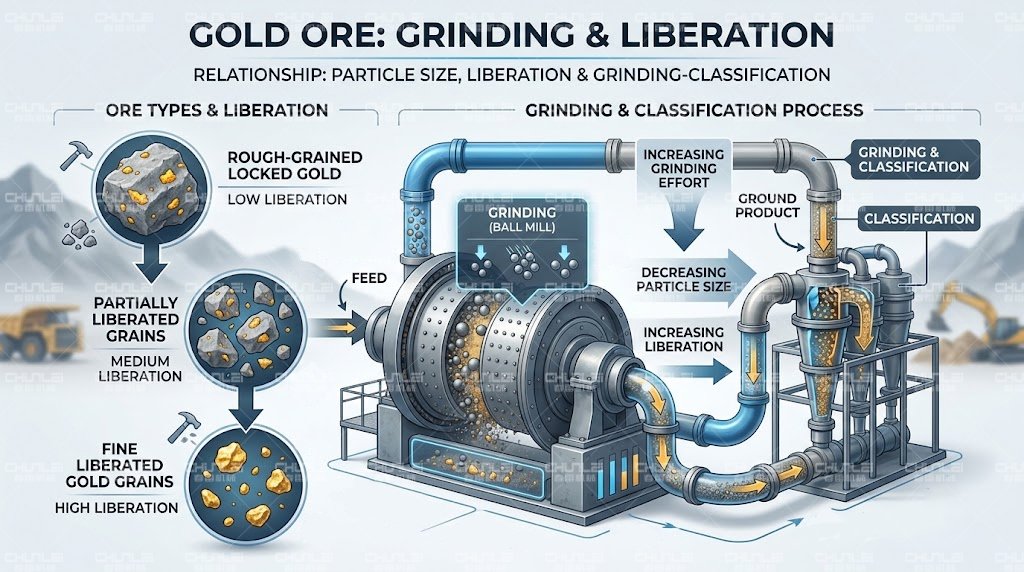
Classification and Over-grinding: Why Poor Classification Makes Grinding More Costly
In closed-circuit gold ore grinding, over-grinding often occurs not because the ball mill is grinding too aggressively, but because the classification process fails to promptly discharge particles that have already reached the target size. If particles meeting the target size are returned to the ball mill along with the coarse fraction, they undergo repeated grinding; this increases the circulating load and energy consumption while generating excessive amounts of fine slime.
| Classification Status | Grinding Circuit Performance | Potential Consequences |
| Coarse classification | Coarse particles enter downstream processes prematurely | Insufficient liberation of gold minerals; downstream recovery is impaired |
| Optimal classification | Sized fines are discharged promptly; coarse particles return to the ball mill | Grinding efficiency and particle size control remain stable |
| Fine classification | Excessive fine particles return to the ball mill | Prone to over-grinding and high circulating loads |
| Fluctuating classification | Overflow particle size varies constantly | Downstream flotation, gravity separation, or leaching processes are affected |
How can one determine if over-grinding is occurring?
Key indicators to monitor on-site include:
- Whether the particle size of the hydrocyclone overflow consistently falls below process specifications;
- Whether the underflow concentration and circulation rate are abnormal;
- Whether the ball mill is consistently operating under high load;
- Whether there is a noticeable increase in fine slimes within the slurry;
- Whether gold recovery rates fail to improve in tandem with increased grinding energy consumption.
In gold ore grinding, the goal is not simply to achieve the finest possible grind, but to attain the optimal particle size for mineral liberation. If classification equipment fails to timely discharge material that meets specifications, the ball mill may repeatedly process particles that have already been sufficiently ground; this ultimately results in a scenario where grinding becomes finer and more costly, yet recovery performance shows no significant improvement.
A Practical Example: Why Classification Can Become the Bottleneck
Assume a gold ore grinding system is designed as follows:
| Item | Example Value |
| Fresh feed | 500 t/d |
| Ball mill | Closed circuit |
| Classifier | Hydrocyclone |
| Target P80 | Approximately 75 μm |
| Grinding circuit | Ball mill + cyclone |
| Downstream | Flotation / Leaching |
The figure of 500 t/d cited here refers only to the fresh feed rate; it does not represent the total volume of circulating material actually processed by the cyclone.
In a closed-circuit grinding operation, coarse particles returned to the ball mill create a circulating load. Since the actual circulating flow rate can be significantly higher than the fresh feed rate, the ball mill, pumps, and cyclones must be sized to accommodate the entire circulating circuit.
A published case study of a grinding circuit—featuring a fresh feed of 500 t/d, a P80 of approximately 75 μm, and a high circulating load—demonstrates that grinding system design cannot rely solely on fresh feed rates but must also account for product particle size and circulating load.
The key takeaway here is:
If cyclone classification efficiency is inadequate, the circulating load may increase, yet the problem might ultimately manifest as “insufficient ball mill output.”
In reality, the true bottleneck may lie within the classification circuit.
How to Optimize a Gold Grinding Classification Circuit?
Optimizing a gold grinding and classification circuit requires looking beyond just ball mill rotational speed or hydrocyclone pressure. The core issues to address are the target grind fineness, which particles require further grinding, and which particles are ready to proceed to the next stage of the recovery process.
Optimization can be approached systematically by following the sequence: Ore Characteristics → Grinding → Classification → Monitoring → Recovery.
| Optimization Stage | Key Focus Areas | Optimization Direction |
| 1. Determine liberation size | Gold occurrence and dissemination size | Determine optimal grind size through ore testing |
| 2. Control feed | Feed rate, particle size, hardness, moisture content | Maintain stable feed to the ball mill; minimize fluctuations |
| 3. Optimize ball mill operation | Mill load, steel ball charge/grading, power, slurry density | Avoid under-grinding and over-grinding |
| 4. Optimize hydrocyclone classification | Feed pressure, density, flow rate, overflow particle size | Ensure timely discharge of sufficiently fine particles; return coarse particles to the mill |
| 5. Control circulating load | Underflow return rate | Prevent excessive material recirculation that increases mill load |
| 6. Monitor product particle size | P80, particle size distribution | Adjust based on requirements for downstream gravity separation, flotation, or leaching |
| 7. Evaluate recovery performance | Gold recovery rate, tailings grade | Assess whether finer grinding actually improves recovery |
Optimizing the grinding and classification process in gold mining is not simply a matter of grinding the ore as finely as possible; rather, it involves ensuring that minerals of the appropriate particle size promptly proceed to the recovery stage, while returning only the coarse particles that genuinely require further grinding to the ball mill.
Common Mistakes in Optimizing Classification
Mistake 1: Assuming finer classification is always better
Blindly pursuing a finer overflow particle size can easily lead to over-grinding, increased generation of fine slimes, and higher energy consumption.
Mistake 2: Focusing only on the ball mill while ignoring classification equipment
Even with high ball mill capacity, if the cyclone’s classification performance is inadequate—resulting in poor control over coarse and fine fractions—the entire grinding circuit may still fail to achieve design objectives.
Mistake 3: Ignoring ore characteristics and directly applying parameters from other operations
Different gold ores vary in hardness, gold occurrence, and liberation size; consequently, the optimal grinding size differs for each.
Mistake 4: Focusing solely on cyclone pressure
Pressure is merely one operational indicator; a comprehensive assessment must also consider feed concentration, flow rate, overflow particle size, and underflow conditions.
Mistake 5: Ignoring circulating load
A large volume of coarse particles repeatedly returning to the ball mill increases the mill’s load. Persistently high circulating loads often indicate a mismatch between the grinding and classification stages.
Mistake 6: Blindly increasing grinding time when particle size is off-spec
Coarser particle size does not necessarily stem from insufficient ball mill capacity; it may also be related to feed rate, slurry concentration, or the condition of the cyclones.
Mistake 7: Focusing only on grinding particle size while ignoring gold recovery rates
A finer P80 does not guarantee improved economic returns. The ultimate assessment must consider the degree of gold liberation, downstream beneficiation performance, and specific energy consumption.
Mistake 8: Ignoring the coordination between upstream and downstream processes
Grinding and classification cannot be optimized in isolation. The final particle size must align with gravity separation, flotation, or leaching processes; otherwise, one might encounter a scenario where “grinding finer yields no significant improvement in recovery.”
FAQ
Q: Why is the discharge particle size of the ball mill consistently unstable?
A: Common causes include insufficient classification efficiency—such as fluctuations in hydrocyclone feed pressure, unstable feed concentration, or improper control of overflow particle size. One should inspect the mill discharge, the cyclone, and the sand return rate simultaneously, rather than adjusting the ball mill alone.
Q: How can one determine if the hydrocyclone’s classification performance is good?
A: Key indicators include the stability of the overflow particle size, the reasonableness of the sand return rate, and whether a significant amount of coarse particles is entering the downstream beneficiation stages. In actual production, assessments should also incorporate results from sieve analysis or particle size testing.
Q: Is a finer classification size always better?
A: No. Excessive fineness increases grinding energy consumption and may lead to over-grinding, while excessive coarseness results in insufficient liberation of valuable minerals. The optimal classification size should be determined based on ore properties, mineral dissemination size, and the downstream beneficiation process.
Q: Why has the sand return rate of the classifier suddenly increased?
A: This may be linked to increased feed volume, changes in slurry concentration, insufficient hydrocyclone operating pressure, or a higher proportion of coarse particles. Persistently high sand return rates increase the ball mill’s circulating load and reduce effective processing capacity.
Q: How can over-grinding be minimized during gold ore grinding?
A: The key is to promptly separate the appropriately sized fine particles from the grinding circuit, preventing material that has already reached the target size from re-entering the ball mill. Additionally, hydrocyclone overflow particle size and the sand return circulation rate must be controlled.
Q: How does hydrocyclone pressure affect classification?
A: Pressure influences the internal flow field and the classification particle size. Excessively low pressure may lead to inadequate classification, while excessively high pressure can increase fine-particle entrainment or equipment wear; therefore, adjustments should be made based on cyclone specifications and actual slurry conditions.
Q: What impact does low classification efficiency have on gold recovery rates?
A: Low classification efficiency can allow coarse particles to pass into downstream processing, resulting in insufficient liberation of some gold minerals; conversely, if grinding is prolonged to compensate for poor liberation, over-grinding often occurs. Therefore, classification indirectly affects the performance of downstream separation processes.
Q: How can the matching of the ball mill and hydrocyclone be optimized?
A: Cyclone selection should not be based solely on the ball mill’s throughput. It is essential to comprehensively consider factors such as feed particle size, slurry density, target overflow particle size, circulating load, and the requirements of downstream gravity separation, flotation, or leaching to establish a stable closed-circuit grinding and classification loop.
Q: Why do coarse particles sometimes report to the overflow during classification?
A: This is usually related to the cyclone’s structural parameters, feed pressure, slurry density, and the particle size distribution of the ore. Coarse particles in the overflow indicate suboptimal classification separation; the cyclone’s operating conditions should be inspected rather than simply increasing the ball mill’s power.
Q: What should be prioritized when optimizing gold ore grinding and classification?
A: It is recommended to first define the target particle size and ore liberation requirements, then examine the feed rate, slurry density, cyclone pressure, overflow particle size, and underflow (sand return) volume. Identifying the root cause of classification anomalies before adjusting parameters is more effective than blindly increasing grinding time or equipment specifications.
Conclusion
Gold grinding efficiency depends on more than just the ball mill. While the ball mill handles the grinding, the classification stage determines which particles require further grinding and which proceed to the next recovery stage. An optimized gold grinding circuit requires a well-matched configuration of ball mills, hydrocyclones, pump sumps, and feed systems—tailored to ore characteristics, liberation size, target fineness, and the downstream recovery process—to minimize over-grinding and circulating loads. If you are unsure about the best grinding and classification configuration for your gold ore, please share details regarding ore properties, processing capacity, feed size, and target fineness; CHUNLEI can help you analyze and select the most suitable solution.
Latest News

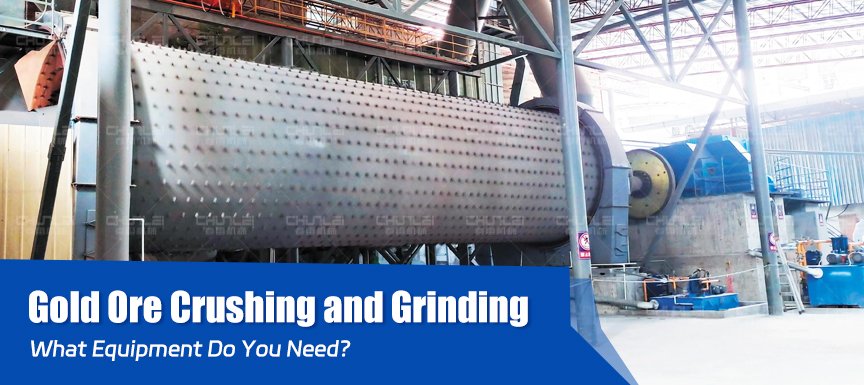
Gold Ore Crushing and Grinding: What Equipment Do You Need?
800When designing a gold ore processing line, my clients often ask which crushers and mills to purchase. However, the equipment selection should actually be based on a thorough understanding of the ore characteristics. Issues in many projects do…
-
How to Select the Right Gold Processing Plant for Your Ore
800When selecting a gold processing plant, simply assuming that a full suite of equipment is all that is needed can lead to issues such as low recovery rates, high energy consumption, and failure to meet production targets.Different ores require d…
-
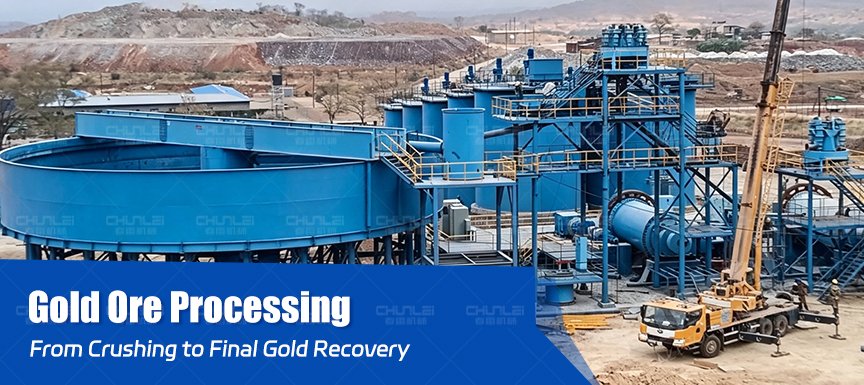
Gold Ore Processing: From Crushing to Final Gold Recovery
800A gold processing plant is not merely a simple assembly of crushers, ball mills, and gold recovery equipment; rather, the goal is to determine the optimal process flow based on factors such as mineral composition, gold particle size,…
-
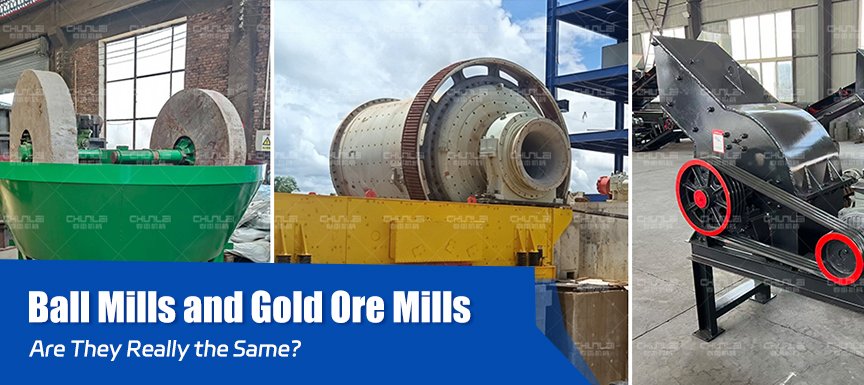
Ball Mills and Gold Ore Mills: Are They Really the Same?
800When searching for gold ore grinding equipment, customers often encounter various terms such as “Ball Mill,” “Gold Mill,” “Gold Milling Machine,” and “Gold Ore Grinding Machine.” Many buyers assume that a “Gold Mill” is a specialized mill de…
loading…
已经是到最后一篇内容了!