 Chunlei Mining Machinery

The Role of Cyanide in Gold Mining: Process Flow and Mineral Processing Management
In gold ore processing, cyanide is a commonly used leaching agent; it directly influences the gold leaching rate, overall recovery, and production costs. However, cyanide leaching is not merely a matter of adding chemicals—factors such as ore characteristics, the fineness of the grind, and the dosage of the leaching agent all play critical roles in the final outcome.
This article explores cyanide leaching from a practical mineral processing perspective, covering the underlying principles, standard process flows, equipment selection, factors affecting recovery rates, and environmental compliance requirements—all to assist gold mining enterprises in making more informed decisions regarding their leaching strategies.
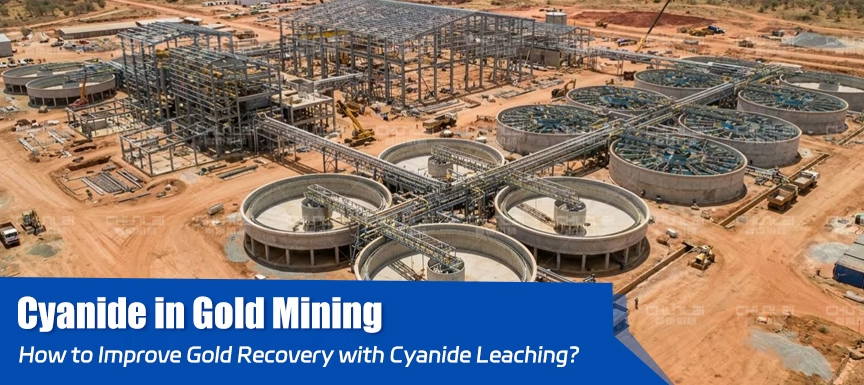
What Is Cyanide in Gold Mining?
In gold mining, cyanide refers to a class of chemical agents used to extract gold. Its primary function is to dissolve gold from ore—bringing it into a liquid solution—so that it can be recovered through subsequent processing steps.
Within the gold ore processing industry, cyanide is a widely used leaching agent, particularly effective for treating ores with low gold content or very fine gold particles.
What Is Cyanide?
Cyanides are compounds that contain the cyanide ion (CN⁻). Those commonly used in gold mining include:
- Sodium Cyanide (NaCN): The most prevalent leaching agent for gold.
- Potassium Cyanide (KCN): Also capable of leaching gold, though it is used less frequently in industrial applications.
Cyanide reacts with gold to form a complex, converting gold—which is otherwise insoluble in water—into a soluble gold-cyanide complex. This process enables the separation of gold from other materials present in the ore.
How Is Gold Extracted Using Cyanide?
The process generally consists of the following steps:
- Crushing and Grinding: The gold ore is crushed and ground into a fine state to fully expose the gold-bearing minerals.
- Cyanide Leaching: Under controlled conditions, the ore is brought into contact with a cyanide solution, causing the gold to gradually dissolve.
- Gold Recovery: Gold is recovered from the solution using methods such as activated carbon adsorption (CIP/CIL) or zinc dust displacement (cementation).
- Smelting and Refining: The recovered gold-bearing material undergoes further processing to produce gold ingots.
It should be noted that cyanide is not a universal solution for all gold ore processing challenges. For instance, in cases where gold is encapsulated within sulfides, contained in carbonaceous “preg-robbing” ores, or found in complex polymetallic ores, direct cyanidation may not yield optimal recovery results.
Why Is Cyanide Used in Gold Mining?
The primary reason is that cyanide possesses a strong ability to form complexes with gold. Under appropriate ore conditions, it enables high gold leaching efficiency, and a mature industrial system for production and recovery has already been established.
1. High Gold Extraction Efficiency
For “free-milling” gold ores—where gold particles are well-liberated and the ore contains minimal “preg-robbing” components or cyanide-consuming substances—cyanide leaching typically yields excellent results.
However, it should be noted that leaching performance depends on ore characteristics, the mode of gold occurrence, the degree of liberation, and process conditions; it cannot be assumed that all gold ores will achieve the same recovery rates.
2. Suitable for Various Gold Ore Processing Methods
Cyanide leaching can be integrated with diverse ore-processing approaches:
- Leaching of ore pulp following grinding.
- Heap leaching for low-grade ores.
- Leaching of concentrates obtained via gravity separation or flotation.
- Recovery of gold in combination with activated carbon adsorption systems.
3. Mature Industrial Recovery Technology
Cyanide leaching can be combined with gold recovery technologies such as CIL (Carbon-in-Leach), CIP (Carbon-in-Pulp), and the Merrill-Crowe process, forming well-established production workflows.
4. Limitations of Cyanide Leaching
Cyanide also has significant limitations:
| Advantages | Limitations |
| Effective at leaching liberated gold | May be less effective for gold encapsulated within sulfide minerals |
| Extensive experience in industrial application | Reagents possess high toxicity |
| Compatible with various gold recovery technologies | Presence of metals such as copper can increase cyanide consumption |
| Suitable for certain low-grade gold ores | “Preg-robbing” carbon can reduce gold recovery rates |
| Process equipment is relatively mature | Requires robust systems for tailings detoxification (cyanide removal) and water management |
Therefore, when selecting a cyanidation process, one should not look solely at the gold grade; it is also necessary to analyze the mineral composition of the ore, the grain size and distribution of the gold, and the presence of minerals that may consume cyanide.
5. Differences between cyanide and other leaching agents in gold mining
| Comparison Criteria | Cyanide Leaching | Non-Cyanide Leaching |
| Common Reagents | Sodium cyanide | Thiosulfates, etc. |
| Gold Extraction Efficiency | Well-established process; relatively high efficiency | Depends on ore characteristics and the specific process |
| Operational Experience | Widely used in industrial applications | Some processes are still under development |
| Safety Requirements | Highly toxic; requires strict management | Risk assessment necessary based on the specific properties of the reagents |
| Applicability | Suitable for a wide range of gold ores | Requires ore-specific testing |
How Does Gold Cyanidation Work?
Gold cyanidation is a common hydrometallurgical process for gold extraction. It primarily utilizes a cyanide solution to dissolve gold from ore, followed by recovery methods such as adsorption onto activated carbon or displacement using zinc dust.
The core principle is as follows: in the presence of oxygen and under alkaline conditions, gold undergoes a complexation reaction with cyanide to form a water-soluble gold-cyanide complex, thereby separating the gold from the ore.
Key Process Steps in Gold Cyanidation
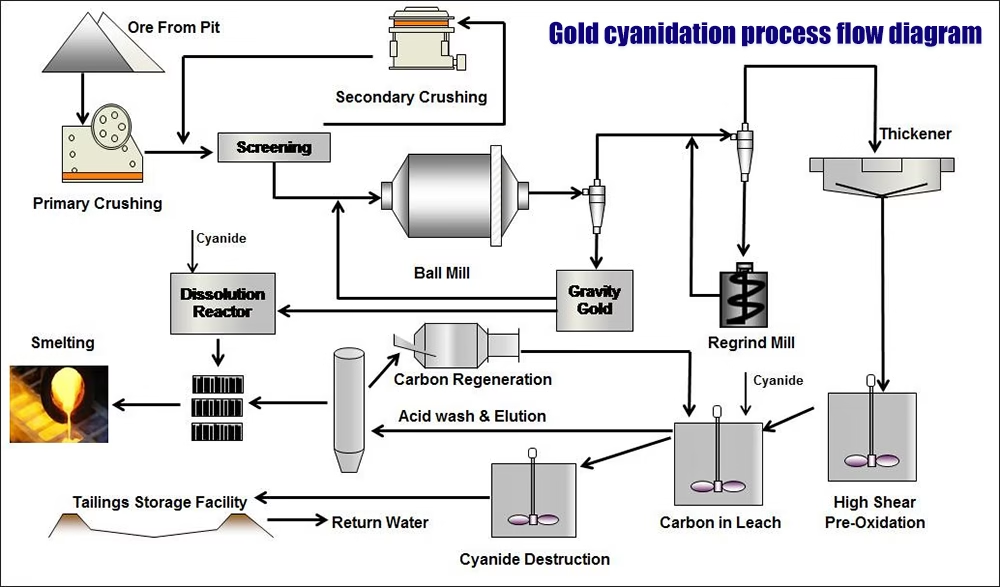
Gold cyanidation typically involves the following main stages:
- Crushing and Grinding: The gold-bearing ore is crushed and finely ground to fully liberate the gold minerals and increase the surface area available for contact with the leaching solution.
- Leaching: Under controlled alkaline conditions, the gold in the ore reacts with the cyanide solution to form a soluble gold-cyanide complex.
- Solid-Liquid Separation: The gold-bearing pregnant solution is separated from the leached ore residue (tailings).
- Gold Recovery: Gold is recovered from the solution using methods such as adsorption onto activated carbon (CIP/CIL) or displacement with zinc dust (the Merrill-Crowe process).
- Smelting: The recovered gold-bearing material undergoes further processing to produce gold ingots.
Key Factors Affecting the Efficiency of Gold Cyanidation
| Influencing factors | Effect on leaching effect |
| Gold ore dissociation degree | The more fully exposed the gold particles are, the more conducive they are to leaching. |
| Cyanide concentration | Affects the complexation and dissolution rate of gold |
| Dissolved oxygen content | Insufficient oxygen reduces gold dissolution efficiency |
| Slurry pH value | Affects cyanide stability and leaching safety |
| Leaching time | Affects the degree of gold leaching |
| Ore properties | Associated minerals such as copper and sulfide may consume chemicals or affect leaching |
Main Types of Gold Cyanidation Processes
Given the variations in ore grade, mineral composition, grain size distribution, and processing scale among different gold deposits, there is no single, universal cyanidation process.
Common industrial methods currently in use include Carbon-in-Leach (CIL), Carbon-in-Pulp (CIP), Heap Leaching, and the Merrill-Crowe process.
1. Carbon-in-Leach (CIL)
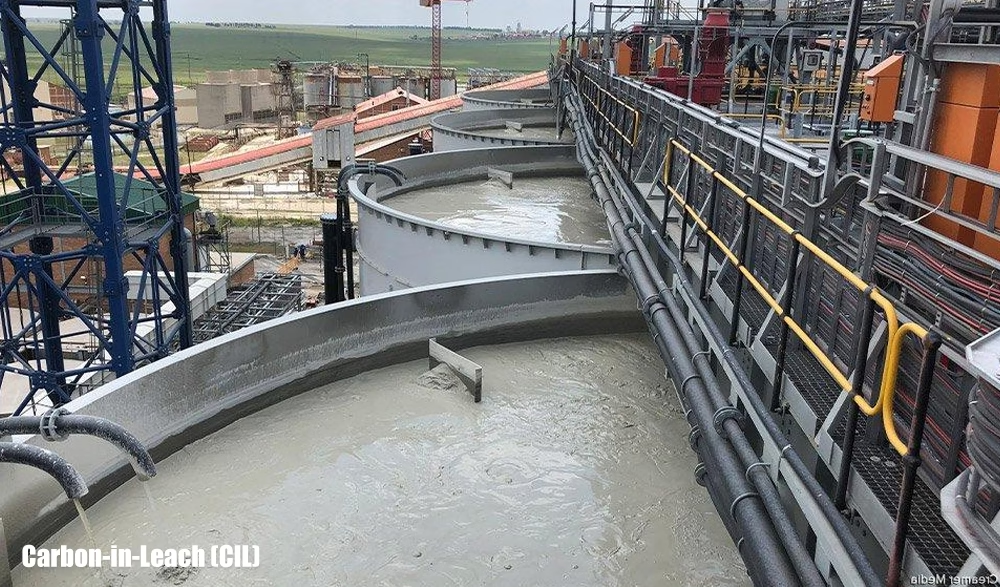
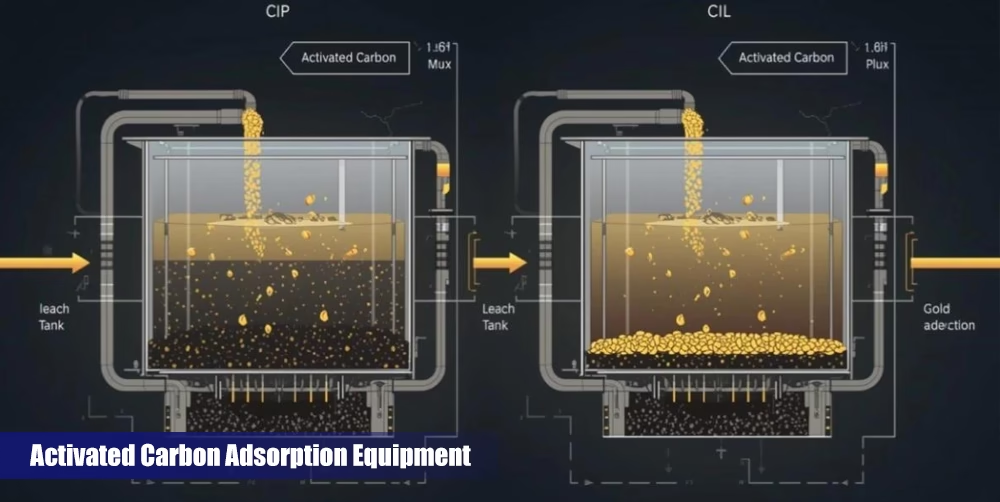
CIL is a process that integrates cyanidation leaching and activated carbon adsorption within the same series of equipment.
During the leaching process, gold dissolves into the solution and is simultaneously adsorbed onto activated carbon. This method is suitable for gold ores that have been tested and verified as compatible with carbon-adsorption-based recovery.
Key Features:
- Leaching and adsorption occur within the same system.
- The process is compact, with equipment concentrated in a single area.
- Capable of handling a wide range of suitable ore slurries.
- Requires careful management of the ore’s “preg-robbing” characteristics (the tendency of the ore to re-adsorb dissolved gold) and the activated carbon.
2. Carbon-in-Pulp (CIP)
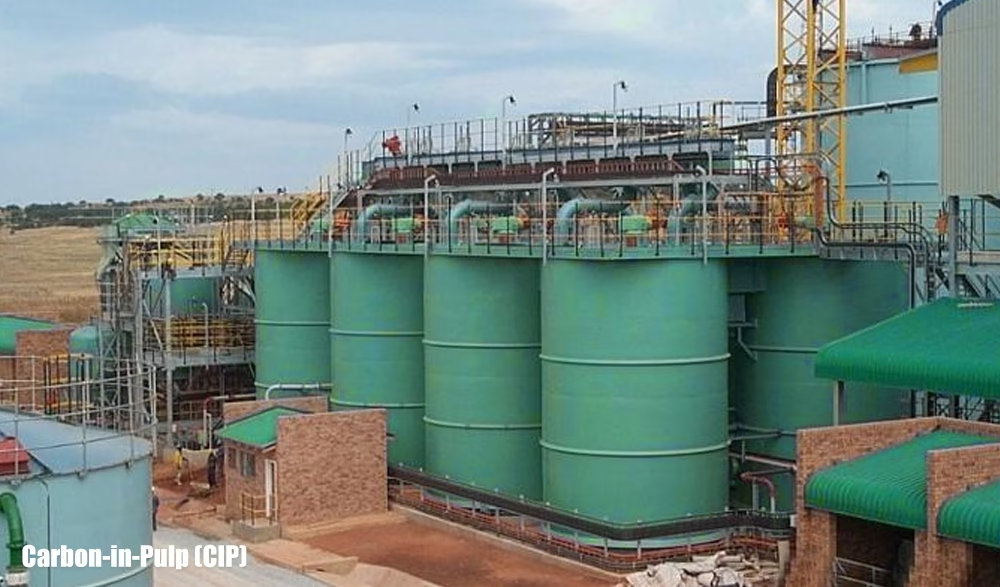
The primary difference between CIP and CIL lies in the equipment configuration for leaching and adsorption.
In the CIP process, cyanidation leaching is typically completed first, after which the gold-bearing slurry is transferred to a separate activated carbon adsorption system.
Key Features:
- Leaching and adsorption are conducted as distinct, separate stages.
- Allows for independent management of the leaching and adsorption phases.
- Suitable for process conditions where leaching can be completed prior to carbon adsorption.
3. Heap Leaching
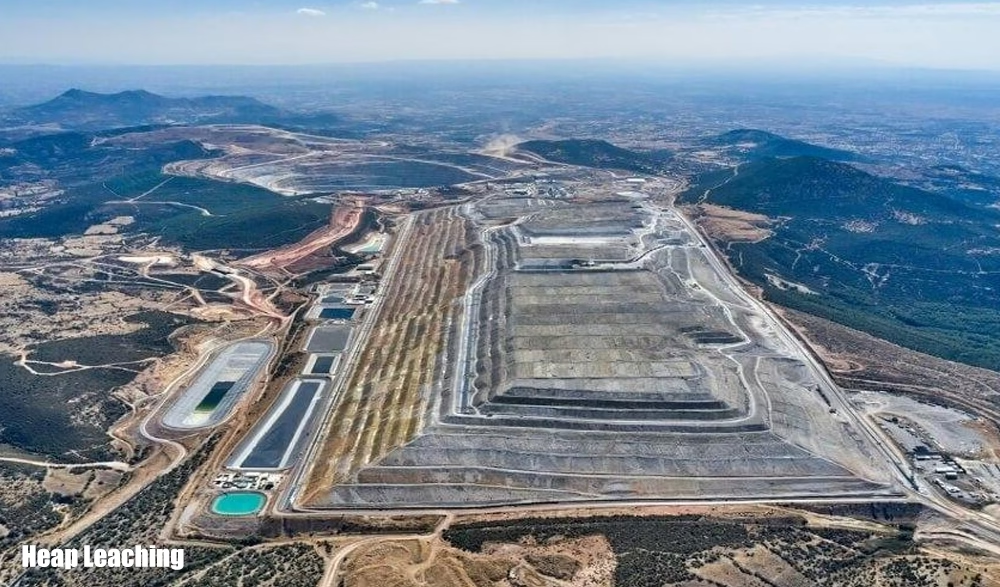
Heap leaching is primarily used for certain low-grade gold ores that possess suitable permeability and leaching characteristics.
Unlike tank leaching—which requires the ore to be finely ground—heap leaching involves placing crushed (and potentially pre-treated) ore onto a specially prepared, impermeable pad. A dedicated solution circulation system is then used to leach the gold and recover it from the pregnant solution.
Key Features:
- Reduces capital investment by eliminating the need for fine grinding.
- Suitable for low-grade ores that have been verified through testing.
- Typically involves a longer processing cycle.
- Requires strict control over heap permeability, site impermeability (to prevent leakage), and the efficiency of the solution collection system.
4. Merrill-Crowe Process (Zinc Precipitation)
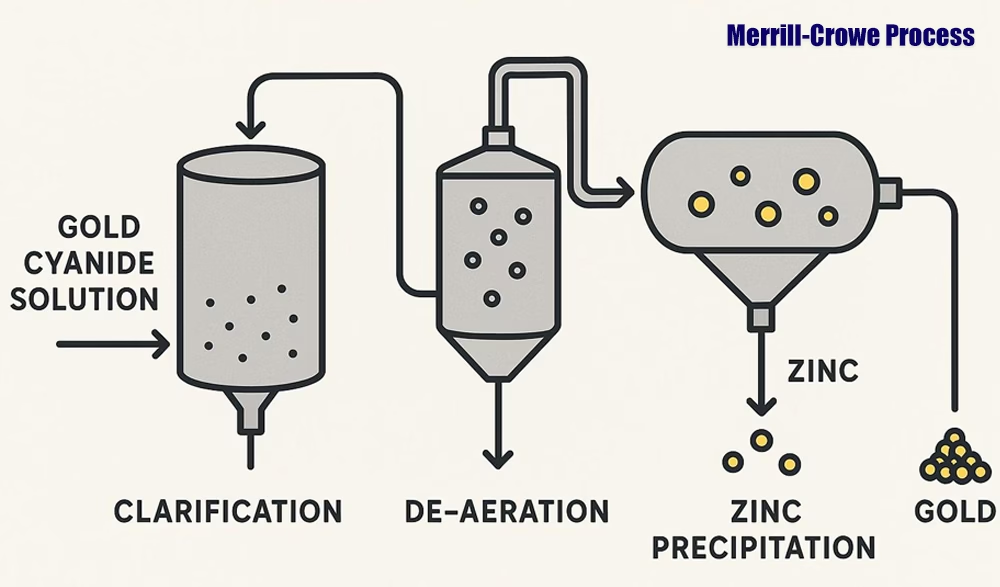
The Merrill-Crowe process is a technique for recovering precious metals from clarified, gold-bearing cyanide solutions.
It typically involves several stages: solution clarification, deoxygenation, zinc precipitation, and subsequent solid-liquid separation.
Key features:
- Recovers gold from solution via zinc precipitation.
- Suitable for gold-bearing solution systems that have been verified through testing and process design.
- Requires the installation of appropriate equipment for solution clarification and metal recovery.
- Differs from the activated carbon adsorption route in terms of applicable conditions and equipment requirements.
5. Comparison of Gold Cyanidation Methods
| Process Type | Core Principle | Applicable Conditions | Key Characteristics |
| CIL (Carbon-in-Leach) | Leaching and activated carbon adsorption occur simultaneously | Suitable for gold-bearing ore slurries amenable to carbon adsorption | Compact process flow |
| CIP (Carbon-in-Pulp) | Leaching followed by activated carbon adsorption | Suitable for ores requiring staged leaching and adsorption | Relatively independent process stages |
| Heap Leaching | Leaching of ore stacked in heaps using a solvent | Suitable for certain low-grade ores amenable to heap leaching | Minimal requirement for fine grinding |
| Merrill-Crowe | Recovery of gold from gold-bearing solutions via zinc displacement | Suitable for clarified gold-bearing solutions | Relies on solution-based displacement for recovery |
What factors influence the gold recovery rate?
In actual gold ore processing, even when the same cyanidation leaching process is employed, gold recovery rates can vary significantly from one mine to another.
This is because the mineral composition of the gold ore, the grain size and distribution of the gold, the fineness of the grind, and the leaching conditions all affect the dissolution and recovery of gold.
1. Gold Ore Mineral Composition
The characteristics of the ore are a key factor in determining the effectiveness of the cyanidation leaching process.
| Ore type | Main features | Impact on cyanide leaching |
| Easy to process gold deposits | Gold particles are easier to dissociate | Usually suitable for direct cyanide testing |
| sulfide gold deposits | Contains pyrite, arsenopyrite, etc. | Gold may be coated in sulfides |
| Copper-bearing gold ore | Contains copper minerals such as chalcopyrite and malachite | May increase cyanide consumption |
| Robbery gold mine | Contains natural organic carbon and other gold-stealing components | Possible re-adsorption of dissolved gold |
| Complex polymetallic gold deposits | Contains a variety of associated metal minerals | Selectivity and drug consumption need to be considered comprehensively |
Among them, copper-containing ores and gold-bearing ores require special attention.
Copper minerals may react with cyanide to form different copper-cyanide complexes, which increases the consumption of chemicals; gold-robbing carbon may adsorb dissolved gold, resulting in a decrease in recovery rate.
2. Gold Particle Size and Liberation
The gold embedded particle size directly affects the front-end grinding plan.
- Coarse-grained, dissociated gold: pre-recovery can be assessed and re-selected.
- Fine-grained, dissociated gold: It is necessary to combine grinding and leaching tests to determine the suitable conditions.
- Micro-grained, gold-coated: further fine grinding or pre-treatment may be required.
It should be noted that grinding ore is not as fine as possible.
Excessive grinding may increase energy consumption, equipment wear and sludge production, and may also affect subsequent solid-liquid separation. Therefore, reasonable grinding indicators should be determined through particle size analysis of grinding products, mineral dissociation analysis and leaching tests.
3. Dissolved Oxygen
Oxygen is an important factor participating in the gold cyanide dissolution reaction.
In actual production, the dissolved oxygen conditions in the slurry will affect the leaching kinetics of gold. If the oxygen supply is insufficient, leaching efficiency may be affected even if other conditions are suitable.
Therefore, it is necessary to evaluate the oxygen mass transfer effect based on the characteristics of the slurry, mixing conditions and equipment operating status, rather than simply increasing the dosage of the agent.
4. Pulp Conditions and Chemical Control
Slurry conditions are directly related to the stability of cyanide leaching.
Mainly need attention:
- Slurry solid content and fluidity.
- Stability of slurry in alkaline environment.
- Monitoring of cyanide-related indicators.
- Dissolved oxygen and leaching process changes.
- The influence of associated metals such as copper and iron in the solution.
In particular, it is important to note that cyanide may form highly toxic HCN gas under acidic conditions, so industrial production must establish strict alkalinity control, gas monitoring and emergency management systems.
5. Leaching Time
Leaching kinetics vary from gold mine to gold mine.
For easily dissociated gold ores, the leaching process may be relatively fast; for ores with fine-grained gold, complex sulfide-coated gold, or slower leaching kinetics, more comprehensive experimental evaluation is required.
Extending the leaching time may not necessarily continuously increase the recovery rate, and may also increase equipment occupation and production costs.
What equipment is needed for gold cyanide leaching?
The cyanide leaching process requires not only leaching equipment, but also front-end crushing and grinding equipment, classification equipment, gold recovery equipment and tailings treatment equipment.
Whether the equipment matching is reasonable will directly affect production capacity, leaching effect, energy consumption and final recovery rate.
1. Crushing Equipment
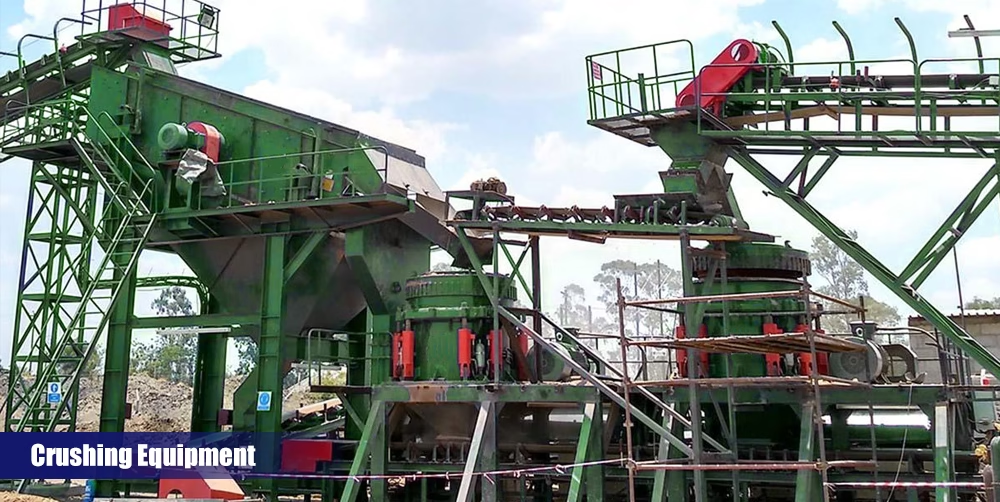
Crushing equipment is mainly used to reduce the particle size of raw ore to prepare for subsequent grinding and leaching.
Common equipment includes:
- Jaw Crusher
- Cone Crusher
- Impact Crusher (impact crusher, depending on the nature of the ore and process needs)
Equipment selection needs to consider the maximum particle size of raw ore, ore hardness, processing capacity and target crushing product particle size.
2. Grinding and Classification Equipment
The main purpose of grinding is to fully dissociate gold minerals and increase the chance of contact between gold and leachate.
Common equipment:
Grinding equipment needs to be matched according to ore hardness, processing capacity, target particle size and classification efficiency.
3. Leaching Tanks
The leaching tank is an important equipment in processes such as CIL and CIP.
Its main function is to provide stable slurry mixing and gas-liquid-solid contact conditions, so that the gold leaching and subsequent recovery processes can be carried out continuously.
When selecting equipment, you need to consider:
- Single tank and total system effective volume.
- Slurry processing capacity.
- Stirring and mixing effects.
- Equipment corrosion and wear resistance.
- Process operation and maintenance requirements.
4. Activated Carbon Adsorption Equipment
Activated carbon adsorption systems are mainly used to recover gold from gold-containing solutions.
Its operating effect is related to activated carbon performance, adsorption conditions, slurry properties and equipment operating status.
In the CIL and CIP processes, activated carbon needs to be properly managed to avoid problems such as loss of carbon powder, reduction in adsorption capacity, and insufficient separation of carbon and slurry.
5. Gold Recovery and Tailings Treatment Equipment
Gold recovery systems may include:
- Elution Equipment
- Electrowinning Cell
- Filter Press
- Smelting Furnace
- Tailings Detoxification System
Equipment configurations for different projects depend on whether activated carbon adsorption or zinc replacement routes are used, as well as tailings treatment and discharge requirements.
6. Gold Cyanidation Equipment Matching Table
| Process link | Main equipment | Core role | Key selection indicators |
| Broken | Jaw crusher, cone crusher | Reduce raw ore particle size | Processing capacity, crushing ratio |
| Grinding | Ball mill, rod mill | Increase mineral dissociation | Grinding fineness and energy consumption |
| Grading | Hydrocyclone, vibrating screen | Control product particle size | Grading efficiency |
| Leaching | Mechanical stirring leaching tank | Realize the dissolution of gold | Effective volume, mixing effect |
| Adsorption | Activated carbon adsorption equipment | Recovery of gold from solution | Adsorption performance, carbon loss |
| Gold recycling | Desorption and electrowinning equipment | Form gold-containing products | Recycling efficiency and processing capacity |
| Tailings treatment | Decyanization and solid-liquid separation equipment | Controlling Residual Cyanide Risks | Processing capabilities and compliance requirements |
Equipment Selection Recommendations: Do not base equipment selection solely on the design throughput. Factors such as grinding fineness, pulp rheology, leaching duration, activated carbon adsorption conditions, and tailings management capacity must all be integrated into the overall design.
Cyanide Consumption and Production Costs
In the cyanidation leaching process for gold ores, cyanide consumption directly impacts processing costs and economic performance. Minerals such as copper, sulfides, iron, and other associated components can react with cyanide, leading to increased reagent consumption. If an ore contains a high proportion of cyanide-consuming constituents, production costs may rise—even if the gold grade is high.
Strategies to reduce cyanide consumption include:
- Optimizing grinding fineness: Enhance the liberation of gold-bearing minerals while avoiding over-grinding to minimize unnecessary reagent consumption.
- Controlling pulp pH: Maintain an appropriate alkaline environment through the controlled addition of lime to reduce cyanide loss.
- Pre-treating cyanide-consuming minerals: Depending on the ore characteristics, consider flotation or other pre-treatment processes to mitigate the consumption of cyanide by minerals such as copper and sulfides.
- Optimizing leaching conditions: Adjust cyanide concentration, leaching duration, and pulp density based on experimental test results.
- Strengthening reagent management: Regularly monitor cyanide concentrations to avoid excessive dosing and improve reagent utilization efficiency.
Key Takeaway: Cyanide consumption is not solely dependent on gold grade; it is closely linked to ore characteristics, the composition of associated minerals, grinding fineness, and the specific leaching process employed. Processing plants should determine optimal reagent dosages through ore testing, ensuring high gold recovery rates while simultaneously minimizing reagent costs and the overall production cost per tonne of ore.
Gold cyanide leaching FAQ
Q: What is gold cyanide leaching?
A: Gold cyanide leaching is a common gold extraction process. It mainly uses cyanide solution to chemically react with the gold in the ore, so that the gold enters the solution in the form of a soluble complex, and then the gold is recovered through activated carbon adsorption or zinc powder replacement.
Q: Which gold mines are suitable for cyanide leaching process?
A: Cyanide leaching is suitable for ores with fine gold mineral dissociation, complete dissociation of gold and gangue minerals, and gold can effectively react with cyanide solution. For refractory gold ores containing sulfur, arsenic or carbonaceous, it is necessary to conduct ore property analysis and mineral processing tests before determining the appropriate process.
Q: What are the common methods for cyanide leaching of gold?
A: Common methods mainly include stirred cyanide leaching, heap leaching and percolation leaching. Among them, stirring leaching is suitable for fine-grained ores that have been ground; heap leaching is usually used for low-grade ores suitable for infiltration; percolation leaching requires ores with good permeability.
Q: Why does gold need to be ground before cyanide leaching?
A: The main purpose of grinding is to fully dissociate gold minerals from gangue minerals and increase the chance of contact between gold and leachate. If the grinding particle size is too coarse, part of the gold may be wrapped, affecting the leaching effect; if the grinding particle size is too fine, it may increase energy consumption and difficulty in sludge treatment.
Q: What factors will affect the gold cyanide leaching rate?
A: The main influencing factors include ore properties, gold mineral particle size, degree of dissociation, slurry conditions, leaching time and related chemical conditions in the solution. In addition, associated components such as copper, sulfide and carbonaceous matter may also affect the cyanide leaching effect.
Q: Why is the gold cyanide leaching rate low?
A: The low leaching rate may be related to factors such as insufficient dissociation of gold minerals, gold being wrapped by sulfides or other minerals, the presence of gold-robbing components in the ore, and inappropriate leaching conditions. It is recommended to conduct ore testing and mineralogical analysis first to find out the main reasons affecting leaching.
Q: How to recover gold after gold cyanide leaching?
A: Common gold recovery methods include activated carbon adsorption and zinc powder replacement. Activated carbon adsorption is mainly used in carbon slurry process (CIP) and carbon leaching process (CIL); zinc powder replacement is often used in gold mud recovery process. The specific selection needs to be determined based on the properties of the slurry, solution conditions and production scale.
Q: What main equipment is needed for gold cyanide leaching?
A: Common equipment includes crushers, ball mills, classifiers, thickeners, leaching mixing tanks, activated carbon adsorption equipment, filtration equipment and tailings treatment equipment, etc. Equipment configuration needs to be matched according to ore properties, processing capacity, process flow and automation requirements.
Q: How to reduce production costs during the gold cyanide leaching process?
A: To reduce costs, we cannot only focus on chemical consumption, but also need to comprehensively consider grinding energy consumption, leaching efficiency, equipment operation stability and gold recovery rate. Optimizing the process flow, rationally configuring equipment, and strengthening the management of chemicals and tailings through ore property testing can reduce unnecessary production costs.
Q: What safety issues need to be paid attention to during the gold cyanide leaching process?
A: Cyanide is highly toxic. During the production process, storage, transportation, preparation and use must be strictly controlled, and professional protection, ventilation, leakage monitoring and emergency treatment facilities must be equipped. At the same time, contact between cyanide and acids must be prevented to avoid the generation of highly toxic hydrogen cyanide gas, and wastewater and tailings must be treated harmlessly in accordance with local regulations. Relevant operations should be performed by trained professionals.
Conclusion
Cyanide leaching is a commonly used method in gold mineral processing, but not all gold mines can directly use the cyanide process. The specific choice depends on the nature of the ore, the particle size of the gold and the dissociation situation, and then decide whether to first use gravity separation, flotation, or directly use CIL, CIP or heap leaching process.
If your gold mine has problems such as low recovery rate, high cyanide consumption, or gold running out of the tailings, you can contact CHUNLEI engineers. We will help you recommend appropriate mineral processing processes and equipment configurations based on the ore conditions to avoid detours and reduce investment risks.
Latest News

How should you choose equipment for pre-desliming in gravity separation?
800Many operators struggle with low recovery rates when using shaking tables, sluice boxes, or centrifugal concentrators—even when the equipment itself is high-quality—only to find that valuable minerals are being lost in the tailings. The root ca…
-
How can the mineral processing method be preliminarily determined based on the appearance of tin ore?
800When you receive a batch of tin ore samples, what should you look at first? Is it the color, the particle size, or the clay content? While these visual characteristics can provide some initial insights, relying solely on the naked eye is not …
-
Which types of tin ore are the most difficult to process?
800Not all tin ores are easy to process. For some alluvial (placer) tin deposits, a simple combination of washing, screening, and gravity separation is often sufficient to produce a high-quality tin concentrate. Primary (lode) tin deposits, howeve…
-
How can the recovery rate of tin from high-sludge oxidized alluvial tin ores be effectively improved?
800When dealing with oxidized alluvial tin ores containing high levels of sludge (fine clay/silt), many processing plants initially consider adding more jigs or shaking tables, or increasing the processing capacity of their existing equipment. I…
loading…
已经是到最后一篇内容了!