 Chunlei Mining Machinery

Small-Scale Gold Processing Plant: A Complete Guide to Equipment and Processes
Setting up a small-scale gold processing plant sounds simple, but choosing the wrong equipment can lead to increasingly higher operating costs and negatively impact gold recovery rates.
Many clients initially focus only on capacity, equipment prices, or the number of machines needed. However, based on our experience, before selecting equipment, you must first understand: What kind of gold ore are you processing? In what form does the gold primarily exist?
If the gold particles in the ore are coarse, they can mostly be recovered through gravity separation; if the gold particles are fine and encased in sulfides, grinding, flotation, and other processes may be necessary.
Ultimately, a small-scale gold processing plant isn’t about having more equipment; it’s about understanding the ore first, determining the process, and then selecting the right equipment. This will help you avoid pitfalls and ensure your investment is used effectively.
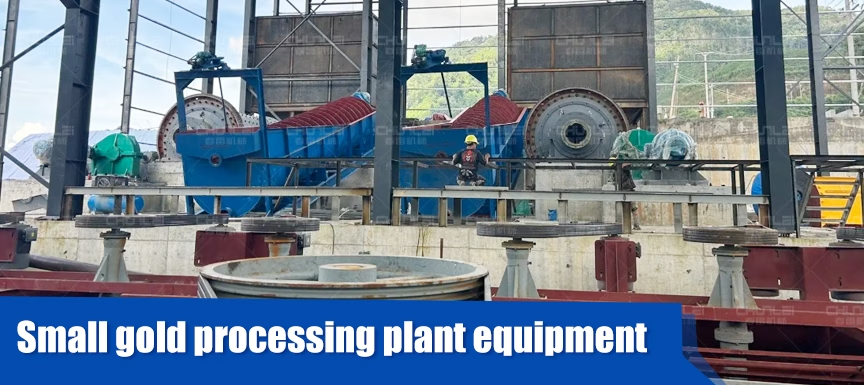
Understanding Ore Properties: What to Do Before Selecting Equipment?
This is a step often overlooked in small-scale gold processing projects.
Even with the same gold ore, different mines can have vastly different hardness, gold grade, gold particle size, and mineral composition. Inappropriate equipment selection, even if the entire production line operates normally, can lead to problems such as high grinding costs, high gold content in tailings, and unsatisfactory recovery rates.
Before finalizing equipment selection, it is recommended to focus on checking the following indicators:
| Testing Items | Main Functions |
| Raw Ore Gold Grade (g/t) | Determines the gold content and economic value of the ore |
| Ore Hardness | Evaluates crushing and grinding equipment and energy consumption |
| Gold Particle Size | Determines the applicability of gravity separation |
| Gold Occurrence State | Determines the ease of gold liberation |
| Mineral Composition | Identifies sulfides and other interfering minerals |
| Grinding Particle Size | Determines the appropriate grinding fineness |
| Mud Content | Determines whether washing or desliming is necessary |
Do not base your entire production line decisions solely on the appearance of the ore or the results of a small-scale manual panning. It is best to first conduct representative sampling, testing, mineralogical analysis, and ore beneficiation trials.
What equipment is needed for a small gold processing plant?
A small gold processing plant doesn’t necessarily need the full set of equipment used in large mines. The key is to configure the appropriate equipment based on the properties of the raw ore and the target processing capacity.
1. Jaw Crusher
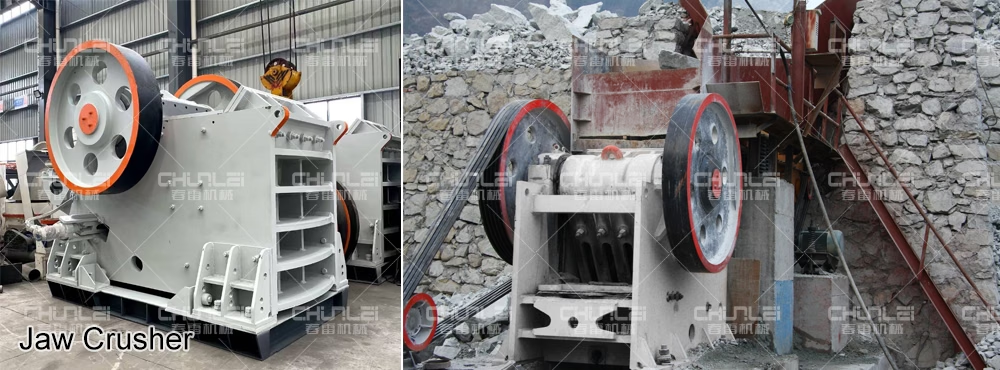
Primarily used to crush large pieces of gold ore, reducing the raw ore to a particle size that subsequent grinding equipment can handle.
Key considerations when selecting a jaw crusher:
- Maximum feed size
- Required output size
- Ore hardness and abrasiveness
- Hourly processing capacity
If the ore is large and hard, a secondary crushing stage may be necessary based on test results.
2. Ball Mill
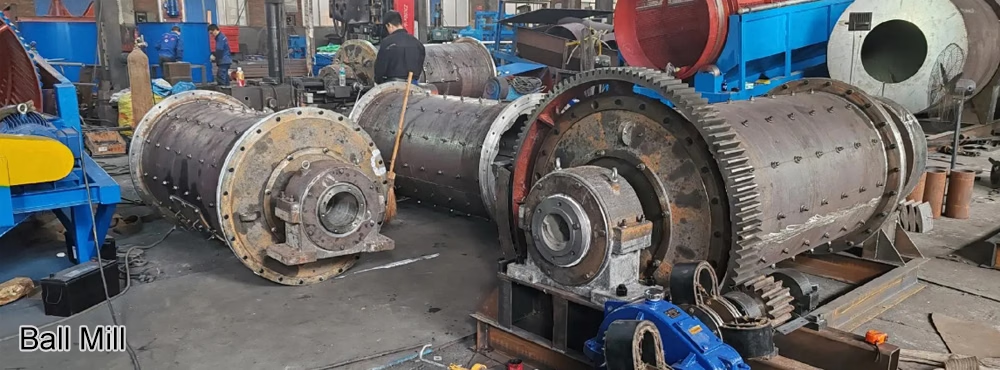
The ball mill is responsible for further grinding the ore, freeing gold particles from gangue or other minerals.
Here’s an important point: finer grinding doesn’t necessarily mean higher gold recovery.
Under-grinding may leave gold trapped inside the mineral; over-grinding may produce excessive slime, increasing the difficulty of subsequent sorting.
It is recommended to determine a suitable grinding fineness through grinding tests and particle size analysis.
3. Gravity Separation Equipment
If the ore contains a significant amount of coarse free gold that can be recovered through gravity separation, consider:
These devices utilize the density difference between gold and gangue for separation.
However, not all gold ores are suitable for gravity separation alone. For fine-grained gold or complex gold inclusions, further evaluation of other processes is necessary.
4. Flotation Machine
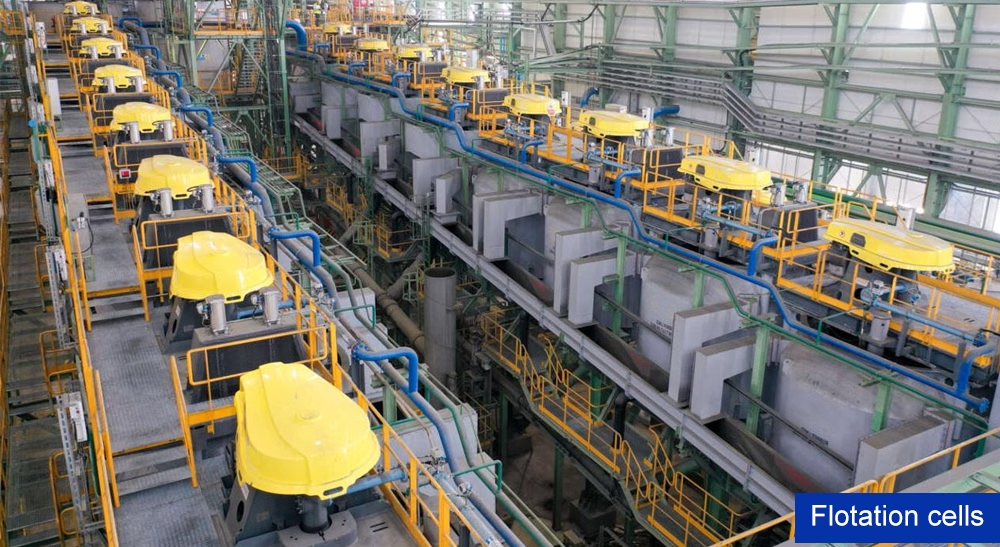
When gold is closely associated with sulfides such as pyrite, gold-bearing minerals can be enriched through flotation.
The main function of flotation is to concentrate the target mineral into a concentrate, reducing the amount of material required for subsequent processing.
5. Dewatering Equipment
Common equipment includes thickeners, filters, and related conveying systems.
The main functions are:
- Recovering production water
- Reducing the moisture content of concentrates or tailings
- Facilitating material transportation and subsequent processing
- Improving tailings management conditions
For small processing plants with limited water supply or requiring water recycling, dewatering systems are equally important.
Typical Process Flow of a Small Gold Processing Plant
After the equipment is determined, the next step is to design a reasonable ore beneficiation process.
1. Raw Ore Feeding and Crushing
First, the raw ore is evenly fed into the crushing system via a feeder.
The crushing stage mainly controls the feed and discharge particle sizes to prevent large pieces of ore from affecting subsequent grinding efficiency.
2. Grinding and Classification
The crushed ore enters a ball mill for further grinding.
The classifying equipment is responsible for controlling the particle size of the ground product, sending the slurry that meets the requirements to subsequent processes, and returning the portion that does not meet the requirements to the grinding system according to the process flow.
Here, it is important to focus on grinding fineness, circulating load, and unit energy consumption.
3. Gold Gravity Recovery
The slurry after grinding enters the gravity separation equipment.
If the ore contains free gold that can be gravity-separated, it can be enriched using a centrifugal separator or shaking table.
For gold-bearing sulfide ores or gravity separation tailings that still contain a significant amount of fine-grained gold, beneficiation tests are needed to assess whether flotation or other suitable processing techniques should be added.
4. Concentrate and Tailings Treatment
The final gold concentrate enters compliant subsequent processing or refining stages.
Tailings require sampling and analysis, moisture management, and standardized disposal. Production lines involving chemical treatments such as leaching must be engineered by professionals and equipped with closed systems, safety facilities, and wastewater treatment systems that comply with local regulations.
Comparison of Equipment and Processes for Different Types of Gold Mines
This is a crucial step in beneficiation plant design. Different types of ore require different equipment configurations.
| Ore Type | Main Characteristics | Evaluable Processes |
| Alluvial Gold | Gold particles are relatively free, often mixed with gravel | Screening, washing, Sprite Cute, jigging |
| Coarse-grained Free Gold Ore | Gold particles are relatively coarse, easily liberated | Crushing, grinding, gravity separation |
| Fine-grained Disseminated Gold Ore | Gold particles are small, more dispersed | Grinding, gravity separation, and other experimental processes |
| Gold-bearing Sulfide Ore | Gold is closely related to sulfides such as pyrite | Grinding, flotation, and subsequent processing |
| Refractory Gold Ore | Gold is encapsulated by minerals or other interfering factors | Specialized mineralogical analysis and beneficiation tests |
If the raw ore is primarily placer gold, directly configuring a large ball mill may not be economical; if the gold is coated with sulfides, simply configuring a shaking table may not achieve the expected recovery rate.
Therefore, equipment configuration should be based on the properties of the ore, rather than buying equipment first and then figuring out how to adapt it to the ore.
How to Improve Gold Recovery Rate in Small Gold Processing Plants?
Small processing plants don’t necessarily need to invest in expensive large-scale equipment. More importantly, they need to select suitable processes based on ore properties, control key parameters, reduce gold loss, and achieve higher recovery rates and lower production costs.
We recommend focusing on the following four things:
- Optimize crushing and grinding particle size: Adjust the grinding fineness according to the gold ore’s distribution characteristics to ensure sufficient gold liberation and avoid ineffective gold recovery due to insufficient grinding.
- Use suitable gravity separation equipment: Utilize shaking tables, centrifugal concentrators, and sluices appropriately to prioritize the recovery of coarse free gold particles, reducing the processing burden on subsequent steps.
- Optimize leaching process parameters: For ores suitable for cyanide leaching, strictly control leaching time, pH value, dissolved oxygen, and reagent concentration to improve gold dissolution efficiency.
- Control pulp concentration and residence time: Adjust the pulp concentration and processing time according to equipment capacity and ore characteristics to avoid affecting gold recovery due to excessively concentrated pulp or insufficient residence time.
- Strengthen tailings testing and secondary recovery: Regularly test the residual gold content in tailings, analyze the causes of gold loss, and add gravity separation, regrinding or other applicable recovery processes when necessary.
What should you pay attention to before investing in a small gold processing plant?
Before investing in a small gold processing plant, you must conduct comprehensive market research and investment planning. Don’t just focus on equipment purchase prices; you must also comprehensively consider ore properties, daily processing capacity, gold grade, beneficiation technology, expected recovery rate, and operating costs.
- First, conduct professional testing of the raw ore to clarify the type of gold deposit and its distribution characteristics, in order to select appropriate crushing, grinding, gravity separation, or flotation processes.
- Second, rationally allocate equipment based on actual output and budget to avoid overcapacity leading to wasted investment or insufficient capacity affecting production efficiency.
- Simultaneously, you need to assess long-term operating costs such as water, electricity, fuel, labor, tailings treatment, and environmental protection facilities in advance, and understand local regulations regarding mining, processing, wastewater discharge, and safe production.
A successful small gold processing plant requires not only reasonable initial investment but also scientific process design, stable equipment performance, high gold recovery rates, and sustainable operation management. Good early planning can reduce investment risks, improve project profitability, and achieve long-term stable production.
FAQ
Q1: What are the main equipment requirements for setting up a small gold processing plant?
A: A small gold processing plant typically requires crushers, ball mills, vibrating screens, gravity separation equipment, flotation machines, thickeners, filtration equipment, and smelting furnaces. The specific equipment configuration depends on the ore properties, processing capacity, gold grade, and beneficiation process.
Q2: How many tons of ore can a small gold processing plant process per day?
A: The processing capacity of a small gold processing plant is typically 5–100 tons per day, depending on the equipment model, production line configuration, ore hardness, and beneficiation process.
Q3: Which gold extraction method is best for a small gold processing plant?
A: Common methods include gravity separation, flotation, and leaching. Gravity separation is generally suitable for ores containing coarse-grained free gold; for fine-grained gold or gold ores associated with sulfides, flotation or other auxiliary processes may be necessary.
Q4: How to improve the gold recovery rate of a small gold processing plant?
A: First, ore sample testing and beneficiation trials are necessary to determine the appropriate grinding fineness and beneficiation process. Simultaneously, optimizing crushing particle size, grinding efficiency, separation equipment parameters, and tailings management helps reduce gold loss and improve overall recovery.
Q5: How much investment is required for a small gold processing plant?
A: Investment costs depend on processing capacity, equipment type, level of automation, plant construction, and infrastructure. The investment for a small gravity beneficiation production line is generally lower than that of a comprehensive production line including flotation, leaching, and tailings treatment systems. It is recommended to develop a budget based on the actual ore conditions.
Q6: What type of ball mill should a gold processing plant choose?
A: The choice of ball mill mainly depends on ore hardness, feed particle size, target grinding fineness, and daily throughput. For small gold processing plants, grinding efficiency, energy consumption, liner wear resistance, and maintenance costs need to be carefully considered.
Q7: How many workers does a small gold processing plant need per day?
A: Staffing depends on the production scale and level of automation. Small gold processing plants typically require operators, equipment maintenance personnel, electrical technicians, and production management personnel. Appropriate automation configurations can reduce labor costs.
Q8: How can small gold processing plants reduce energy consumption?
A: Energy consumption can be reduced by optimizing crushing and grinding processes, selecting high-efficiency motors, properly configuring ball mills, minimizing equipment idling time, and optimizing water circulation systems. Regular equipment maintenance also helps improve overall operating efficiency.
Q9: How should small gold processing plants handle tailings and wastewater?
A: It is recommended to configure thickeners, filtration equipment, tailings storage facilities, and wastewater circulation systems. For beneficiation processes involving chemical reagents, appropriate wastewater treatment and hazardous substance control facilities are also required to ensure compliance with local environmental regulations.
Q10: How to choose a reliable equipment supplier for a small gold processing plant?
A: When selecting a supplier, focus on their equipment manufacturing experience, gold beneficiation project case studies, equipment quality, processing capacity, after-sales service, and technical support. It is best to provide ore samples for beneficiation tests and determine equipment configuration based on the test results to avoid blind procurement.
Conclusion
Building a small gold processing plant is not simply a matter of purchasing a few crushers, ball mills, and shaking tables to start production.
The real key is to first understand the properties of the ore, then determine the crushing, grinding, and beneficiation processes, and finally configure the equipment according to the processing capacity.
A good beneficiation plant plan is not about having more equipment, but about achieving stable processing capacity and a high gold recovery rate with reasonable investment.
If you are planning to build a plant, please contact us. Tell us about your ore characteristics and daily output, and we will recommend suitable processes and equipment solutions for you!
Click the button below for a free consultation on beneficiation plant solutions!
Latest News

The Role of Cyanide in Gold Mining: Process Flow and Mineral Processing Management
800In gold ore processing, cyanide is a commonly used leaching agent; it directly influences the gold leaching rate, overall recovery, and production costs. However, cyanide leaching is not merely a matter of adding chemicals—factors such as ore c…
-
How should you choose equipment for pre-desliming in gravity separation?
800Many operators struggle with low recovery rates when using shaking tables, sluice boxes, or centrifugal concentrators—even when the equipment itself is high-quality—only to find that valuable minerals are being lost in the tailings. The root ca…
-
How can the mineral processing method be preliminarily determined based on the appearance of tin ore?
800When you receive a batch of tin ore samples, what should you look at first? Is it the color, the particle size, or the clay content? While these visual characteristics can provide some initial insights, relying solely on the naked eye is not …
-
Which types of tin ore are the most difficult to process?
800Not all tin ores are easy to process. For some alluvial (placer) tin deposits, a simple combination of washing, screening, and gravity separation is often sufficient to produce a high-quality tin concentrate. Primary (lode) tin deposits, howeve…
loading…
已经是到最后一篇内容了!