 Chunlei Mining Machinery
Guide and Methods for Extracting Gold from Oxidized Ore
Oxidized gold ore, often found near the surface where weathering has altered its chemical composition, presents both a challenge and an opportunity for miners and prospectors. Unlike refractory sulfide ores, oxidized ore is typically more porous and amenable to conventional extraction methods, often yielding higher recovery rates. This guide will walk you through the identification, processing, and extraction techniques for oxidized gold ore, helping you maximize your gold recovery efficiently and economically.
In this article, we will introduce:
Understanding Oxidized Gold Ore
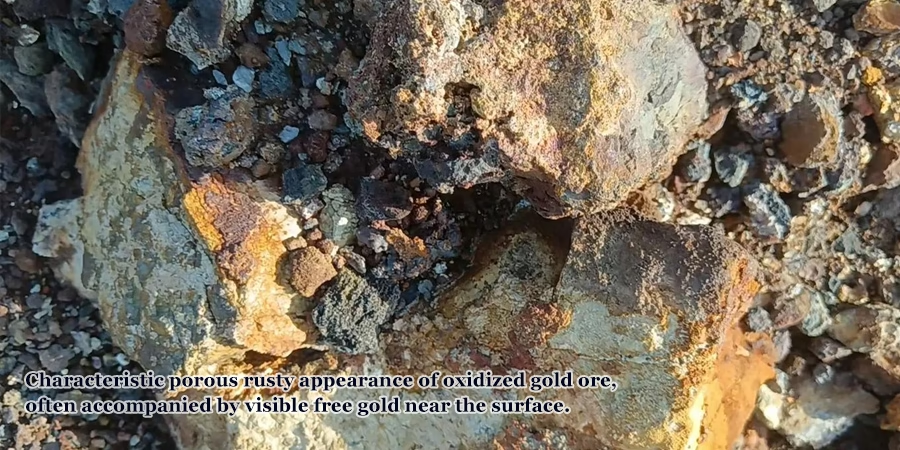
Oxidized gold ore forms through prolonged exposure to oxygen and water, a process called weathering. This breaks down sulfide minerals (like pyrite) that often encapsulate gold in primary deposits. The result is a softer, more porous rock where gold particles are frequently “liberated” or only lightly coated with oxides of iron, making them more accessible to leaching solutions.
Key Identification Features:
- Color: Yellow, red, brown, or orange “rusty” hues due to iron oxides.
- Texture: Friable, crumbly, and often porous.
- Location: Typically found in the upper parts of ore deposits (the oxidized zone), above the water table.
Step-by-Step Extraction Methods
1. Ore Crushing and Grinding
The first step is to reduce the ore to a fine consistency to expose the gold particles. Oxidized ore is often softer, requiring less energy to crush.
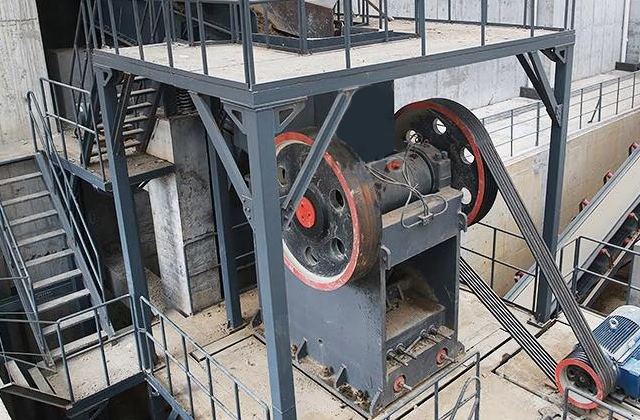
- Primary Crushing: Use a jaw crusher to reduce ore to smaller fragments.
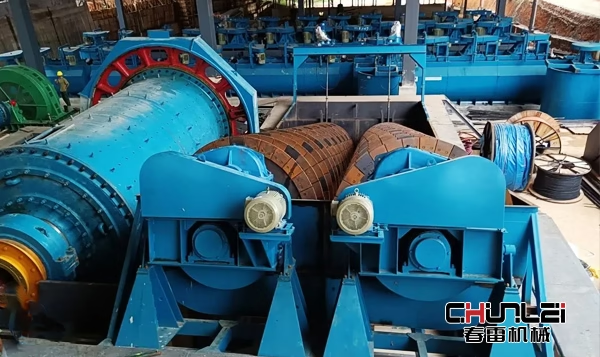
- Secondary Grinding: A ball mill or hammer mill pulverizes the material into a fine powder or slurry. The target is typically 75-150 microns for optimal leaching.
2. The Leading Method: Cyanide Leaching
For most large-scale and efficient operations, cyanide leaching (specifically the Carbon-in-Pulp (CIP) or Carbon-in-Leach (CIL) process) is the industry standard for oxidized ore.
- Process: The finely ground ore slurry is mixed with a dilute sodium cyanide solution (0.01-0.05%). The cyanide dissolves the gold into a liquid complex.
- Adsorption: Activated carbon is introduced into the tanks. The dissolved gold readily adsorbs onto the carbon particles.
- Elution & Recovery: Gold-loaded carbon is washed (eluted) with a hot caustic solution to strip the gold. The resulting high-grade solution is then electrowon to produce gold sludge, which is smelted into doré bars.
Advantage for Oxidized Ore: The porous nature of oxidized ore allows for excellent percolation and contact with cyanide solutions, often resulting in recovery rates exceeding 90%.
3. Alternative & Smaller-Scale Methods
Heap Leaching
Ideal for low-grade oxidized deposits.
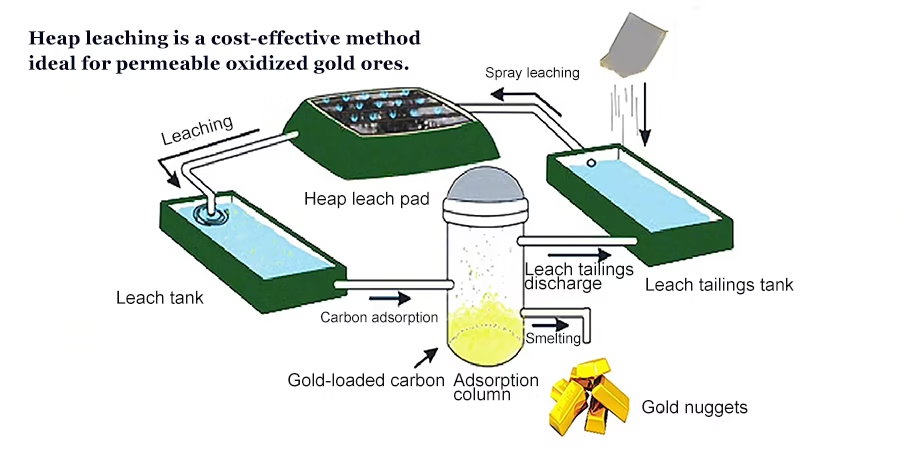
- Process: Crushed ore is stacked on an impermeable pad. A dilute cyanide solution is sprinkled over the heap, percolates through, and dissolves the gold. The “pregnant solution” is collected at the bottom and pumped to a recovery plant.
- Why it works for Oxidized Ore: The ore’s natural permeability enhances solution flow and gold dissolution.
Agitation Leaching (Vat Leaching)
For higher-grade oxidized material, ore is leached in stirred tanks for faster, more controlled extraction.
Non-Cyanide Alternatives:
- Thiourea Leaching: An alternative for small operations wary of cyanide, though more expensive.
- Thiosulfate Leaching: An emerging, environmentally friendlier option, particularly for ores with high copper content.
Key Advantages of Processing Oxidized Gold Ore
Higher Recovery Rates: Gold is often already liberated, leading to faster and more complete extraction compared to refractory ores.
Lower Energy Consumption: Softer ore requires less grinding energy.
Favorable Kinetics: Gold dissolves quickly in leaching agents due to minimal sulfide interference.
Reduced Chemical Consumption: Less consumption of oxidants like oxygen or peroxide compared to sulfide ores.
Critical Considerations & Best Practices
Comprehensive Testing: Always conduct fire assays and bench-scale metallurgical testing (like bottle roll or column leach tests) to determine the optimal grind size, reagent dosage, and expected recovery.
Environmental & Safety Compliance: Cyanide management requires rigorous safety protocols, proper containment, and often a detoxification circuit. Permitting is mandatory.
Washability: Some oxidized ores may contain clay, which can cause slurry thickening issues. Pre-washing or agglomeration may be necessary.
Particle Size Optimization: Avoid over-grinding, which increases costs, and under-grinding, which reduces recovery. Find the economic optimum.
Conclusion
Processing oxidized gold ore can be highly rewarding due to its straightforward treatment path and excellent recovery potential. The industry predominantly relies on cyanide leaching paired with carbon adsorption (CIP/CIL) for its efficiency and cost-effectiveness. For smaller or low-grade deposits, heap leaching remains a viable alternative.
Success hinges on proper ore characterization through metallurgical testing and adherence to strict environmental and safety standards. By selecting the right method for your ore’s specific characteristics and scale of operation, you can effectively unlock the value contained within oxidized gold deposits.
CHUNLEI’s expert team stands ready to customize tailored processes for you, offering one-stop services from design to equipment supply. Inquiries welcome!
Latest News

What are the gravity separation process flows for tin ore?
800Having worked in the tin mining industry for many years, I’ve observed a recurring issue among clients: even when the raw ore has a high tin content and a substantial amount of processing equipment is employed, the final tin recovery rates rema…
-
Gravity Concentration vs. Flotation for Gold: Which Process Should You Choose?
800In gold beneficiation projects, many mining engineers face a critical question: Why does the final gold recovery rate consistently fall short of expectations, even when grinding fineness and reagent regimes are strictly maintained according t…
-
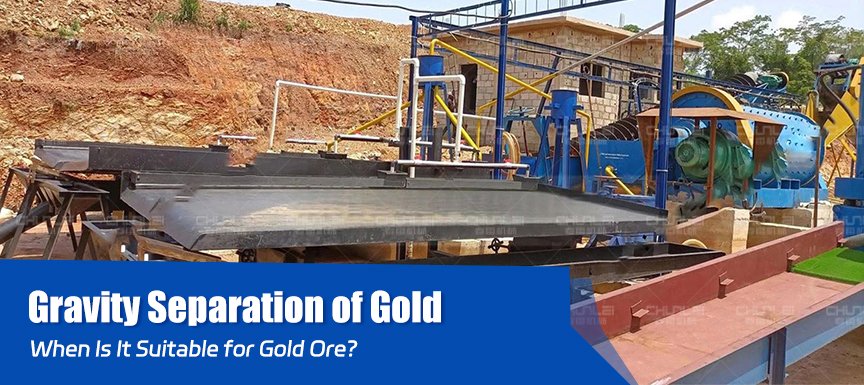
Gravity Separation for Gold: When Is It Suitable for Gold Ore?
800Many people immediately associate “gold ore” with gravity separation, yet not all gold deposits are suitable for recovery using gravity methods alone. Gravity separation is appropriate for liberated native gold or other heavy minerals that ex…
-
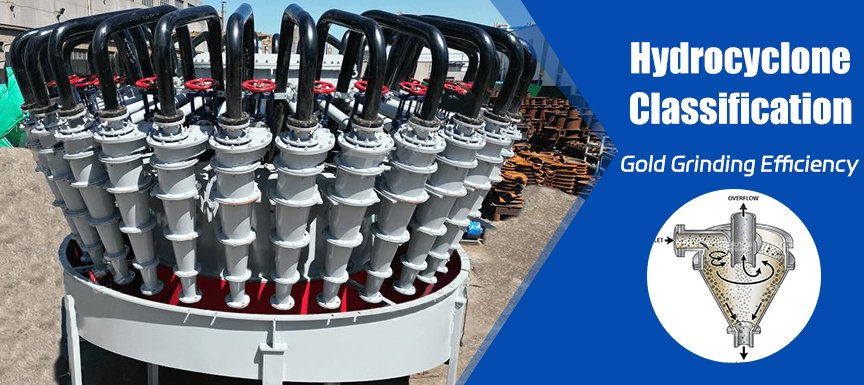
How Classification Affects Gold Grinding Efficiency
800In gold ore grinding circuits, attention is often focused primarily on ball mill capacity, power consumption, and grinding media; however, in actual operation, classification plays an equally critical role in determining grinding efficiency. …
loading…
已经是到最后一篇内容了!