 Chunlei Mining Machinery
What are the gravity separation process flows for tin ore?
Having worked in the tin mining industry for many years, I’ve observed a recurring issue among clients: even when the raw ore has a high tin content and a substantial amount of processing equipment is employed, the final tin recovery rates remain disappointing.
In some cases, while the concentrate grade may meet specifications, cassiterite (tin ore) can still be found in the tailings. In other instances, over-grinding produces an excess of fine sludge, which hinders the performance of equipment like shaking tables and jigs—ultimately leading to the loss of valuable tin.
In reality, more sophisticated equipment or finer grinding does not necessarily guarantee better results in tin beneficiation. The key lies in ensuring the sufficient liberation of cassiterite and implementing tailored processing strategies for particles of different sizes.
Since the difficulty of separation varies significantly between coarse, medium-fine, and ultra-fine particles, establishing a well-designed process—encompassing crushing, grinding, classification, and size-specific separation—is far more effective than simply adding more equipment.
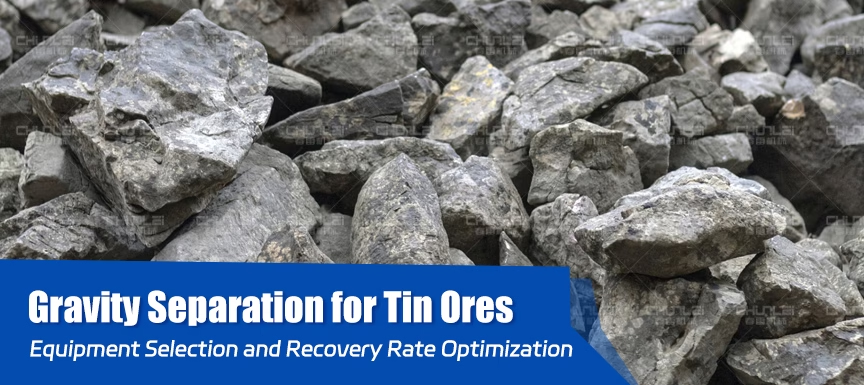
Why Is Gravity Concentration Suitable for Tin Ores?
Density Difference Between Cassiterite and Gangue
Gravity concentration of tin ores primarily leverages the differences in how various minerals move within a gravitational or centrifugal field to separate valuable minerals from gangue.
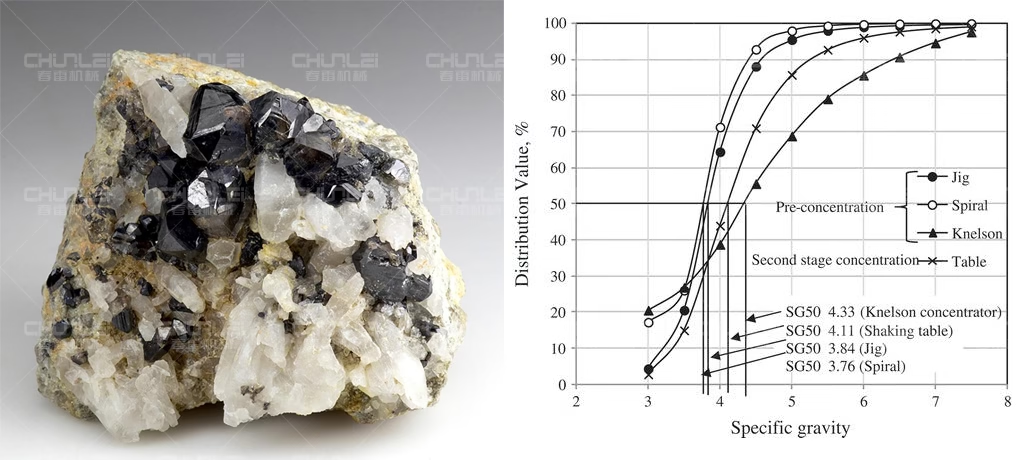
Cassiterite typically has a density of approximately 6.8–7.1 g/cm³, while quartz has a density of about 2.65 g/cm³. This significant density contrast creates favorable conditions for gravity concentration; however, the actual separation efficiency also depends on factors such as particle size, particle shape, pulp density, and equipment operating parameters.
Three Key Conditions for Gravity Concentration of Tin Ores
- Degree of Mineral Liberation
- Cassiterite must be liberated from the gangue through appropriate grinding. If a large number of composite particles (middlings) remain, it may be impossible to achieve the desired grade; conversely, over-grinding can produce ultra-fine tin particles that are difficult to recover.
- Appropriate Particle Size Distribution
- Equipment such as jigs, spiral concentrators, and shaking tables each have an optimal particle size range. Processing a mixture of coarse particles, fine particles, and slimes together can reduce separation efficiency.
- Suitable Pulp Conditions
- Factors such as feed concentration, feed rate, stroke length, stroke frequency, deck slope, and wash-water volume all influence the performance of gravity concentration. These parameters must be determined through testing rather than simply adopting settings from other processing plants.
What are the gravity separation processes for tin ore?
Gravity separation of tin ore is a method used to enrich tin minerals by exploiting the density difference between cassiterite (the primary valuable mineral, with a density of approximately 6.8–7.1 g/cm³) and gangue minerals. This process utilizes equipment such as screens, classifiers, jigs, shaking tables, and spiral chutes.
Gravity separation is commonly applied to alluvial tin deposits and primary (lode) tin deposits, as well as for pre-treatment—either before or after cassiterite flotation—or for the recovery of tin from tailings. The specific process flow must be determined based on factors such as the particle size of the raw ore, the grain size at which cassiterite is disseminated, the mineralogical composition, and the degree of mineral liberation.
Common gravity separation process flows for tin ore include:
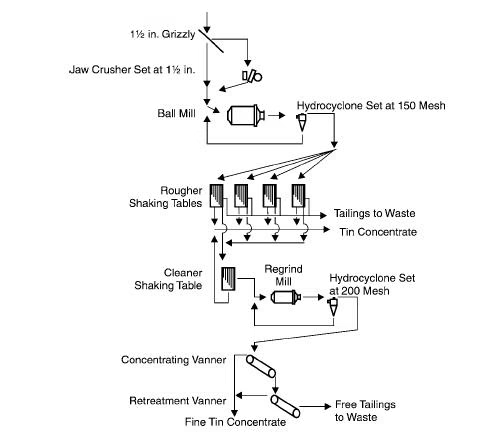
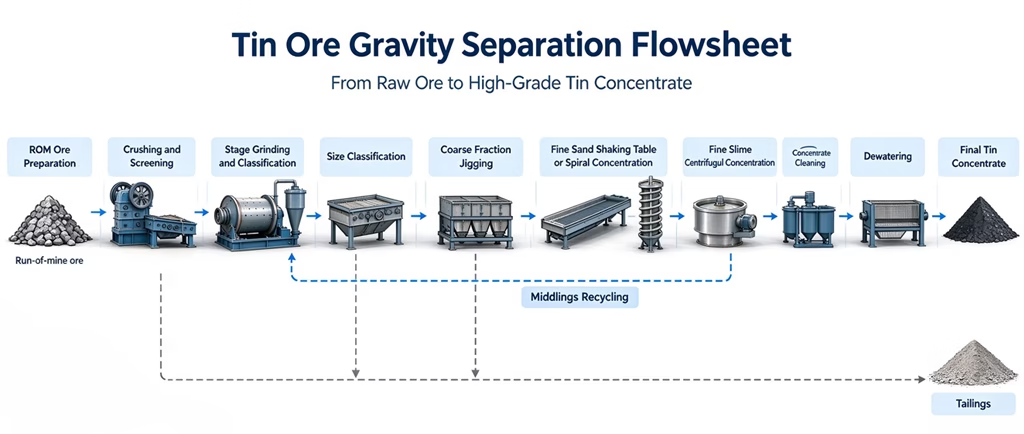
1. Crushing–Screening–Grinding Process
Suitable for lode tin ores and raw ores that require mineral liberation.
Run-of-mine ore → Jaw crusher → Cone crusher (configured as needed) → Screening → Grinding → Classification.
Objective: To achieve thorough liberation of cassiterite from gangue minerals, while minimizing over-grinding to reduce the loss of fine-grained cassiterite.
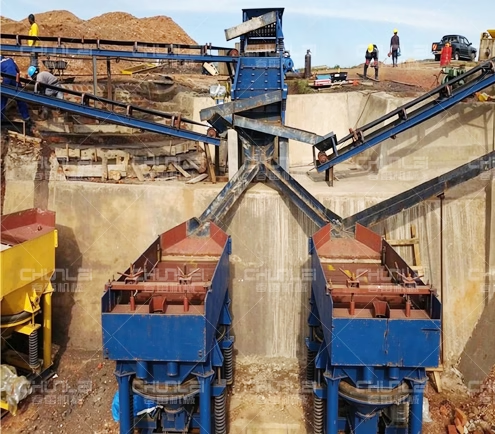
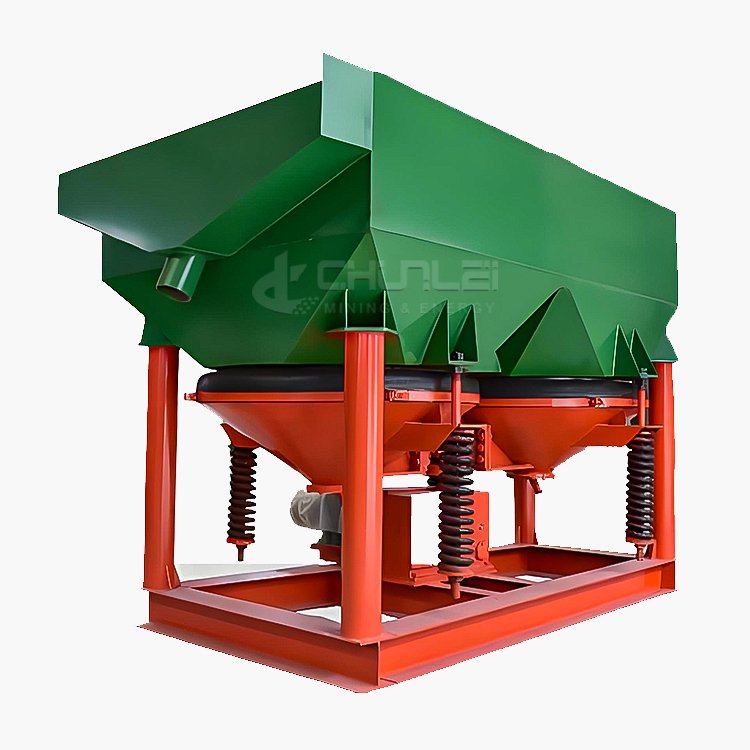
2. Jigging Gravity Separation Process
Suitable for the pre-enrichment of relatively coarse-grained cassiterite.
Screened coarse-grained ore → Jig → Coarse concentrate, middlings, and tailings.
Advantages: High processing capacity and strong pre-enrichment capability; typically used in conjunction with subsequent cleaning stages employing shaking tables.
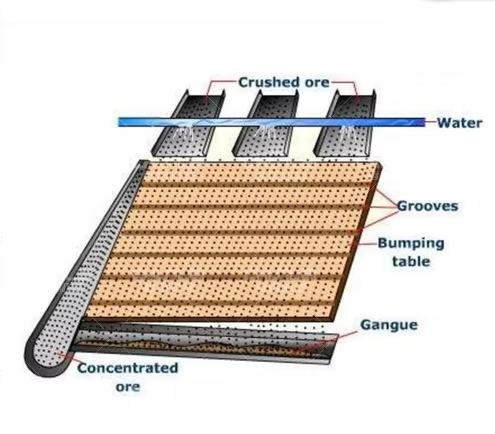
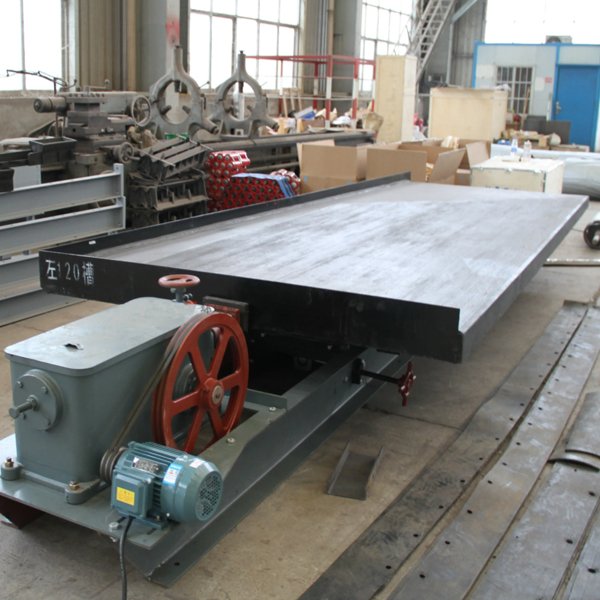
3. Gravity Concentration Process Using Shaking Tables
Suitable for the cleaning and classified recovery of liberated cassiterite.
Jigging rough concentrate or classified feed → Shaking table → Tin concentrate, middlings, and tailings.
Advantages: Offers high separation precision, facilitating the production of high-grade tin concentrate; however, the processing capacity is relatively limited.
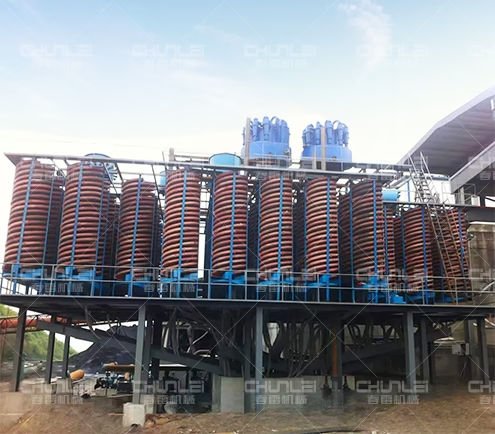
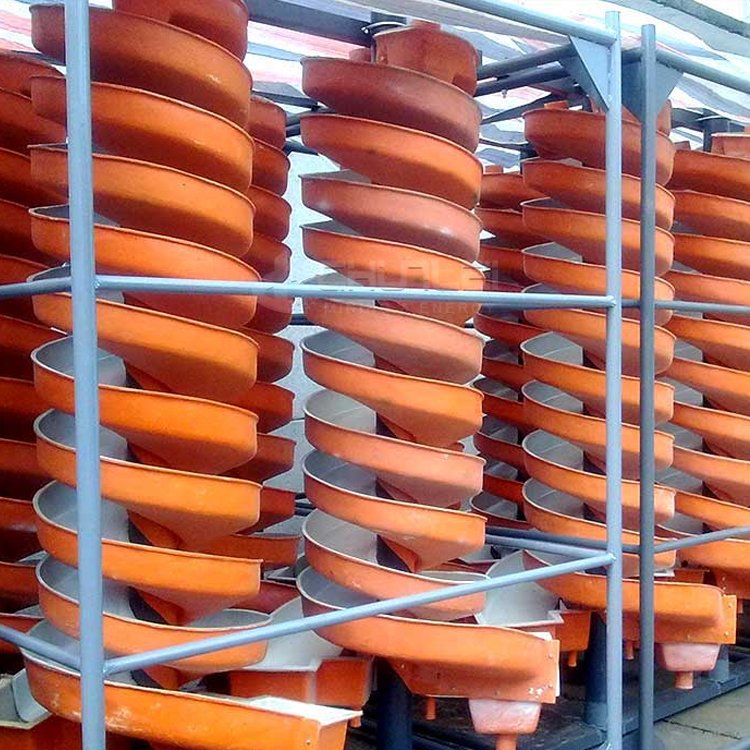
4. Spiral Chute Gravity Separation Process
Suitable for alluvial tin ores or fine-grained materials amenable to spiral separation.
Screening/Classification → Spiral Chute → Rough Concentrate, Middlings, and Tailings → Shaking Table Cleaning (Upgrading).
Advantages: Simple structure; no external mechanical drive required for the separation surface; well-suited for continuous, large-scale processing.
Primary Gravity Separation Equipment and Applicable Particle Size Ranges
Gravity separation is a method that utilizes the density difference between minerals and gangue, employing forces such as water flow, gravity, or vibration to achieve separation. The applicable particle size range for various gravity separation devices depends primarily on the density difference between minerals, particle size distribution, particle shape, and feed concentration.
The particle size ranges provided in the table below serve as common reference values in mineral processing; in actual practice, these may vary depending on the specific characteristics of the ore and the operating parameters of the equipment.
| Gravity Separation Equipment | Typical Particle Size Range | Key Features and Applications |
| Jig | Approx. 0.5–50 mm | Suitable for coarse- and medium-grained minerals; high throughput; commonly used for processing coal, tungsten, tin, etc. |
| Shaking Table | Approx. 0.02–2 mm | High separation precision; suitable for fine-grained minerals and final cleaning (upgrading) stages. |
| Spiral Chute | Approx. 0.03–2 mm | Simple structure, low energy consumption; commonly used for iron ore, ilmenite, and placer deposits. |
| Spiral Concentrator | Approx. 0.1–2 mm | Suitable for handling high-volume flows of fine-grained minerals; commonly used for iron ore and heavy mineral separation. |
| Hydrocyclone (used in dense-medium or hydraulic classification applications) | Depends on the separation medium and equipment configuration | Can be used for classification or, under specific conditions, density-based separation; standard hydrocyclones are primarily for classification and are not strictly classified as gravity separation equipment. |
| Centrifugal Concentrator | Approx. 0.01–0.5 mm | Utilizes centrifugal force to enhance the recovery of fine and ultra-fine heavy minerals. |
| Shaking Sluice / Belt Sluice | Approx. 0.02–2 mm | Commonly used for recovering placer gold and fine-grained heavy minerals; applicability is influenced by water flow and surface characteristics. |
| Dense-Medium Cyclone | Typically approx. 0.5–50 mm (varies by specific equipment) | Uses the density difference of a dense medium for separation; commonly used for coal and the pre-concentration of certain metallic ores. |
How to Optimize Grinding-Classification and Tin Recovery?
Optimizing grinding-classification and tin recovery centers on three key objectives: preventing over-grinding, ensuring accurate classification (avoiding the misplacement of coarse particles into the overflow), and minimizing the loss of tin minerals. In the beneficiation of cassiterite (SnO₂), simply increasing the grinding fineness is not an effective way to improve recovery; over-grinding can produce ultra-fine cassiterite particles, which are difficult to recover via gravity separation, lead to higher tin content in the tailings, and increase energy consumption.
Key Measures for Optimizing Grinding and Classification
- Optimize Grinding Fineness to Prevent Over-grinding
– Conduct mineral liberation studies to determine the optimal grind size required for the effective separation of cassiterite from gangue minerals.
– Do not rely solely on the percentage of material passing through a 200-mesh screen; instead, analyze the tin grade, tin distribution, and degree of mineral liberation for each particle size fraction.
– If tin losses in the fine fractions are high, consider reducing grinding intensity, shortening residence time, or implementing staged grinding.
– Once cassiterite particles are liberated, they should be recovered promptly to prevent them from re-entering the grinding mill. - Improve Classification Efficiency to Reduce Misplacement of Coarse and Fine Particles
– Monitor the feed pressure and concentration of hydrocyclones, and check for wear on apex nozzles (spigots) and vortex finders (overflow pipes).
– Regularly sample and analyze the particle size distribution and tin distribution in the hydrocyclone feed, overflow, and underflow.
– If the underflow contains a significant amount of liberated cassiterite, consider implementing a bypass recovery circuit or recovering the tin before it returns to the mill.
– If the overflow contains unliberated coarse cassiterite particles, investigate potential classification short-circuiting, equipment wear, or issues with particle size control. - Implement Size-Specific Recovery Processes
– Coarse, liberated cassiterite: Prioritize recovery via gravity separation.
– Medium-to-fine cassiterite: Utilize shaking tables, spiral concentrators, or other appropriate equipment based on the degree of liberation.
– Ultra-fine cassiterite: Evaluate specialized techniques such as fine-particle gravity separation, desliming, or other suitable beneficiation methods.
– Avoid discarding fine slimes directly; first, calculate the potential loss of tin metal contained within these slimes.
Factors Affecting Tin Recovery Rate
| Observed Performance | Potential Causes | Priority for Optimization |
| High tin content in tailings, with tin concentrated in coarse fractions | Insufficient liberation; low classification efficiency | Optimize grind size and classification cut size |
| High tin content in tailings, with tin concentrated in fine slimes | Over-grinding of cassiterite; low efficiency in fine-particle gravity separation | Implement fine-slime classification; conduct tests for fine-particle recovery |
| High tin content in cyclone underflow | Liberated cassiterite is repeatedly returned to the mill | Investigate pre-concentration or bypass recovery for the underflow |
| Increase in concentrate grade, but decrease in recovery | Middlings recirculation, losses to tailings, or suboptimal separation conditions | Calculate the tin metal balance for the entire process |
| High energy consumption in the mill without improvement in recovery | Changes in ore characteristics, over-grinding, or ineffective circulation | Adjust feed particle size, grinding media composition, and circulating load |
Comparison of Gravity Concentration Processes for Tin Ores
For polymetallic tin ores, a single gravity concentration process may not be sufficient to meet the quality requirements for the final concentrate. For instance, when cassiterite occurs in association with sulfides, iron-bearing minerals, or tungsten minerals, it may be necessary to incorporate additional separation stages—such as flotation, magnetic separation, or other techniques—depending on the specific mineralogical characteristics.
| Process Type | Typical Configuration | Applicable Conditions | Key Considerations |
| Gravity Concentration of Alluvial/Placer Tin Ores | Washing and screening → Jigging or spiral concentration → Shaking table (for final cleaning) | Cassiterite is well-liberated; separation of fines/slimes from sand is required | Degree of sliming, particle size distribution, and loss of fine particles |
| Gravity Concentration of Primary Tin Ores | Crushing → Stage grinding → Classification → Jigging, shaking tables, etc. | Gradual liberation of cassiterite from the surrounding rock (gangue) is required | Grinding fineness, composite particles (middlings), and over-grinding |
| Gravity Concentration of Fine-Grained Tin Ores | Classification → Fine-particle gravity concentration → Centrifugal recovery tests | High content of fine-grained cassiterite | Recovery efficiency for fine particles and operational costs |
| Combined Processes for Polymetallic Tin Ores | Gravity concentration supplemented by flotation, magnetic separation, etc. | Cassiterite occurs in association with sulfides or other minerals | Concentrate quality, recovery of associated metals, and process complexity |
Common Issues and Pitfalls in Gravity Concentration of Tin Ores
1. Why do tailings from tin ore gravity concentration often contain high levels of tin?
Common reasons include:
- Insufficient liberation of cassiterite, with particles remaining attached to gangue minerals.
- An overly broad feed particle size distribution, making stable separation difficult.
- Loss of fine-grained cassiterite into the tailings or the overflow from desliming operations.
- Inappropriate feed pulp density, feed rate, or equipment operating parameters for the specific ore being processed.
- Inefficient circulation of middlings, leading to an increased load on the processing circuit.
It is recommended to conduct sieve analysis, chemical assays, and mineralogical studies on the tailings to identify the specific particle size fractions and mineral forms in which tin is being lost. This will inform decisions on whether to implement fine-slime recovery, adjust the fineness of grind, or modify the separation circuit.
2. Is it necessary to grind all tin ore to a very fine size?
No. Excessive grinding increases energy consumption and may cause the “sliming” (pulverization into ultra-fine particles) of cassiterite. The correct approach is to perform grinding tests to determine the relationship between the degree of liberation and particle size distribution, and then consider staged grinding and staged separation.
3. Can a shaking table alone handle the entire tin ore beneficiation process?
While some ores can be effectively enriched using only shaking tables, a single-stage shaking table process may struggle to balance throughput and recovery if the raw ore contains significant amounts of coarse material, clay, or ultra-fine cassiterite. The need for additional equipment—such as jigs, spiral concentrators, or centrifugal concentrators—should be determined based on experimental data.
4. How do you decide whether it is worth adding equipment for fine-slime recovery?
First, calculate the total metal content of tin within the fine-slime fraction and determine its recoverability through small-scale or continuous testing. Then, compare the value of the additional concentrate recovered against the costs of equipment depreciation, energy consumption, maintenance, and subsequent refining. A dedicated fine-slime recovery circuit is only justified if the incremental economic gain is sufficient.
FAQ
Q: What is gravity separation for tin ore?
A: Gravity separation for tin ore is a mineral processing method that enriches tin minerals by exploiting the density difference between cassiterite (tin ore) and gangue minerals. Common equipment used in this process includes jigs, shaking tables, spiral chutes, and centrifugal concentrators.
Q: For which types of tin ore is gravity separation suitable?
A: Gravity separation is primarily applicable to alluvial (placer) tin deposits and primary (lode) tin deposits containing cassiterite. Alluvial tin is generally easier to recover via gravity separation. For primary tin deposits, the ore must first undergo crushing and grinding—based on the grain size and the degree of mineral liberation—before an appropriate gravity separation process is applied.
Q: What equipment is commonly used in tin ore gravity separation?
A: Common equipment includes vibrating screens, jigs, spiral chutes, shaking tables, and centrifugal concentrators. Jigs are suitable for processing coarser particles, while shaking tables are ideal for the fine-tuning (cleaning) of finer particles. Centrifugal concentrators can be used to recover certain fine-grained cassiterite. The specific equipment configuration should be determined based on the characteristics of the ore.
Q: What is the basic process flow for tin ore gravity separation?
A: A typical process flow includes crushing, screening, grinding (if necessary), classification, gravity separation, cleaning, and dewatering. For alluvial tin, processes such as ore washing and scrubbing are usually required. For primary tin deposits, the focus should be on the liberation of cassiterite grains, while avoiding over-grinding, which can lead to the loss of fine-grained tin.
Q: What is the typical recovery rate for tin ore gravity separation?
A: The recovery rate for tin ore gravity separation is influenced by factors such as the grade of the raw ore, the grain size of the cassiterite, the mineralogical distribution (texture), the degree of slime formation, and the equipment configuration; therefore, it cannot be defined by a single, universal value. It is recommended to conduct ore amenability (treatability) tests, followed by small-scale or industrial-scale pilot tests, to determine a realistic recovery target.
Q: How can the recovery rate of tin be improved in gravity separation?
A: The recovery rate can be improved by optimizing grinding fineness, implementing proper classification, controlling feed concentration and flow rates, adjusting equipment operating parameters, and employing a multi-stage process that combines roughing, scavenging, and cleaning (finishing) stages. At the same time, it is essential to examine the tin content in the tailings to determine whether there is a loss of fine-grained cassiterite or if the minerals have not been sufficiently liberated.
Q: Why does the concentrate grade remain low after gravity separation of tin ore?
A: Common reasons include incomplete liberation of composite particles (middlings), inadequate separation of light and heavy minerals, non-uniform feed particle size, interference from slimes (fine mud), and improper equipment parameter settings. Concentrate grade can be improved by enhancing grinding and classification, removing harmful slimes, optimizing gravity separation parameters, and incorporating additional cleaning (refining) stages.
Q: How should fine-grained cassiterite be recovered from tin ore?
A: Depending on particle size and ore characteristics, equipment such as shaking tables or centrifugal concentrators can be used to recover fine-grained cassiterite. For ultra-fine cassiterite, the effectiveness of gravity separation may be compromised by the reduced difference in particle settling velocities and interference from slimes; in such cases, it may be necessary to incorporate flotation or other suitable separation methods.
Q: Why are large amounts of slimes generated during the gravity separation of tin ore?
A: Slimes may originate from natural clays or weathered minerals present in the raw ore, or they may be generated during crushing and grinding. An excess of slimes interferes with the stratification of particles, thereby reducing separation efficiency. This can be mitigated through ore washing, scrubbing, desliming, and careful control of the grinding fineness; however, the risk of losing fine-grained cassiterite during desliming must be evaluated beforehand.
Q: How should appropriate gravity separation equipment and processing flowsheets be selected for tin ore?
A: Selection should be based on a comprehensive assessment of factors such as raw ore throughput, tin grade, mineral composition, feed particle size, the degree of cassiterite liberation, and the target concentrate grade and recovery rate. It is recommended to conduct ore sampling, analysis, and beneficiation testing before determining specific equipment models, processing capacities, and process flowsheets—rather than relying solely on equipment specifications or theoretical capacity.
Conclusion
The key to gravity separation of tin ore lies in integrating mineral properties, the degree of liberation, and particle size distribution with the operating principles of the processing equipment. This approach is essential for effectively improving the grade and recovery rate of tin concentrate, thereby ensuring the efficient utilization of resources.
Interested in a gravity separation solution tailored to your specific ore? Contact us for expert advice on mineral processing techniques and equipment configuration.
[Inquire now to receive a customized mineral processing solution]
Latest News

Gravity Concentration vs. Flotation for Gold: Which Process Should You Choose?
800In gold beneficiation projects, many mining engineers face a critical question: Why does the final gold recovery rate consistently fall short of expectations, even when grinding fineness and reagent regimes are strictly maintained according t…
-
Gravity Separation for Gold: When Is It Suitable for Gold Ore?
800Many people immediately associate “gold ore” with gravity separation, yet not all gold deposits are suitable for recovery using gravity methods alone. Gravity separation is appropriate for liberated native gold or other heavy minerals that ex…
-
How Classification Affects Gold Grinding Efficiency
800In gold ore grinding circuits, attention is often focused primarily on ball mill capacity, power consumption, and grinding media; however, in actual operation, classification plays an equally critical role in determining grinding efficiency. …
-
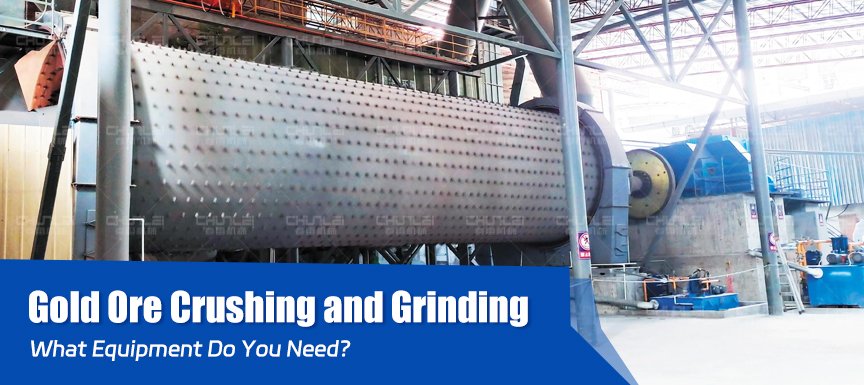
Gold Ore Crushing and Grinding: What Equipment Do You Need?
800When designing a gold ore processing line, my clients often ask which crushers and mills to purchase. However, the equipment selection should actually be based on a thorough understanding of the ore characteristics. Issues in many projects do…

loading…
已经是到最后一篇内容了!