 Chunlei Mining Machinery
How to Design a Granite Crushing and Sand-Making Production Line?
This article provides a comprehensive guide to granite production lines: a complete design from crushing and screening to grinding.
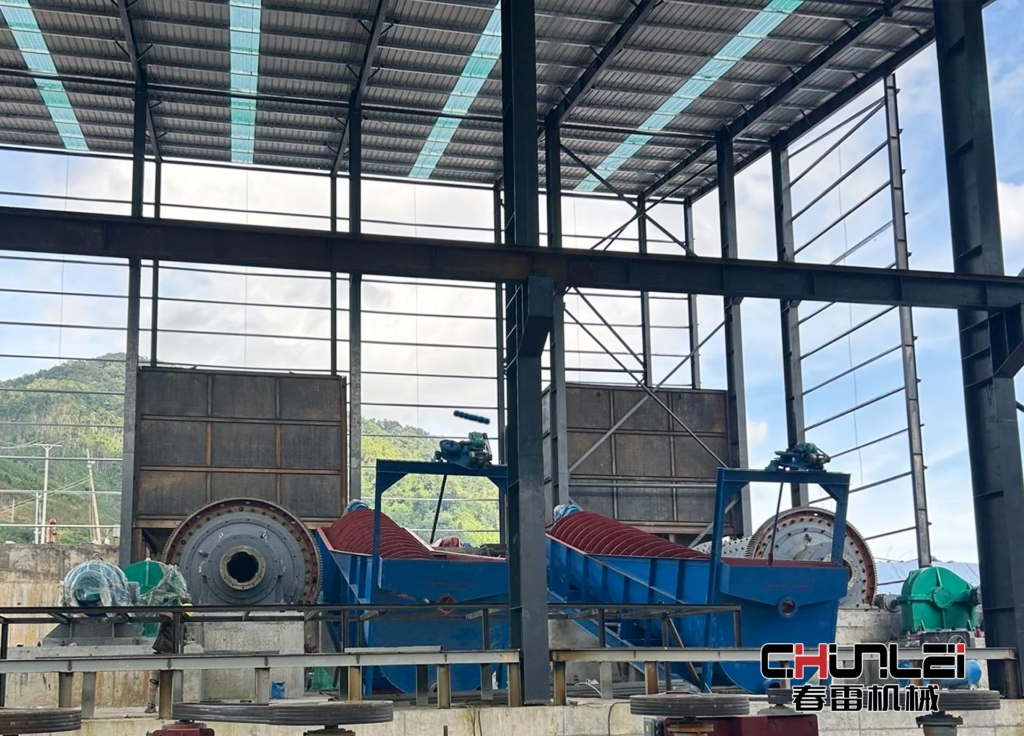
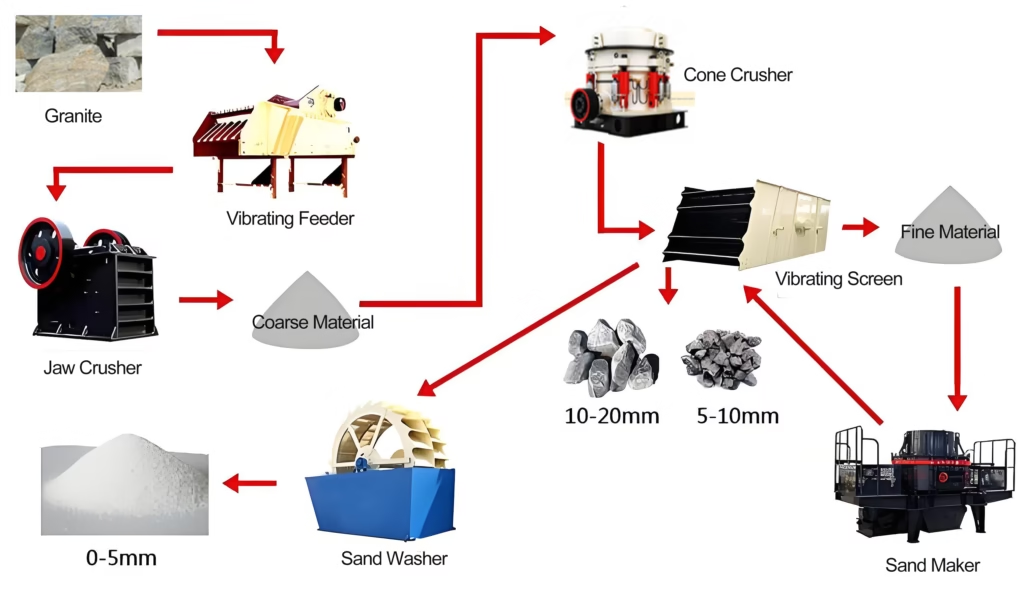
Granite, renowned for its hard texture and attractive color, is widely used in construction and serves as an excellent raw material for manufactured sand and gravel. However, as a hard rock, it poses significant processing challenges, demanding exceptional wear resistance and crushing power from equipment. A complete granite production line includes feeding, crushing, sand making, sand washing, and grinding stages, interconnected by conveying systems.
What is Granite Crushing Equipment?
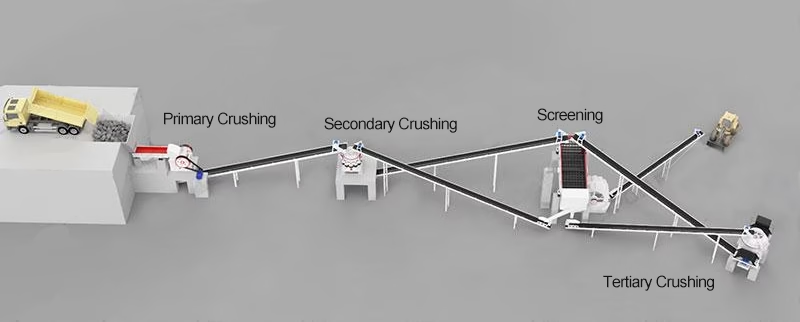
Granite crushing equipment is a mechanical system designed to overcome granite’s high hardness and abrasiveness through progressive crushing from coarse to fine. It includes jaw crushers for primary crushing, cone crushers or impact crushers for secondary and tertiary crushing, and impact sand makers for producing sand.
How Does the Crushing Process Lay the Foundation for Grinding or Sand Making?
The crushing process is the indispensable foundation for efficient grinding and high-quality sand production. The crushing system does more than simply reduce the size of rocks; its crucial role is to prevent wear and sudden shutdowns in subsequent equipment caused by large stones.
Thus, the initial crushing system can significantly reduce expenses related to maintenance and downtime in downstream equipment, effectively boosting production efficiency, lowering production costs, and ultimately increasing economic returns.
which crusher is better for secondary and tertiary crushing?
Jaw crushers are essential for primary crushing. For secondary crushing of granite, should you choose a cone crusher or an impact crusher? Let’s compare the two:
| Cone Crusher | Impact Crusher | |
| Crushing Principle | Laminar compression | Impact Collision |
| Suitable Materials | High-hardness materials (e.g., granite, basalt) | Medium-to-low hardness materials (e.g., limestone, dolomite) |
| Wear Resistance | Excellent. Core wear-resistant parts use high-manganese steel alloys for extended service life. | Poor. When used for granite, hammer plates and impact plates wear extremely rapidly, requiring frequent replacement. |
| Final Product Shape | Good. Uniform particle size, though needle and flake content is slightly higher than impact crushers. | Excellent. Produces cubical, well-shaped particles, but at the cost of extremely high wear. |
| Energy Consumption | Lower | Higher |
Given granite’s high hardness and abrasive properties, selecting a cone crusher is far more economical and reliable than an impact crusher, both in terms of cost and particle shape.
What is granite grinding equipment?
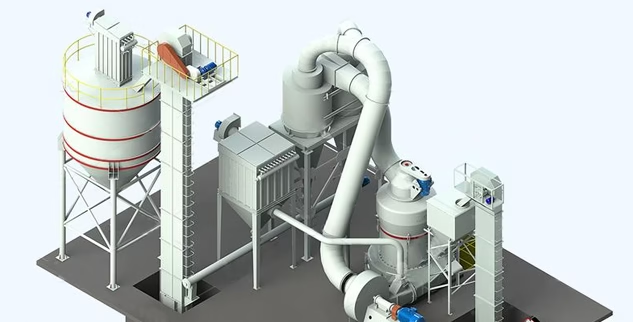
Granite grinding equipment processes smaller particles (typically <20mm) produced by crushing systems into finer powders through grinding, friction, or impact.
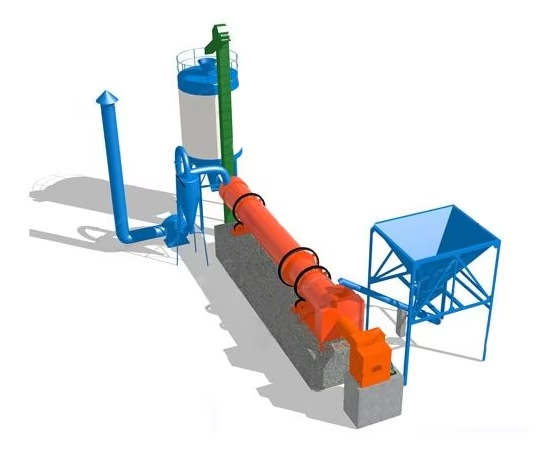
Depending on required fineness and capacity, Raymond mills, vertical mills, ball mills, or ultra-fine mills may be employed. The following diagram illustrates their relationships:
Designing a Granite Grinding Production Line
The core of a granite grinding production line lies in ultra-fine pulverization, precise classification, and efficient collection. Therefore, comprehensive consideration must be given to raw material characteristics, product objectives, investment scale, and environmental requirements.
Latest News

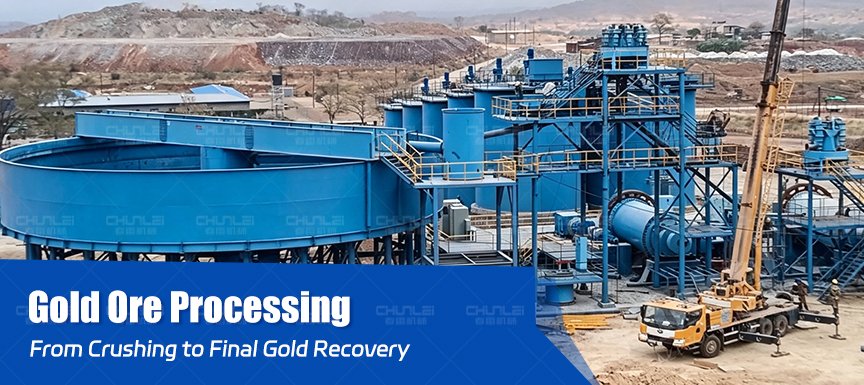
Gold Ore Processing: From Crushing to Final Gold Recovery
800A gold processing plant is not merely a simple assembly of crushers, ball mills, and gold recovery equipment; rather, the goal is to determine the optimal process flow based on factors such as mineral composition, gold particle size,…
-
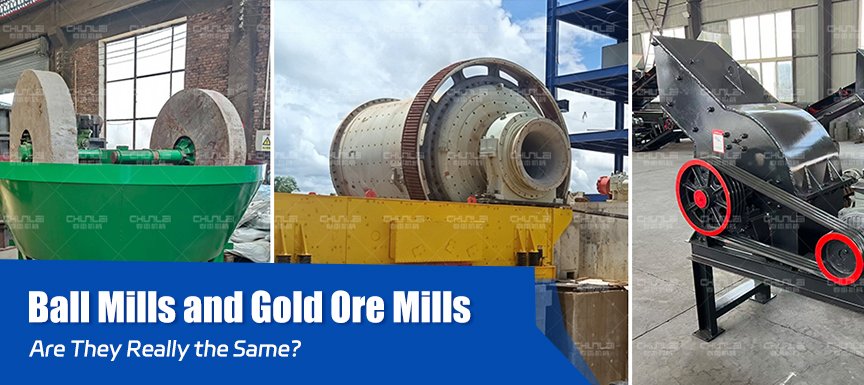
Ball Mills and Gold Ore Mills: Are They Really the Same?
800When searching for gold ore grinding equipment, customers often encounter various terms such as “Ball Mill,” “Gold Mill,” “Gold Milling Machine,” and “Gold Ore Grinding Machine.” Many buyers assume that a “Gold Mill” is a specialized mill de…
-
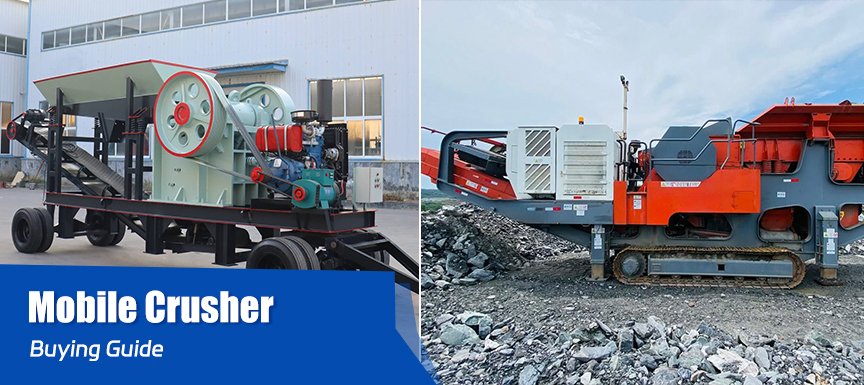
Mobile Crusher Buying Guide: Wheeled or Tracked?
800Many customers focus solely on portability when purchasing a mobile crusher, viewing it merely as the acquisition of a single piece of equipment. In reality, selecting the wrong model can lead to either insufficient output or excessive wear and…
-
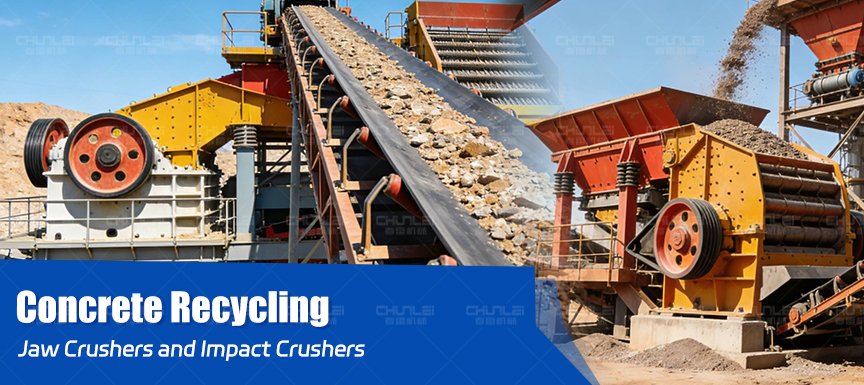
Jaw Crushers and Impact Crushers: Turnkey Solutions for Concrete Recycling
800Demolishing old buildings and roads generates vast amounts of waste concrete; direct landfilling not only consumes valuable space but also incurs high transportation costs. The real challenge lies in transforming this waste concrete into reusab…
loading…
已经是到最后一篇内容了!