 Chunlei Mining Machinery
Complete Guide to Gold Ore Grinding Equipment: Ball Mill Selection, Grinding Process Flow and Beneficiation Plant Design
Gold grinding is a crucial step in gold beneficiation. Whether processing oxide gold ore, sulfide gold ore, quartz vein gold ore, or placer gold concentrate, grinding efficiency determines the overall gold recovery rate.
A well-designed grinding system can not only improve concentrate quality but also reduce energy consumption and operating costs. When building or expanding a gold beneficiation plant, the selection of gold grinding equipment is particularly important. Ball mills are widely adaptable and have the most extensive application.
What is gold mine grinding equipment?
Gold ore grinding equipment is a device that further grinds the crushed gold ore into fine particles to fully dissociate the gold-containing minerals from the gangue. Only by sufficient grinding can gold-bearing minerals be efficiently recovered through flotation, gravity separation, and cyanide leaching.
The crusher can only break large pieces of ore into small pieces, and the grinding equipment is responsible for fine grinding. Insufficient grinding will result in the inability to separate gold minerals; excessive grinding will reduce the recovery rate and increase energy consumption.
According to the properties of ore and production needs, commonly used grinding equipment is divided into the following categories:
- ball mill
- rod mill
- Semi-autogenous grinding machine (SAG)
- Hammer mill (only suitable for small mines)
Among them, the ball mill has stable operation and excellent grinding effect, and is the preferred equipment for most large and medium-sized gold concentrators.
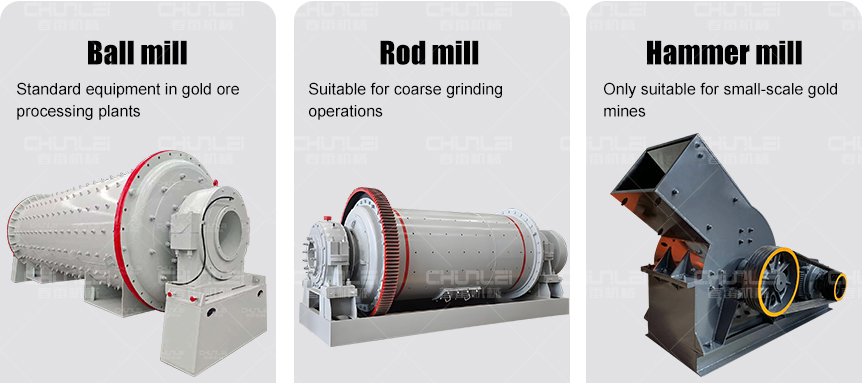
Comparison of Ball Mill, Rod Mill, and Hammer Mill Performance
Selecting the right grinding equipment is crucial during the ore processing plant design phase. Different mills are suited to different ore properties, processing scales, and subsequent beneficiation processes. Ball mills, rod mills, and hammer mills each have their advantages and disadvantages; choosing the right equipment can improve gold recovery rates and reduce operating costs.
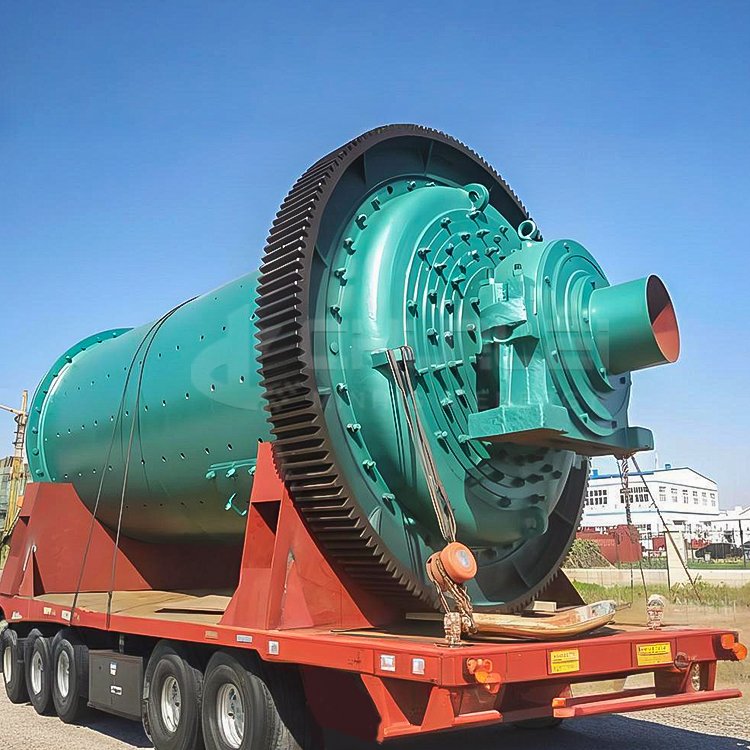
Ball Mill: The Mainstream Standard Equipment in Gold Processing Plants
The most widely used grinding equipment in modern gold processing plants. Inside the cylinder, steel balls continuously impact and grind the ore as the cylinder rotates until the target particle size is achieved.
Advantages:
- Suitable for both wet and dry grinding
- High grinding efficiency
- Uniform and stable product particle size distribution
- Seamless integration with flotation, gravity separation, and cyanide leaching processes
- Suitable for continuous and stable production in large and medium-sized concentrators
Applicable Scenarios:
- Post-crushing grinding
- Closed-loop grinding systems
- Gold flotation plants
- Carbon-in-pulp (CIP) gold extraction plants
- Quartz vein gold mines, sulfide gold mines
Ball mills are the preferred choice for most large and medium-sized gold mine projects due to their high throughput, stable operation, and compatibility with various ores.
Rod Mill: Suitable for coarse grinding
Rod mills use steel rods instead of steel balls as the grinding media. Steel rods provide line contact grinding, unlike the point contact of steel balls, resulting in less over-grinding and a more uniform product particle size.

Advantages:
- Low over-grinding, less ore slime
- Uniform output particle size, suitable for coarse grinding
- Suitable for ores with high quartz content
- Also applicable to artificial sand production lines.
Disadvantages:
- Low efficiency in fine grinding conditions
- Unable to achieve ultrafine grinding
- Limited application scenarios in gold beneficiation.
Rod mills are more suitable when downstream processes require coarse particles and strict control of fine slime generation.
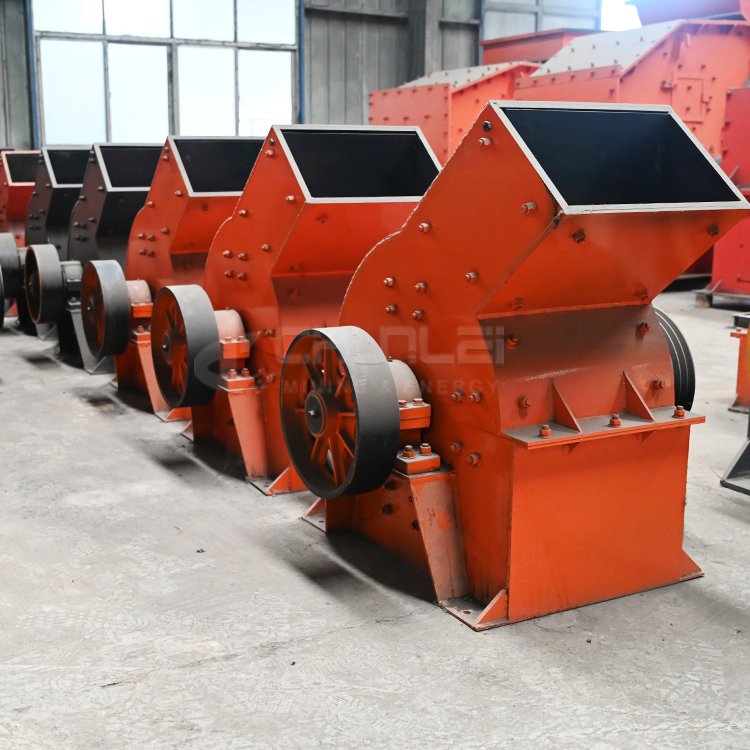
Hammer Mill: Only suitable for small-scale gold mines
It relies on high-speed rotating hammers to impact and crush ore. It has a simple structure and low equipment purchase cost, but is only used in small-scale gold mines.
Advantages:
- Low equipment purchase price
- Compact structure, small footprint
- Easy installation, low maintenance threshold
Disadvantages:
- Rapid wear of vulnerable parts
- Uneven output particle size
- Limited processing capacity
- Not suitable for large-scale industrial beneficiation plants
In industrial gold beneficiation production lines, hammer mills are generally used only as auxiliary equipment, not as the main grinding equipment.
Comparison table of core parameters of ball mills, rod mills, semi-autogenous mills, and hammer mills
| Comparison Items | Ball Mill | Rod Mill | Hammer Mill |
| Working Principle | Steel balls impact and grind the ore | Rotating steel rods reduce over-grinding | High-speed hammer impact crushing |
| Product Particle Size | Fine Grinding (approx. 75–200μm) | Medium-Coarse Grinding (approx. 0.5–3mm) | Coarse Grinding, uneven particle size |
| Grinding Efficiency | ★★★★★ | ★★★★☆ | ★★☆☆☆ |
| Processing Capacity | Medium-Large Production Line | Medium-Small Production Line | Small Production Line |
| Energy Consumption | Medium | Low | Low |
| Over-grinding | Less | Minimum | Severe |
| Applicable Ore | Gold Ore, Copper Ore, Iron Ore, Lithium Ore, Lead-Zinc Ore etc. | Quartz, tungsten, tin and brittle ores | Soft ores, small-scale gold mines |
| Subsequent processes | Flotation, cyanidation, gravity separation | Gravity separation, ball milling pretreatment | Simplified gravity separation |
| Equipment investment | ★★★☆☆ | ★★☆☆☆ | ★☆☆☆☆ |
| Maintenance cost | Medium | Low | High (fast hammer wear) |
| Main advantages | Fine particle size, high recovery rate, wide application | Uniform particle size, less over-grinding | Simple structure, low investment |
| Main limitations | Relatively high energy consumption | Unsuitable for ultrafine grinding | Poor particle size control, unsuitable for fine grinding |
| Recommended applications | Best suited for gold ore beneficiation | Suitable for coarse grinding and pre-grinding | Suitable for small or pilot projects |
How to choose suitable gold mine grinding equipment?
- Ball mill: Suitable for most gold ore concentrators, it is the most widely used grinding equipment in flotation, cyanide leaching and gravity separation processes. It can obtain stable fine grinding particle size and high gold recovery rate.
- Rod Mill: Suitable for coarse grinding or as pre-grinding equipment before the ball mill, which can effectively reduce over-crushing and improve subsequent grinding efficiency.
- Semi-autogenous mill (SAG Mill): It is suitable for large-scale gold mining projects with large processing capacity and high degree of automation. It can reduce the crushing process and improve the overall production capacity.
- Hammer mill: Low investment cost and simple structure, suitable for small gold mines, pilot projects or mobile mineral processing equipment, but not suitable for industrial production requiring high recovery rates.
Standard Gold Ore Grinding Process Flow
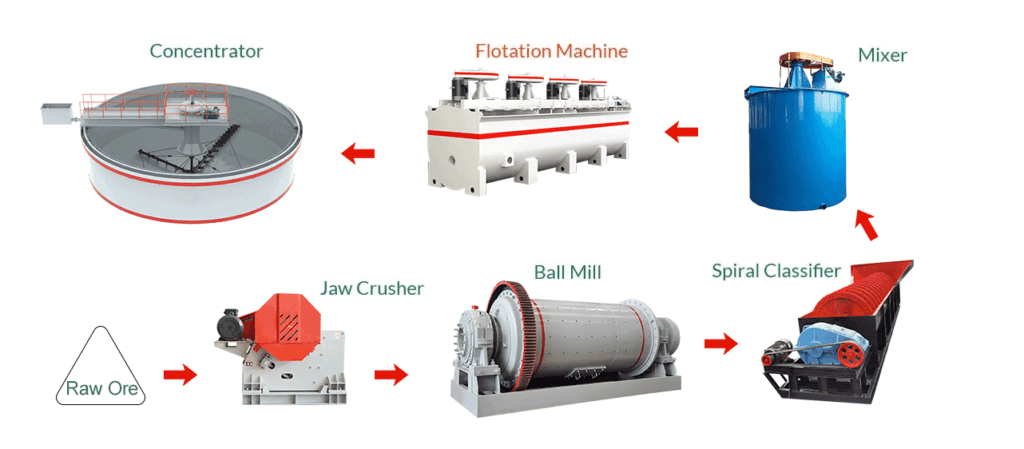
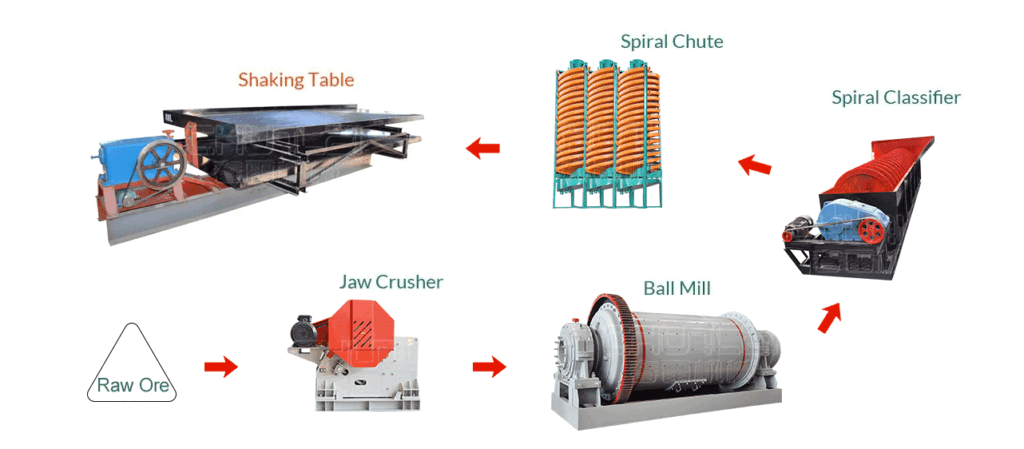
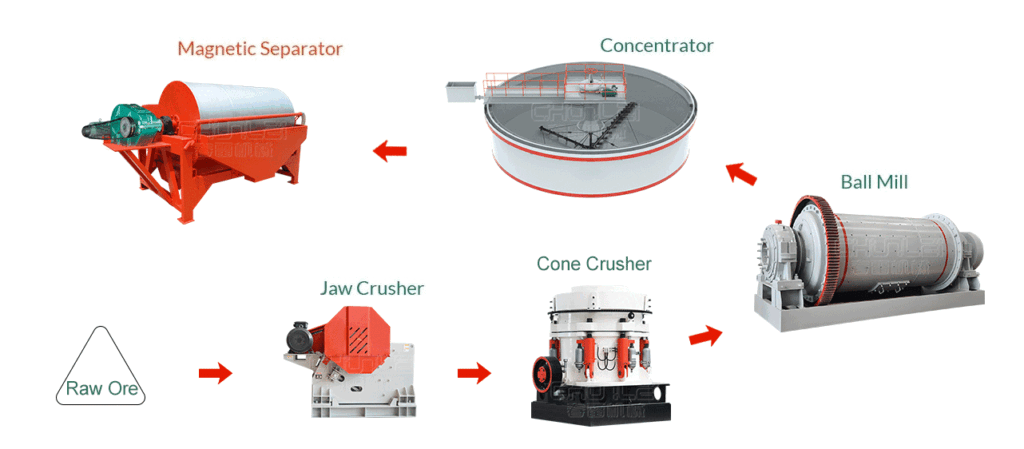
Closed-circuit grinding configuration can stabilize product particle size distribution, improve grinding efficiency, and reduce energy consumption. The conventional closed-circuit grinding process for gold ore consists of the following steps:
- First Stage Coarse Crushing: Large gold ore is coarsely crushed by a jaw crusher.
- Second Stage Medium and Fine Crushing: A cone crusher/impact crusher further reduces the ore particle size.
- Ore Storage: The crushed ore is stored in a silo to ensure stable feeding.
- Grinding Operation: The ore is fed into a ball mill, where it is refined by the impact and grinding of steel balls.
- Classification and Separation: A spiral classifier/hydrocyclone separates qualified fine particles from coarse particles for return grinding.
- Closed-Circuit Circulation Grinding: Unqualified coarse particles are returned to the ball mill for regrinding until the particle size is acceptable.
- Mineral Processing and Separation: The ground slurry enters flotation, gravity separation, magnetic separation, or cyanide leaching processes (depending on the ore type).
Optimal Grinding Particle Size Standard for Gold Recycling
How finely should gold ore be ground? There is no uniform standard; the optimal grinding particle size depends on the mineral composition and subsequent beneficiation processes.
| Ore Type | Recommended Grinding Fineness |
| Easily Liberated Native Gold Ore | 70%~80% Passing through a 75-micron sieve |
| Sulfide Gold Ore | Determined by flotation tests |
| Quartz Vein Gold Ore | Fine grinding standard determined based on mineral liberation analysis |
| Refractory Gold Ore | Determined based on laboratory beneficiation tests |
Finer grinding does not necessarily lead to higher recovery rates. Over-grinding produces a large amount of sludge, increasing reagent consumption and energy consumption. Therefore, mineral beneficiation tests must be conducted before selecting grinding equipment.
Common Production Challenges in Gold Mine Grinding
Many gold mines experience production failures due to improper grinding system design. Typical problems include:
- Insufficient mineral liberation, resulting in low gold recovery rates
- Over-grinding leading to excessive energy consumption
- Uneven product particle size
- Huge steel ball consumption
- Frequent liner replacement and maintenance
- Declining flotation performance
- High overall operating costs
All of these problems can be solved by adapting grinding equipment, optimizing grinding parameters, and balancing the grinding circuit design.
Complete Selection Guide for Gold Ore Grinding Equipment
When selecting gold ore grinding equipment, key considerations should include ore properties, processing capacity, target particle size, and beneficiation process. High-hardness or large-scale gold mine projects typically employ a combination of semi-autogenous grinding mills (SAG) and ball mills, while small and medium-sized beneficiation plants often use a closed-circuit grinding system of ball mills and hydrocyclones. For processes requiring coarse grinding, rod mills can be selected as pre-grinding equipment.
Simultaneously, it is recommended to prioritize equipment with high automation, low energy consumption, and stable operation, and to customize grinding solutions based on actual operating conditions to improve gold recovery, reduce operating costs, and ensure long-term stable operation of the production line.
CHUNLEI One-Stop Selection Service
CHUNLEI can provide complete grinding equipment selection and production line design solutions based on the customer’s ore properties, processing capacity, target grinding fineness, and subsequent beneficiation process. Our engineers will recommend the most suitable ball mill, rod mill, or semi-autogenous mill configuration based on your actual working conditions, and optimize the entire grinding production line to help achieve higher gold recovery rates, lower energy consumption, and more stable production operations.
Precise Selection Guide for Ball Mills in Gold Ore Processing Plants
The appropriate selection of a ball mill directly impacts grinding efficiency, gold mineral liberation, ore recovery rate, energy consumption, and production costs. Therefore, when selecting a ball mill, ore properties, processing capacity, grinding fineness, and beneficiation processes should be considered, rather than solely focusing on equipment price.
- Selection Based on Ore Properties: Different types of gold ores have different hardness and mineral composition. Suitable ball mill models, liners, and steel ball configurations should be selected to achieve better grinding results.
- Selection Based on Processing Capacity: Choose a ball mill of appropriate specifications based on the beneficiation plant’s daily throughput (TPD) to meet requirements while avoiding waste caused by oversized or undersized equipment.
- Selection Based on Grinding Fineness: Subsequent gravity separation, flotation, or CIP/CIL leaching processes have different grinding fineness requirements. The appropriate ball mill specifications and closed-circuit grinding system should be selected based on the target particle size.
- Select a closed-circuit grinding system: It is recommended to use a closed-circuit grinding process consisting of a ball mill + hydrocyclone or a ball mill + spiral classifier, which can effectively control product particle size and improve grinding efficiency and gold recovery rate.
Core Supporting Equipment for a Complete Gold Ore Grinding System
A complete gold ore grinding system includes not only a ball mill but also supporting equipment such as crushing, feeding, classifying, conveying, and automatic control systems, forming a highly efficient and stable grinding production line. A reasonable equipment configuration can improve grinding efficiency, reduce energy consumption, and provide stable feeding conditions for subsequent flotation, gravity separation, or cyanide leaching.
Core Supporting Equipment
- Jaw Crusher: Coarsely crushes the raw ore, reducing the feed particle size.
- Cone Crusher: Performs medium and fine crushing, meeting the feeding requirements of the ball mill.
- Vibrating Screen: Screens for qualified particle sizes, improving crushing efficiency.
- Bag: Stores material evenly, ensuring continuous and stable feeding.
- Electromagnetic Vibrating Feeder: Quantitatively and continuously feeds the ball mill.
- Ball Mill: The core grinding equipment, achieving fine grinding of ore and mineral liberation.
- Hydrocyclone or Spiral Classifier: Controls grinding fineness, forming a closed-loop grinding cycle.
- Slurry pump: Transports ore slurry, enabling continuous grinding and classification operations.
- Belt conveyor: Connects various processes, enabling continuous material transport.
- PLC intelligent control system (optional): Enables automatic control, operation monitoring, and fault alarms, improving production efficiency.
Factors Affecting the Price of Gold Mine Grinding Equipment
Most Frequently Asked Question by Purchasing Customers: How much does a gold mine grinding equipment unit cost? There is no fixed price for the equipment; the final price is determined by multiple factors:
- Processing Capacity: The larger the output and the larger the equipment specifications, the higher the price.
- Equipment Type: Different types of equipment, such as ball mills, rod mills, and semi-autogenous mills (SAG mills), have significantly different prices.
- Grinding System Configuration: Whether it includes a crusher, classifier, slurry pump, feeder, and automatic control system will affect the overall investment in the production line.
- Automation Level: Higher levels of automation, such as PLC intelligent control, frequency conversion speed regulation, and online monitoring, result in a higher equipment price.
- Materials and Wear Parts: The material of the liner, the quality of the steel balls, and the configuration of key components will affect the equipment cost and service life.
- Customization Needs: Equipment customized according to ore characteristics and on-site conditions will have different prices.
Professional investors do not only focus on the purchase price but also comprehensively evaluate the overall operating costs of the equipment.
Why Choose CHUNLEI to Build Your Gold Processing Plant?
CHUNLEI specializes in mining equipment manufacturing and mineral processing technology design. Whether you’re building a new gold processing plant or upgrading an existing grinding circuit, our engineering team can customize a complete solution to meet your specific needs.
CHUNLEI’s Advantages
- Customized Process Solutions: We design more suitable mineral processing processes and equipment configurations based on different gold ore types.
- Complete Equipment Supply: We provide complete production line equipment including crushing, grinding, gravity separation, flotation, leaching, and dewatering.
- High Efficiency and Stable Operation: Reliable equipment performance meets continuous production needs and improves production efficiency.
- Energy Saving and Consumption Reduction: Optimized production line configuration reduces energy consumption, steel consumption, and maintenance costs.
- Extensive Project Experience: We have extensive experience serving multiple mining projects and can meet the construction needs of gold processing plants of different sizes.
- Comprehensive After-Sales Service: We provide installation guidance, equipment commissioning, operation training, spare parts supply, and long-term technical support. Our core objective: To help our clients achieve higher gold recovery rates, lower operating costs, and stable, continuous production.
Typical Application Scenarios of Gold Ore Grinding Equipment
Gold ore grinding equipment is widely used in various gold mining projects worldwide.
- Gold Ore Beneficiation Plants: Used for fine grinding of ores such as quartz vein gold ore and sulfide gold ore, improving gold mineral liberation and recovery rates.
- Place Gold Mining Plants: Serves as grinding equipment before gravity separation, helping to release fine gold particles and improve separation efficiency.
- CIP/CIL Cyanide Leaching Production Lines: Grinds ore to a suitable particle size, improving leaching rates and gold recovery rates.
- Polymetallic Ore Beneficiation Plants (Gold-Copper, Gold-Silver, etc.): Meets the grinding fineness requirements of flotation processes, improving the overall recovery rate of valuable metals.
- New and Expanded Gold Beneficiation Projects: Suitable for production lines of different scales, with customized configurations based on processing capacity.
Due to significant differences in ore properties between different projects, standard configurations cannot be directly applied.
FAQ
Q: What is the optimal grinding equipment for gold ore processing?
A: Most large and medium-sized gold beneficiation plants prioritize ball mills due to their stable operation, high grinding efficiency, and suitable discharge particle size for flotation and cyanide leaching processes.
Q: Can a rod mill completely replace a ball mill?
A: No. Rod mills are more suitable for coarse grinding; however, most gold beneficiation processes require fine grinding, which can only be accomplished using ball mills.
Q: Wet grinding or dry grinding?
A: Wet grinding is recommended for most gold mines: it is more efficient, produces less dust, and is better compatible with wet flotation and leaching processes.
Q: What is the approximate price of gold ore grinding equipment?
A: Prices are influenced by multiple factors, including processing capacity, mill specifications, complete equipment configuration, automation level, and project requirements. Customized solutions offer the most accurate quotes.
Q: What is the standard grinding fineness for gold ore?
A: The optimal fineness is determined by the ore type and beneficiation process. It is recommended to determine this through laboratory beneficiation tests to maximize gold recovery.
Q: How long is the service life of ball mill liners?
A: The service life of liners depends on the abrasiveness of the ore, operating conditions, and the liner material. Proper maintenance and matching the grinding media specifications can significantly extend the liner’s service life.
Q: How to improve the overall gold recovery rate?
A: Optimize grinding fineness, stabilize feed conditions, match suitable beneficiation processes, and standardize equipment operation.
Q: Does the grinding circuit require custom design?
A: Yes, it does. Each gold deposit has different mineral characteristics; a customized grinding circuit can improve mineral liberation, increase recovery rate, and reduce operating costs.
Q: Can one mill process multiple types of gold ore?
A: In most cases, yes, but grinding parameters and circuit design need to be adjusted according to ore hardness, mineral composition, and target fineness.
Q: How to choose a reliable equipment supplier?
A: Prioritize manufacturers with complete engineering design capabilities, in-house equipment manufacturing, customizable solutions, long-term technical support, and comprehensive after-sales service. Don’t just compare prices.
Summary
Choosing the right grinding process and equipment, and optimizing the grinding circuit, can improve gold recovery rates, reduce power consumption, decrease expenses, and maximize long-term return on investment.
Whether it’s a small pilot plant or a large industrial mining project, a well-designed grinding system can bring long-term and stable economic benefits. Contact Chunlei Heavy Industry now for free exclusive consultation and customized solutions for your gold ore processing plant!
Latest News

What are the gravity separation process flows for tin ore?
800Having worked in the tin mining industry for many years, I’ve observed a recurring issue among clients: even when the raw ore has a high tin content and a substantial amount of processing equipment is employed, the final tin recovery rates rema…
-
Gravity Concentration vs. Flotation for Gold: Which Process Should You Choose?
800In gold beneficiation projects, many mining engineers face a critical question: Why does the final gold recovery rate consistently fall short of expectations, even when grinding fineness and reagent regimes are strictly maintained according t…
-
Gravity Separation for Gold: When Is It Suitable for Gold Ore?
800Many people immediately associate “gold ore” with gravity separation, yet not all gold deposits are suitable for recovery using gravity methods alone. Gravity separation is appropriate for liberated native gold or other heavy minerals that ex…
-
How Classification Affects Gold Grinding Efficiency
800In gold ore grinding circuits, attention is often focused primarily on ball mill capacity, power consumption, and grinding media; however, in actual operation, classification plays an equally critical role in determining grinding efficiency. …
loading…
已经是到最后一篇内容了!