 Chunlei Mining Machinery
2026 Ball Mill Prices and Buying Guide
Regarding the price of ball mills in 2026, there is a vast difference in cost among manufacturers. A small laboratory ball mill might cost only a few thousand dollars, whereas a large-scale mining ball mill could require an investment of hundreds of thousands or even over a million dollars.
A “ball mill” is not a piece of equipment with fixed specifications; the actual price depends on factors such as specifications, production capacity, configuration, and specific project requirements.
This article provides a detailed analysis covering ball mill pricing, factors influencing cost, price variations based on capacity, wet versus dry grinding mills, project costs beyond the equipment itself, and tips on avoiding common pitfalls during procurement.
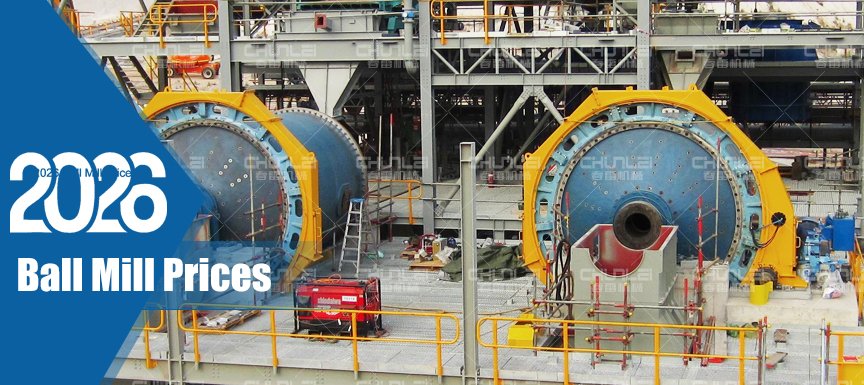
2026 Ball Mill Prices
There is no standardized pricing for ball mill equipment; the final quote depends on factors such as processing capacity, shell dimensions, grinding method, motor power, liner material, discharge method, and specific application.
Market reference data for 2026 indicates that prices for small-scale industrial ball mills range from approximately $15,000 to $120,000, while medium-scale industrial ball mills may cost between $30,000 and $500,000. Large-scale ball mills used in mining and cement production can exceed $500,000, potentially reaching into the millions of dollars.
| Equipment Category | Processing Capacity / Output | Motor Power (kW) | Estimated Price Range (USD) | Main Application Areas |
| Laboratory / Pilot-Scale Ball Mill | 1 – 20 kg / batch | 0.75 – 5.5 kW | $2,000 – $15,000 | R&D, material testing, university laboratories |
| Micro-Industrial Ball Mill | 0.2 – 1.0 t/h | 7.5 – 22 kW | $15,000 – $45,000 | Small ceramic plants, pigment grinding |
| Small-Scale Production Ball Mill | 1.0 – 5.0 t/h | 30 – 75 kW | $45,000 – $110,000 | Gold ore processing, fine quartz grinding |
| Medium-Sized Industrial Ball Mill | 5.0 – 20.0 t/h | 90 – 280 kW | $110,000 – $320,000 | Cement plants, aggregate and silica sand grinding |
| Large-Scale Mining Ball Mill | 20.0 – 100+ t/h | 315 – 1,500+ kW | $350,000 – $2,500,000+ | Large copper, iron, and gold ore processing plants |
What factors affect the price of a ball mill?
The price of a ball mill is not determined solely by the size of the equipment; variations in model, processing capacity, and configuration can lead to significant price differences. When requesting a quote, it is advisable to focus on the following parameters:
1. Ball mill processing capacity
Before discussing price, one must first determine the processing capacity, as this is a primary factor influencing the cost.
There are distinct differences in equipment dimensions, drive systems, and overall structure between a ball mill designed to process a few tons of material per hour and one required to handle tens or even hundreds of tons.
Simply put:
Required processing capacity = Target output × Actual operating factor
However, selecting the right ball mill cannot be done using a simple formula alone; factors such as feed particle size, Bond Work Index, target product fineness, grinding method, and actual operating conditions must also be considered.
2. Feed particle size and discharge fineness
Even with the same processing capacity, the ball mill configuration will differ depending on the feed particle size and the required discharge fineness.
For example, grinding 10–20 mm material to a relatively coarse product size versus grinding the same material into a finer powder may require vastly different energy inputs and equipment configurations.
Generally speaking:
The greater the grinding difficulty and the finer the required product, the higher the grinding energy required and the more advanced the equipment configuration may need to be.
3. Wet vs. dry grinding
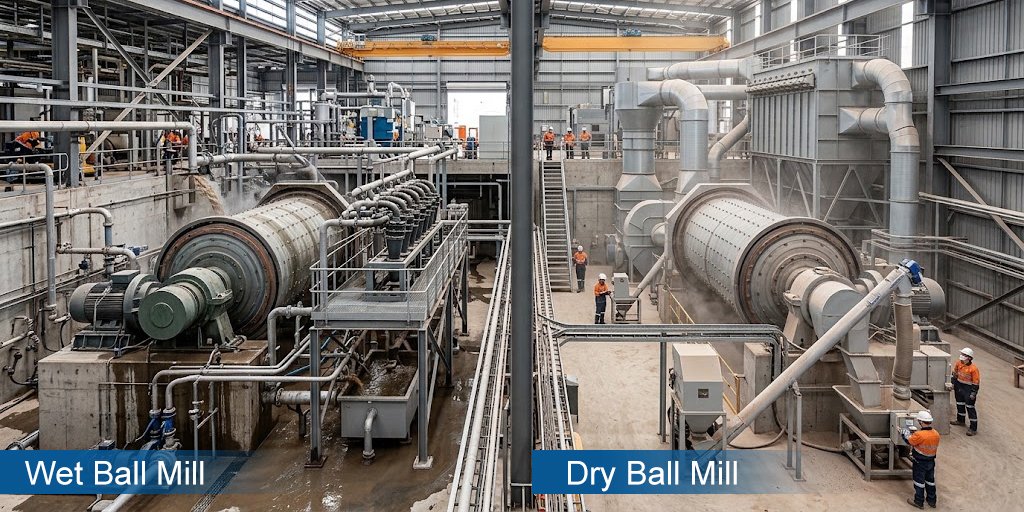
Wet ball mills involve the addition of water or other liquid media during the grinding process, whereas dry ball mills do not use process water.
These two methods entail different process configurations and, consequently, different price points.
In mineral processing, wet ball milling is common when the overall beneficiation flow involves slurry handling.
Dry ball milling is an option when the final product must remain dry or when adding water during the grinding process is unsuitable.
4. Liner material
Ball mill liners primarily serve to protect the mill shell and also influence the movement of the steel grinding media inside the shell.
Common liner types include:
- Rubber liners
- Steel liners
- Composite liners
- Ceramic liners
- Liners with a lower initial price are not necessarily the most economical choice.
For highly abrasive ores, the service life of the liners directly impacts long-term operating costs.
5. Motor and Drive System
Large-scale ball mills typically require higher drive power.
Consequently, the motor power, gearbox, drive mechanism, and electrical system all influence the final price quote.
6. Discharge Method
Different applications allow for various discharge methods, such as overflow discharge and grate discharge.
The specific choice should be determined based on the grinding process and processing capacity, rather than simply to lower the equipment price.
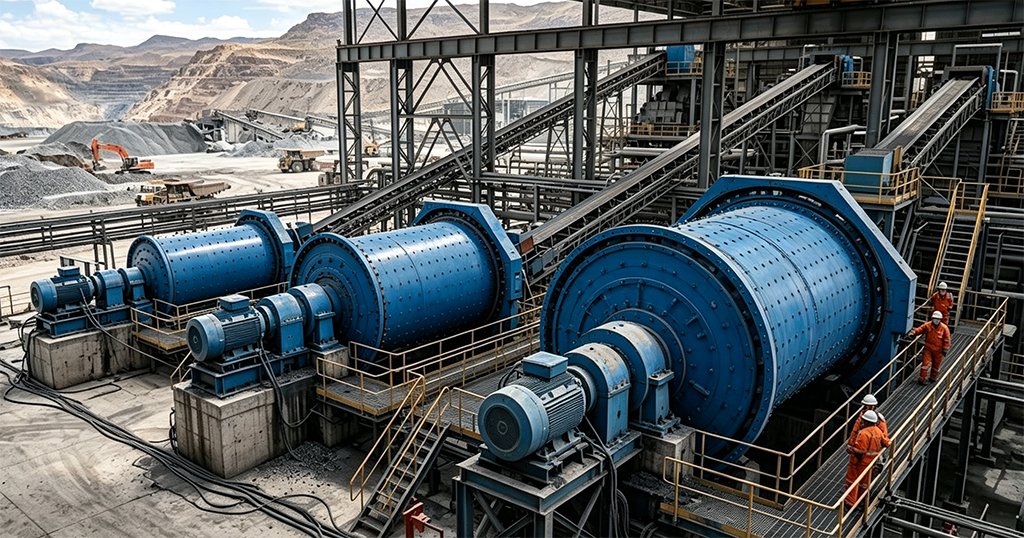
Prices of Ball Mills Based on Processing Capacity
Many customers search for ball mill prices based on processing capacity.
In fact, comparing price quotes based on processing capacity is more practical than simply comparing equipment dimensions.
The price ranges for industrial ball mills, based on 2026 market reference data, are as follows:
| Processing Capacity | Typical Applications | Approximate Equipment Price |
| 0.2–5 t/h | Small-scale grinding, pilot production | Approx. US$15,000–120,000 |
| 5–20 t/h | Small- to medium-sized mineral processing projects | Approx. US$30,000–200,000+ |
| 20–80 t/h | Medium- to large-sized mineral processing projects | Approx. US$200,000–700,000+ |
| 80–200+ t/h | Large-scale mining projects | US$700,000+ |
It should be noted that there is significant overlap among these price ranges, as processing capacity is not the sole determinant of price.
Factors such as ore hardness, feed particle size, product fineness, wet versus dry grinding, motor power, liner specifications, automation configurations, and auxiliary equipment all influence the final price.
Price Comparison: Wet Ball Mills vs. Dry Ball Mills
When comparing the prices of wet ball mills and dry ball mills, one cannot simply state that one type is necessarily cheaper than the other.
In mineral processing, if the subsequent process requires a slurry, wet grinding may be more suitable.
If the final product must remain dry, dry grinding may be the more logical choice.
| Comparison Item | Wet Ball Mill | Dry Ball Mill |
| Grinding Medium | Water/Slurry | Dry material |
| Common Applications | Mineral processing, ore beneficiation | Cement, minerals, powders |
| Dust Control | Generally relatively easy | Requires greater emphasis on dust removal |
| Downstream Process | Requires slurry handling | Suitable for dry powder handling |
| Process Water | Required | Not required |
| Equipment Price | Depends on specific configuration | Depends on specific configuration |
Therefore, when selecting a ball mill, one should consider: “Which grinding method will result in lower costs for my entire production process?”
What is typically included in a ball mill price quote?
This is a crucial point to consider when comparing quotes for different ball mills.
Some suppliers may offer only the main ball mill unit and the drive system, whereas others might provide a relatively complete equipment configuration.
A comprehensive and detailed quote usually includes:
| Quoted Items | Typical Inclusions |
| Ball Mill Main Unit | Shell, end caps, bearings, drive assembly, etc. |
| Motor and Reduction Unit | Main motor, gearbox, couplings, etc. (specific configuration depends on the model) |
| Grinding Media | Steel balls, steel rods, or ceramic balls, etc. (some manufacturers quote these separately) |
| Feeding Equipment | Feeders, feed assemblies, etc. |
| Discharge Equipment | Discharge assemblies, slurry pumps, etc. (configured according to the process) |
| Classification Equipment | Hydrocyclones, spiral classifiers, or other closed-circuit grinding equipment |
| Control System | Electrical control cabinets, variable frequency drives (VFDs), instrumentation, and automation systems |
| Wear Parts | Liners, partition plates, end liners, etc. (inclusion depends on the specific quotation) |
| Spare Parts | Initial batch of spare parts or installation/maintenance tools (may be quoted separately) |
| Transportation Costs | Usually calculated based on destination, equipment weight, and shipping method |
| Installation and Commissioning | Some manufacturers include technical guidance; others charge separately |
| Taxes and Other Fees | Determined by trade terms, destination country, and contract clauses |
What costs need to be considered in addition to the price of the equipment?
The purchase price of the ball mill is just one part of the total project investment.
A complete grinding project typically also requires consideration of the following expenses.
1. Transportation Costs
Large-scale ball mills are typically heavy, and some units may even be classified as oversized or overweight cargo.
Transportation costs depend on:
- Equipment dimensions
- Equipment weight
- Transport distance
- Port conditions
- Mode of transport
- Destination country
2. Foundation and Installation
Large ball mills usually require the construction of a dedicated foundation.
Consequently, foundation work, lifting and rigging, electrical installation, and equipment commissioning can all add to the project investment.
For large-scale equipment, 2026 market data estimates that costs such as transportation, tariffs, foundations, electrical installation, and commissioning could increase the total project cost by approximately 15%–40%; however, the actual proportion varies significantly depending on the project location and site conditions.
3. Auxiliary Equipment
Ball mills rarely operate in isolation within commercial production lines.
Depending on the specific project, a complete grinding system may include:
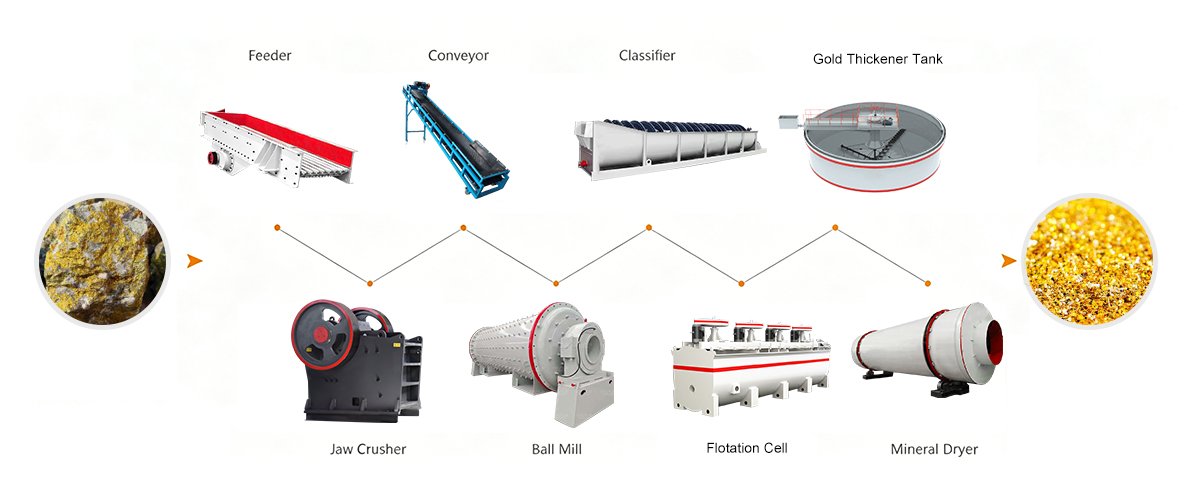
Feeding → Crushing → Ball Milling → Classification → Thickening/Separation → Product Conveying
In mineral processing projects, equipment such as crushers, vibrating screens, feeders, hydrocyclones, and slurry pumps may all form part of the complete grinding system.
How to Select a Ball Mill Without Over-Investing?
1. Select based on actual throughput; do not simply chase “high capacity”
First, determine the required tonnage per hour for normal production, then factor in a reasonable capacity margin. Operating equipment at low loads for extended periods not only results in high initial investment but can also increase electricity consumption and maintenance costs.
2. Choose the model based on feed size and product fineness
Larger feed sizes and requirements for finer grinding generally demand higher specifications and greater grinding capacity from the ball mill. Avoid selecting a model that far exceeds current needs simply to accommodate potential future production increases.
3. Select the grinding method based on ore properties
Ore hardness, grindability, moisture content, and target fineness all influence equipment configuration. Conducting ore characterization and grinding tests is a safer approach than simply scaling up equipment based on past experience.
4. Do not overlook classification equipment
Ball mills do not operate in isolation. For closed-circuit grinding, the selection of hydrocyclones or spiral classifiers is equally important. If classification efficiency is low, even a large ball mill may suffer from over-grinding or excessive circulating loads.
5. Avoid “over-specifying” auxiliary equipment
Features such as automatic control systems, variable frequency drives (VFDs), backup pumps, and spare parts should be selected based on actual project needs. The priority is ensuring stable production, not simply maximizing the number of installed components.
6. Compare total investment, not just the ball mill’s quoted price
Calculate the combined costs of the ball mill, motor, feeding equipment, classification equipment, pumps, electrical control systems, wear parts, and transportation/installation. A low price for the main unit does not necessarily mean a lower total project investment.
The key to selecting a ball mill is not buying the largest one available, but ensuring that the equipment’s throughput, feed size capabilities, product fineness, and grinding characteristics align with actual operating conditions.
For mining projects, establishing parameters such as throughput, feed size, target fineness, ore type, and daily operating hours allows you to quickly rule out most options that involve over-investment.
Common Mistakes When Purchasing a Ball Mill
Mistake 1: Focusing solely on price while ignoring configuration
Some price quotes cover only the main ball mill unit; components such as the motor, classifier, and slurry pump must be purchased separately. Always review the complete configuration when comparing prices.
Mistake 2: Selecting an oversized model
Bigger is not always better. An oversized unit leads to unnecessary increases in initial investment, power consumption, and maintenance costs.
Mistake 3: Focusing only on processing capacity
Model selection must also account for feed particle size, required product fineness, ore hardness, and grindability; the model should not be chosen based solely on tonnage per hour.
Mistake 4: Overlooking classification efficiency
The ball mill operates as part of a system that includes hydrocyclones or spiral classifiers. If the classification process cannot keep pace, even a large ball mill may fail to achieve the required product fineness.
Mistake 5: Ignoring the cost of wear parts
Items such as liners, grinding balls, and bearings represent long-term operating costs; purchase decisions should not be based solely on the initial equipment price.
Mistake 6: Failing to verify after-sales service and spare parts availability
Ball mills typically require long-term operation; the ability to obtain spare parts and technical support in a timely manner is equally important.
Mistake 7: Not selecting the model based on actual ore characteristics
Ore hardness and grindability vary significantly. Whenever possible, the selection plan should be based on actual ore samples or grinding test results.
FAQ
Q1: Why is there such a significant price difference for ball mills of the same specifications from different manufacturers?
A: Beyond equipment specifications, factors such as materials, liners, motor configuration, manufacturing standards, automation levels, and after-sales service all influence the final price.
Q2: What is the relationship between ball mill price and processing capacity?
A: Generally, higher processing capacity requires larger equipment specifications and higher installed power, leading to a corresponding increase in price. However, the final choice depends on ore properties and specific grinding requirements.
Q3: Which is more expensive: a wet-type or a dry-type ball mill?
A: There is no simple answer. Prices for both types depend on specifications, material properties, and auxiliary systems. Dry grinding also requires additional equipment for dust collection and material conveying.
Q4: Does higher motor power mean a higher price for the ball mill?
A: Generally, yes; higher power increases the cost of the motor and related drive components. However, motor power should be determined by the actual grinding load; blindly choosing high power is not recommended.
Q5: Does the material of the ball mill liner affect the price?
A: Yes. Different materials and grinding conditions require different types of liners with varying wear resistance and service lives, resulting in different costs.
Q6: Does steel ball consumption increase the equipment’s operating costs?
A: Yes. Steel balls are consumables; consumption is affected by factors such as ball size distribution, ore hardness, grinding fineness, and operating conditions. Therefore, long-term operating costs should be considered during procurement.
Q7: Which is more cost-effective: a used ball mill or a new one?
A: Used equipment may have a lower initial investment, but critical components—such as the shell, bearings, gears, liners, and motor—must be thoroughly inspected. If repair and replacement costs are high, it may not be more cost-effective than buying new equipment.
Q8: Does a low price for a ball mill imply good value for money?
A: Not necessarily. One should compare equipment performance, energy consumption, the cost of wear parts, service life, and after-sales service, rather than focusing solely on the purchase price.
Q9: Can a ball mill be selected based on a budget?
A: You can establish an investment budget first, but you should not sacrifice necessary processing capacity or grinding performance just to lower the price. A more rational approach is to first determine the process requirements and then optimize the configuration within the budget.
Q10: How can the total cost of purchasing a ball mill be reduced?
A: You can approach this by making a suitable equipment selection, optimizing auxiliary equipment, avoiding unnecessary features, and comparing long-term operating costs. Purchasing the “right equipment” is generally more important than simply buying “cheap equipment.”
Conclusion
Selecting the right ball mill model—and avoiding oversized equipment or excessive configuration—is essential for controlling both initial investment and long-term operating costs. If you are planning to purchase a ball mill, please contact CHUNLEI, we will match you with the appropriate model and grinding solution based on your specific operating conditions and provide a tailored quotation.
Latest News

A Comprehensive Guide to Types of Tin Ore and Mineral Processing Techniques
800Tin ore beneficiation is not merely a matter of crushing and grinding the ore before feeding it into a jig or a shaking table. Even within a single tin mining project, the optimal beneficiation process can vary significantly depending on factor…
-
How is a 0.2% tin ore processed into a 60% concentrate?
800Many clients attempt to process ore containing 0.2% tin, only to find that—after a series of operations—the ore grade has failed to improve, while significant amounts of cassiterite remain in the tailings. Some clients try to compensate by inte…
-
What are the gravity separation process flows for tin ore?
800Having worked in the tin mining industry for many years, I’ve observed a recurring issue among clients: even when the raw ore has a high tin content and a substantial amount of processing equipment is employed, the final tin recovery rates rema…
-
Gravity Concentration vs. Flotation for Gold: Which Process Should You Choose?
800In gold beneficiation projects, many mining engineers face a critical question: Why does the final gold recovery rate consistently fall short of expectations, even when grinding fineness and reagent regimes are strictly maintained according t…
loading…
已经是到最后一篇内容了!