 Chunlei Mining Machinery

How is a 0.2% tin ore processed into a 60% concentrate?
Many clients attempt to process ore containing 0.2% tin, only to find that—after a series of operations—the ore grade has failed to improve, while significant amounts of cassiterite remain in the tailings. Some clients try to compensate by intensifying the grinding process, which paradoxically leads to an even lower recovery rate. Others invest in equipment such as jigs, shaking tables, or other machinery, yet still fail to achieve satisfactory final results.
In reality, to produce a tin concentrate with a grade of around 60% from low-grade ore, one must first gain a clear understanding of the cassiterite’s characteristics: its appearance, particle size, and the degree to which it is intergrown with the gangue minerals. Only then can one determine the appropriate methods for crushing, grinding, and classification, as well as the specific equipment required for each particle-size fraction. A well-designed process is the only way to obtain a high-grade concentrate.
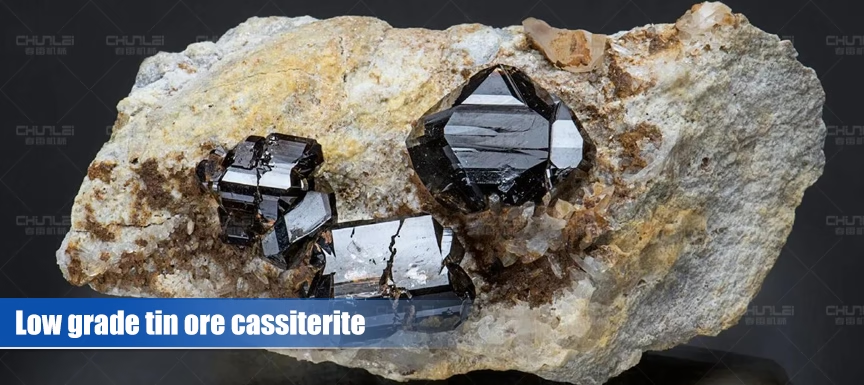
Why is a 0.2% tin ore difficult to process?
The difficulty in processing a 0.2% tin ore stems not merely from its low grade; more critical factors include the grain size distribution (dissemination size) of the cassiterite, the degree of mineral liberation, the content of mineral slimes, and the compatibility between the processing equipment and the particle size of the material.
In the case of low-grade tin ore, the presence of cassiterite does not guarantee that all the tin can be effectively recovered. If the crushing, grinding, and classification stages are poorly designed, cassiterite may end up in the tailings, resulting in low concentrate yields and unsatisfactory recovery rates.
While cassiterite has a high density, this does not mean that all cassiterite is easily recovered.
One of the most common valuable minerals in tin deposits is cassiterite (SnO₂). With a theoretical density of approximately 6.8–7.1 g/cm³—significantly higher than that of many common gangue minerals—cassiterite is often well-suited for recovery via gravity separation.
However, three practical challenges arise during production:
- Coarse-grained cassiterite: If the cassiterite has not yet been liberated from the gangue, it may end up in the middlings or tailings when fed directly into gravity separation equipment.
- Fine-grained cassiterite: As particle size decreases, the settling and stratification behavior of the particles in water changes, making gravity separation more difficult.
- Ultra-fine-grained cassiterite: Such particles are easily lost with the slimes; conventional equipment, such as jigs or shaking tables, may not be effective for their recovery.
Therefore, the high density of cassiterite does not imply that the same gravity separation equipment is suitable for all particle sizes.
1. What does low-grade raw ore imply?
Suppose you process 1,000 tonnes of raw ore with a tin (Sn) content of 0.2%. In terms of elemental tin (Sn), it theoretically contains only:
1,000 × 0.2% = 2 tonnes of Sn
This means that even a small amount of tin ending up in the tailings can result in significant metal loss. Therefore, when processing low-grade tin ore, one must focus not only on the grade of the concentrate but also, crucially, on the overall tin recovery rate.
This is precisely why recovery rates are of paramount importance in the beneficiation of low-grade tin ore: a high concentrate grade does not necessarily mean a high quantity of recovered tin; if losses in the tailings are not well controlled, the costs incurred during the preceding beneficiation stages may effectively be wasted.
2. Which parameters must be tested prior to mineral processing?
| Test Item | Primary Objective | Impact on Process Design |
| Chemical Analysis of Run-of-Mine Ore | Confirm actual tin grade | Assess resource grade and beneficiation potential |
| Mineralogical Composition Analysis | Identify cassiterite and other tin-bearing minerals | Determine suitability for gravity separation or the need for a combined process |
| Particle Size Distribution (Sieve Analysis) | Determine the proportions of coarse, medium, and fine fractions | Establish classification and size-fraction-specific treatment strategies |
| Mineral Liberation Degree | Evaluate the association between cassiterite and gangue minerals | Determine the required fineness for crushing and grinding |
| Tailings Tin Content Analysis | Identify the primary sources of tin loss | Guide improvements to the recovery process |
| Grinding Tests | Compare the effects of different grinding fineness levels | Prevent over-grinding and unnecessary energy consumption |
Before purchasing equipment, it is advisable to conduct ore sample analysis and beneficiation testing. For low-grade tin ore, gaining a clear understanding of the ore’s characteristics is often more valuable than simply increasing investment in equipment.
Detailed Mineral Processing Flow for Producing 60% Tin Concentrate from 0.2% Tin Ore
For low-grade tin ore, a multi-stage beneficiation process is typically designed based on the specific characteristics of the ore. A standard tin ore processing flow is as follows:
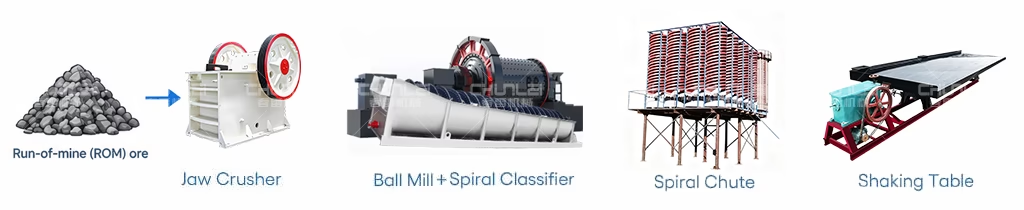
Run-of-mine preparation → Crushing and screening → Stage grinding → Classification → Size-fractionated gravity separation → Middlings reprocessing → Concentrate refining → Dewatering.
Please note that this is a reference flow; not all tin ores require this exact process. Depending on the ore, additional steps—such as pre-concentration, desliming, magnetic separation, or other auxiliary processes—may be necessary.
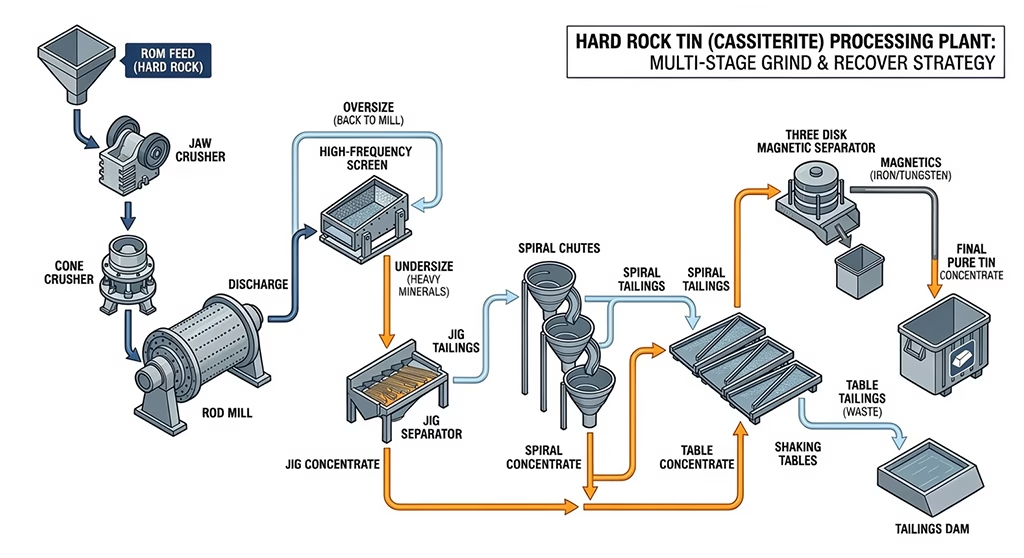
Step 1: Crushing and Screening – Preventing Unnecessary Over-grinding
The run-of-mine ore first undergoes crushing and screening to reduce large ore fragments to a particle size range suitable for downstream equipment.
This stage serves two primary purposes:
- To crush the ore to an appropriate particle size, preparing it for subsequent grinding.
- To minimize the repeated crushing of already liberated cassiterite (tin ore), which would otherwise generate excessive fine slimes that are difficult to recover.
If the ore contains coarse-grained cassiterite that is easily liberated, testing can determine whether a pre-concentration step—such as pre-sorting or coarse-fraction gravity separation—is warranted prior to grinding. This can reduce the volume of material fed into the grinding mills, thereby lowering downstream energy consumption.
However, the feasibility of recovering coarse-grained cassiterite at an early stage must be determined through mineral liberation and particle size analysis; it cannot be assessed based solely on the grade of the run-of-mine ore.
Step 2: Stage Grinding and Classification for Controlled Cassiterite Liberation
Finer grinding is not necessarily better.
If grinding is too coarse, cassiterite may remain intergrown with gangue minerals; if it is too fine, excessive amounts of “slimes” (fine-grained waste) are generated, complicating downstream separation processes.
A more sound approach involves stage grinding, stage classification, and timely recovery:
- After the first stage of grinding, the material is classified.
- Particles that have reached the required degree of liberation are prioritized for gravity separation.
- For middlings—particles that remain intergrown—mineralogical analysis is used to determine whether they should be returned for further grinding.
- Fine-grained fractions are evaluated separately to assess their tin content and recovery potential.
This strategy prevents all ore from being repeatedly ground to the same fine size, thereby reducing the risk of over-grinding.
Step 3: Select gravity separation equipment based on particle size
This is a highly critical step in the entire process.
| Material Characteristics | Equipment for Priority Testing | Primary Function |
| Liberated, relatively coarse-grained cassiterite | Jig | Initial separation based on density differences |
| Fine-sand-sized material suitable for shaking table treatment | Shaking table | Further separation of cassiterite from light minerals |
| Placer/alluvial minerals within an appropriate size range | Spiral concentrator | Continuous processing for suitable particle sizes and pulp conditions |
| Fine-grained material difficult to recover effectively via conventional gravity separation | Centrifugal gravity concentrator | Enhanced separation of fine-grained, high-density minerals |
| Fine-grained material containing significant amounts of slime (fine clay/silt) | Desliming and classification, followed by evaluation of recovery methods for fine particles | Reduction of interference from slimes and determination of an appropriate processing route |
It should be emphasized that the equipment listed in the table does not simply serve as direct substitutes for one another. Spiral chutes, shaking tables, and centrifugal concentrators each have their own specific range of application; therefore, the optimal choice must be determined through testing, with consideration given to factors such as particle size, pulp density, processing capacity, and separation performance metrics.
Step 4: Roughing, Middlings Retreatment, and Cleaning
Gravity separation typically cannot achieve both high grade and high recovery in a single pass.
A more effective approach involves separating the material into distinct products:
- Concentrate: Contains a high grade of tin and may undergo further cleaning.
- Middlings: Contain a residual amount of tin; depending on the degree of mineral intergrowth, they can be returned to an appropriate stage of the separation or grinding circuit.
- Tailings: Before being sent to the tailings management system, they should be assayed for tin content to determine whether further recovery is warranted.
The point at which middlings are reintroduced into the circuit must be carefully determined based on the specific process flow. Returning all middlings to the front of the circuit indiscriminately can lead to an excessive circulating load, which compromises the stability of the entire production line.
Step 5: Concentrate Cleaning and Dewatering
Following the roughing and middlings treatment stages, the resulting tin concentrate may still contain impurities such as quartz or iron-bearing minerals. Depending on the nature of the ore, additional processing—such as cleaning via shaking tables or magnetic separation—may be required to more effectively separate the tin from these impurities. Finally, the concentrate undergoes thickening and filtration to prepare it for subsequent transport or smelting.
Achieving a tin concentrate grade of 60% cannot be accomplished with a single piece of equipment. Whether this target is attainable depends on factors such as the degree of cassiterite liberation, the complexity of the ore composition, and the overall design and efficiency of the beneficiation process.
How to Select Key Equipment? Understanding the Roles of Different Units?
The principle for selecting equipment for processing low-grade tin ore is straightforward: first, determine the ore’s particle size distribution and the degree of cassiterite (tin ore mineral) liberation; then, select the appropriate equipment. Do not choose the equipment first and then attempt to force the ore to suit it.
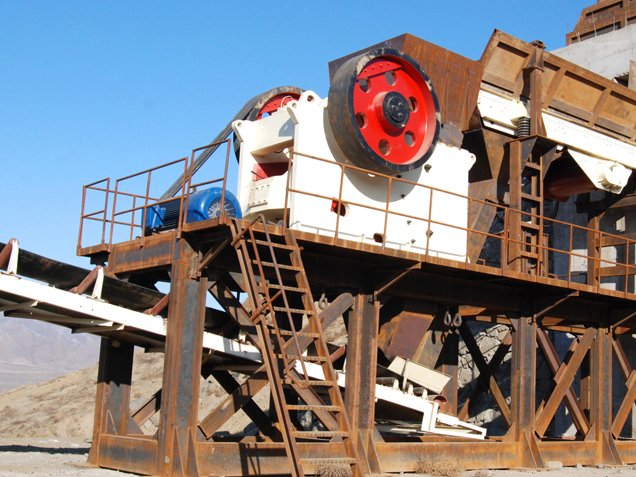
1.Crushing Equipment: Controlling Particle Size to Facilitate Liberation
The selection of crushing equipment depends on the maximum size of the run-of-mine ore, its hardness, the required processing capacity, and the specifications for subsequent grinding stages.
If the crushed product is too coarse, it may increase the load on the grinding circuit; if it is too fine, it may result in an unnecessary excess of fine particles and slimes.
Key factors for selection include:
- Feed particle size versus target discharge particle size.
- Ore hardness and abrasiveness.
- Screening efficiency and closed-circuit operating conditions.
- Whether coarse-particle pre-concentration is required after crushing.
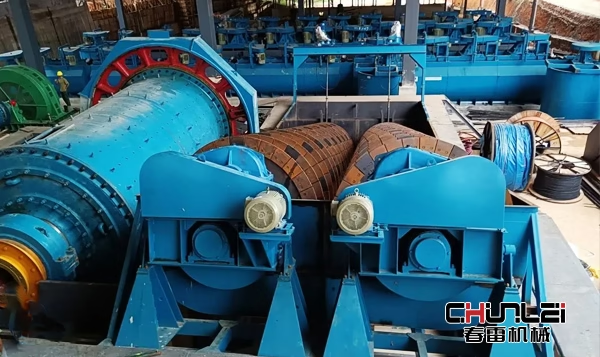
2. Grinding and Classification Equipment: Managing Liberation Without Blindly Pursuing Fineness
The type and specifications of grinding mills should be determined based on ore hardness, results from grinding tests, production scale, and target particle size. Classification equipment should be configured to minimize the entry of coarse particles into downstream fine-particle separation stages, while also ensuring that fine cassiterite particles are not mistakenly discarded as waste.
Evaluating the grinding process should go beyond just the final fineness; it should also consider:
- Whether the degree of cassiterite liberation has improved.
- The distribution of tin within the target particle size range.
- Whether there is a significant increase in the production of fine slimes.
- Energy consumption per unit of throughput and the circulating load.
- Changes in the grade and recovery rate of the concentrate obtained from subsequent gravity separation.
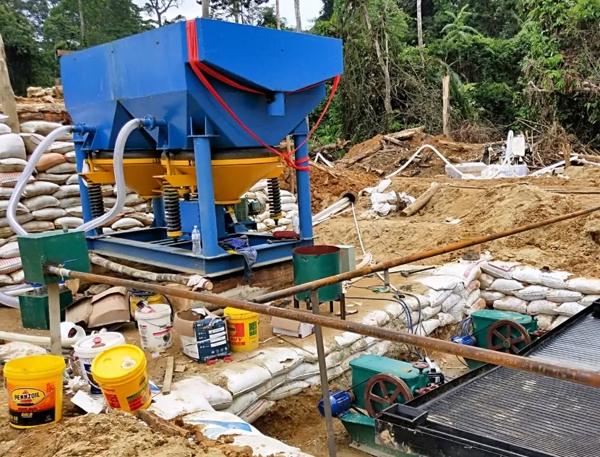
3. Jigs: Suitable for Coarse-Particle Gravity Separation
Jigs utilize periodic water flow to stratify mineral particles based on their density. They are well-suited for roughing or pre-enrichment within a specific particle size range, as determined by prior testing.
While jigs offer the advantage of continuous processing, their separation performance remains influenced by factors such as particle size distribution, the degree of mineral liberation, the stability of the ore feed, and operational parameters. If the cassiterite has not yet been liberated, achieving an ideal separation result may be impossible, even if the equipment is operating correctly.
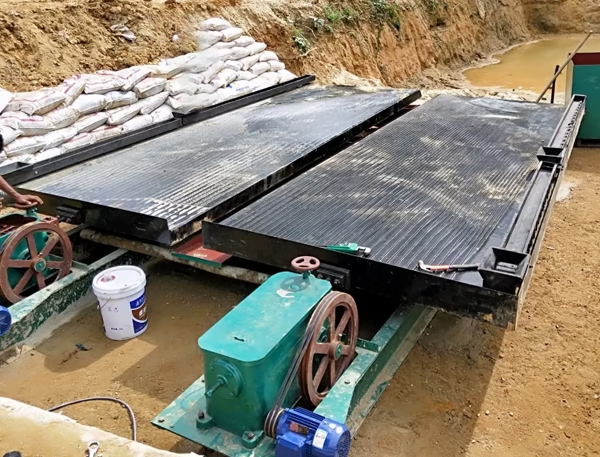
4. Shaking Tables: Suitable for fine-grained materials requiring further separation
Shaking tables utilize the motion of the deck, the flow of water, and differences in the properties of mineral particles to achieve separation. They are commonly used for the cleaning or scavenging of materials within an appropriate size range.
During equipment selection and commissioning, it is essential to balance factors such as feed particle size, feed pulp density, wash water volume, deck inclination, and throughput.
The performance of a shaking table can be significantly compromised if there is an excess of slimes, an overly broad range of feed particle sizes, or if the cassiterite remains intergrown with gangue minerals.
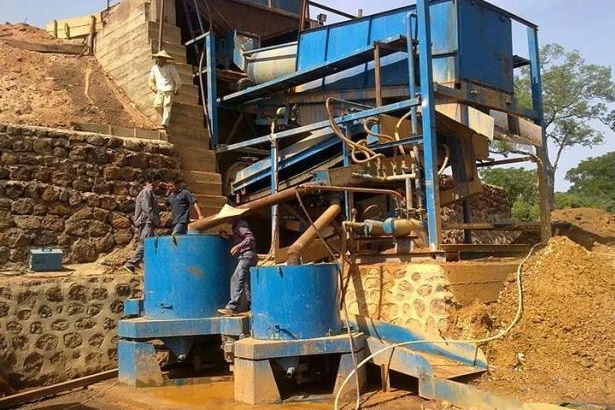
5. Centrifugal Gravity Concentrators: Evaluating the potential for recovering fine-grained cassiterite
Centrifugal gravity concentrators may be considered when cassiterite is concentrated in the fine-size fractions that are difficult to process using conventional gravity separation methods. However, this does not guarantee that all ultra-fine cassiterite can be effectively recovered.
Actual performance depends on particle size distribution, pulp characteristics, equipment operating parameters, and the degree of mineral liberation. In the case of ultra-fine slimes, separation can be challenging—even if the minerals have a high density—due to the influence of particle size and fluid dynamics.
Therefore, the decision to invest in centrifugal gravity concentrators should be based on size-fractionated beneficiation tests, rather than relying solely on the throughput capacity claimed in the equipment’s promotional literature.
How can grinding, classification, and tin recovery rates be optimized?
If a processing plant is already equipped with units such as jigs and shaking tables, yet the tin content in the tailings remains high, it is advisable not to rush into adding more equipment. Instead, first identify the specific stage where tin loss occurs, then determine the appropriate modifications.
Begin by conducting a particle size analysis of the tailings to pinpoint the source of tin loss.
It is recommended to perform a sieve analysis on the tailings and analyze the tin content within each individual size fraction.
| Key Issues in Tailings | Potential Causes | Recommended Measures |
| Significant tin content in coarse fractions | Insufficient liberation of cassiterite, or suboptimal coarse-fraction separation | Review crushing/grinding fineness, liberation status, and parameters for coarse-fraction gravity separation |
| High tin loss in medium-to-fine fractions | Improper classification, or mismatch between equipment and particle size distribution | Optimize classification; conduct gravity separation tests tailored to specific size fractions |
| High tin content in fine slimes | Loss of fine cassiterite, or interference from slimes during separation | Evaluate desliming conditions and recovery processes for fine particles |
| Excessive circulating load of middlings | High proportion of composite particles (middlings), or inappropriate return points in the circuit | Analyze the composition of middlings; adjust return points or regrinding conditions |
| High concentrate grade but low overall recovery | Over-cleaning, or excessive losses during roughing/scavenging stages | Balance grade and recovery; assess metal distribution across each processing stage |
The specific optimization steps are as follows:
- Control grinding fineness: Insufficient grinding leads to inadequate liberation of cassiterite, while over-grinding generates excessive fine slimes, which negatively impacts subsequent gravity separation.
- Optimize classification efficiency: Promptly separate liberated cassiterite to prevent over-grinding, and return incompletely liberated composite particles to the mill for further processing.
- Implement graded gravity separation: Deploy appropriate equipment—such as jigs, shaking tables, or centrifugal concentrators—based on the characteristics of different particle size fractions to enhance cassiterite recovery.
- Strengthen tailings monitoring: Regularly analyze the tin content and particle size distribution in the tailings to identify the causes of tin loss and make targeted adjustments to process parameters.
Finer grinding is not necessarily better. By conducting mineral liberation analysis, particle size testing, and beneficiation experiments, one can determine the optimal grinding fineness and classification conditions—thereby increasing tin recovery while simultaneously reducing energy consumption and production costs.
How should the effectiveness of different mineral processing schemes and equipment be compared?
When comparing mineral processing schemes for tin ore, one should not simply look at which piece of equipment yields the highest concentrate grade, nor should one rely solely on the theoretical recovery rates claimed by equipment manufacturers. The true basis for comparison is: given the same ore sample and similar experimental conditions, which process configuration can recover the most tin and consistently achieve the target concentrate grade, while effectively controlling investment, energy consumption, and operating costs?
Taking ore where cassiterite (SnO₂) is the primary valuable mineral as an example, a mineral processing scheme must comprehensively account for factors such as ore characteristics, the liberation size of the cassiterite, the content of fine slimes, the presence of associated minerals, and the specific requirements for the final concentrate.
Comparison of Common Tin Ore Processing Schemes:
| Mineral Processing Schemes | Key Advantages | Key Limitations | Best Suited For |
| Single-stage Gravity Separation | Relatively simple process; generally requires fewer chemical reagents | May struggle to achieve adequate recovery of fine/ultrafine particles or complex intergrown minerals | Cassiterite that is already liberated and of a particle size suitable for gravity separation |
| Staged Grinding + Gravity Separation | Reduces the risk of over-grinding; allows for the timely recovery of liberated cassiterite | Requires optimization of classification points and middlings circulation | Primary tin ores prone to over-grinding or losses in the middlings fraction |
| Multi-size Fraction Processing + Gravity Separation | Employs specific equipment for different particle size ranges, enabling targeted recovery | Increased complexity in process flow and operational management | Ores with a distinct distribution of coarse and fine cassiterite particles |
| Gravity Separation + Desliming/Fine Particle Recovery | Helps minimize the loss of fine cassiterite | Desliming may inadvertently remove valuable minerals; requires management of fine-slurry streams | Ores with high fine-slurry content or significant losses of fine cassiterite in the tailings |
| Gravity Separation + Flotation | Allows for the separation of associated sulfides or specific fine-grained minerals | Complex reagent regimes; requires verification of mineral floatability and downstream processing | Polymetallic ores where gravity separation alone is insufficient |
| Gravity Separation + Magnetic Separation (or other auxiliary methods) | Effective for removing specific magnetic impurities or improving concentrate quality | Dependent on differences in mineral magnetic susceptibility; may lead to higher capital investment | Applications requiring the removal of impurities from concentrates or the separation of specific minerals |
For ores where cassiterite is primarily liberated and there is a significant density contrast, gravity separation should be evaluated as a priority. If there are notable differences in particle size, risks of fine-slime loss, or complex mineral associations, then staged grinding, multi-size fraction processing, and necessary supplementary separation methods should be considered.
FAQ
Q: Is it always possible to produce a 60% tin concentrate from a 0.2% tin ore?
A: Not necessarily. While 60% Sn may be a target grade for certain projects, achieving it depends on factors such as mineral composition, the degree of cassiterite liberation, associated minerals, the beneficiation flowsheet, and product specifications. This must be verified through ore sample testing.
Q: For low-grade tin ore, should a jig or a shaking table be used?
A: The choice cannot be based solely on the head grade. One must first analyze the particle size and liberation state of the cassiterite. Jigs are suitable for the roughing of particles within a specific size range, while shaking tables are often used for further separation of appropriately sized material; both can be integrated into a well-designed flowsheet.
Q: Does finer grinding of tin ore always lead to higher recovery rates?
A: No. Grinding that is too coarse results in insufficient liberation, while grinding that is too fine can generate excessive slimes and make the recovery of fine particles more difficult. Comparative tests at different grind sizes should be conducted to determine the optimal parameters that balance liberation, recovery, and energy consumption.
Q: Why might the tin recovery rate remain low even when the concentrate grade meets the requirements?
A: This could be due to losses during roughing, the loss of fine-grained cassiterite, over-processing during cleaning stages, or an inefficient middlings circulation system. It is recommended to analyze the rougher tailings, cleaner tailings, middlings, and final tailings to identify where the primary losses are occurring.
Q: What are the most important tests to conduct before processing low-grade tin ore?
A: It is advisable to begin with chemical analysis, mineralogical analysis, particle size distribution analysis, and mineral liberation analysis of the raw ore, followed by gravity separation condition tests and flowsheet development tests. For ores containing significant amounts of fine tin-bearing slimes or complex mineral compositions, it is also necessary to evaluate specialized fine-particle recovery methods or auxiliary separation processes.
Conclusion
For low-grade tin ore with a tin content of only 0.2%, achieving a 60% Sn concentrate does not depend merely on increasing grinding time or selecting a specific piece of equipment. Instead, the key lies in effective cassiterite liberation, size-based classification, and the control of tin losses. We recommend conducting ore analysis and beneficiation testing first, followed by the development of an appropriate process flowsheet and equipment configuration—balancing concentrate grade, tin recovery, and production costs.
Are you looking for a tin beneficiation solution tailored to your specific ore? Please contact us and provide details regarding your ore samples and production requirements. We will assist you in analyzing your ore’s characteristics, optimizing the beneficiation process, and recommending the ideal equipment configuration.
Latest News

What are the gravity separation process flows for tin ore?
800Having worked in the tin mining industry for many years, I’ve observed a recurring issue among clients: even when the raw ore has a high tin content and a substantial amount of processing equipment is employed, the final tin recovery rates rema…
-
Gravity Concentration vs. Flotation for Gold: Which Process Should You Choose?
800In gold beneficiation projects, many mining engineers face a critical question: Why does the final gold recovery rate consistently fall short of expectations, even when grinding fineness and reagent regimes are strictly maintained according t…
-
Gravity Separation for Gold: When Is It Suitable for Gold Ore?
800Many people immediately associate “gold ore” with gravity separation, yet not all gold deposits are suitable for recovery using gravity methods alone. Gravity separation is appropriate for liberated native gold or other heavy minerals that ex…
-
How Classification Affects Gold Grinding Efficiency
800In gold ore grinding circuits, attention is often focused primarily on ball mill capacity, power consumption, and grinding media; however, in actual operation, classification plays an equally critical role in determining grinding efficiency. …
loading…
已经是到最后一篇内容了!