 Chunlei Mining Machinery
A Comprehensive Guide to Limestone Crushing Plants
Many limestone quarry owners simply copy crushing plans designed for hard rock—like granite—and base their equipment choices solely on price. Consequently, once production begins, they discover that the final product fails to meet size specifications, excessive fines are generated, wear parts deteriorate rapidly, and operating costs skyrocket.
To select the right limestone production line, you must first understand the material’s silica content and moisture/clay levels, as well as the specific product grades you intend to sell. Some owners try to cut costs by installing a single-stage hammer crusher, only to find the machine constantly clogging when processing sticky, clay-rich material. Others unnecessarily install cone crushers, wasting a significant amount of money in the process.
Therefore, when selecting limestone crushing equipment, do not focus exclusively on output capacity. You must first thoroughly assess your stone’s characteristics, aggregate specifications, and site conditions, while calculating the total long-term cost of ownership; only then can you ensure the project is truly profitable.
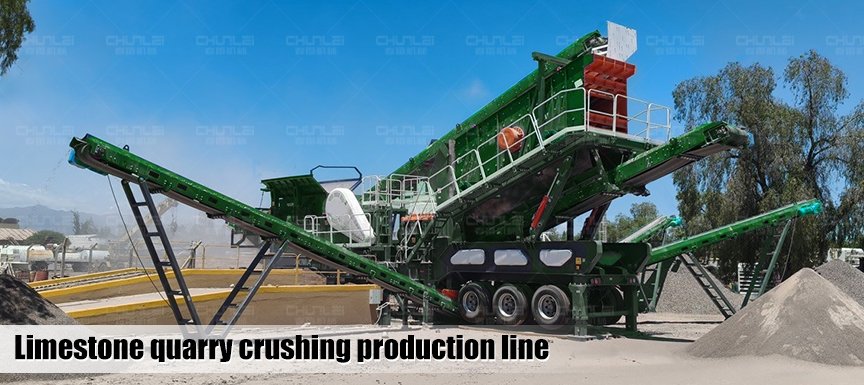
Impact of Limestone Material Characteristics on Crushing System Design
While limestone may appear easy to crush, properties such as hardness, moisture content, clay content, lump size, and abrasiveness vary significantly across different quarry sites; therefore, equipment selection for the crushing system cannot be based solely on production capacity.
- Low-hardness, easily crushable limestone: A jaw crusher can be considered for primary crushing, followed by an impact crusher or other fine-crushing equipment configured according to final product specifications.
- High-hardness limestone: Heavy-duty jaw crushers are typically required for the primary stage, while equipment wear resistance and processing capacity are key considerations for secondary crushing.
- High clay content: It is advisable to install pre-screening or clay-rock separation equipment before the crusher to prevent clay from entering the crushing chamber and causing blockages.
- High moisture content: Wet, sticky materials tend to adhere to screens and equipment; special attention should be paid to the feeding, screening, and discharge stages.
- Large raw material lump size: The primary crusher must be selected based on the maximum feed size to avoid issues where large rocks cannot enter the inlet or the machine lacks the capacity to process them.
- Production of manufactured sand: In addition to crushing, particle shape and product gradation must be considered; a shaping or sand-making stage is usually required.
- Requirement for multiple product sizes: A closed-circuit process—combining a crusher, vibrating screen, and return conveyor—can be employed to recirculate oversized material for further crushing.
Selection Chart for Limestone Crushing Equipment Under Various Operating Conditions
Limestone varies significantly in hardness and clay content; therefore, equipment selection cannot be based solely on production capacity but must also take into account raw material lump size, moisture content, product particle size, and end-use requirements.
| Limestone Operating Conditions | Key Characteristics | Recommended Equipment/Process | Applicable Scenarios |
| Soft, dry limestone | Easy to crush; low abrasiveness | Jaw crusher + Impact crusher | General construction aggregates |
| Medium-hard limestone | Moderate hardness; large lump size | Jaw crusher + Impact/Cone crusher | Sand and gravel aggregates |
| Hard limestone | Difficult to crush; high wear | Heavy-duty jaw crusher + Cone crusher | Large-scale aggregate production lines |
| High clay/mud content | Clay tends to clog equipment | Mud-stone separator/Pre-screening + Jaw crusher | Soil-contaminated limestone |
| High moisture content; high stickiness | Prone to screen blinding and material clogging | Pre-screening/Mud-stone separation + Crushing equipment | Wet, sticky limestone |
| Very large raw material lumps | Large maximum feed size | Heavy-duty jaw crusher | Primary mine crushing |
| Manufactured sand production required | High standards for particle shape and gradation | Jaw crusher + Secondary crushing + VSI sand maker + Screening | Manufactured sand production |
| Multiple product specifications required | Varying product particle size requirements | Crusher + Vibrating screen + Return conveyor | Multi-specification aggregates |
| Limestone for cement/lime production | Focus on stable crushing and target particle size | Single- or two-stage crushing system | Cement and lime production |
If the limestone is soft, dry, and has a low clay content, an impact crushing solution is preferable; if the material is hard and highly abrasive, a cone crusher is usually a better choice; if the clay content is high, the issues regarding clay and sticky materials should be addressed before considering subsequent crushing stages.
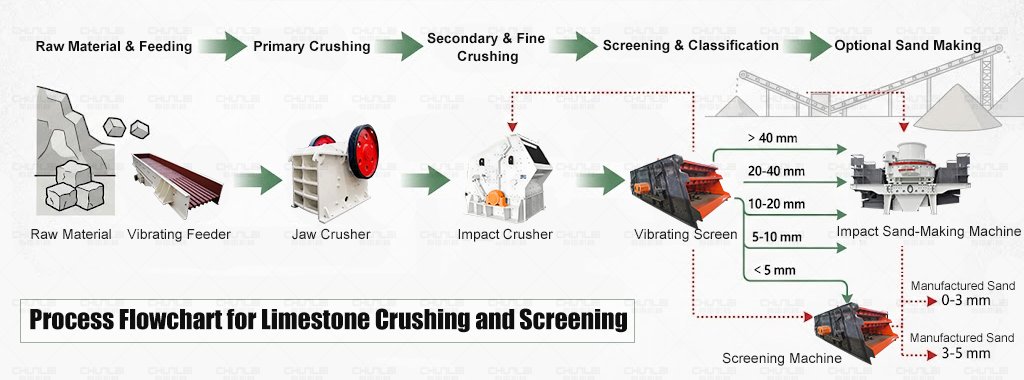
Complete Process Flow for a Limestone Crushing Plant
Typical limestone crushing production lines consist of four core stages: primary crushing, secondary/fine crushing, screening, and an optional sand-making stage.
Complete material flow: Raw ore → Vibrating feeder → Primary crusher → Belt conveyor → Secondary/fine crusher → Circular vibrating screen (grading) → Stockpiles of finished products of various specifications. Oversized material is returned to the crusher for a closed-loop cycle; if manufactured sand is required, a VSI sand-making machine is added downstream.
- Primary Crushing Stage: Large limestone blocks are fed into the primary crusher and reduced to 80–250 mm, providing suitable feed material for the secondary/fine crushing stage; jaw crushers are the mainstream choice here.
- Secondary/Fine Crushing Stage: Material from the primary stage is further crushed to produce aggregates for construction and road building; impact crushers and heavy-duty hammer crushers are the most commonly used primary machines for limestone applications.
- Screening Stage: A circular vibrating screen separates the material into 0–5 mm fines, 5–20 mm concrete aggregates, and 20–40 mm road-base stone; oversized material is returned to the crushing circuit.
- Optional Sand-Making Stage: If the project requires high-quality manufactured sand, a VSI (Vertical Shaft Impact) crusher is added downstream to perform fine crushing and shape shaping.
Analysis of the Five Main Types of Limestone Primary Crushing Equipment
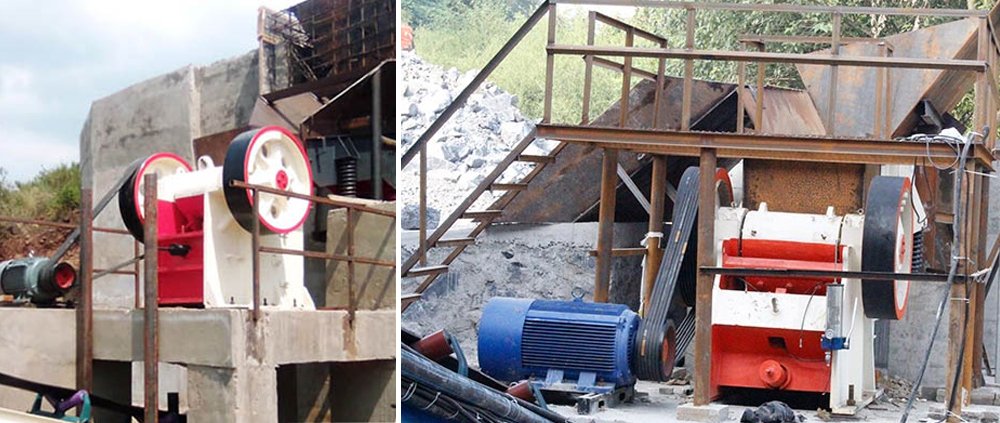
1. Jaw Crusher | Primary Crushing Workhorse
- Positioning: Handles the initial coarse crushing stage of the production line, processing oversized run-of-mine ore from blasting.
- Suitability: Compatible with various types of limestone; operates reliably even when the ore contains small amounts of hard siliceous inclusions.
- Capacity Range: 1–1,200 t/h; Crushing Ratio: 4:1–8:1.
- Advantages: Robust structure, high feed tolerance, and stable operation.
- Drawbacks: Produces a relatively high proportion of flaky and elongated particles; cannot directly yield finished aggregate and is limited to coarse crushing.
| Commonly used models | Maximum feed mm | Processing capacity t/h | Applicable scenarios |
| PE400×600 | 340 | 16 64 | Small and medium sized quarries |
| PE750×1060 | 630 | 110 320 | Medium Limestone Crushing Plant |
| PE1500×1800 | 1200 | 500 1200 | Large limestone mine |
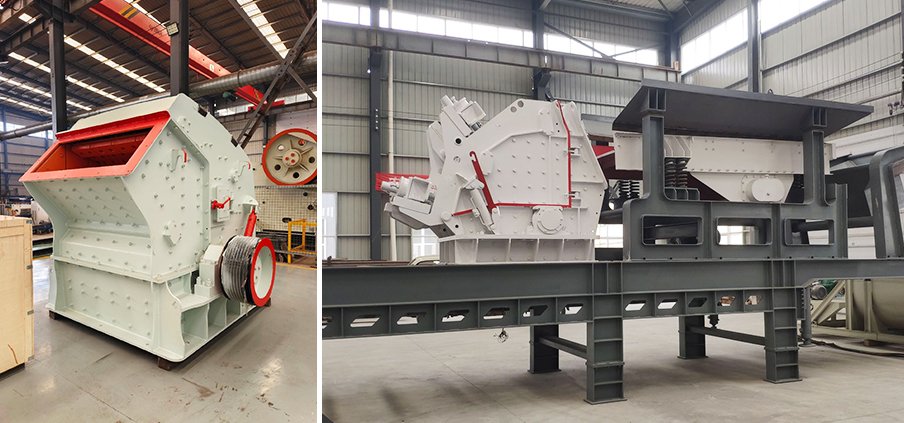
2. Impact Crusher | Secondary/Tertiary Crushing & Aggregate Shaping
- Positioning: The most common secondary crushing equipment for limestone; utilizes high-speed impact for size reduction.
- Application: Suitable for standard low-silica limestone; produces high-quality cubical aggregates for concrete and asphalt.
- Capacity Range: 30–2,000 t/h; Crushing Ratio: 10:1–20:1.
- Advantages: Excellent product shape, high proportion of cubical particles, and low content of elongated or flaky particles.
- Limitations: Blow bar wear increases sharply when processing ore with high-silica inclusions; wet, sticky materials tend to clog the crushing chamber.
| Common Models | Max. Feed Size (mm) | Processing Capacity (t/h) | Application Scenario |
| PF-1007 | 300 | 30-70 | Small-scale aggregate production |
| PF-1315 | 350 | 120-250 | Medium-scale limestone production line |
| PF-1520 | 500 | 300-550 | Large-scale aggregate production line |
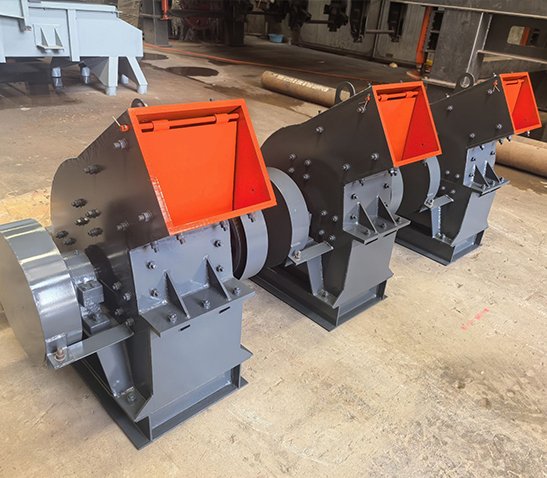
3. Heavy-Duty Hammer Crusher | Single-Stage Crushing Solution
- Positioning: Single-stage crushing; reduces large raw ore to under 25mm in one pass; widely selected for limestone projects in cement plants.
- Suitability: Low-silica limestone with a moisture content of <8%.
- Capacity Range: 60–3,000 t/h; maximum crushing ratio of up to 50:1.
- Advantages: Eliminates the need for secondary crushing, simplifies the overall process flow, and reduces the total number of equipment units.
- Limitations: Tends to produce a high proportion of fines; prone to clogging the crushing chamber when processing ore with high clay content.
| Common Models | Max. Feed Size (mm) | Processing Capacity (t/h) | Application Scenarios |
| PCZ1308 | 380 | 60-160 | Small to medium-sized limestone plants |
| PCZ1615 | 550 | 200-550 | Medium-sized gypsum and limestone projects |
| PCZ1720 | 650 | 500-1000 | Raw material crushing for large-scale cement plants |
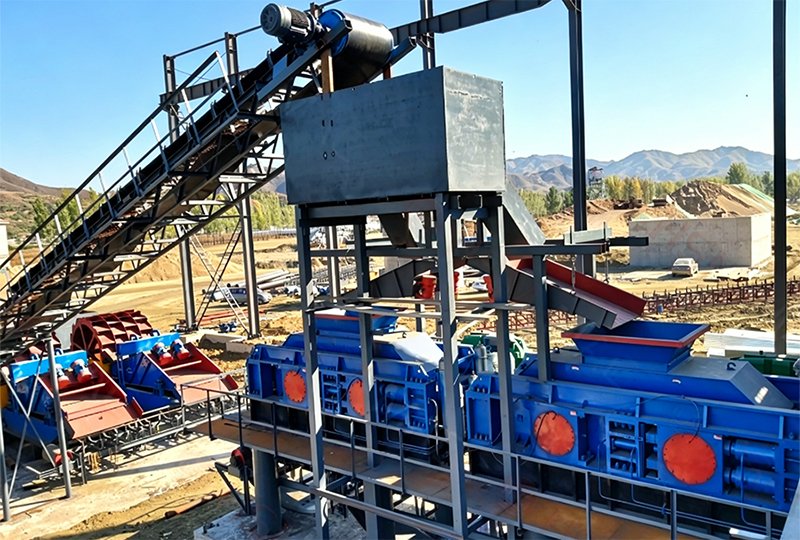
4. Roll Crusher | Low-Fines Crushing
- Positioning: Compression-based crushing, designed to minimize the production of stone dust.
- Suitability: Applications requiring control over the proportion of fines; suitable for slightly moist or sticky limestone.
- Capacity Range: 3–110 t/h; Crushing Ratio: 3:1–5:1.
- Advantages: Minimal over-crushing and low fines generation; spring protection mechanism allows automatic retraction when encountering uncrushable material.
- Limitations: Low crushing ratio and restricted feed size; not suitable for large-scale primary crushing.
| Common Models | Max. Feed Size (mm) | Processing Capacity (t/h) | Application Scenarios |
| 2PG0640 | 25 | 5-20 | Small-scale limestone processing |
| 2PG1060 | 30 | 20-50 | Medium-scale fine crushing |
| 2PG1560 | 30 | 30-110 | Industrial limestone raw materials |
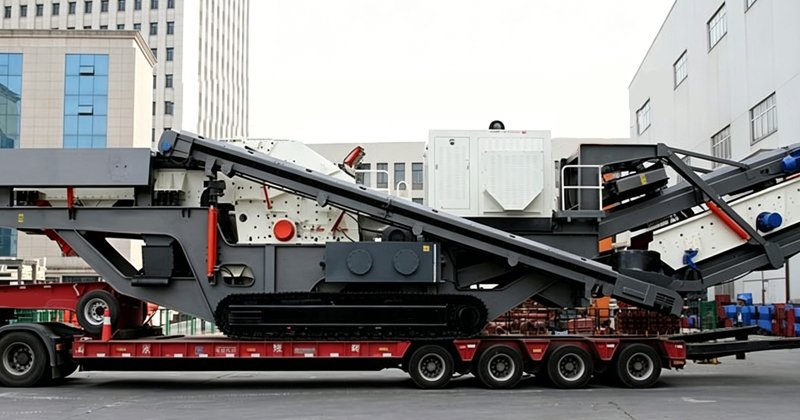
5. Mobile Limestone Crushing Station | Flexible On-Site Solution
For projects requiring frequent relocation—such as quarries, road construction, and construction waste processing—mobile limestone crushing stations offer greater flexibility than fixed production lines.
- Configuration: Integrates feeding, crushing, and screening units onto a single chassis; available with wheeled or tracked mobility.
- Suitability: Ideal for projects with short timelines, frequent site transfers, or remote locations lacking infrastructure for permanent civil works.
- Capacity Range: 50–650 t/h; main crushing units can be configured with jaw crushers, impact crushers, or VSI sand-making machines.
- Advantages: Eliminates the need for extensive concrete infrastructure; allows for on-site crushing directly at the quarry face, thereby saving on ore transportation costs.
- Limitations: Single-unit capacity is constrained by chassis limits; the chassis and tracks are subject to continuous wear, resulting in higher overall costs for long-term, multi-year mining projects.
Reference Breakdown of Investment Costs for Production Lines of Various Scales
| Production Line Scale | Typical Equipment Configuration | Estimated Investment Range (USD) |
| Small-scale (10–50 t/h) | Small jaw crusher + impact crusher / heavy-duty hammer crusher + vibrating screen | 20000-60000 |
| Medium-scale (50–200 t/h) | Standard jaw crusher + impact crusher + multi-deck circular vibrating screen; closed-circuit process | 70000-150000 |
| Large-scale (200–600+ t/h) | Heavy-duty jaw crusher + multiple impact crushers; full automated control system | 200000-400000+ |
| Mobile (50–500 t/h) | Wheeled / tracked mobile crushing and screening station | 120000-300000+ |
Key Factors Affecting Total Cost
- Production Capacity: Higher capacity requires a simultaneous scale-up of the main production line machinery, steel structures, and auxiliary equipment.
- Fixed vs. Mobile Production Lines: Mobile equipment has a higher purchase price but eliminates the need for extensive civil engineering work.
- Ore Impurities: High-silica limestone necessitates upgraded wear-resistant parts, thereby increasing the operations and maintenance budget.
- Customizations: Features such as automation, dust removal systems, and non-standard voltage configurations for overseas markets increase the overall investment.
Real-world Overseas Limestone Project Case Studies
Case 1: 500 TPH Limestone Crushing Project in Myanmar
This project processes limestone raw material with a design capacity of approximately 500 t/h and operates for about 12 hours a day. The finished product specifications include 0–5 mm, 5–10 mm, and 10–30 mm fractions, primarily intended for road construction, general construction, and concrete production.
The production line utilizes a vibrating feeder, a jaw crusher, an impact crusher, and a vibrating screen, employing multi-stage screening to obtain aggregates of various sizes.
For medium-scale projects involving limestone of moderate hardness, a two-stage crushing and screening configuration offers a highly practical production solution.
Case 2: 500 TPH Limestone Production Line in Sri Lanka
A documented 500 t/h limestone production line in Sri Lanka serves a cement plant. The design accounts for a raw material composition containing approximately 10% soil and the requirement to produce multiple aggregate size fractions. Consequently, a two-stage crushing setup—comprising a jaw crusher, an impact crusher, and a vibrating screen—was adopted, alongside necessary screening and conveying systems. This case illustrates how raw material clay content and desired product ratios directly influence the design of the crushing process.
Case 3: 250–300 TPH Hard Limestone Project in Cambodia
A public case study from Cambodia features a design capacity of 250–300 t/h processing hard limestone. The maximum feed size is approximately 500–600 mm, with product requirements of 0–8 mm, 8–21 mm, and 21–30 mm. The process employs a jaw crusher for primary crushing, followed by a cone crusher for secondary crushing and a vibrating screen for classification, with oversize material recirculated to the crusher.
For hard limestone requiring multiple product size fractions, a closed-circuit crushing process allows for better control over the final product particle size.
Common Issues in Limestone Crushing
1. Directly adopting crushing workflows designed for hard rock (like granite) and relying heavily on cone crushers
Issue: Using cone crushers as the primary/secondary stage for limestone leads to unnecessarily high equipment procurement and O&M costs.
Solution: Prioritize impact crushers for standard limestone; consider cone crushers only for limestone with high silica content.
2. Blindly selecting single-stage heavy-duty hammer crushers while ignoring the proportion of fines produced
Issue: Prioritizing fewer machines and simpler workflows results in excessive stone dust production, a lower yield of finished aggregates, and unsold fines eating into profits.
Solution: Assess the market’s acceptance of fines before deciding whether to use a single-stage crushing process.
3. Overlooking ore moisture content and clay, and skipping pre-screening
Issue: During the rainy season, damp raw materials cause frequent clogging in crushers and vibrating screens, leading to significant downtime.
Solution: If raw material moisture is high, add a grizzly pre-screening stage or select a crusher with an anti-clogging crushing chamber design.
4. Focusing solely on theoretical rated capacity while ignoring wear and reduced output caused by silica impurities
Issue: Nominal capacities in brochures are high, but actual wear on wear parts is rapid when processing high-silica limestone, resulting in lower-than-expected output.
Solution: Base equipment selection on actual operational data from mines with similar material properties, rather than relying only on brochure specifications.
5. Selecting mobile crushing stations for long-term mining operations and ignoring ongoing chassis maintenance costs
Issue: Using mobile stations for fixed mining sites (with 5–8 year lifespans) leads to accumulating annual costs for tracks and hydraulic components.
Solution: Prioritize fixed crushing production lines for stable, long-term mining operations.
FAQ
Q1: For limestone crushing, should I choose a single-stage heavy-duty hammer crusher or a two-stage process (jaw crusher + impact crusher)?
A: If fine powder content is not a concern (e.g., for cement plant raw materials), a single-stage heavy-duty hammer crusher process simplifies the production line. However, for high-grade concrete aggregates—where there are strict requirements regarding particle shape (minimizing flaky/elongated particles) and fines content—a two-stage closed-circuit process using a jaw crusher and an impact crusher is preferable.
Q2: Can an impact crusher still be used if the limestone contains quartz or silica impurities?
A: High silica content accelerates blow bar wear. If silica impurities are significant, it is recommended to upgrade to wear-resistant blow bar materials or switch to a cone crusher for the secondary/tertiary crushing stage.
Q3: Are mobile crushing stations suitable for long-term limestone quarrying?
A: They are suitable for projects with short durations or frequent site relocations. For fixed quarries operating for over five years, a stationary crushing line offers better lifecycle cost-efficiency.
Q4: Is a cone crusher unnecessary for limestone crushing?
A: It is generally unnecessary for standard, low-silica limestone. However, if the ore hardness and abrasiveness increase—and there are high demands regarding the service life of wear parts—cone crushers offer a distinct advantage.
Q5: What equipment is typically required for a limestone crushing plant?
A: Common equipment includes feeders, jaw crushers, impact or cone crushers, vibrating screens, and conveyors; the specific configuration depends on production capacity and finished product specifications.
Q6: How many crushing stages are typically used in a limestone crushing plant?
A: A two-stage process is common: a jaw crusher handles primary (coarse) crushing, while an impact or cone crusher handles secondary crushing. For projects with strict particle size requirements, sand-making and shaping stages can be added.
Q7: Is a jaw crusher suitable for limestone?
A: Yes, it is. Jaw crushers are typically used for primary coarse crushing in limestone production lines and are particularly well-suited for handling large run-of-mine ore.
Q8: Should I choose an impact crusher or a cone crusher for limestone?
A: The choice depends mainly on material hardness, abrasiveness, and finished product requirements. Impact crushers are suitable for soft to medium-hard limestone, whereas cone crushers are preferable for harder, more abrasive materials.
Q9: Does a limestone crushing plant need to be equipped with a vibrating screen?
A: If producing stone aggregates of various specifications is required, a vibrating screen is usually necessary to grade the crushed material.
Q10: What should be done if the limestone has a high clay content?
A: Pre-screening or soil-stone separation equipment can be installed before the crushing stage to remove soil and fines in advance, thereby reducing clogging and inefficient crushing.
Q11: Can manufactured sand be produced directly after crushing limestone?
A: Yes, but it usually requires the addition of a VSI sand-making machine and screening equipment to further crush, shape, and grade the aggregate.
Q12: How is the particle size of the finished product controlled in a limestone crushing plant?
A: Control is primarily achieved by adjusting the crusher’s discharge opening, selecting appropriate crushing equipment, and using vibrating screens for grading. Oversized material can be returned to the crusher for reprocessing.
Q13: What types of projects are suitable for mobile limestone crushing stations?
A: They are well-suited for quarries, road construction, and projects requiring frequent relocation, as they allow for on-site limestone processing and reduce the need for material transport.
Q14: What information is needed to set up a limestone crushing plant?
A: It is recommended to provide details such as maximum raw material lump size, limestone hardness, clay content, target production capacity, desired finished particle size, and end-use application; this ensures an accurate design of the crushing process and proper equipment selection.
Conclusion
When crushing limestone, one must consider factors beyond just hardness—such as siliceous impurities, moisture content, and the intended use of the final product. A combination of jaw and impact crushers is suitable for standard aggregates, whereas cement plants might opt for single-stage crushing depending on operational conditions; mobile crushing stations are a viable choice if relocation is required. Equipment selection should not be based solely on purchase price; it is essential to comprehensively evaluate the costs associated with wear parts, civil works, and long-term operations.
If you are unsure which crushing solution best suits your limestone, simply provide us with details regarding raw material size, production capacity, and product specifications. CHUNLEI can then recommend the most appropriate equipment and process flow tailored to your specific operational needs.
Latest News

Gravity Separation for Gold: When Is It Suitable for Gold Ore?
800Many people immediately associate “gold ore” with gravity separation, yet not all gold deposits are suitable for recovery using gravity methods alone. Gravity separation is appropriate for liberated native gold or other heavy minerals that ex…
-
How Classification Affects Gold Grinding Efficiency
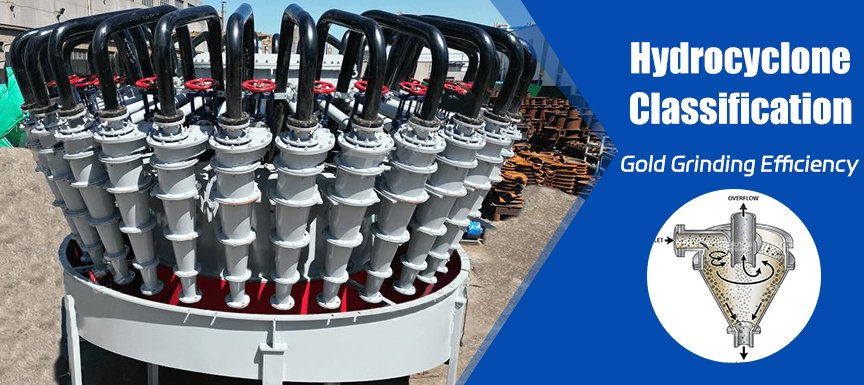
800In gold ore grinding circuits, attention is often focused primarily on ball mill capacity, power consumption, and grinding media; however, in actual operation, classification plays an equally critical role in determining grinding efficiency. …
-
Gold Ore Crushing and Grinding: What Equipment Do You Need?
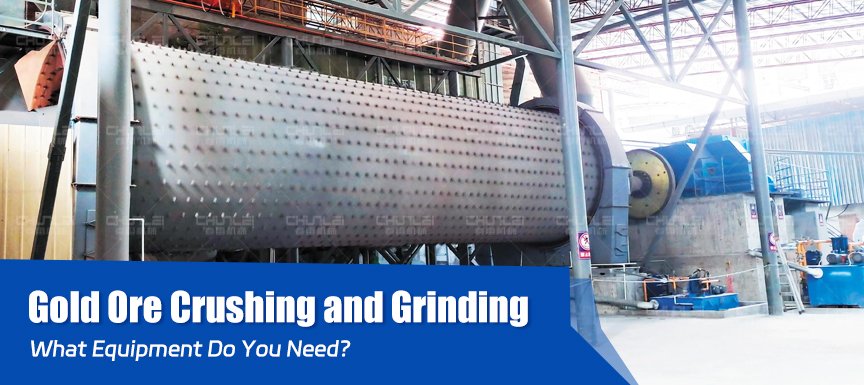
800When designing a gold ore processing line, my clients often ask which crushers and mills to purchase. However, the equipment selection should actually be based on a thorough understanding of the ore characteristics. Issues in many projects do…
-
How to Select the Right Gold Processing Plant for Your Ore
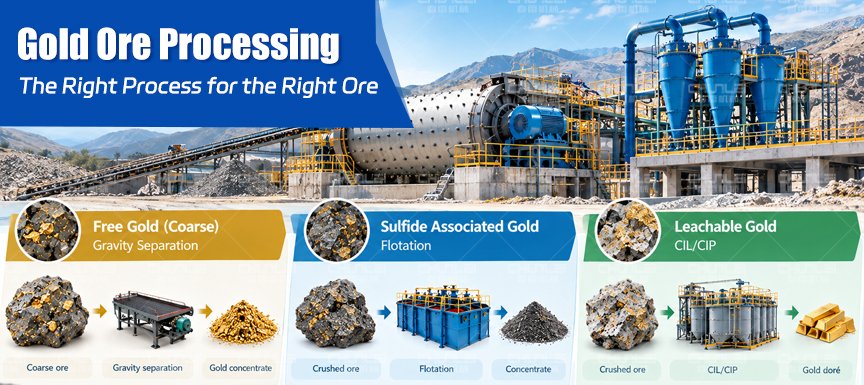
800When selecting a gold processing plant, simply assuming that a full suite of equipment is all that is needed can lead to issues such as low recovery rates, high energy consumption, and failure to meet production targets.Different ores require d…
loading…
已经是到最后一篇内容了!