 Chunlei Mining Machinery
How To Optimize The Recirculating Load In A Crushing Plant?
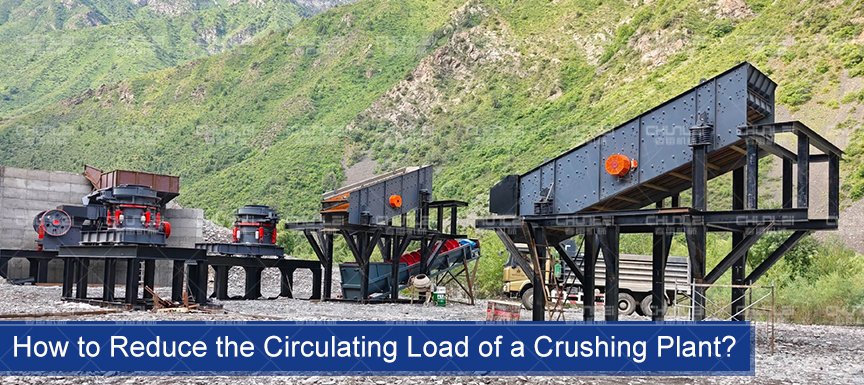
In closed-circuit crushing systems, excessive rotational load is one of the most troublesome issues for customers. When a large amount of material is circulated back to the crusher via the belt conveyor, it impacts capacity, energy consumption, and the lining.
Many people try to address rotational load by reducing the crusher’s discharge port (CSS), but this often results in excessive fine powder and screen clogging. Solving this problem requires treating the crusher, vibrating screen, and return belt conveyor as a unified system, rather than as individual machines.
What is the recirculating load in a crushing circuit?
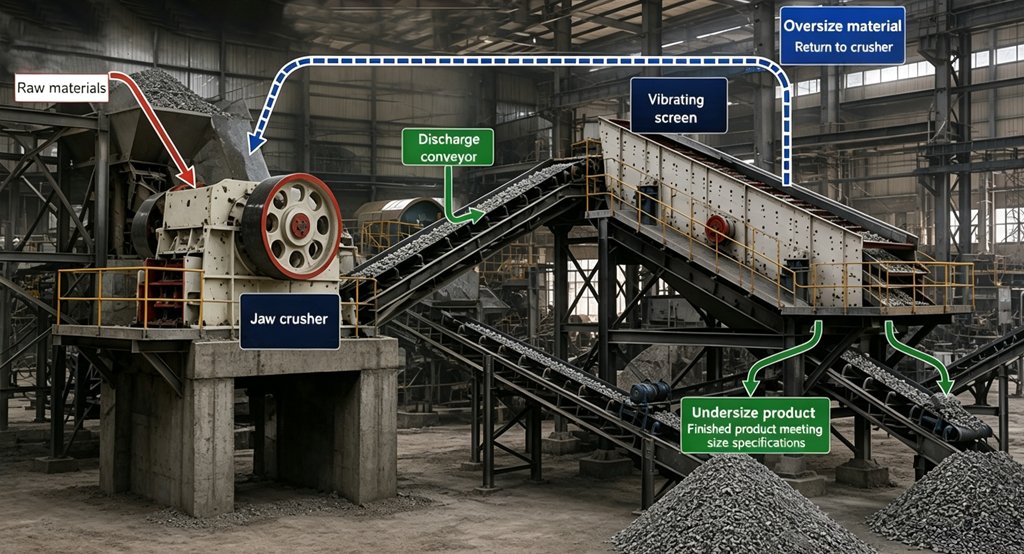
After raw material enters the primary or secondary crusher, it is conveyed to screening equipment. Material that fails to meet size specifications is returned to the crusher via a return conveyor for further crushing.
This circulating stream of material is known as the “recirculating load.” A moderate recirculating load helps ensure a uniform product size and prevents oversized, uncrushed rock from passing to downstream processes.
However, excessive recirculating load occurs when material that already meets size specifications is mistakenly returned to the crusher. This unnecessarily occupies volume within the crushing chamber, leads to the over-crushing of already acceptable material, and impairs the screening efficiency for new feed material.
Why is the recirculating load excessively high?
There are two main reasons for an excessively high recirculating load: first, the crusher discharge is too coarse; and second, the screening equipment fails to promptly separate out the material that meets specifications. Additionally, changes in feed characteristics—such as moisture content, clay content, or particle size distribution (PSD)—can further exacerbate system instability.
| Possible reasons | Check items | Typical abnormal phenomena |
| Crusher discharge is too coarse | CSS discharge port, cavity type selection, liner wear, feeding distribution | Excessive true over-diameter material exists in the crusher discharge |
| Screening efficiency is low | Screen material, aperture status, material layer thickness, cloth uniformity | A large amount of qualified grade materials are mixed into the returned material on the screen |
| Changes in feed properties | Feed PSD, moisture content, mud content, rock hardness | Equipment settings were not changed, but production performance dropped significantly |
| Line processing capacity mismatch | Crusher capacity, screening area, belt conveyor load | A single device is overloaded while other devices still have redundancy |
| Feeder operation is unstable | Buffer bin material level, feeder speed, motor power amplitude | The material tonnage on the return belt fluctuates violently |
How does screening efficiency affect the recirculation of oversize material?
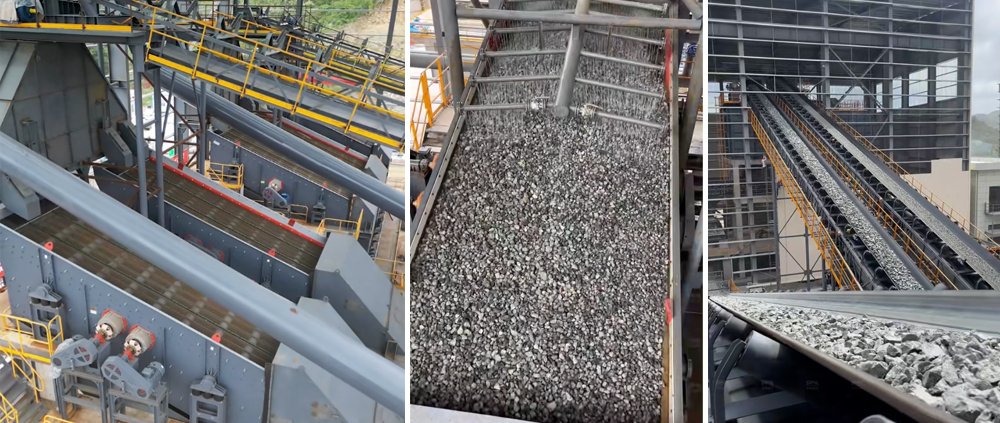
If the screening and classification efficiency of a vibrating screen drops, material within the acceptable size range remains trapped in the oversize material flow and is returned to the crusher.
Common screening bottlenecks include:
- Excessive material bed depth: An excessive feed rate prevents fine material from making contact with the screen surface to pass through.
- Screen blinding and pegging: Near-size particles become wedged in the apertures, or wet, sticky fines adhere to the screen mesh, significantly reducing the effective open area.
- Uneven material distribution: Material shifts to one side of the screen surface, causing the effective screening area on the other side to go to waste.
Sampling the oversize material conveyor is crucial. If the recirculated material contains more than 15%–20% of acceptable, undersize material, simply optimizing the screening efficiency can immediately reduce the recirculation load without requiring adjustments to the crusher settings.
How can the volume of recirculating material in the crushing chamber be altered?
Once screening efficiency issues have been ruled out, the focus should shift to the crushing equipment—specifically the secondary and tertiary cone crushers.
- Closed-Side Setting (CSS): While increasing the CSS boosts throughput, it results in a coarser product, thereby increasing the volume of recirculating material. Conversely, setting the CSS too tight—while reducing oversized material—can easily lead to over-crushing, power spikes, and excessive fines generation.
- Liner Wear Condition: Liner wear (thinning or grooving) alters the reduction ratio and the product size distribution (PSD) curve. Do not rely solely on the CSS value displayed on the control panel; instead, compare the actual product PSD against the initial baseline data.
- Choke Feeding: Cone crushers require a stable, evenly distributed feed that fills the chamber to achieve inter-particle (layer) crushing. Feed segregation or intermittent feeding results in a coarser product and uneven liner wear.
When should the crushing and screening circuit be adjusted?
Sometimes, individual machines operate normally, yet the load distribution across the entire flow sheet suffers from an inherent imbalance. A large cone crusher cannot compensate for insufficient screening area or capacity limitations on the recirculation conveyor belt.
Circuit design re-evaluation and adjustment are required in the following situations:
- The screening area is insufficient for the current feed tonnage.
- The reduction ratio for a single crushing stage is excessive, necessitating the addition of a tertiary fine-crushing stage.
- The system lacks a pre-screening stage (scalping or fines removal), causing natural fines to unnecessarily enter the crusher and recirculate.
How can the recirculating load be reduced without generating excessive fines?
Indiscriminately narrowing the crusher’s discharge setting (CSS) to force a reduction in recirculating load comes at a high cost: increased fines (dust), accelerated liner wear, and a significant drop in the yield of high-value coarse aggregates.
To optimize the circuit while maintaining the required product gradation:
- Install a prescreen: Remove natural fines before the secondary crushing stage.
- Upgrade screen media: Use anti-blinding/anti-sticking mesh or self-cleaning polyurethane screen panels to maximize the effective open area.
- Control feed fluctuations: Use variable-frequency feeders to ensure a continuous, uniform feed and eliminate surges and drops.
- Coordinate CSS with screen aperture: Match the crusher discharge setting to the top-deck screen aperture to balance the reduction ratio and screening efficiency.
How can the entire closed-circuit system be diagnosed and optimized?
Before adjusting equipment parameters, follow this systematic diagnostic process to identify inefficiencies in the circuit:
- Establish an operational baseline: Record the initial fresh feed rate, motor current, CSS setting, and current recirculating load tonnage.
- Analyze the recirculating stream: Conduct sieve analysis on material from the recirculation conveyor to calculate the percentage of misplaced fines.
- Inspect crusher discharge: Sample the crusher discharge directly to determine if coarse output is due to an excessive CSS, liner wear, or failure to maintain a full crushing chamber.
- Check screen condition: Inspect the screen surface for issues such as blinded or plugged apertures, uneven material distribution, or improper inclination angles.
- Fine-tune single variables: Adjust only one parameter at a time (e.g., screening amplitude, feed rate, or CSS) and observe the system’s response before making further adjustments.
- Verify net product output: Ensure that the actual net product output (t/h) increases effectively while maintaining product quality specifications.
Frequently Asked Questions
Q1: What is considered a normal circulating load ratio in a crushing plant?
There is no single, fixed industry standard. Depending on factors such as rock hardness, target product size, and screening efficiency, the circulating load in a typical closed-circuit crushing system is usually maintained between 20% and 50% of the fresh feed tonnage.
Q2: Does an excessively high circulating load mean my crusher is undersized?
Not necessarily. Poor screening efficiency, screen blinding, or severe liner wear can cause a large amount of already-sized material to return to the system, creating the illusion of insufficient crusher capacity. Be sure to sample the screen oversize material during your troubleshooting process.
Q3: Will reducing the Closed Side Setting (CSS) always lower the circulating load?
No. While reducing the CSS can decrease the amount of true oversize particles, it can also lead to crushing chamber blockages, increase the generation of dust and fines, reduce the crusher’s overall throughput, and accelerate liner wear.
Q4: How can I determine whether the bottleneck lies with the screen or the crusher?
Sample the material on the recycle conveyor. If the recirculated material contains a large proportion of particles that already meet the product size specifications, the bottleneck is at the screen; if the recirculated material consists almost entirely of true oversize rocks that exceed size requirements, you need to adjust the crusher settings or inspect the condition of the crushing chamber.bile rack; and if there is space in the early design of the fixed production line, it will be relatively convenient to add equipment later.
Conclusion
CHUNLEI is a professional manufacturer of crushing, screening, conveying, and mineral processing equipment. Our engineering team provides customized services—including closed-circuit system diagnostics, equipment selection, and process optimization—dedicated to helping clients eliminate production bottlenecks and maximize profitability. We invite you to contact our engineers to obtain a tailored optimization plan for your crushing circuit.
Latest News

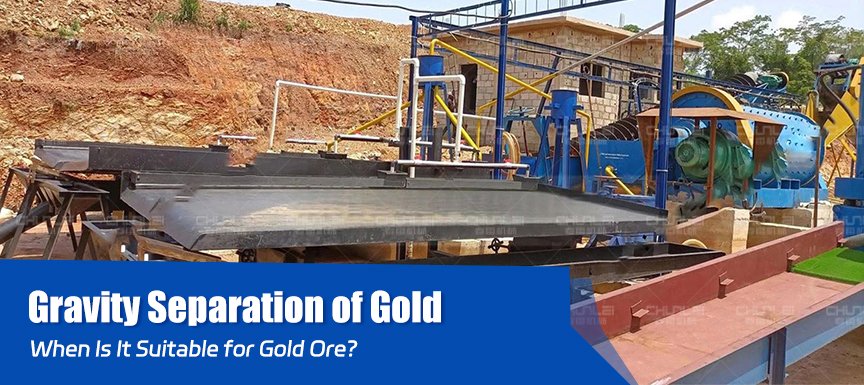
Gravity Separation for Gold: When Is It Suitable for Gold Ore?
800Many people immediately associate “gold ore” with gravity separation, yet not all gold deposits are suitable for recovery using gravity methods alone. Gravity separation is appropriate for liberated native gold or other heavy minerals that ex…
-
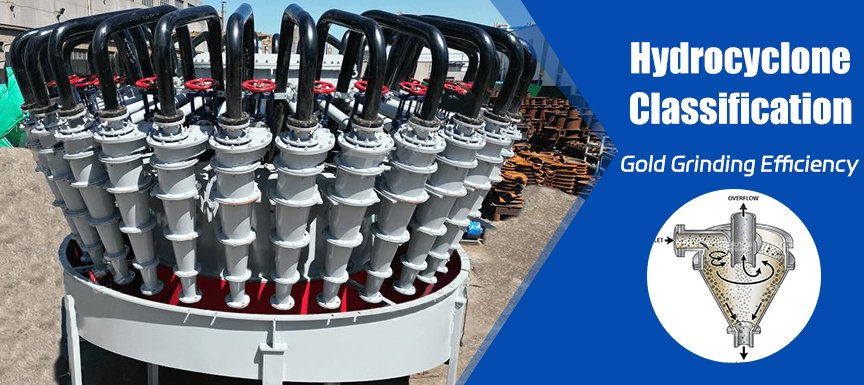
How Classification Affects Gold Grinding Efficiency
800In gold ore grinding circuits, attention is often focused primarily on ball mill capacity, power consumption, and grinding media; however, in actual operation, classification plays an equally critical role in determining grinding efficiency. …
-
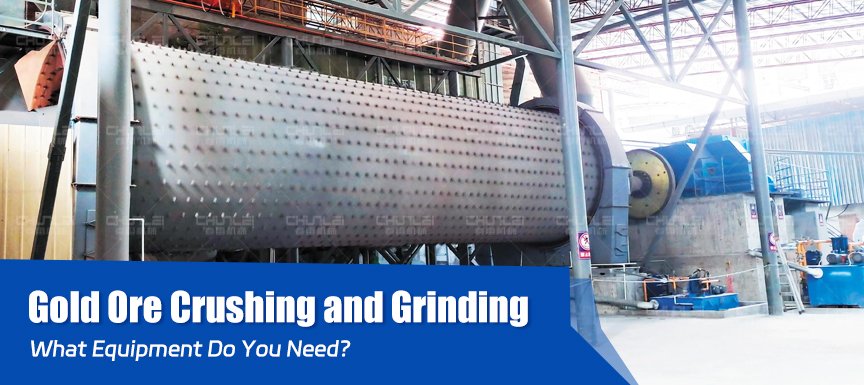
Gold Ore Crushing and Grinding: What Equipment Do You Need?
800When designing a gold ore processing line, my clients often ask which crushers and mills to purchase. However, the equipment selection should actually be based on a thorough understanding of the ore characteristics. Issues in many projects do…
-
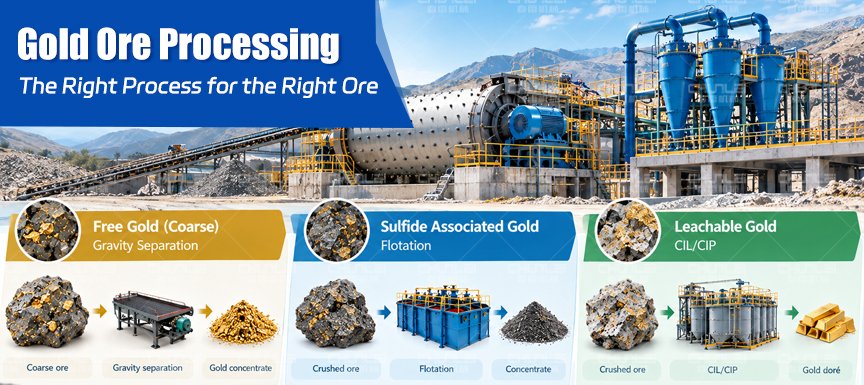
How to Select the Right Gold Processing Plant for Your Ore
800When selecting a gold processing plant, simply assuming that a full suite of equipment is all that is needed can lead to issues such as low recovery rates, high energy consumption, and failure to meet production targets.Different ores require d…
loading…
已经是到最后一篇内容了!