 Chunlei Mining Machinery
Cement Ball Mill Heat Balance
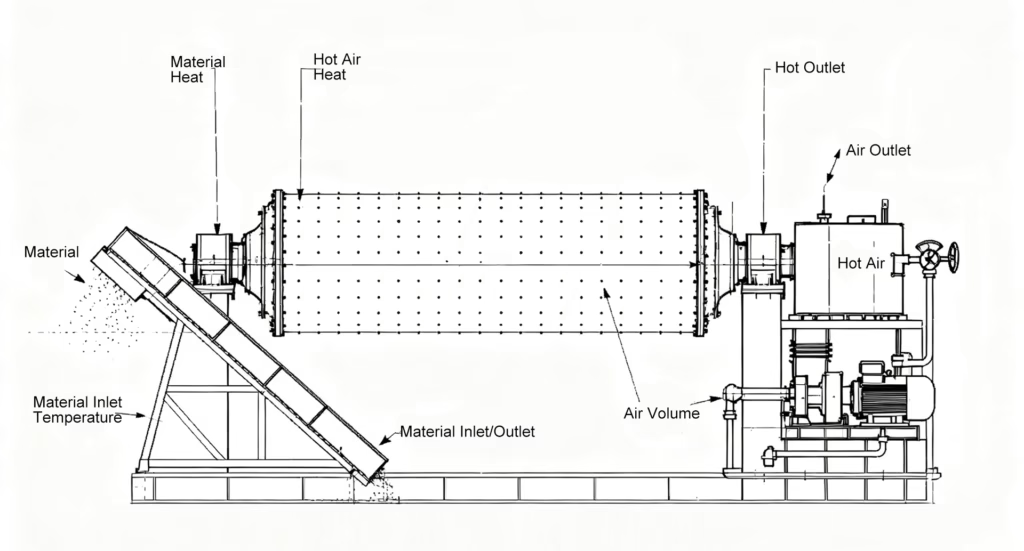
Thermal Balance of Cement Ball Mills definition
The thermal balance of cement ball mills refers to the calculation and analysis of the difference between heat input (such as physical heat carried by materials and mechanical heat generated during grinding) and heat release (such as heat carried out by finished products, heat dissipation from the cylinder, and heat consumed by moisture evaporation) within the mill system. Calculating the thermal balance effectively prevents excessive internal temperatures, avoids cement “false setting” or performance degradation, and ensures grinding operations maintain a stable, efficient thermal environment over the long term. It also enhances grinding efficiency while reducing energy consumption, making it an indispensable technical step for optimizing production and guaranteeing cement quality.
Impact of Thermal Imbalance in Cement Ball Mills
- During grinding, the majority of energy is converted into heat, causing elevated temperatures within the mill. This leads to a series of consequences:
- Degraded cement quality: May trigger gypsum dehydration, inducing false setting in cement and compromising later strength development.
- Equipment Operational Safety: Excessive bearing temperatures threaten equipment integrity and disrupt continuous operation.
- Reduced Grinding Efficiency: Elevated temperatures may exacerbate material “balling” or “clumping,” diminishing grinding effectiveness.
- Downstream Process Issues: High-temperature cement complicates packaging and storage while potentially impairing concrete workability.
- Consequently, conducting thermal balance analysis and implementing cooling measures is critical.
Common Cooling Measures and Thermal Balance Applications
- When mill temperatures are excessively high or thermal balance calculations indicate significant excess heat in the system, the following measures may be considered:
- Internal Water Spraying: This is the most direct and effective internal cooling method. Spraying an appropriate amount of atomized water into the mill utilizes the heat absorption principle of water evaporation to reduce temperatures.
- External Cylinder Cooling: Water spraying on the cylinder exterior for heat dissipation. Though simple, this method yields minimal practical effect and may accelerate cylinder corrosion. It is typically used only as a temporary auxiliary measure.
- Internal Mill Ventilation: Optimize ventilation system design (e.g., ductwork, dust collectors) to enhance mill airflow, promptly removing heat and water vapor generated during grinding. Ensure proper sealing and leak prevention.
- Lower material temperature: Cool clinker before grinding or allow it to cool naturally during storage before feeding into the mill.
- Control material particle size: Thoroughly crush materials before feeding into the mill to minimize particle size during grinding, thereby reducing the heat generated.
- Use grinding aids: Certain grinding aids can enhance grinding efficiency while also lowering mill temperatures to some extent.
Conclusion
Chunlei Machinery is one of China’s leading manufacturers of cement ball mills, offering high-quality ball mill equipment.
If you are interested in ball mills or have any inquiries, please contact us—we are available 24 hours a day to address your questions.
Latest News

What are the gravity separation process flows for tin ore?
800Having worked in the tin mining industry for many years, I’ve observed a recurring issue among clients: even when the raw ore has a high tin content and a substantial amount of processing equipment is employed, the final tin recovery rates rema…
-
Gravity Concentration vs. Flotation for Gold: Which Process Should You Choose?
800In gold beneficiation projects, many mining engineers face a critical question: Why does the final gold recovery rate consistently fall short of expectations, even when grinding fineness and reagent regimes are strictly maintained according t…
-
Gravity Separation for Gold: When Is It Suitable for Gold Ore?
800Many people immediately associate “gold ore” with gravity separation, yet not all gold deposits are suitable for recovery using gravity methods alone. Gravity separation is appropriate for liberated native gold or other heavy minerals that ex…
-
How Classification Affects Gold Grinding Efficiency
800In gold ore grinding circuits, attention is often focused primarily on ball mill capacity, power consumption, and grinding media; however, in actual operation, classification plays an equally critical role in determining grinding efficiency. …

loading…
已经是到最后一篇内容了!