 Chunlei Mining Machinery
The Difference Between Cement Ball Mills and Cement Mixing Ball Mills
Cement ball mills and Cement mixing ball mills are two distinct types of equipment with fundamentally different operating principles and application scenarios. Below are the differences between them, ranging from working principles to application scenarios:
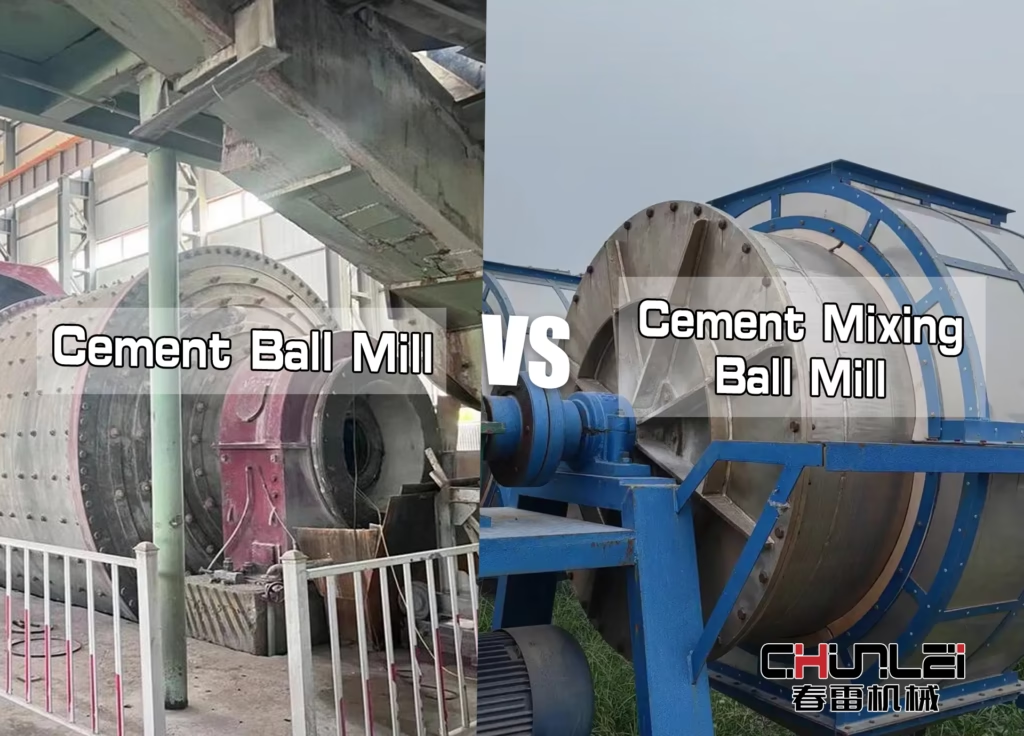
Different Working Principles
The cement ball mill, a type of ball mill, is a traditional horizontal ball mill. It primarily operates by rotating the entire cylinder. Centrifugal force causes the grinding media to rise to a certain height before being abruptly thrown downward, generating impact and grinding to pulverize the material.
In contrast, the cement mixing ball mill—also known as a mixing mill—features a stationary cylinder. Its grinding media undergoes intense impact and friction through the rotation of an internal agitator, achieving material pulverization.
Differences in Output and Application
The cement ball mill serves as the primary production equipment for bulk grinding of cement raw materials or clinker to the required fineness. They achieve finer particle sizes and offer higher processing capacities. Suited for large-scale cement production lines, ball mills are among the most common choices for both raw material preparation and finished cement grinding.
Cement agitators serve as auxiliary or experimental equipment for small-batch, ultra-fine “grinding” or homogenization. They produce more uniform particle size distributions with lower energy consumption, making them ideal for specialized applications such as reinforcing micro-cracks, precision grouting, or laboratory use.
Differences in Footprint
Cement ball mills are typically horizontal ball mills requiring large rotating cylinders, resulting in a larger footprint and relatively higher operational noise levels.
Cement mixing ball mills do not require large rotating cylinders, making them relatively compact in size with lower noise levels.
Conclusion
To illustrate with a simple example:
If you need to grind large rock chunks into standard cement powder, use a cement ball mill.
If you need to refine standard cement powder into finer ultrafine powder, or require small-batch, high-intensity mixing or experimental work, use a cement mixing ball mill.
Should you have further questions or interest in ball mills, please feel free to contact us anytime.
If you’re facing these challenges:
- Unsatisfactory cement grinding efficiency?
- Persistently high energy costs?
- Difficulty controlling product particle size consistency?
Our technical experts offer complimentary on-site assessments and customized solutions. Click to contact us for tailored cement ball mill equipment specifications and quotations aligned with your production requirements.
Latest News

What are the gravity separation process flows for tin ore?
800Having worked in the tin mining industry for many years, I’ve observed a recurring issue among clients: even when the raw ore has a high tin content and a substantial amount of processing equipment is employed, the final tin recovery rates rema…
-
Gravity Concentration vs. Flotation for Gold: Which Process Should You Choose?
800In gold beneficiation projects, many mining engineers face a critical question: Why does the final gold recovery rate consistently fall short of expectations, even when grinding fineness and reagent regimes are strictly maintained according t…
-
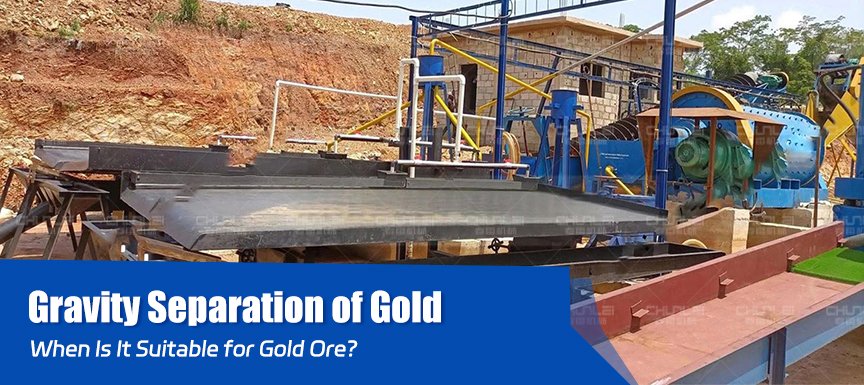
Gravity Separation for Gold: When Is It Suitable for Gold Ore?
800Many people immediately associate “gold ore” with gravity separation, yet not all gold deposits are suitable for recovery using gravity methods alone. Gravity separation is appropriate for liberated native gold or other heavy minerals that ex…
-
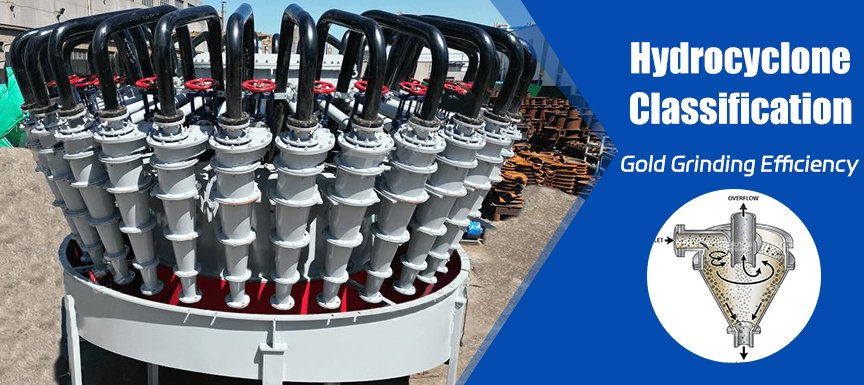
How Classification Affects Gold Grinding Efficiency
800In gold ore grinding circuits, attention is often focused primarily on ball mill capacity, power consumption, and grinding media; however, in actual operation, classification plays an equally critical role in determining grinding efficiency. …

loading…
已经是到最后一篇内容了!