 Chunlei Mining Machinery
How Do You Select Ball Mill Liners Based On Ore Hardness?
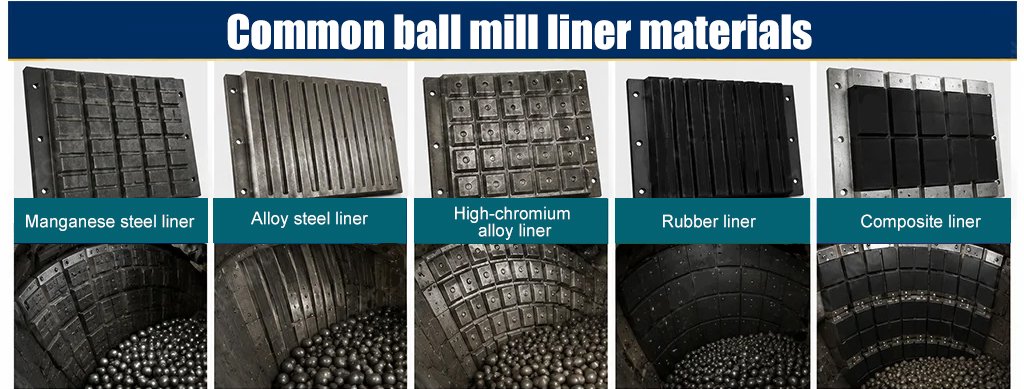
During ball mill operations, operators often encounter a common issue: liner replacement frequency increases without a corresponding improvement in grinding efficiency—or even with a rise in energy consumption per ton of ore. The problem often lies not merely in the quality of the liners themselves, but in a mismatch between the liners and the ore’s hardness and abrasiveness, the steel ball size, and the specific grinding method employed.
A specific type of liner might perform reliably for an extended period with one type of ore, yet wear out rapidly when used with another ore characterized by high hardness and abrasiveness. Therefore, selecting ball mill liners requires first assessing ore hardness and the primary wear mechanisms before determining the appropriate material and liner design; simply asking “which material is the most wear-resistant” is insufficient.
This article explains how to select ball mill liners by considering factors such as ore hardness, impact strength, abrasiveness, and grinding particle size, helping you avoid the common pitfall of basing your choice solely on purchase price.
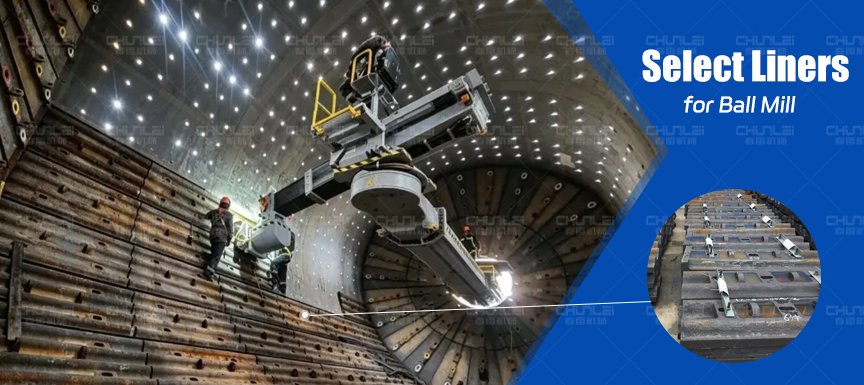
Why does ore hardness affect the selection of ball mill lining?
When the ball mill is running, the ore and steel balls will continuously impact and rub against the lining plate.
Harder ore usually means more significant impact and abrasive wear during grinding. If the lining material or structure is not suitable, it may occur:
- Excessive liner wear rates
- Localized wear-through of the liner
- Liner breakage
- Increased steel ball consumption
- Reduced grinding efficiency
- More frequent shutdowns for liner replacement
So, how can one ensure the steel balls achieve the optimal motion pattern while withstanding impact and wear?
Ore hardness is just one factor. Actual selection requires a comprehensive approach that considers ore hardness, abrasiveness, impact intensity, and the grinding media—rather than simply choosing based on the material type alone.
What ore parameters should be considered when selecting ball mill liners?
1. Ore Hardness
Ore hardness is the most fundamental reference criterion.
Common metrics include:
- Mohs hardness
- Bond Work Index
- Ore compressive strength
- Ore grindability
Note that liner material selection should not be based solely on a Mohs hardness figure.
For instance, two ores might have similar hardness, but if one contains a high proportion of quartz, their actual abrasiveness could differ significantly.
2. Ore Abrasiveness
Abrasiveness determines the rate at which the liner wears down.
If the ore contains significant amounts of quartz, siliceous minerals, or other hard particles, the liner typically requires superior wear resistance.
Therefore, when purchasing liners, it is advisable to provide the supplier with the following details:
Ore hardness + quartz content/abrasiveness + feed particle size.
3. Feed Particle Size
The coarser the feed, the greater the impact force generated between the steel balls and the ore.
Coarse, hard ores often demand higher impact resistance from the liners.
This is why metal liners with good toughness are frequently selected for the primary (coarse) grinding stage.
4. Steel Ball Size
Bigger is not necessarily better when it comes to steel balls.
Large steel balls generate higher impact energy, placing greater demands on the liner’s impact resistance.
Consequently, liner design must take into account ball diameter, ball charge volume, and mill rotational speed.
5. Wet vs. Dry Grinding
Wet and dry ball milling involve different operating environments.
Wet grinding requires additional consideration of slurry characteristics, corrosiveness, and the suitability of rubber liners; dry grinding focuses more on issues such as dust, impact, and abrasive wear.
How do you select liner materials based on ore hardness?
While ore hardness is the initial factor to consider when choosing ball mill liners, the decision must also take into account ore abrasiveness, feed particle size, grinding ball size, and impact intensity. Simply put, the hardest liner is not necessarily the right choice for hard ore; the key is determining whether the wear is primarily caused by impact or by abrasive wear.
| Ore Operating Conditions | Key Characteristics | Recommended Liner Materials | Selection Rationale |
| Soft, low-abrasivity ore | Low impact, mild wear | Rubber/composite liners | Prioritize light weight, corrosion resistance, and ease of maintenance |
| Medium-hardness ore | Balanced impact and wear | High-manganese steel, Cr-Mo alloy steel | Further selection based on grinding ball size and abrasivity |
| High-hardness ore | High impact and wear | Cr-Mo alloy steel, high-manganese steel | Balance wear resistance and impact toughness |
| High-hardness, highly abrasive ore | High content of hard minerals (e.g., quartz) | Cr-Mo alloy steel or high-chromium materials | Prioritize wear resistance while managing impact risks |
| Coarse particle size, high impact | Large ore chunks, large grinding balls | High-manganese steel, tough alloy steel | Prioritize impact resistance and fracture toughness |
| Fine grinding, low impact | Fine material, small grinding balls | Cr-Mo steel, rubber/composite liners | Focus on wear resistance and grinding efficiency |
High-manganese steel is typically used for high-impact, coarse-grinding applications, whereas Cr-Mo alloy steel is commonly employed for fine-grinding operations involving high abrasiveness and moderate impact. Rubber liners are more frequently used in environments characterized by moderate impact and wet grinding.
The final material selection must be determined based on the specific mill and ore testing.
What are the differences between high-manganese steel, alloy steel, and rubber liners?
There is no single “best” type of ball mill liner; the choice depends primarily on ore hardness, abrasiveness, grinding ball size, and impact intensity. Simply put, you can make your selection as follows:
| Liner Type | Key Characteristics | Suitable Operating Conditions | Advantages | Points to Note |
| High-Manganese Steel Liners | Good toughness, high impact resistance | Large ore chunks, coarse grinding, high-impact environments | Resistant to fracture from impact | May wear relatively quickly under highly abrasive conditions |
| Alloy Steel Liners | High wear resistance and strength | Medium-to-high hardness, highly abrasive ores | Good wear resistance, wide range of applications | Price is generally higher than standard high-manganese steel |
| Rubber Liners | Lightweight, good elasticity | Wet grinding, fine grinding, low-impact environments | Low noise, relatively easy installation and maintenance | Not suitable for high-impact conditions involving large steel grinding balls |
Here is a point that is easily overlooked:
A liner is not necessarily better just because it is harder.
- High-manganese steel: Prioritizes impact resistance; suitable for coarse grinding and operations involving large grinding balls.
- Alloy steel: Prioritizes wear resistance; suitable for hard and highly abrasive ores.
- Rubber: Prioritizes low weight and adaptability to wear conditions; often used in certain wet fine-grinding applications.
If your ore is hard and has a high quartz content, do not focus solely on liner hardness; you must also consider actual wear and impact conditions. When selecting a liner, it is best to provide details on ore hardness, feed particle size, grinding ball dimensions, and ball mill specifications to determine the most suitable material.
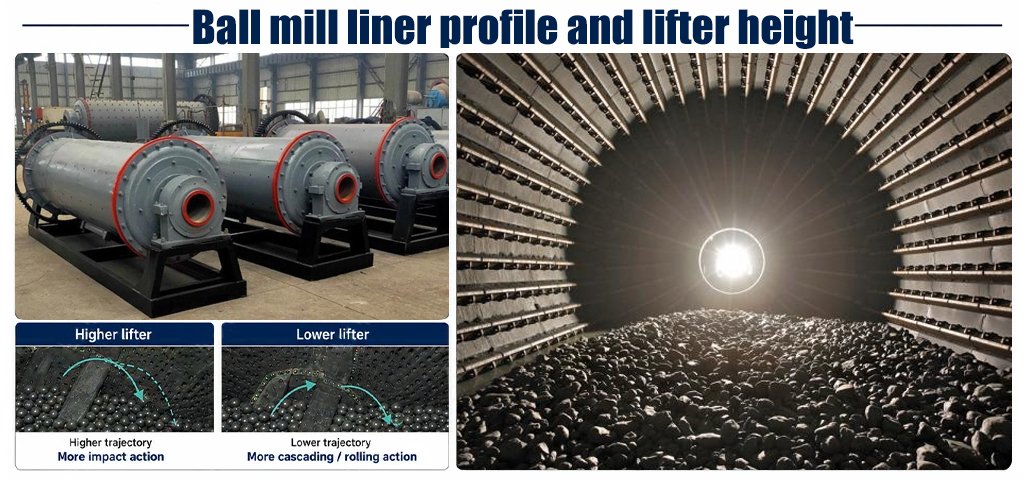
Why is the structure of the liner equally important?
When selecting ball mill liners, many people focus solely on material and wear resistance; however, the liner’s structure is just as critical. This is because the shape of the liner directly influences the height to which the steel balls are lifted, the manner in which they fall, the trajectory of the ore, and overall grinding efficiency.
| Liner Structure | Primary Function | Suitable Operating Conditions |
| Wave-profile liner | Lifts grinding media; enhances impact and attrition | Coarse grinding; medium-hardness ore |
| Step-profile liner | Improves media lifting capacity; enhances impact | Coarse grinding; coarse feed |
| Smooth liner | Primarily attrition-based; reduces intense impact | Fine grinding; finer material |
| Rubber liner | Provides elastic cushioning; reduces impact and noise | Wet grinding; fine grinding |
If the ore is hard and the feed size is large, yet an unsuitable liner structure is used, problems such as inefficient steel ball motion, severe localized wear, and reduced grinding efficiency may arise.
How should liner plates be selected for different grinding stages?
As a ball mill operates across various grinding stages, ore particle sizes and the nature of steel ball impacts vary; consequently, the choice of liner plates must be adjusted accordingly. Simply put, the priority for coarse grinding is impact resistance, whereas for fine grinding, it is wear resistance and grinding efficiency.
| Grinding Stage | Typical Operating Conditions | Liner Selection Strategy | Key Considerations |
| Coarse Grinding | Large feed size, large steel balls, high impact | High-manganese steel, alloy steel | Impact resistance, fracture resistance |
| Intermediate Grinding | Particle size gradually decreases; impact and attrition coexist | High-manganese steel or Cr-Mo alloy steel | Balance between wear resistance and toughness |
| Fine Grinding | Fine material, small steel balls, enhanced attrition/grinding action | Cr-Mo alloy steel, rubber/composite liners | Wear resistance, reduction of ineffective impact |
| Regrinding | Predominantly fine particles; requires stable fine grinding | Rubber or composite liners, etc. | Grinding efficiency, service life, and maintenance |
If your ball mill primarily processes large, high-hardness ore, the liners must first ensure impact resistance; once the fine grinding stage is reached, greater emphasis can be placed on wear resistance, steel ball dynamics, and liner service life.
Therefore, do not rely on a single set of liners for the entire process. It is generally more rational to adjust the liner design and material according to the specific grinding stage and actual wear conditions.
Coarse grinding: Impact resistance → Intermediate grinding: Balancing impact and wear → Fine grinding: Wear resistance and efficiency → Regrinding: Stable operation and low maintenance.
How do you determine if the ball mill liner has been selected correctly?
The suitability of a liner is judged by whether it enables the ball mill to operate stably and efficiently. On-site, you should focus on the following aspects:
- Uniformity of liner wear
If specific areas wear down significantly faster than others, it may indicate a mismatch in liner design, material, or the motion of the grinding media (steel balls). - Liner service life vs. expectations
Frequent replacements and excessive downtime suggest a need to re-evaluate the liner’s material and design. - Stability of grinding fineness
If the product particle size becomes noticeably coarser as the liner wears, it indicates a potential loss of lifting capacity. - Changes in ball mill throughput
If throughput drops significantly after a liner replacement, check whether the liner design is adversely affecting steel ball motion or material retention time. - Abnormal steel ball consumption
A suitable liner helps maintain optimal steel ball motion. A sudden increase in steel ball consumption warrants an inspection of the liner. - Reduction in operating cost per ton of ore
Ultimately, do not focus solely on the unit price of the liner; instead, comprehensively compare liner lifespan, maintenance frequency, steel ball consumption, and throughput.
If the liner exhibits uniform wear and consistent service life, maintains normal grinding fineness and throughput, and results in reasonable costs per ton of ore, the liner selection is likely appropriate.
Conversely, if issues such as severe localized wear, frequent breakage, reduced output, or unstable grinding fineness arise, you should re-examine whether the liner material and design are compatible with the specific ore characteristics and operating conditions.
Common Misconceptions in Ball Mill Liner Selection
- Focusing solely on ore hardness: High hardness does not necessarily require a high-hardness liner; factors such as ore abrasiveness, feed particle size, and impact intensity must also be considered.
- Assuming harder liners are more durable: Liners require a balance between wear resistance and toughness; in high-impact operating conditions, prioritizing hardness excessively can actually increase the risk of breakage.
- Comparing only liner prices: Do not look merely at the purchase price; consider liner service life, downtime for replacement, grinding media consumption, and cost per ton of ore processed.
- Overlooking liner structure: Even with the same material, differences in structure and lifter bar design can affect grinding media movement and grinding efficiency.
- Using the same liner for all ball mills: Operating conditions differ for coarse grinding, fine grinding, and regrinding; liner materials and structures should be selected accordingly.
- Ignoring grinding media size: Larger grinding media exert greater impact force, requiring liners with corresponding impact resistance.
- Focusing only on new liner performance: Suitability should be evaluated comprehensively, taking into account long-term wear, throughput, grinding fineness, and service life.
FAQ
Q1: What is the primary function of ball mill liners?
A: They primarily protect the mill shell; additionally, their structural design alters the motion of the grinding media (steel balls), thereby enhancing impact and grinding efficiency.
Q2: What materials are commonly used for ball mill liners?
A: Common materials include high-manganese steel, alloy steel, rubber, and composite materials; the specific choice depends on ore hardness, abrasiveness, and operating conditions.
Q3: Should harder liners be selected for harder ores?
A: Not necessarily. Hardness is only one factor; one must also consider ore abrasiveness, feed particle size, grinding ball size, and impact intensity.
Q4: How often do ball mill liners need to be replaced?
A: There is no fixed schedule; replacement depends on the actual wear. Regular inspections of liner thickness and wear status allow for timely replacement planning.
Q5: Are rubber liners suitable for all ball mills?
A: No. Rubber liners are generally better suited for specific wet grinding, fine grinding, and low-impact applications; caution is advised when dealing with large, high-hardness ores.
Q6: Which is better: high-manganese steel liners or alloy steel liners?
A: There is no absolute answer. High-manganese steel typically offers superior impact resistance, while alloy steel emphasizes wear resistance; the choice should be based on the specific ore and mill operating conditions.
Q7: Does the liner structure affect ball mill output?
A: Yes. The height, shape, and arrangement of the liner lifter bars influence the motion of the grinding balls, thereby affecting impact, grinding action, and overall milling efficiency.
Q8: Why does localized wear occur on ball mill liners?
A: It may be caused by uneven ore particle size, grinding ball gradation, liner structure, feeding methods, or improper material movement within the mill shell.
Q9: What factors influence the price of ball mill liners?
A: Key factors include material, dimensions, weight, structural design, wear resistance, and purchase quantity. Cost should not be judged solely by the price of a single liner unit.
Q10: How do I choose the right ball mill liners?
A: It is recommended to provide specifications for the ball mill, ore hardness, feed particle size, processing capacity, steel ball size, target fineness, and the grinding method (wet or dry) in order to determine the appropriate materials and structure.
Conclusion
Selecting ball mill liners requires a comprehensive assessment that goes beyond just material, price, or ore hardness; factors such as feed particle size, abrasiveness, grinding ball size, the specific grinding stage, and actual wear patterns must also be considered. The right liner not only extends service life but also helps maintain consistent grinding efficiency and reduces long-term operating costs.
If you are unsure which liner is best suited for your ball mill, please contact us. By providing details such as the ball mill model, ore characteristics, processing capacity, feed particle size, and the performance of your current liners, we can help you determine the optimal liner material and design—preventing the costly downtime and expenses associated with an incorrect choice.
Latest News

A Comprehensive Guide to Types of Tin Ore and Mineral Processing Techniques
800Tin ore beneficiation is not merely a matter of crushing and grinding the ore before feeding it into a jig or a shaking table. Even within a single tin mining project, the optimal beneficiation process can vary significantly depending on factor…
-
How is a 0.2% tin ore processed into a 60% concentrate?
800Many clients attempt to process ore containing 0.2% tin, only to find that—after a series of operations—the ore grade has failed to improve, while significant amounts of cassiterite remain in the tailings. Some clients try to compensate by inte…
-
What are the gravity separation process flows for tin ore?
800Having worked in the tin mining industry for many years, I’ve observed a recurring issue among clients: even when the raw ore has a high tin content and a substantial amount of processing equipment is employed, the final tin recovery rates rema…
-
Gravity Concentration vs. Flotation for Gold: Which Process Should You Choose?
800In gold beneficiation projects, many mining engineers face a critical question: Why does the final gold recovery rate consistently fall short of expectations, even when grinding fineness and reagent regimes are strictly maintained according t…
loading…
已经是到最后一篇内容了!