 Chunlei Mining Machinery
Magnesite Mining and Processing: 2026 Profitability Strategy
Investing in magnesite is a high-demand venture within the refractory raw materials market. Profitability, however, does not hinge solely on the size of reserves; it requires comprehensive planning that integrates mineralogical analysis, beneficiation and metallurgical processing, product positioning, and regulatory compliance to secure reasonable profit margins in the 2026 market landscape.
The true challenge of a magnesite project lies in processing ore of the appropriate grade into products that possess genuine market value. Success in 2026 requires striking the right balance between ore characteristics and processing methods.
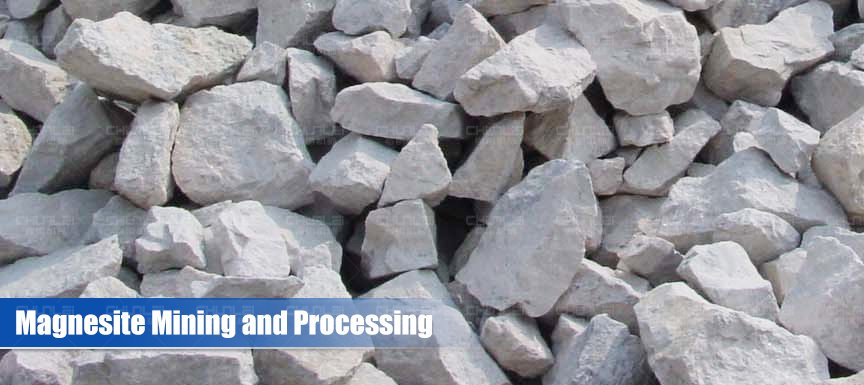
Why must magnesite projects in 2026 rethink their profitability models?
In the past, the primary focus for magnesite projects was often the scale of the mine and the volume of raw ore output. However, by 2026, the factors that truly drive profit will be the market price of the ore, the value added through processing, and the processing cost per ton of product.
Simply put, this can be approached from three angles:
- Prioritize quality enhancement before processing: For low-grade, high-silica ore, consider pre-concentration, washing, or flotation based on specific conditions to minimize wasteful processing.
- Market-driven product strategy: Determine the specific products and specifications required by customers first, then select the appropriate beneficiation and calcination processes; avoid blindly pursuing high purity.
- Control energy and processing costs: Crushing, grinding, beneficiation, and calcination all incur costs; particular attention should be paid to energy consumption during the calcination stage.
Core Profitability Logic
Raw Ore Grade → Beneficiation Recovery Rate → Finished Product Quality → Selling Price → Processing Costs → Final Profit
Therefore, for magnesite projects in 2026, the key is not “the more you mine, the more you earn,” but rather generating higher product value from every ton of raw ore while controlling processing costs.
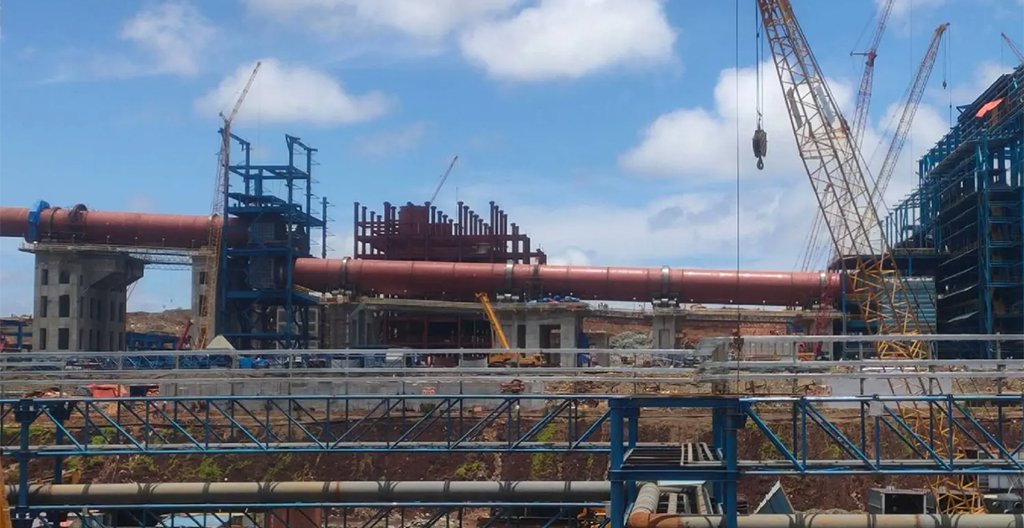
What ore characteristics must be assessed before mining begins?
Before rushing to select equipment and processes for magnesite mining, it is crucial to thoroughly understand the ore’s properties. Focus on the following aspects:
- MgO grade: Determine the average grade of the run-of-mine ore and how it varies across different ore seams.
- Impurities (e.g., SiO₂, CaO): Impurity levels affect the difficulty of beneficiation and the quality of the final product.
- Ore hardness and abrasiveness: These factors influence the selection of crushers, mills, and liners.
- Run-of-mine particle size: This determines the configuration of primary crushing and subsequent grinding equipment.
- Mineral dissemination characteristics: Assess how easily the magnesite can be separated from gangue minerals like quartz and calcite.
- Moisture and clay content: These affect screening, washing, and material handling/conveying efficiency.
- Target product: Decide whether the output will be raw ore, light-burned magnesium oxide (caustic calcined magnesia), or dead-burned magnesia (sintered magnesia) before determining the processing method.
In short: First clarify the ore’s nature, impurity levels, and the desired product, then finalize the mining and processing plans. This approach helps minimize the need for future equipment retrofitting and avoids unnecessary investment.
How do you choose the right mining method for magnesite?
1. Open-pit mining
Suitable for large-scale magnesite deposits where the ore body is relatively shallow; it offers a high degree of mechanization and facilitates easier extraction and transport.
2. Underground mining
Suitable for deposits located at greater depths or in areas where open-pit mining would require excessive overburden removal; however, it places higher demands on mining technology and safety management.
How to choose?
A simple rule of thumb is:
Shallow ore body, large scale → Prioritize open-pit mining
Deep ore body, large volume of overburden → Consider underground mining
However, decisions should not be based solely on mining costs; a comprehensive analysis must also factor in ore loss rates, waste rock volume, transport distances, and the value of the final product.
If you already have data on the magnesite ore body’s thickness, depth, and planned production output, you can use this information to determine the most suitable mining method before finalizing plans for subsequent crushing, beneficiation, and processing.
What is the value of magnesite?
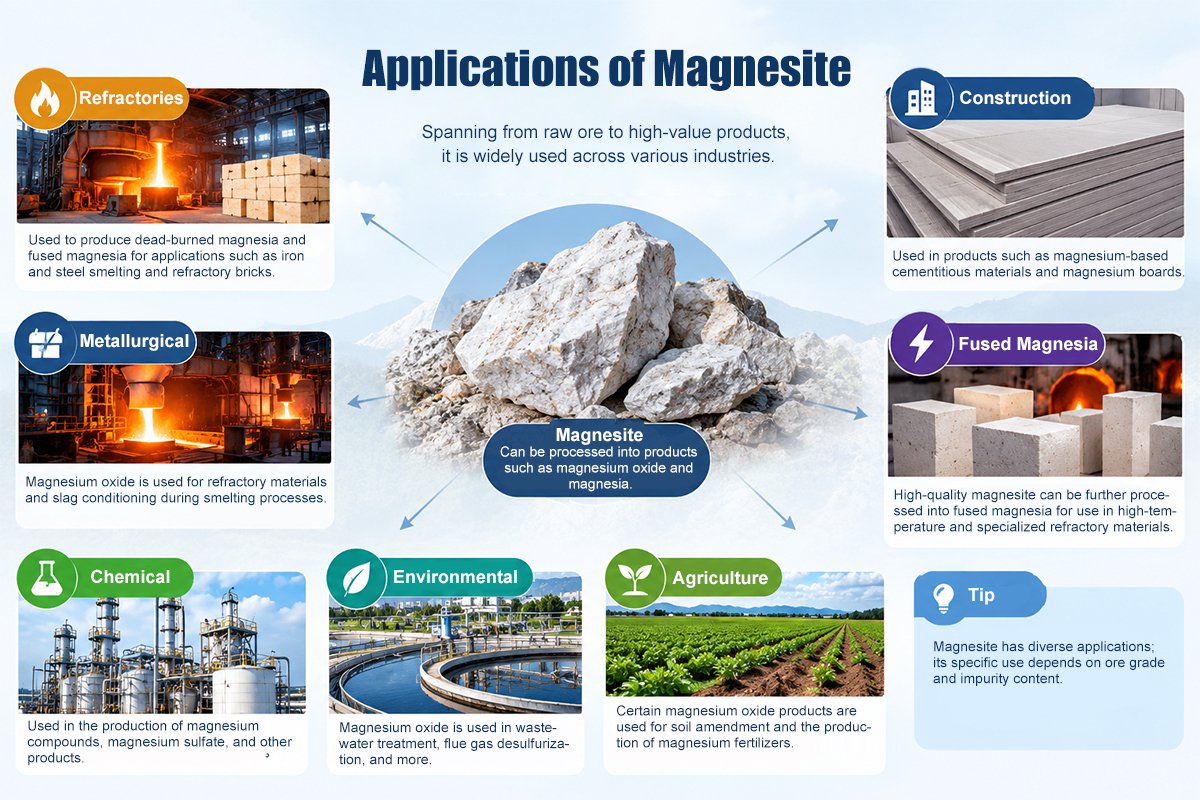
Magnesite is primarily used to produce magnesium-based materials such as magnesium oxide and magnesia. Its applications are extensive, with specific uses determined by ore grade and the specifications of the processed products.
- Refractories: Used to produce dead-burned magnesia and fused magnesia for applications such as steel smelting and refractory bricks.
- Metallurgical industry: Magnesium oxide serves as a refractory material and is used for slag conditioning during smelting processes.
- Chemical industry: Used to manufacture magnesium compounds, magnesium sulfate, and other products.
- Environmental protection: Magnesium oxide is used in wastewater treatment, flue gas desulfurization, and similar applications.
- Agriculture: Certain magnesium oxide products are used for soil amendment and the production of magnesium fertilizers.
- Construction materials: Used in products such as magnesium-based cementitious materials and magnesium boards.
- Fused magnesia sector: High-quality magnesite can be further processed into fused magnesia for use in high-temperature and specialized refractory materials.
In short: Magnesite has a wide range of uses; the appropriate processing route and final product depend on the ore grade and impurity content.
How should the magnesite crushing and screening process be designed?
There is no single, fixed process for crushing and screening magnesite; the design depends primarily on the raw ore’s particle size, hardness, clay content, and the requirements for the final product. The general design principle is “sufficiency”—avoiding over-crushing and unnecessary equipment investment.
Common Process:
Run-of-mine (ROM) ore → Jaw crusher → Vibrating screen → Qualified product
If the raw ore is large, or if a finer feed size is required for the subsequent grinding stage, the following process may be used:
ROM ore → Jaw crusher → Cone crusher/Impact crusher → Vibrating screen → Qualified product
Oversized particles retained on the screen are returned to the crusher via a return conveyor, creating a closed-loop circuit.
Why is indiscriminate fine crushing not recommended?
Excessive crushing leads to increased:
- Dust generation
- Power consumption
- Equipment wear
- Loss of fines
- Burden on downstream separation processes
Therefore, the ultimate goal of crushing equipment is to provide the appropriate particle size for the next stage of processing, rather than simply crushing the ore as finely as possible.
How can the value of low-grade magnesite be enhanced?
Low-grade magnesite is not necessarily devoid of value; the key lies in upgrading its quality first before determining the processing method. Practical approaches include:
- Pre-sorting to remove waste rock: Separate obviously low-grade ore and waste rock early on to reduce the volume of material requiring subsequent crushing and grinding.
- Washing and desliming: If the ore has a high clay content, washing it first can improve the efficiency of subsequent separation processes.
- Upgrading via flotation: If the magnesite is associated with impurities such as quartz or calcite, flotation can be used to increase the concentrate grade.
- Optimizing grind size: Grind only to the point where mineral liberation is achieved; avoid over-grinding, which increases electricity consumption.
- Selecting processing routes based on the product: Produce magnesium oxide products that meet market demand rather than blindly pursuing ultra-high purity.
Core Strategy
Low-grade raw ore → Pre-sorting/Washing → Grinding and flotation (if necessary) → Increased concentrate grade → Processing into higher-value products
Ultimately, the critical calculation is not merely “can the grade be improved,” but rather how much value the upgraded product adds versus the additional costs incurred for beneficiation and processing.
If you have data on the MgO, SiO₂, and CaO content as well as the raw ore particle size, these can be used to further determine the most suitable upgrading strategy.
How does magnesite calcination affect product value?
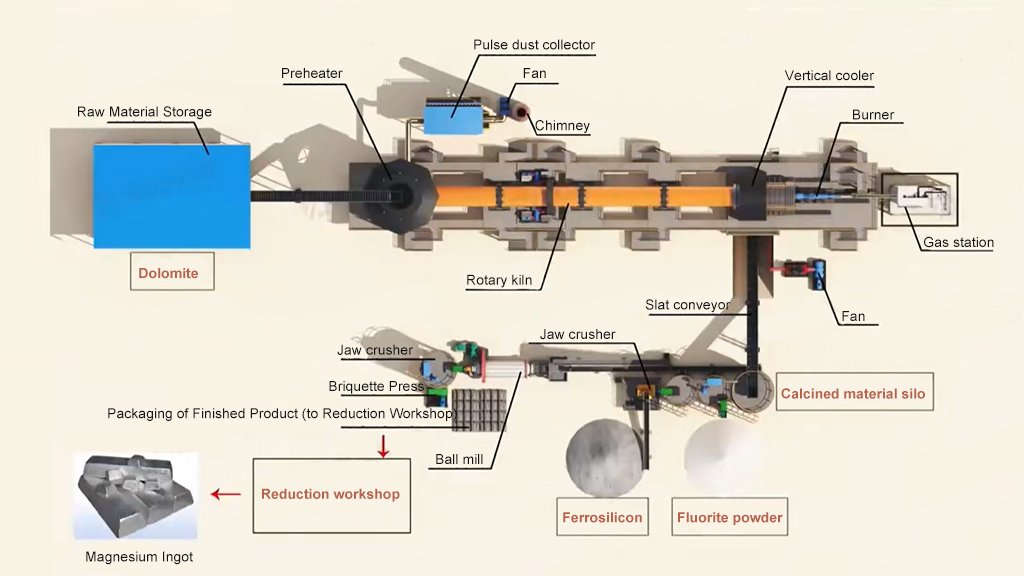
The purpose of magnesite calcination is to decompose MgCO₃ into MgO. However, variations in calcination temperature, duration, and process control affect the product’s purity, reactivity, density, and end-use applications—thereby directly influencing its market price.
In simple terms:
- Light calcination: Primarily produces Caustic Calcined Magnesia (CCM); characterized by high reactivity, making it suitable for chemical and environmental applications.
- Dead burning: Produces Dead Burned Magnesia (DBM); the product is denser and primarily used in refractory materials.
- Over-calcination: Excessive temperature or duration can reduce product reactivity, negatively impacting subsequent applications.
- Under-calcination: Incomplete decomposition of the magnesite can result in a product that fails to meet quality specifications.
Core Logic
Raw ore quality → Proper calcination → Product specification control → Target market alignment → Enhanced product value
Therefore, calcination is not simply a case of “higher temperature is better.” Selecting the right calcination conditions based on the target product allows for quality assurance while simultaneously controlling fuel and processing costs.
If you are planning a magnesite calcination project, please provide details such as the raw ore MgO grade, particle size, target product, and planned output. We can then assist you with a detailed analysis of the appropriate calcination process and equipment configuration.
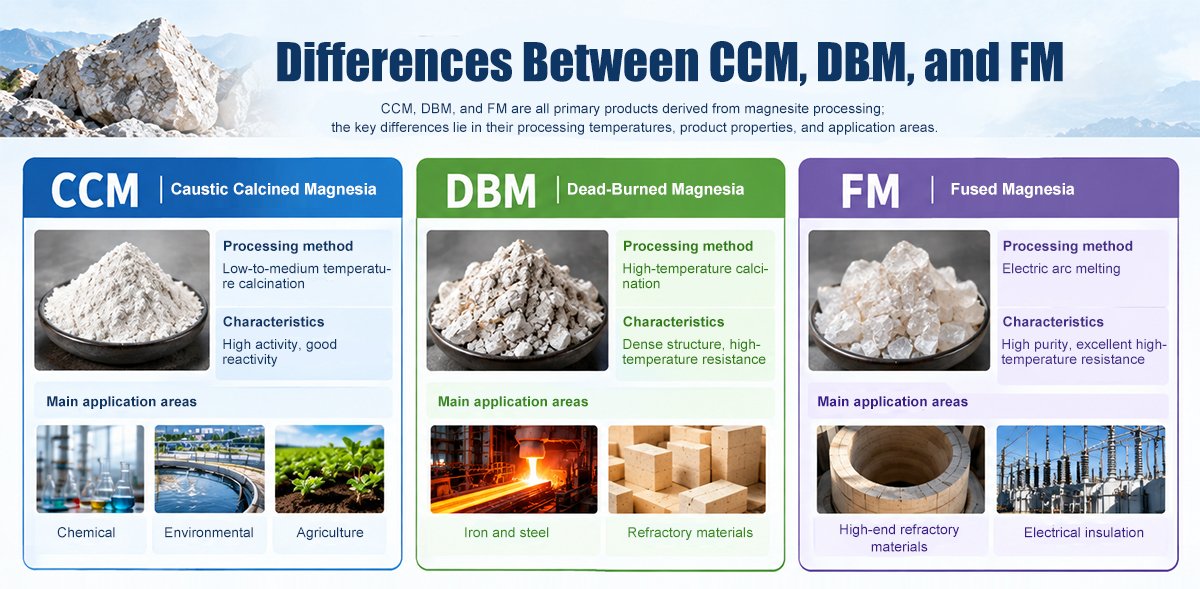
What are the differences between CCM, DBM, and FM?
When magnesite is processed into various magnesium products, the concept can be simply understood as follows: differences in the degree of calcination result in differences in product properties and applications.
| Product | Chinese Name | Key Processing Characteristics | Main Applications | Cost Level |
| CCM | Caustic Calcined Magnesia | Calcined at lower temperatures; retains high reactivity | Chemical industry, environmental protection, agriculture, etc. | Lower |
| DBM | Dead-Burned Magnesia | Calcined at high temperatures; results in a denser product | Refractories, iron and steel industry, etc. | Higher |
| FM | Fused Magnesia | Produced via electric fusion; high purity and high-temperature resistance | High-end refractories, electrical insulation, etc. | Higher |
How do you choose?
If you are primarily considering market demand and investment costs:
- If you want to produce magnesium oxide with high reactivity and a wide range of applications → consider CCM.
- If targeting the refractory materials market → consider DBM.
- If targeting high-end refractories and high-purity magnesia → consider FM.
In short, CCM, DBM, and FM do not simply represent a “low-end, mid-end, high-end” hierarchy; rather, they involve different processing routes that yield distinct product properties and market applications. When undertaking a project, you should first define the target product and quality specifications, then work backward to determine the raw material requirements, calcination process, and equipment configuration.
How to Reduce Magnesite Processing Costs in 2026?
1. Prevent low-grade ore from entering the entire process flow
This is the most direct approach to cost reduction.
If a portion of obvious waste rock can be rejected at the initial stage, the load on subsequent processes—crushing, grinding, flotation, and calcination—can be reduced.
2. Optimize grinding particle size
For flotation, “finer grinding” is not necessarily better.
Once the minerals have achieved an optimal degree of liberation, further grinding only increases electricity consumption and the risk of over-grinding (sliming).
Therefore, testing is required to determine the:
Optimal grinding size → Classification size → Flotation feed size
3. Improve screening and classification efficiency
If classification is unstable, coarse particles may carry over to the next stage, while fine particles might undergo repeated processing.
For projects utilizing closed-circuit ball milling, consider the following configuration:
Ball mill + Slurry pump + Hydrocyclone
This establishes a stable closed-circuit loop.
4. Manage calcination heat effectively
During the kiln stage, focus on:
- Feed stability
- Particle size uniformity
- Fuel-to-air ratio
- Temperature distribution within the kiln
- Waste heat recovery from exhaust gases
- Condition of thermal insulation and refractory materials
The key to profitability in 2026 lies not merely in increasing output, but in reducing the energy and raw materials consumed per ton of qualified product.
What are the common pitfalls in magnesite project investments?
Pitfall 1: Focusing solely on MgO grade while ignoring impurities
Even with raw ore containing around 40% MgO, varying levels of SiO₂, CaO, and Fe₂O₃ can necessitate completely different processing strategies.
Pitfall 2: Blindly copying another operation’s production line
Just because another magnesite operation uses flotation doesn’t mean yours requires it.
Differences in mineral composition and textural characteristics (mineral association/intergrowth) can dictate different processing flows.
Pitfall 3: Comparing only the purchase price of equipment
The true cost calculation should include:
Equipment investment + Civil works + Energy consumption + Consumables + Labor + Maintenance + Product recovery rate
…rather than simply comparing the price tag of a single piece of equipment.
Pitfall 4: Finalizing the process flow without conducting beneficiation tests
This is a critical mistake to avoid.
Especially with low-grade magnesite, finalizing the reagent regime, grinding fineness, and flotation flow without experimental validation can lead to prohibitively high costs for subsequent adjustments.
Pitfall 5: Blindly pursuing high purity for the sake of a higher selling price
While high-purity products may offer higher added value, they also demand stricter raw material control and more complex processing workflows.
Assess the market before deciding on the product; analyze the ore before selecting the equipment.
FAQ
Q: What are the main steps in magnesite processing?
A: The typical process flow is:
Mining → Crushing → Screening → Beneficiation/Upgrading → Calcination → Cooling → Finished Product Processing
Specific steps such as washing, flotation, magnetic separation, or grinding depend on the properties of the raw ore and the requirements for the final product.
Q: Is it worth processing low-grade magnesite?
A: It is possible, but one cannot look solely at the MgO grade. It is necessary to analyze impurities such as SiO₂, CaO, and Fe₂O₃, as well as mineral dissemination characteristics, beneficiation recovery rates, energy costs, and the selling price of the final product.
Q: Why is flotation required for magnesite?
A: When magnesite cannot be easily separated from gangue minerals (such as quartz or calcite) via simple screening or gravity separation, flotation can be used to separate them based on differences in surface properties. Research is ongoing to optimize flotation reagents and separation efficiency, particularly for desilication and the separation of magnesite from quartz.
Q: How fine should magnesite be ground before flotation?
A: There is no fixed particle size applicable to all mines. The grind size should be determined based on the mineral dissemination size and laboratory liberation tests. Grinding too coarsely results in insufficient mineral liberation, while grinding too finely can increase energy consumption and lead to excessive slime formation.
Q: What is the calcination temperature for magnesite?
A: No single fixed temperature applies to all products. Calcination temperature and duration must be determined based on raw material particle size, product type, kiln structure, and target performance characteristics. Recent studies indicate that for selective calcination, temperature ranges of 650–750°C combined with durations of 30–120 minutes significantly affect decomposition; however, experimental conditions cannot be directly applied as operating parameters for all industrial kilns.
Q: Can the process flow be determined without conducting beneficiation tests?
A: That carries significant risk. Magnesite properties vary by deposit; it is best to conduct ore analysis and beneficiation tests before finalizing the process flow.
Q: Is bigger equipment always better?
A: No. Oversized equipment not only increases initial investment but can also lead to higher energy consumption and maintenance costs; equipment selection should be based on actual processing capacity.
Q: What are the downsides of comparing only equipment prices?
A: It is easy to overlook downstream costs. Beyond the purchase price, one must account for electricity, fuel, wear parts, maintenance, and labor.
Q: Does producing high-purity products always yield higher profits?
A: Not necessarily. Higher product quality usually entails stricter processing requirements and higher costs; market demand should be assessed before deciding on the product grade.
Q: Why does the calcination stage often drive up costs?
A: Improper control of temperature, feed particle size, or residence time can lead to fuel waste and fluctuations in product quality.
Q: How can excessive investment in a magnesite project be avoided?
A: Analyze the ore properties and target products first, then determine the crushing, grinding, beneficiation, and calcination processes to avoid unnecessary equipment investment driven by a desire for “high-end specifications.”
Q: What are the most critical factors to calculate for a magnesite project?
A: Do not focus solely on output and selling price; carefully calculate raw ore grade, recovery rate, finished product quality, energy consumption, and cost per ton to determine the actual profit.
Conclusion
If you are planning a magnesite processing project, we recommend sharing details such as the raw ore’s MgO, SiO₂, and CaO content, particle size, processing capacity, and target product specifications. We can then help you outline the crushing, grinding, separation, and calcination stages, identifying which equipment is worth the investment and where processes can be streamlined. Contact a CHUNLEI engineer today!
Latest News

A Comprehensive Guide to Types of Tin Ore and Mineral Processing Techniques
800Tin ore beneficiation is not merely a matter of crushing and grinding the ore before feeding it into a jig or a shaking table. Even within a single tin mining project, the optimal beneficiation process can vary significantly depending on factor…
-
How is a 0.2% tin ore processed into a 60% concentrate?
800Many clients attempt to process ore containing 0.2% tin, only to find that—after a series of operations—the ore grade has failed to improve, while significant amounts of cassiterite remain in the tailings. Some clients try to compensate by inte…
-
What are the gravity separation process flows for tin ore?
800Having worked in the tin mining industry for many years, I’ve observed a recurring issue among clients: even when the raw ore has a high tin content and a substantial amount of processing equipment is employed, the final tin recovery rates rema…
-
Gravity Concentration vs. Flotation for Gold: Which Process Should You Choose?
800In gold beneficiation projects, many mining engineers face a critical question: Why does the final gold recovery rate consistently fall short of expectations, even when grinding fineness and reagent regimes are strictly maintained according t…
loading…
已经是到最后一篇内容了!