 Chunlei Mining Machinery
Why Does A Ball Mill Produce Excessive Fines?
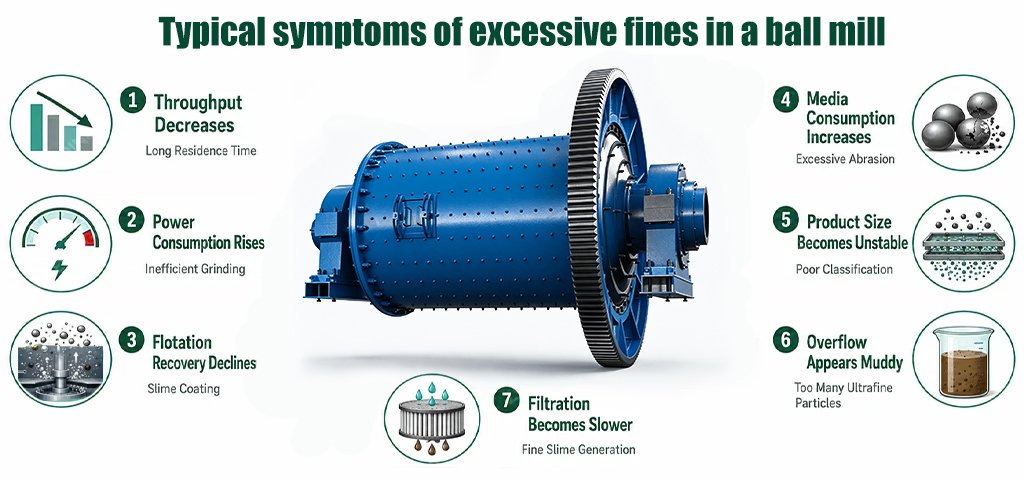
The production of excessive fines in a ball mill—a phenomenon known as over-grinding—often leads to various downstream issues, such as increased power consumption, greater difficulty in subsequent mineral processing, and accelerated wear of components.
So, what causes over-grinding? Many customers’ first reaction is simply to lower the rotational speed. In reality, however, factors such as feed particle size, throughput, steel ball grading, ball charge, liner wear, slurry concentration, and the performance of classification equipment all influence the final product particle size.
The real issue to address is not “how to make the ball mill grind more coarsely,” but rather how to ensure that particles meeting the target size exit the grinding circuit in a timely manner.
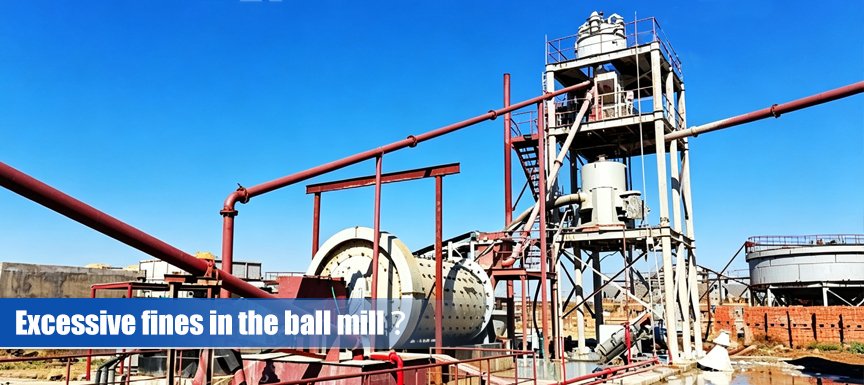
What constitutes the production of excessive fines in a ball mill?
In mineral processing, ore must be ground to a specific particle size to achieve sufficient liberation of valuable minerals from the gangue. However, if the ball mill continues to grind ore that has already reached the target size into even finer particles, the proportion of ultrafine particles and slimes in the final product will increase significantly.
For instance, if the process requires the product to reach a certain fineness but the proportion of fines keeps rising during actual operation, over-grinding may be occurring.
Determining whether there are “excessive fines” involves looking at three main aspects:
- Whether the actual product particle size is significantly finer than the target size
- Whether the proportion of fine particles is steadily increasing
- Whether the efficiency of downstream mineral processing is being compromised
Therefore, a finer grind is not necessarily better; the goal should be to grind the ore to the appropriate size based on the requirements of the subsequent mineral processing stages.
Why does a ball mill produce excessive fines?
1. Insufficient Feed Rate
If the ball mill maintains its rotational speed and operating conditions but the actual feed rate drops, the residence time of the ore inside the mill may increase.
Simply put:
Reduced feed → Change in mill load → Increased material residence time → Particles that already meet specifications undergo further grinding → Increase in fines
Therefore, if there is a sudden increase in fines, first check whether the actual tonnage has dropped; do not immediately adjust the mill’s rotational speed.
2. Inadequate Classification Efficiency
This is a critical point to check first in a closed-circuit ball milling system.
Hydrocyclones or spiral classifiers are responsible for sending properly sized fine particles to the next stage of the process while returning coarser particles to the ball mill.
If classification performance is poor, fine particles are returned along with the underflow:
Fine particles → Returned to ball mill → Reground → Become finer → Returned again
Over time, this easily leads to over-grinding.
Consequently, when a ball mill produces excessive fines, the root cause sometimes lies not in the mill itself, but in the classification stage.
How does feed particle size lead to over-grinding?
1. Feed is too fine
This is a point often overlooked.
If the upstream crushing and screening systems have already produced a large volume of fine particles, these particles are essentially close to the target size upon entering the ball mill.
As the ball mill continues to operate, it may grind them further into ultra-fine particles.
Therefore, regular checks are necessary across the process flow:
Crusher discharge → Vibrating screen classification → Ball mill feed
If there is a sudden increase in the fine fraction of the ball mill feed, the issues with upstream screening and crushing should be addressed first.
2. Feed is too coarse
Excessively coarse feed also causes problems.
Large particles require more time to reach the target size, during which particles that have already been ground fine may be subjected to continued impact and attrition.
Thus, the most reasonable approach is:
Ensure upstream crushing is as stable as possible to provide the ball mill with a suitable and consistent feed size.
The function of the ball mill is “grinding,” not replacing the upstream crusher in performing the bulk of the coarse crushing work.
Does steel ball grading affect the content of fines?
Yes, and the impact is quite direct.
The size of the steel balls determines the primary mechanism by which ore is crushed inside the mill.
| Steel Ball Condition | Potential Issues | Adjustment Strategy |
| Excessive large steel balls | Beneficial for coarse particle breakage but may be unsuitable for fine grinding | Check maximum ball diameter |
| Excessive small steel balls | Increases grinding action; may produce more ultra-fine particles | Optimize steel ball size distribution |
| Improper steel ball size distribution | Difficult to stably control both coarse and fine particles | Adjust based on feed particle size |
| Severe steel ball wear | Changes in effective impact and grinding conditions | Regularly inspect and replenish balls |
Therefore, the steel ball grading should not simply aim for “large balls” or “small balls”; instead, it should be adjusted based on feed particle size, ore hardness, and the target product fineness.
In short: appropriate steel ball grading minimizes over-grinding while maintaining reasonable grinding efficiency.
How do ball mill rotational speed and ball charge affect performance?
1. Improper Rotational Speed
The rotational speed of the ball mill dictates the motion of the steel balls.
If the speed is too low, the balls primarily roll or slide; if it is too high, the balls may cling to the mill shell, failing to generate the ideal impact force from falling.
Therefore, simply reducing the rotational speed does not necessarily solve the problem of over-grinding; in fact, it may lead to a decrease in throughput.
2. Improper Ball Charge
An incorrect ball charge—whether too high or too low—can destabilize the grinding process.
Consequently, when issues with excessive fines arise, it is advisable not to adjust just one parameter in isolation, but to simultaneously evaluate:
Mill speed → Ball charge → Ball size distribution → Ore feed rate
If the ball mill produces excessive fines, do not assume that simply lowering the speed or increasing the ball charge will solve the problem. Instead, adjustments should be made holistically, taking into account ore hardness, feed particle size, target fineness, and the actual circulating load.
Why does slurry concentration affect grinding fineness?
Slurry concentration influences the interaction between ore and grinding media (such as steel balls), material flow, and residence time within the mill; consequently, it directly impacts the final product’s particle size. Both excessively low and excessively high concentrations can impair grinding performance.
- Excessively low concentration: The slurry is too dilute, allowing material to pass through the mill quickly. This can result in insufficient grinding action and an increase in coarse particles.
- Optimal concentration: The ore, grinding media, and slurry maintain an ideal interaction state, leading to more consistent grinding fineness.
- Excessively high concentration: The slurry becomes too viscous, slowing down material flow and increasing residence time inside the mill. This can lead to over-grinding and an excess of fine particles.
- Variations in ore properties: Optimal slurry concentration varies depending on the ore type; fixed values cannot be applied universally.
In actual production, if a sudden increase in fine particles is observed in the ball mill, one should check the slurry concentration in addition to the rotational speed and grinding media charge (ball grading).
Can a hydrocyclone cause over-grinding in a ball mill?
Yes; more precisely, however, abnormal hydrocyclone classification can indirectly lead to over-grinding in the ball mill. In a closed-circuit grinding process, if the cyclone fails to promptly separate properly sized fine particles into the overflow, these fines return to the ball mill with the underflow. They are then subjected to repeated grinding, ultimately resulting in over-grinding.
- Overflow is too fine, underflow contains excessive fines: Check the cyclone’s classification efficiency.
- Abnormal cyclone feed pressure: This can alter the classification particle size.
- Improper slurry density: This affects the cyclone’s classification performance.
- Wear or blockage of the apex (spigot) or vortex finder (overflow pipe): These issues can also cause classification abnormalities.
A simple rule of thumb:
Properly sized fines discharged promptly via overflow → Reduced over-grinding
Large amounts of fines returning via underflow → Risk of over-grinding
Therefore, when excessive fines are observed, do not focus solely on adjusting the ball mill itself; also inspect the hydrocyclone’s operating status and classification particle size.
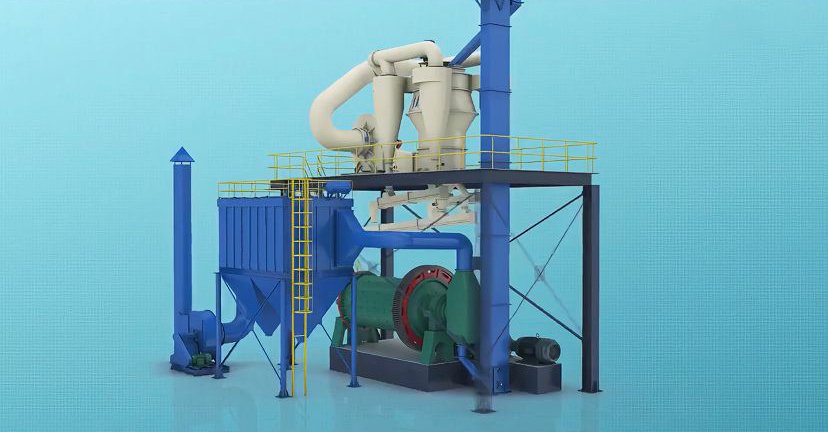
How do you determine exactly which stage is causing the problem?
Do not rely solely on the ball mill’s final discharge.
A more reliable method is to take and compare continuous samples.
It is recommended to collect samples at the following points:
Fresh feed → Ball mill discharge → Cyclone feed → Cyclone overflow → Cyclone underflow → Final product
Then, compare the particle size distribution at each point.
| Symptom | Priority Checks |
| Ball mill discharge is already very fine | Mill parameters, steel ball charge/grading, residence time |
| Cyclone overflow suddenly becomes finer | Classification pressure, slurry density, flow rate |
| Underflow contains a large amount of fine particles | Cyclone classification efficiency, operating conditions |
| Throughput drops while fines increase | Feed rate, ore characteristics, mill load |
| Sudden onset of over-grinding | Changes in run-of-mine ore, feed size, or operating parameters |
| Increase in fines accompanied by higher steel ball consumption | Steel ball charge/grading, ore abrasiveness, grinding conditions |
This “front-to-back” investigation method is usually easier to find the real cause than directly adjusting the ball mill speed.
How can the production of excessive fines in a ball mill be reduced?
If over-grinding occurs, do not rely solely on reducing the rotational speed; instead, make adjustments across several areas—feed, grinding media (steel balls), slurry, and classification:
- Control feed particle size: Prevent excessively fine material from entering the ball mill to minimize unproductive fine grinding.
- Stabilize feed rate: Avoid low feed rates that cause material to remain in the mill for too long.
- Optimize steel ball grading: Select the ball charge based on ore hardness, feed size, and target fineness; avoid an excess of small balls.
- Adjust slurry concentration: Maintain an appropriate concentration to stabilize material flow and grinding action.
- Check liner wear: Worn liners alter the movement of the steel balls, affecting the grinding particle size.
- Improve classification efficiency: Inspect hydrocyclones or classifiers to ensure that properly sized material is discharged promptly, thereby reducing the amount of fines returned to the ball mill.
- Avoid blindly extending grinding time: Classify the material as soon as the target size is reached to prevent further grinding.
In short: The key to reducing excessive fines is to ensure the ball mill “stops once the job is done,” rather than grinding as finely as possible. When making actual adjustments, it is best to consider product particle size, circulating load, and downstream processing requirements comprehensively.
Common Mistakes
Mistake 1: Reducing ball mill speed upon observing excessive fines
Issue: This may lead to reduced throughput without actually resolving issues related to classification efficiency or feed characteristics.
Recommendation: First, inspect the feed, steel ball charge/grading, slurry density, and classification equipment.
Mistake 2: Assuming higher fineness equates to higher metal recovery
Not all ores require ultra-fine grinding.
Over-grinding can generate excessive slimes, which creates problems for downstream processes such as flotation, thickening, and filtration.
Mistake 3: Testing only the final product
The final product reveals the “result” but does not directly indicate the “cause.”
It is best to simultaneously collect samples from the ball mill feed, discharge, and various points within the classification circuit.
Mistake 4: Overlooking recent changes in operating conditions
If the ball mill previously operated normally but has recently started producing excessive fines, prioritize checking the following:
Has the raw ore changed?
Has the feed particle size changed?
Have the steel balls been replaced?
Are the liners worn?
Has the cyclone undergone maintenance?
This type of troubleshooting is usually more effective than readjusting the entire system.
FAQ
Q1: Does the production of a large amount of fines in a ball mill indicate high grinding efficiency?
Not necessarily. Continuing to grind after the target liberation size has been reached constitutes over-grinding, which increases unproductive energy consumption as well as the wear of steel balls and liners.
Q2: Can reducing the ball mill’s rotational speed decrease the production of fines?
It can sometimes alter the grinding dynamics, but it should not be the primary solution. If the root cause is low classification efficiency or unstable feed rates, simply reducing the speed may result in decreased throughput.
Q3: Why does feeding material that is already too fine into the ball mill actually lead to over-grinding?
Because some particles are already close to the target size; upon entering the mill, they are subjected to further impact and attrition, making them more likely to be reduced to unwanted ultra-fine particles.
Q4: Can poor classification by the hydrocyclone lead to over-grinding?
Yes. If a large quantity of fine particles enters the cyclone underflow and is returned to the ball mill, they may undergo repeated grinding, thereby increasing the fines content.
Q5: How can one determine if the ball mill is actually over-grinding?
The most direct method is particle size analysis. Compare the actual product particle size against the target P80 and downstream process requirements, while also examining changes in particle size across the feed, mill discharge, and classified product streams.
Conclusion
Excessive fines generation in a ball mill is not necessarily a problem with the mill itself, nor is it usually caused by a single parameter in isolation.
The focus should be on the entire grinding circuit:
Feed particle size → Feed rate → Steel ball charge grading → Ball charge volume → Mill speed → Slurry density → Liner condition → Classification efficiency → Circulating load
Therefore, the most effective approach to solving the problem is: take samples first → identify where the fines increase occurs → determine the cause → then adjust the parameters.
If your ball mill has recently experienced an increase in fines, unstable P80 values, reduced throughput, or abnormal cyclone underflow, please contact the engineers at CHUNLEI, we can quickly diagnose the issue based on your specific situation.
Latest News

Magnesite Mining and Processing: 2026 Profitability Strategy
800Investing in magnesite is a high-demand venture within the refractory raw materials market. Profitability, however, does not hinge solely on the size of reserves; it requires comprehensive planning that integrates mineralogical analysis, benefi…
-
How Do You Select Ball Mill Liners Based On Ore Hardness?
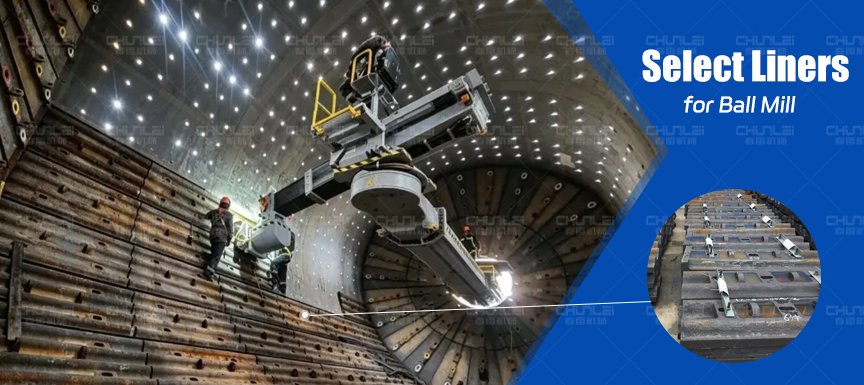
800During ball mill operations, operators often encounter a common issue: liner replacement frequency increases without a corresponding improvement in grinding efficiency—or even with a rise in energy consumption per ton of ore. The problem often …
-
2026 Ball Mill Prices and Buying Guide
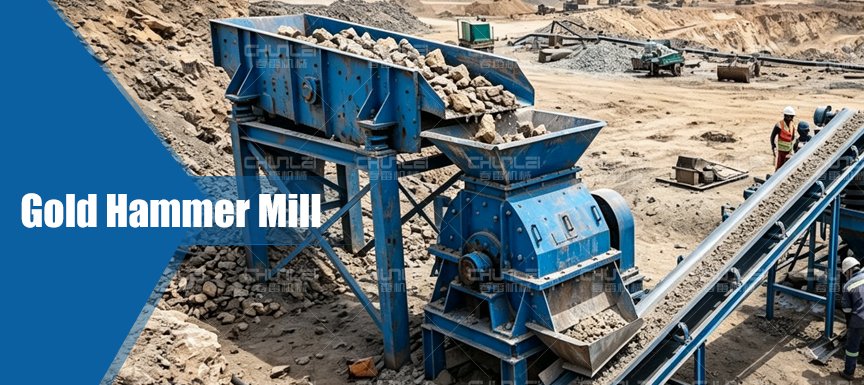
800Hammer mills are highly popular among customers because of their relatively simple structure and ability to crush and finely grind gold ore within a compact process flow; however, they are not suitable for every type of gold ore. Some gold…
-
2026 Ball Mill Prices and Buying Guide
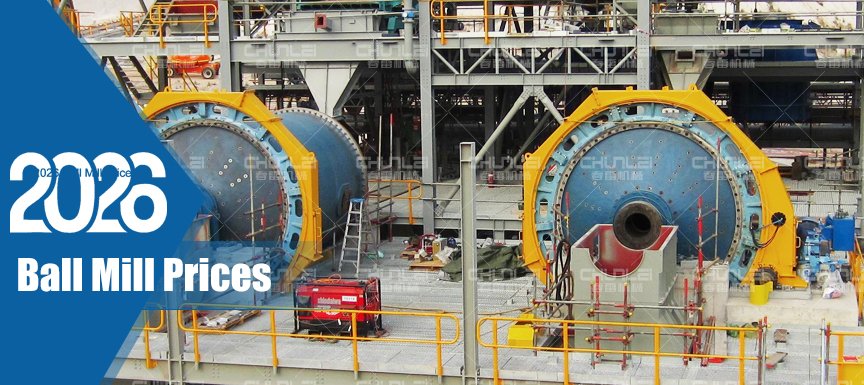
800Regarding the price of ball mills in 2026, there is a vast difference in cost among manufacturers. A small laboratory ball mill might cost only a few thousand dollars, whereas a large-scale mining ball mill could require an investment of hundre…
loading…
已经是到最后一篇内容了!