 Chunlei Mining Machinery
Quartz Sand Production Line Equipment: A One-Stop Guide from Configuration and Pricing to Installation
Building a successful quartz sand production line is far more than simply installing equipment. Achieving quartz sand purity that meets market value and application requirements demands meticulous process design. Missteps in equipment selection or mismatches with raw material characteristics will inevitably lead to severe operational issues and unnecessary expenses down the line.
Every stage from mine to finished product is critical. Accurate mineralogical analysis and appropriate equipment selection directly determine the design of crushing, grinding, separation, and purification processes. Decision-makers must look beyond equipment prices and consider lifecycle costs and long-term operational expenses to avoid economic losses from inadequate equipment performance.
This guide offers a comprehensive, practical roadmap for quartz sand production lines. We will dissect the core equipment configurations, analyze scaling solutions for different production capacities, and detail the entire installation and commissioning process with its critical points. This will empower you to navigate each step from project planning to stable production with clarity and confidence.

Four Core Process Stages in Quartz Sand Production
In quartz sand production, transforming raw quartz ore into high-purity quartz sand primarily involves four core stages: crushing and screening—grinding and classification—mineral washing and desliming—magnetic separation and flotation.
Stage One: Crushing and Screening (Preliminary Separation of Raw Material by Size)
The first link in the quartz sand production line is the crushing and screening of raw ore. This process reduces large ore blocks to smaller sizes that meet specifications, preparing them for subsequent processing. Crushing not only reduces size but also involves “impurity removal.” Some projects, when dealing with waste rock that shows significant color differences, will remove low-grade waste rock as much as possible before crushing. This reduces the pressure on crushing equipment and indirectly lowers overall operating costs.

Primary Crushing Equipment
Jaw Crusher: Typically used for primary crushing, handling larger, high-compressive-strength raw ore.
Cone Crusher: Commonly employed for secondary and tertiary crushing, producing finer, more uniform products. Impact crushers can process medium-hard materials.
VSI Sand Maker: Used for final shaping in the crushing stage. If high-quality cubic fine particles are required, the sand maker is the optimal choice.
Role of Screening
Vibrating screens classify crushed materials into different sizes. Oversized particles are returned to the crusher for further reduction, while qualified material advances to subsequent stages. Vibrating screens prevent over-crushing while enhancing efficiency in downstream processes. Thus, their role after each crushing stage is critical.
A well-designed crushing and screening system forms the cornerstone of an efficient and high-return quartz sand production line.
Stage Two: Grinding and Classification (Controlling Particle Fineness and Purity)
After undergoing crushing and screening, quartz ore proceeds to the next stage: grinding and classification. This phase further reduces particle size and separates impurities still mixed with quartz particles, serving as a critical step for purification and achieving desired fineness. Classification equipment separates fully ground material from coarser particles.

Grinding Equipment:
The choice between rod mills and ball mills for quartz sand grinding directly determines the product’s market viability. Some clients opt for ball mills without conducting grinding tests, which often leads to “over-grinding.” This results in significant loss of fine silt-sized particles and imposes unnecessary costs on subsequent flotation and dewatering processes.
Rod Mill: Widely used in quartz sand grinding due to their unique “line contact” grinding mechanism. Rod mills enable selective grinding, prioritizing the reduction of coarse particles and surface impurities. This effectively minimizes over-grinding, resulting in a more concentrated particle size distribution. The resulting particles are predominantly spherical or elliptical in shape, which is highly desirable. This characteristic makes rod mills indispensable in fields with stringent requirements for particle size and impurity content, such as photovoltaic glass, high-transmittance glass, and electronic-grade silicon micropowder.
Ball Mill: Employing “point contact” impact and grinding, ball mills readily achieve finer particle sizes. However, this intense grinding method also leads to over-grinding and challenges in controlling particle shape, often producing sharp, irregular particles that result in a broad particle size distribution. Ball mills are better suited for standard quartz sand products with less stringent particle shape requirements, such as foundry sand, ceramic glazes, glass fibers, and certain building material fillers.
Classification Equipment:
Classification precisely separates ground quartz sand streams according to specified particle size requirements, ensuring the final product’s particle size distribution meets standards.
Hydrocyclone: Utilizing powerful centrifugal sedimentation principles, it achieves extremely high classification efficiency for fine particles. Simultaneously, coarse particles that fail to meet the required size are returned to the mill for re-grinding, forming a closed-circuit system.
Spiral Classifier: For quartz sand production lines with less stringent particle size requirements and high throughput, the spiral classifier is the preferred choice. It primarily achieves solid-liquid separation and coarse particle separation through the mechanical lifting action of spiral blades. It is particularly suitable for pre-classification or desliming operations in conjunction with mills.
Stage Three: Mineral Washing and Desliming (Removal of Impurities and Fine Silt)
After grinding and primary classification, quartz sand enters the washing and desliming stage for selective purification. The core objective here is to thoroughly separate stubborn impurities adhering to the quartz sand particles—including primary/secondary iron films, clay minerals, and organic contaminants—thereby enhancing product purity and value.

Core Equipment:
Sand Washer: This equipment primarily removes released impurities by continuously mechanically agitating and rinsing with clean water to separate fine silt and light materials from the sand. Depending on processing capacity and material characteristics, either a bucket wheel sand washer or a spiral sand washer can be selected.
Bucket Wheel Sand Washer: Its key advantages are high cleaning efficiency and strong self-cleaning capability through water recirculation.
Spiral Sand Washer: Demonstrates greater stability and higher processing capacity when handling coarse-grained sand.
Hydraulic Cyclone Separator: Enables precise classification and removal of extremely fine particles (typically -0.075mm or -0.045mm and smaller). Separates fine particles from coarse sand slurry. Multiple units can be coordinated to achieve optimal classification results.
Stage Four: Magnetic Separation and Flotation (Removal of Magnetic Impurities and Contaminants, Deep Purification)
Magnetic separation and flotation are crucial for purifying high-purity quartz sand. This deep purification is essential for specialized applications in electronics, optics, and solar energy, enabling thorough removal of residual impurities.
While many customers focus on strong magnetic separators for iron removal in quartz sand, varying magnetic properties of iron minerals may limit magnetic separation effectiveness. This is where flotation technology plays a critical role, effectively removing impurities like feldspar and mica.
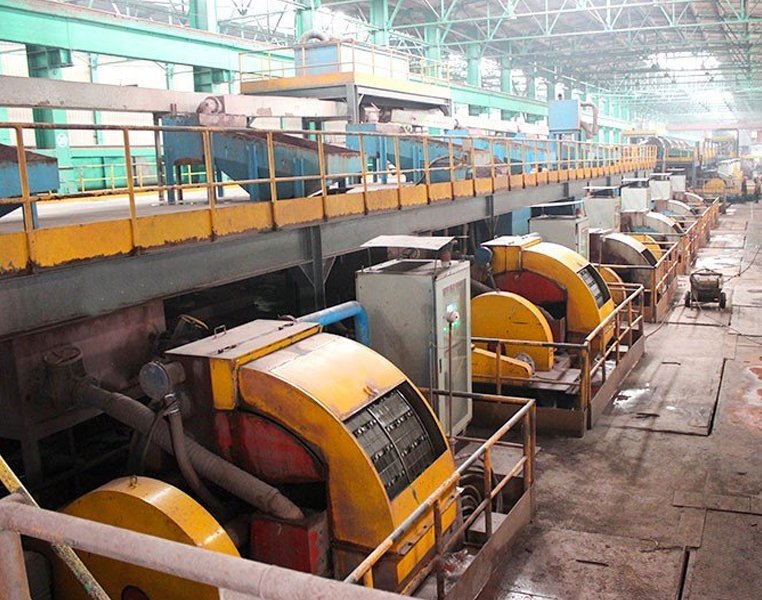

Magnetic Separation Equipment:
Magnetic Separator: Typically employed before high-gradient magnetic separation to pre-remove strongly magnetic minerals from raw materials, protecting downstream high-gradient magnetic separators from unexpected wear and damage.
High-Gradient Magnetic Separator: Primarily removes weakly magnetic impurities from quartz sand, such as hematite, limonite, biotite, etc., effectively enhancing the purity of non-magnetic materials.
Flotation Equipment:
Flotation Cell: Provides agitation and aeration functions, enabling collectors to attach to impurity minerals and lift them to the surface via bubbles.
Core Points for Installation, Commissioning, and Operation & Maintenance
- Pre-Installation Preparation:
Foundation Survey and Design: Ensure foundation bearing capacity meets equipment requirements.
Plant Layout Planning: Rationally plan equipment layout, reserving maintenance access routes.
Utility Preparation: Ensure power and water supply are in place, particularly constructing a recirculation pool for sand washing water. - Installation Procedure:
Follow the principle of “main units first, auxiliary equipment later; bottom-up installation.” Sequentially install the feeder, crusher, sand maker, screening equipment, and sand washing equipment. Finally, connect conveyor belts and pipelines. - Commissioning and Trial Operation:
No-Load Test Run: Verify smooth operation of each unit individually and check for abnormal noises.
Load Test Run: Gradually increase load from low to full capacity while monitoring operational status, current, temperature, and other parameters.
Process Parameter Adjustment: Optimize finished product quality by adjusting crusher discharge opening, vibrating screen inclination and amplitude, sand washer water flow, etc. - Routine Operation, Maintenance, and Care:
Regular Inspections: Check wear on consumable parts (e.g., jaw plates, impact hammers, screen mesh, impellers).
Lubrication System: Strictly use specified lubricants as per equipment requirements and replace them regularly.
Tightening and Cleaning: Inspect bolts at critical connection points for looseness and maintain equipment cleanliness.
Advantages of CHUNLEI Customized Solutions
- Precision Matching: Deeply aligned with your raw material characteristics and final product standards to ensure optimal process routes.
- Efficiency Leap: Optimized equipment selection and process integration significantly boosts capacity utilization while reducing energy consumption per unit.
- Resource Enhancement: Intelligent sorting and recovery designs substantially increase target component recovery rates and minimize resource waste.
- Investment Protection: Prevents under- or over-investment, ensuring every budget dollar translates into tangible productivity.
- Future-Proofing: Modular design reserves upgrade capacity for future expansion, enabling production lines to adapt flexibly to business growth and process evolution.
Conclusion
CHUNLEI specializes in delivering customized quartz sand production solutions. Our equipment is renowned for reliability, efficiency, and superior performance. We provide end-to-end support encompassing design, manufacturing, installation, and after-sales service. Choosing us means acquiring not just equipment, but a future-proof, profit-generating production solution that lays a solid foundation for your project’s success. Contact us today!
Latest News

Gravity Concentration vs. Flotation for Gold: Which Process Should You Choose?
800In gold beneficiation projects, many mining engineers face a critical question: Why does the final gold recovery rate consistently fall short of expectations, even when grinding fineness and reagent regimes are strictly maintained according t…
-
Gravity Separation for Gold: When Is It Suitable for Gold Ore?
800Many people immediately associate “gold ore” with gravity separation, yet not all gold deposits are suitable for recovery using gravity methods alone. Gravity separation is appropriate for liberated native gold or other heavy minerals that ex…
-
How Classification Affects Gold Grinding Efficiency
800In gold ore grinding circuits, attention is often focused primarily on ball mill capacity, power consumption, and grinding media; however, in actual operation, classification plays an equally critical role in determining grinding efficiency. …
-
Gold Ore Crushing and Grinding: What Equipment Do You Need?
800When designing a gold ore processing line, my clients often ask which crushers and mills to purchase. However, the equipment selection should actually be based on a thorough understanding of the ore characteristics. Issues in many projects do…

loading…
已经是到最后一篇内容了!