 Chunlei Mining Machinery
Secondary vs. Tertiary Crushers: Ultimate Selection & Buyer’s Guide
When designing crushing production lines, many people are unsure whether a tertiary crushing stage is necessary after secondary crushing. If the material exiting the secondary stage is too coarse, the volume of material returned to the screen increases; this frequent recirculation forces the equipment to operate under high loads for extended periods, significantly accelerating the wear of components and driving up maintenance costs.
So, should a secondary or tertiary crusher be used? The decision depends on factors such as raw material size, rock hardness, target output, final product specifications, and requirements for particle shape.
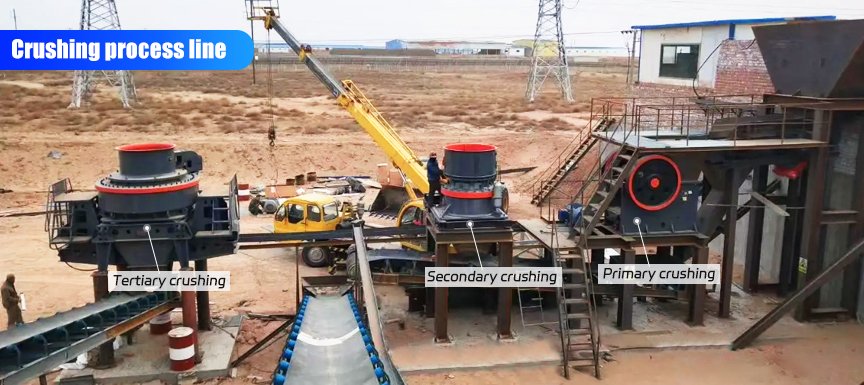
Differences in Positioning Between Secondary and Tertiary Crushing Stages
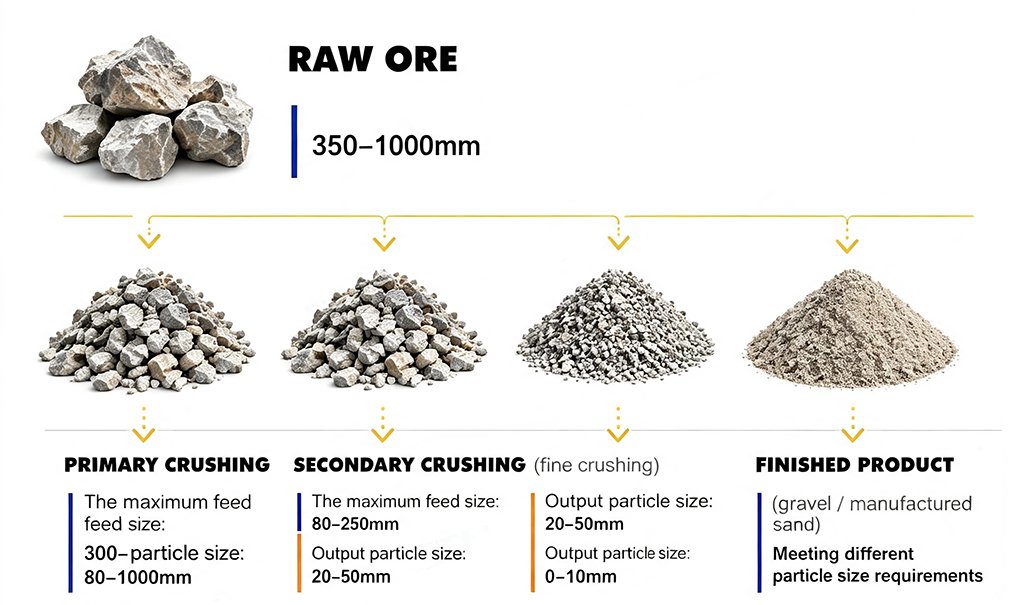
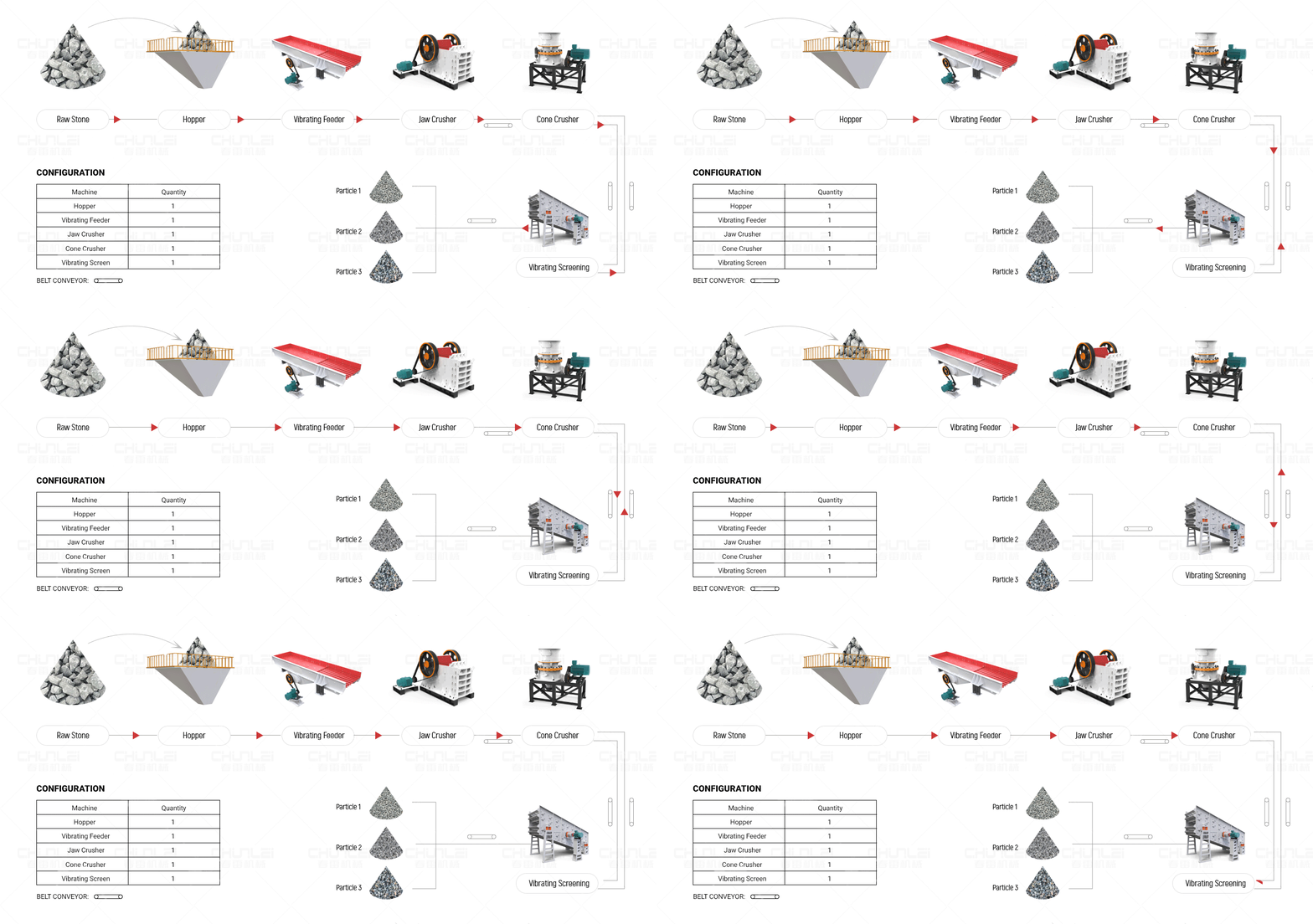
A complete sand/aggregate or ore crushing process typically follows this sequence: primary crushing (jaw crusher) → secondary (cone crusher/impact crusher) crushing → tertiary crushing (fine crushing/shaping) → screening and classification.
- Secondary Crushing (Intermediate Crushing): Processes the output from primary crushing (80–250 mm) into an intermediate size range of 20–50 mm. Its purpose is to provide suitable feed material for subsequent stages rather than to achieve optimal particle shape.
- Tertiary Crushing (Fine Crushing/Shaping): Processes the intermediate material (20–50 mm) into finished sand (0–10 mm) and high-quality aggregates. This stage emphasizes precise particle size control and shaping, which directly determine the market value of the finished products.
| Evaluation Criteria | Secondary Crushing | Tertiary Crushing/ Shaping |
| Typical Feed Size | 80–250 mm | 20–50 mm |
| Typical Output | 20–50 mm intermediate material | 0–10 mm finished aggregate / manufactured sand |
| Core Process Objectives | Size reduction; preparing material for downstream stages | Fine crushing + particle shaping; improving aggregate gradation |
| Key Evaluation Metrics | Processing capacity (t/h), wear part lifespan | Particle shape (flakiness/elongation index), fines content, gradation |
| Recommended Equipment | Cone crusher / Impact crusher | VSI vertical shaft sand maker / Roll crusher / Fine crusher |
Under no circumstances should the secondary crusher be tasked with tertiary shaping duties simply to save on initial investment costs. Doing so will result in the content of needle-like and flaky particles in the final product severely exceeding limits, while also causing the consumption of wear parts to skyrocket.
Secondary Crushing Equipment Comparison: Cone Crusher vs. Impact Crusher
The choice of equipment should first be based on the compressive strength and abrasiveness of the ore, and secondarily on the required product shape.
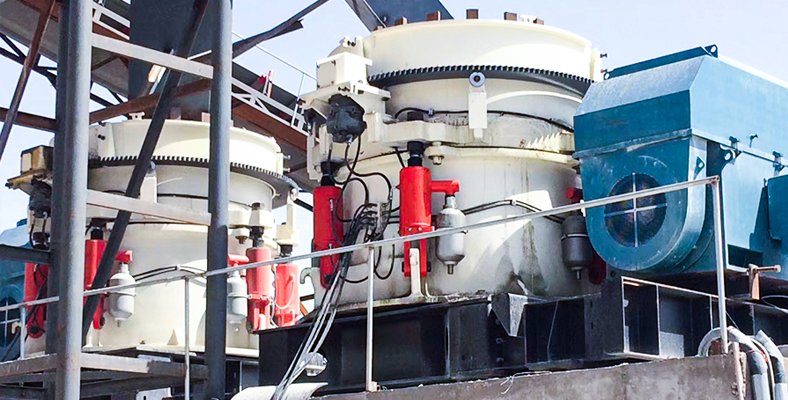
1. Cone Crusher (Laminated Compression Principle)
- Suitable Materials: High-hardness, highly abrasive rocks such as granite, basalt, river pebbles, and iron ore with a compressive strength > 200 MPa.
- Key Parameters: Feed size 80–250 mm | Discharge size 25–64 mm | Capacity 25–2,180 t/h.
- Key Advantages:
- Low O&M Costs: Thanks to the laminated crushing principle, liner wear is minimal, and the cost per metric ton of hard rock is significantly lower than that of an impact crusher.
- Stable Operation: Easily integrated with vibrating screens to form a closed-circuit system; highly resistant to impact loads.
- Main Limitations:
- The proportion of needle- and flake-shaped particles is higher than that of impact crushers; high-grade concrete aggregates require post-processing for shaping;
- Initial equipment investment is relatively high; materials with high moisture content or clay content are prone to clogging the crushing chamber.
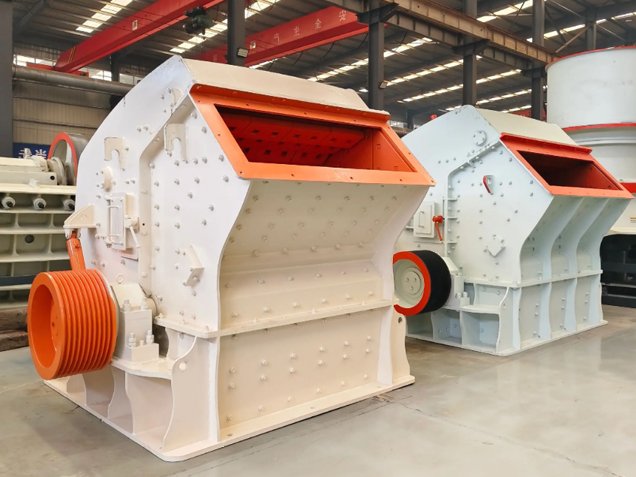
2. Impact Crusher (Impact Crushing Principle)
- Suitable Materials: Limestone, dolomite, construction waste, and other medium-to-soft ores with a compressive strength ≤ 150 MPa.
- Key Parameters: Feed size ≤ 800 mm | Output size 10–80 mm | Capacity 30–2000 t/h.
- Core Advantages:
- Excellent particle shape: The finished product is predominantly cubic, with a low proportion of needle- and flake-shaped particles;
- High crushing ratio and relatively low initial procurement costs.
- Main Limitations:
- When processing highly abrasive hard rock, the impact plates wear out extremely quickly and often need to be replaced within a few days;
- Sensitive to foreign objects (such as iron contamination), requiring iron removal equipment at the front end.
Cone crushers are the preferred choice for high-hardness, abrasive rock;
Impact crushers are the preferred choice for medium-to-soft materials and recycled aggregates.
Comparison of Tertiary Crushing (Fine Crushing/Shaping) Equipment
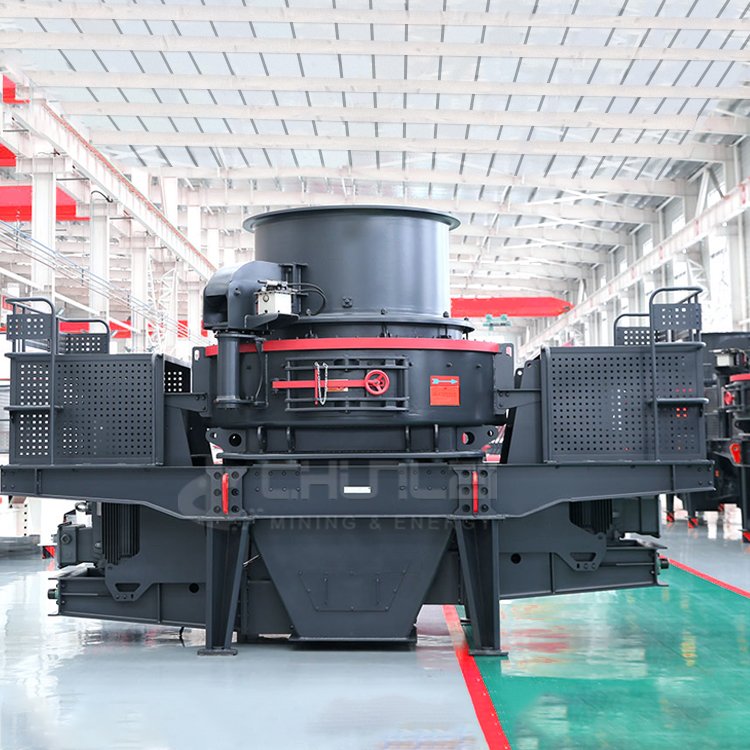
1. VSI Vertical Shaft Impact Sand Maker (Stone-on-Stone / Stone-on-Iron)
- Applications: High-quality manufactured sand for premium ready-mixed concrete and asphalt pavement.
- Performance Characteristics: Excellent shaping capability, significantly reducing the content of flaky and elongated particles; requires strict feed size control (<55 mm); normal wear occurs on the throwing tips in highly abrasive conditions; generates some stone dust, requiring auxiliary dust removal or sand washing equipment.
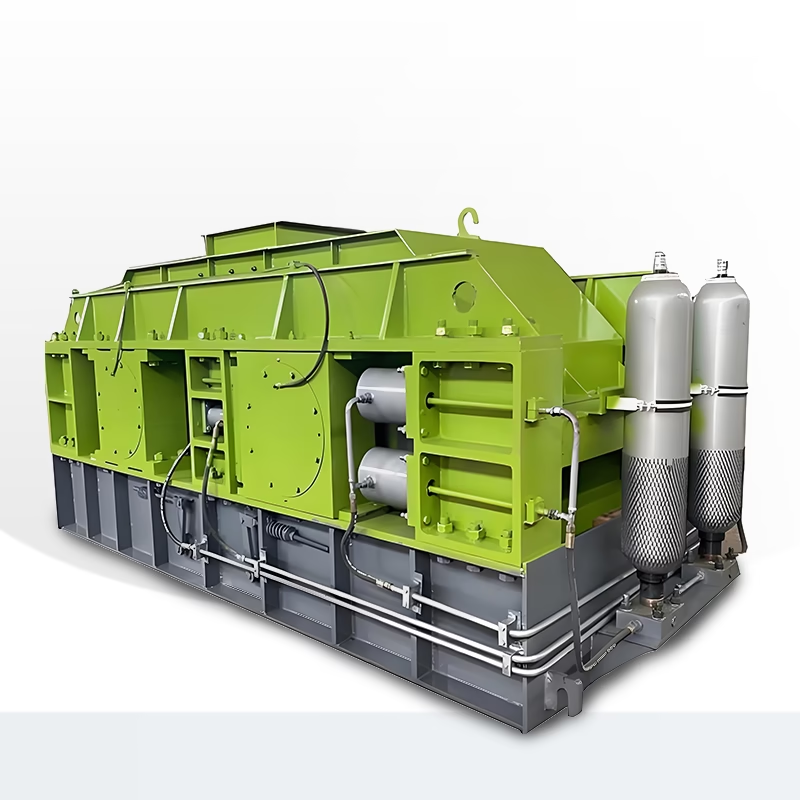
2. Double-Roll Crusher
- Applications: Coal, clinker, and brittle ores; suitable for operations requiring strict control over over-crushing (excessive fines generation).
- Performance Characteristics: Low generation of stone dust; resistant to clogging when processing moist materials; however, the crushing ratio is low, and the maximum processing capacity of a single unit is limited.
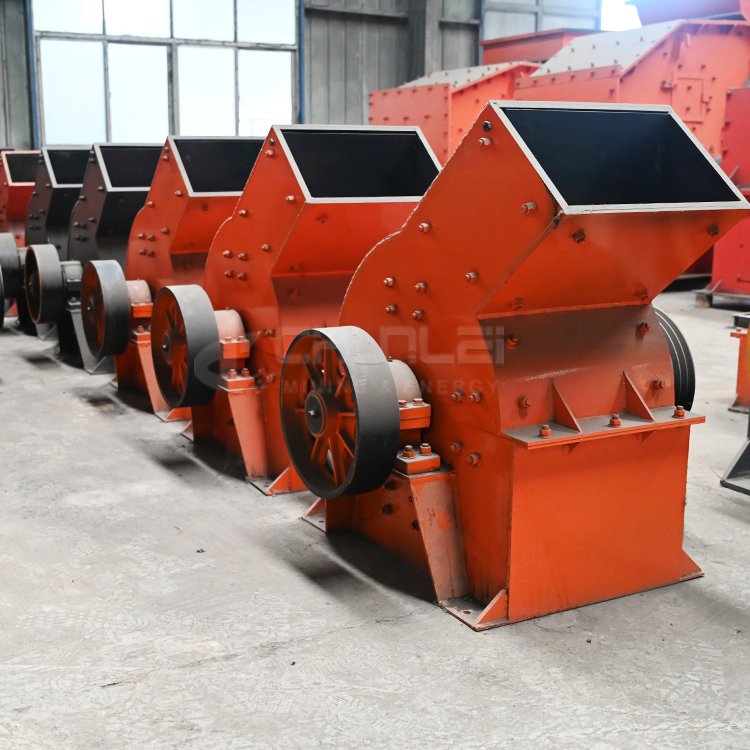
3. Fine Crusher (Hammer-type Fine Crusher)
- Applications: Aggregates for roadbed sub-base layers, construction waste recycling, and medium-scale aggregate projects.
- Performance Characteristics: High tolerance for feed size (≤190 mm) and moderate equipment investment; however, hammer wear is significant when processing hard rock, and the proportion of stone dust in the output is relatively high.
| Equipment Class | Key Advantages | Major Drawbacks | Typical Applications |
| VSI Vertical Shaft Sand Maker | Excellent particle shape; high cubicity | Requires periodic replacement of wear parts; strict feed size limits | High-quality manufactured sand for expressways and commercial ready-mix concrete |
| Double-Roll Crusher | Low fines (stone dust) generation; good anti-clogging performance | Low maximum capacity; limited reduction ratio | Coal, brittle ores, low-fines aggregates |
| Fine Crusher | High tolerance for feed variations; low investment cost | High wear rates with hard rock; tends to produce excess fines | Roadbed cushion materials; construction and demolition waste |
How to select the appropriate equipment?
The selection and configuration of secondary and tertiary crushers are determined based on factors such as material properties, production capacity targets, and finished aggregate standards. Common and mature supporting solutions include:
- Physical properties of the ore: Determine the rock’s compressive strength (MPa), saturated water absorption rate, and silica content to assess material hardness and abrasiveness.
- Finished aggregate standards: Clarify end-market requirements (e.g., high-grade C60 concrete, asphalt pavement meeting national standards, or general backfill material).
- Hourly design capacity: The secondary crushing capacity should include a 10%–15% margin over the primary crushing capacity to prevent bottlenecks.
- Maximum feed size: Strictly verify the output size from the primary crusher; prevent oversized material from entering the secondary crushing chamber.
- Closed-circuit circulating load: If a screening and recirculation system is used, account for a 15%–30% circulating load when calculating the equipment’s actual operating load.
How to select the right equipment for a production line?
- High-quality manufactured sand line (Granite/Basalt)
- Jaw crusher (primary crushing) → Cone crusher (secondary crushing) → Vibrating screen → VSI vertical shaft sand maker (tertiary shaping) → Finished product sand washing/screening
- Standard aggregate line (Limestone/Dolomite)
- Jaw crusher (primary crushing) → Impact crusher (secondary crushing) → Fine crusher (tertiary crushing) → Finished product screening
- Mineral processing feed line (Copper/Lead-Zinc mines)
- Jaw crusher (primary crushing) → Cone crusher (secondary crushing) → Double-roll crusher/Fine-crushing cone crusher → Ball milling stage
- Construction and demolition waste recycling line
- Iron remover + Jaw crusher (primary crushing) → Impact crusher (secondary crushing) → VSI impact crusher (shaping) → Grading and screening
Common Operational Errors
Secondary and tertiary crushing stages may appear to simply involve further size reduction, but certain on-site practices can easily lead to reduced output, poor particle shape, and accelerated wear on liners and crushing surfaces. Common errors include:
1. Excessive feed size
Failure to adhere to the equipment’s maximum feed size limits—such as forcing in oversized chunks—can cause blockages, trigger frequent “tramp iron” protection shutdowns, or even damage the equipment.
2. Inconsistent feed rates
Crushers require a relatively stable, continuous feed. Frequent interruptions or sudden surges in feed volume cause load fluctuations, negatively affecting crushing efficiency and the final product’s particle size.
3. Poor control of secondary crushing output size
If the secondary crushing product is too coarse, it places an excessive burden on the tertiary stage; if it is too fine, unnecessary over-crushing occurs, increasing energy consumption and wear.
4. Prioritizing output over all else in tertiary crushing
Blindly increasing feed volume to boost output can overload the crushing chamber and degrade particle shape. Tertiary crushing should focus on balancing particle shape, particle size, and output.
5. Improper discharge opening adjustment
An excessively large discharge opening fails to meet product size requirements, while one that is too small increases equipment load and wear. Adjustments should be made based on specific product size requirements.
6. Failure to promptly clear blockages
Forcing the machine to continue running after a blockage is detected in the crushing chamber is dangerous. The machine should be stopped and the blockage cleared according to the manufacturer’s guidelines, rather than simply trying to “force it through” by increasing the feed.
7. Ignoring material moisture and clay content
Feeding wet, sticky, or high-clay-content material directly into secondary or tertiary crushers often leads to clogging and material adhesion, hindering normal discharge.
8. Neglecting wear on consumable parts
Continuing to use components like crushing walls, concave liners, blow bars, or liners after they are severely worn reduces crushing efficiency, degrades particle shape, and can compromise the safe operation of the equipment.
9. Focusing only on the crusher, not the entire production line
Secondary and tertiary crushing stages do not operate in isolation. If the feeders, screens, and crushers are mismatched, the entire production line may experience unstable output, even if the crusher itself is functioning correctly.
For secondary and tertiary crushing, the biggest concerns are not that the equipment is “undersized,” but rather unsuitable feed material, unstable feeding, improper discharge opening adjustments, and mismatched screening. When selecting equipment, do not focus solely on the crusher model; instead, consider the raw material size, target product size, production capacity, and screening method collectively.
Frequently Asked Questions
Q1: Where is secondary crushing typically positioned in the production line?
A: It is usually located after primary (coarse) crushing and before screening. Primary crushing handles large raw material chunks, while secondary crushing further reduces the particle size.
Q2: What is the typical feed size for a secondary crusher?
A: There is no fixed value; it depends on the output size from the primary crusher and the equipment’s maximum feed size. Actual material particle size should be the basis for equipment selection.
Q3: What is the main purpose of tertiary crushing?
A: It primarily addresses the issue of the product not being fine enough after secondary crushing. It also allows for further adjustment of product gradation to meet requirements for manufactured sand, ore grinding, or fine aggregate production.
Q4: Is a cone crusher suitable for secondary crushing?
A: Yes, it is suitable. Cone crushers are a common choice, especially when processing hard and abrasive materials such as granite, basalt, and iron ore.
Q5: Is an impact crusher suitable for secondary crushing?
A: It is suitable for materials of low-to-medium hardness and moderate compressive strength. It delivers excellent crushing and shaping results for materials like limestone and construction waste.
Q6: Can tertiary crushing directly produce manufactured sand?
A: Yes, but it usually requires integration with screening equipment. For manufactured sand projects, tertiary crushing equipment selection must consider not only output particle size but also the shape and gradation of the finished product.
Q7: Is a vibrating screen required after secondary crushing?
A: In most cases, yes. A vibrating screen separates out material that meets specifications and returns oversized particles to the crusher for further processing, creating a closed-loop circuit.
Q8: Why do secondary and tertiary crushing stages often experience excessive material recirculation?
A: Common causes include improper crusher discharge settings, mismatched screen aperture sizes, excessive feed rates, and fluctuations in material moisture content or particle size. An inspection of the entire crushing system is required to identify the specific cause.
Q9: How is the crusher’s discharge particle size controlled?
A: Control is primarily achieved by adjusting the discharge opening, crushing chamber configuration, feed rate, and screening parameters. Adjustment methods vary by equipment type, so settings should be configured according to the specific model.
Q10: What is a reasonable configuration for secondary and tertiary crushing equipment?
A: Generally, the setup follows the sequence of “primary crushing → secondary crushing → tertiary crushing/sand making → screening.” Rather than focusing on a single machine in isolation, ensure that the processing capacity and output particle size of the upstream and downstream equipment are well-matched.
Q11: Is it better to crush material as finely as possible during the tertiary stage?
A: No. Excessive crushing not only increases energy consumption and equipment wear but may also generate an overabundance of fine powder. The appropriate crushing size should be determined based on the specifications of the final product.
Q12: What are the most critical factors to monitor during the operation of secondary and tertiary crushing equipment?
A: Pay close attention to feed uniformity, equipment load, the discharge opening, bearing temperatures, the lubrication system, and the wear status of consumable parts. Maintaining a stable feed rate is usually more important than simply increasing the equipment load.
Conclusion
For secondary and tertiary crushing stages, simply adding more equipment or aiming for the finest possible product size is not necessarily the best approach; crushing equipment should be configured rationally based on specific requirements. A well-designed crushing circuit not only ensures the desired product particle size and gradation but also minimizes unnecessary equipment investment, energy consumption, and wear.
If you are unsure whether your project requires secondary or tertiary crushing—or how best to combine cone crushers, impact crushers, and VSI sand-making machines—please share your material type, feed size, target output, and desired product size with CHUNLEI. We can analyze the optimal crushing solution and equipment configuration based on your specific operating conditions, helping you avoid issues such as oversizing equipment or inefficient circuit design.
Latest News

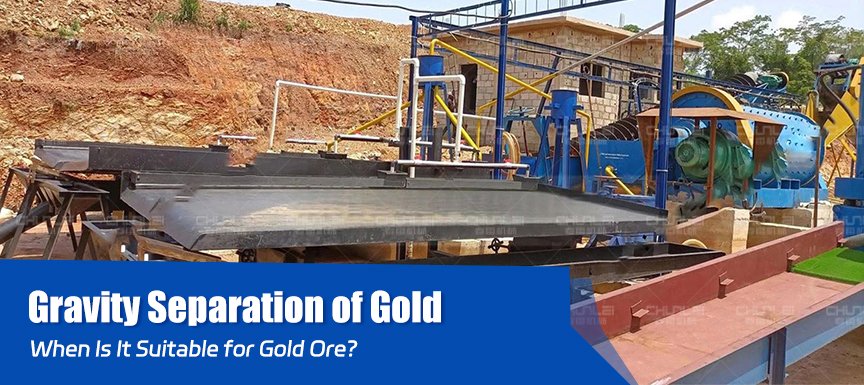
Gravity Separation for Gold: When Is It Suitable for Gold Ore?
800Many people immediately associate “gold ore” with gravity separation, yet not all gold deposits are suitable for recovery using gravity methods alone. Gravity separation is appropriate for liberated native gold or other heavy minerals that ex…
-
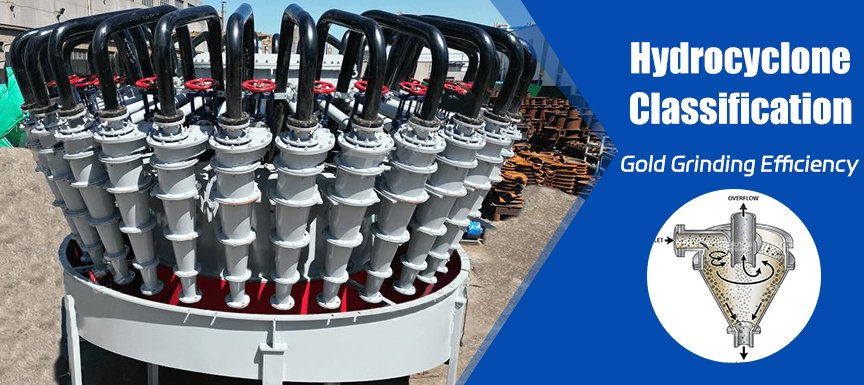
How Classification Affects Gold Grinding Efficiency
800In gold ore grinding circuits, attention is often focused primarily on ball mill capacity, power consumption, and grinding media; however, in actual operation, classification plays an equally critical role in determining grinding efficiency. …
-
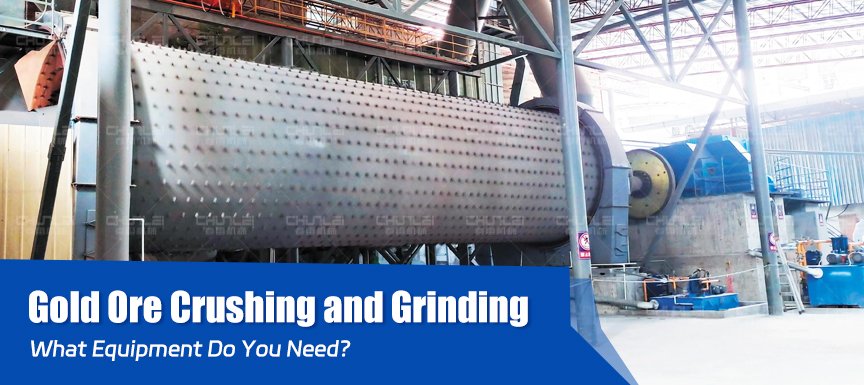
Gold Ore Crushing and Grinding: What Equipment Do You Need?
800When designing a gold ore processing line, my clients often ask which crushers and mills to purchase. However, the equipment selection should actually be based on a thorough understanding of the ore characteristics. Issues in many projects do…
-
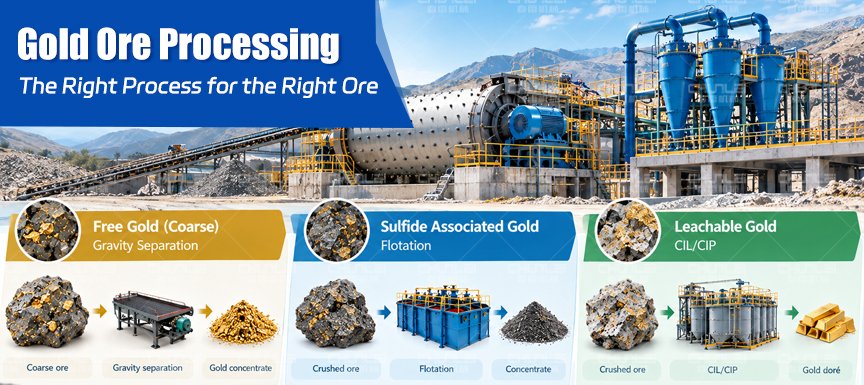
How to Select the Right Gold Processing Plant for Your Ore
800When selecting a gold processing plant, simply assuming that a full suite of equipment is all that is needed can lead to issues such as low recovery rates, high energy consumption, and failure to meet production targets.Different ores require d…
loading…
已经是到最后一篇内容了!