 Chunlei Mining Machinery
VSI Crusher for Sand Making: Precision Shaping and Production
Many sand and gravel plant operators encounter difficulties when producing manufactured sand: investing in fine crushing equipment results in sand and gravel with a high content of needle-like and flaky particles, failing to meet the standards for concrete and asphalt aggregates. Some plants, when processing highly abrasive hard rocks such as granite and river pebbles, experience extremely rapid wear and tear on vulnerable parts, leading to persistently high production costs per ton of ore. Other manufacturers directly copy other companies’ processes, neglecting rotor speed, feed particle size, and moisture content, resulting in unstable sand production and frequent rotor blockage.
The VSI Crusher for Sand Making is a widely used three-stage fine crushing and shaping equipment for solving aggregate particle shape problems. However, to obtain qualified finished products, simply purchasing large models is insufficient. Model selection, feed control, and the installation position within the crushing circuit are all crucial.
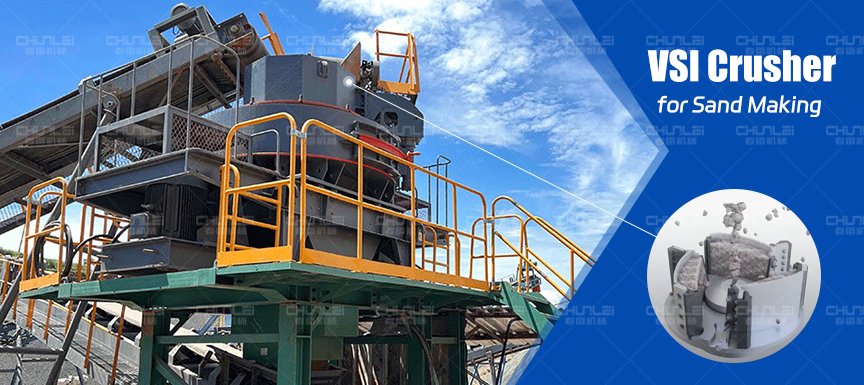
Why do many sand and gravel plants choose VSI Crusher for Sand Making?
VSI Crusher for Sand Making are mainly used for sand making and shaping, especially suitable for production lines with high requirements for finished product particle shape, gradation, and sand and gravel quality. Many sand and gravel plants use them as tertiary crushing or shaping equipment, mainly due to the following factors:
- Good finished product particle shape: Using a “stone-on-stone” or “stone-on-iron” crushing method, it can improve the finished product’s needle-like and flaky particles, increasing the overall particle shape of the sand and gravel.
- Suitable for sand making: It can further crush smaller-diameter stones to produce manufactured sand and fine aggregates.
- Significant shaping effect: For materials already processed by jaw crushers and cone crushers, VSI can further improve the particle shape.
- Easier control of product gradation: By adjusting the feed rate, rotor speed, and screening system, adjustments can be made according to the finished product requirements.
- Wide range of applications: It can be used for various sand and gravel raw materials such as granite, basalt, river pebbles, and limestone, but specific applicability must be determined in conjunction with the material’s hardness and abrasiveness.
- Easy to integrate with sand and gravel production lines: It can typically be combined with vibrating screens, conveyors, sand washers, and other equipment to form a complete sand production line.
If your sand and gravel plant only requires simple crushing, a VSI Crusher for Sand Making may not be necessary; however, if you have requirements for the particle shape, finished product quality, and shaping effect of the manufactured sand, a VSI crusher is often a better choice.
When selecting a model, don’t just look at the equipment price and nominal output. It’s best to consider the properties of the raw materials, feed particle size, target output, and finished product requirements to determine the appropriate model. This will allow you to truly realize the value of the VSI crusher.
VSI Crusher Sand Making Working Principle
The VSI Crusher for Sand Making adopts the high-speed impact crushing principle. Material falls from the top feed hopper into the high-speed rotating rotor, which accelerates the ore to 50-75 m/s, projecting it at high speed into the crushing chamber.
The same machine can switch between two crushing modes:
- Ore impacting the accumulated stone layer in the chamber (stone-on-stone mode)
- Ore impacting a high-chromium alloy anvil (stone-on-iron mode)
- The ore is crushed along the weak crystal structure of the mineral, simultaneously completing the crushing and particle shaping processes. The crushed material is discharged from the bottom of the equipment and sent to a vibrating screen for grading and a sand washing machine for cleaning.
Further reading: 《Secondary and Tertiary Crusher: How to Choose》, to understand the positioning of three-stage shaping equipment in the production line.
Rock-on-Rock vs. Rock-on-Anvil: How to Choose a Crushing Mode
The two most common crushing modes of VSI impact crushers are “Rock-on-Rock” and “Rock-on-Anvil”. Simply put, the former relies primarily on the collision and crushing of stones against each other, while the latter involves the material impacting a metal anvil.
| Comparison Items | Stone-on-stone | Stone-on-iron |
| Crushing Method | Material-to-material collision | Material-on-metal anvil collision |
| Main Features | Relatively low wear | High crushing efficiency |
| Finished Product Characteristics | Good particle shape, suitable for shaping and sand making | Relatively large crushing ratio |
| Applicable Materials | Medium-hard, hard, and highly abrasive materials | Softer or medium-hard materials |
| Wear of vulnerable parts | Relatively low | Relatively fast |
| Common Uses | Manufactured sand, aggregate shaping | Fine crushing, sand making |
When to Choose Stone-on-Stone Crushing?
If your raw materials are hard, highly abrasive stones such as granite, basalt, or pebbles, and you want to produce manufactured sand and aggregates with good particle shape, stone-on-stone crushing is a good option.
Its advantage is that the material bears the main impact, with less direct contact between metal parts and the material, thus reducing wear under suitable operating conditions.
When to Choose Stone-on-Iron Crushing?
If the material has relatively low hardness and you want a stronger impact crushing effect, stone-on-iron crushing can be considered.
However, in stone-on-iron crushing, the material directly impacts the metal anvil, so you usually need to pay more attention to the wear and replacement costs of the anvil and wear-resistant parts.
The Position of VSI Crusher in the Complete Aggregate Process
VSI Crusher for Sand Making are almost exclusively used as the third-stage fine crushing/shaping equipment and are not suitable for coarse or medium crushing.
Typical Complete Process for Manufactured Sand: Vibrating Feeder → Jaw Crusher (First-stage coarse crushing) → Cone Crusher (Second-stage medium crushing) → Vibrating Screen → VSI Sand Making Machine → Vibrating Screen → Sand Washer → Finished Product Stockpile
- VSI Feed Requirements: Pretreated materials <50mm; High-abrasion hard rock is recommended to have a feed size ≤40mm.
- Typical Output: 0-5mm manufactured sand, 5-10mm and 10-20mm cubic concrete asphalt aggregate.
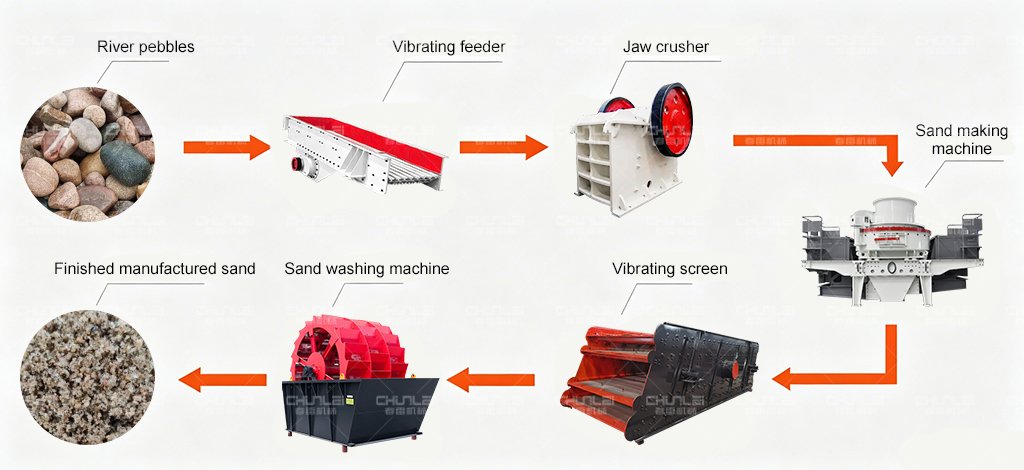
VSI Crusher for Sand Making Compared with Other Fine Crushing Equipment
When building a sand production line, sand and gravel plants often compare VSI Crusher for Sand Making with hammer crushers and double roll crushers.
| Comparison Items | VSI Vertical Shaft Impact Crusher | Hammer Crusher | Double Roll Crusher |
| Core Functions | Sand Making + Aggregate Shaping | Medium and Fine Crushing | Fine Crushing, Low Powder Output |
| Particle Shape and Quality | Excellent, cubic, few needle-like and flaky particles | Average, high proportion of stone powder | Produces some needle-like and flaky particles |
| Suitable Rock Hardness | Medium-hard to highly abrasive hard rock | Soft and medium-hard rock | Soft and medium-brittle ore |
| Life of Wear Parts in Hard Rock Conditions | Excellent life in stone-on-stone mode | Very short life | Medium |
| Fine Sand Yield | High, adjustable | High output but high stone powder | Medium, less fine powder |
For producing high-grade concrete and asphalt aggregates, and processing granite and river pebbles, a VSI vertical shaft impact crusher is the preferred choice. If the raw material is limestone, used only as low-standard aggregate for roadbeds, and the finished product particle shape requirements are not high, a hammer crusher or double roll crusher has lower initial purchase costs.
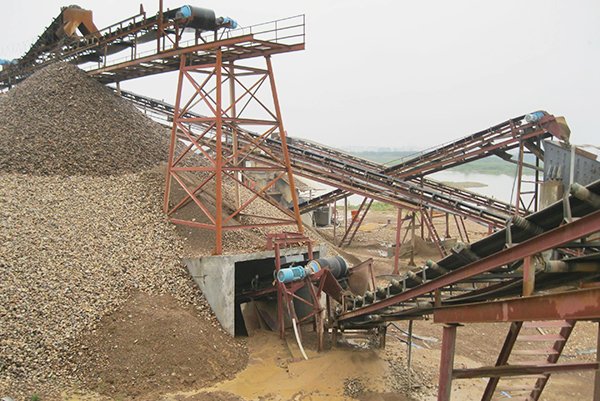
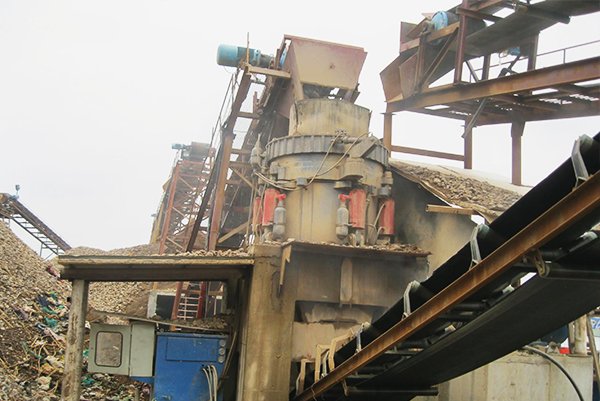
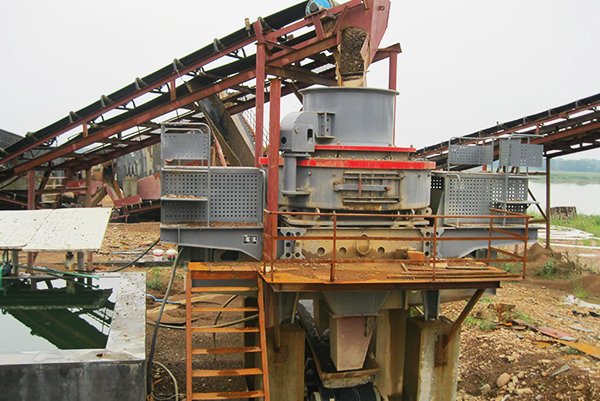
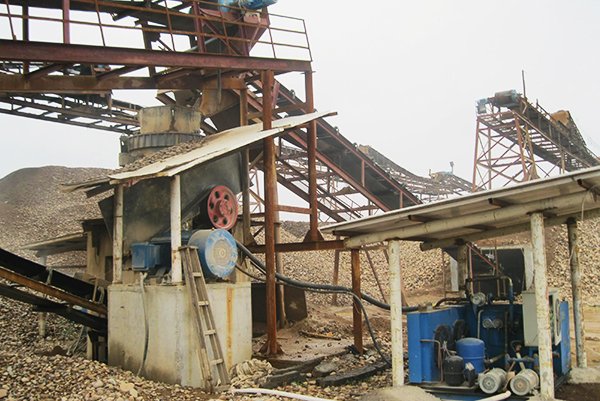
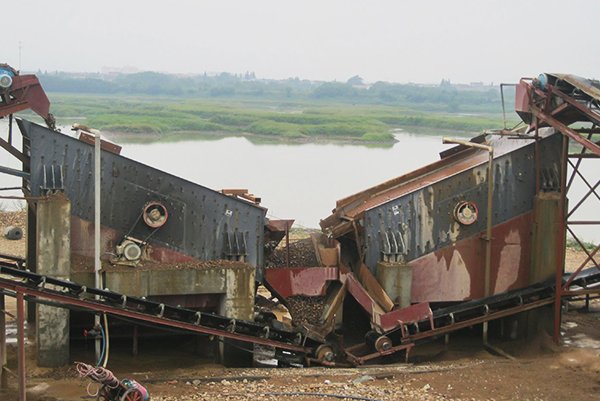
Overseas Aggregate Plant Real-World Case Study
Project: Southeast Asia 120 tons/hour River Pebble Sand Production Line
- Raw Material: High-abrasion river pebbles
- VSI Feed: Cone crusher pre-processed ≤40mm stone
- Equipment Configuration: VSI Crusher for Sand Making, stone-on-stone mode
- Before Modification: Using stone-on-iron mode, the throwing head needed to be replaced every 220-260 hours, resulting in high maintenance costs.
- After Modification: The service life of wearing parts increased by more than 45%; the finished sand, with its needle-like and flaky texture, fully meets local commercial concrete standards.
Common Operational Mistakes and Solutions
1. Feeding Excessive Particle Size into VSI
- Symptom: Severe rotor vibration, accelerated wear of the discharge head, and decreased production capacity.
- Solution: Strictly control the maximum feed size; do not feed hard rock exceeding 40mm; return oversized material to the secondary cone crusher for re-crushing.
2. Feeding High-Moisture, Sticky Material
- Symptom: Scaling inside the chamber, rotor blockage, and unstable throughput.
- Solution: Control the feed moisture content to below 5%; add pre-screening at the front end for clay-containing raw materials.
3. Ore and Crushing Mode Mismatch
- Symptom: Using stone-on-iron crushing on hard rock causes rapid burnout of vulnerable parts; using stone-on-stone crushing on soft limestone results in insufficient sand output.
- Solution: Refer to the comparison table above and switch modes according to the abrasiveness of the ore.
4. Unilateral Replacement of Discharge Head After Wear, Rotor Imbalance
- Symptom: Severe vibration of the entire machine, risk of loose bolts.
- Handling: The throwing heads need to be replaced in pairs or as a whole set. It is forbidden to replace only a single worn part.
Frequently Asked Questions
Q1: Can a VSI Crusher for Sand Making be directly connected after a jaw crusher as a secondary crusher?
A: Not recommended. A VSI is a three-stage shaping machine. Large pieces of raw rock directly entering will cause severe damage to the rotor; the material must first be crushed to below 50mm by a cone/impact crusher.
Q2: Does stone-on-stone crushing always produce better sand?
A: No. Its advantage is for highly abrasive hard rocks, focusing on low loss and good particle shape; for medium-soft limestone, stone-on-iron crushing produces higher sand output. Selection should be based on the ore properties.
Q3: How to reduce the operating costs of VSI Crusher for Sand Making wear parts?
A: ① Use stone-on-stone crushing for hard, abrasive ores; ② Strictly control the feed particle size and moisture content; ③ Replace the feed heads in pairs for balance; ④ Ensure uniform and stable feeding, avoiding sudden large or small impact feeds.
Q4: What is the core difference between a VSI Crusher for Sand Making and a cone crusher?
A: Cone crushers rely on compression and are mainly used for secondary crushing and diameter reduction; VSI relies on high-speed impact and focuses on fine crushing and finished aggregate shaping. Hard rock sand and gravel production lines typically use both in combination.
Conclusion
The VSI vertical shaft impact crusher is positioned as a third-stage shaping and sand-making equipment and cannot be used for coarse crushing.
Two operating modes: stone-on-stone is suitable for hard, abrasive rocks, reducing spare parts consumption; stone-on-iron is for medium-soft ores, aiming for higher sand output.
Controlling feed particle size and moisture content, and replacing the feed heads in pairs, can reduce on-site failures and lower maintenance costs.
The VSI is not a universal solution. If only producing low-grade roadbed aggregate, it can be compared with hammer crushers and double-roll crushers.
Latest News

Gravity Separation for Gold: When Is It Suitable for Gold Ore?
800Many people immediately associate “gold ore” with gravity separation, yet not all gold deposits are suitable for recovery using gravity methods alone. Gravity separation is appropriate for liberated native gold or other heavy minerals that ex…
-
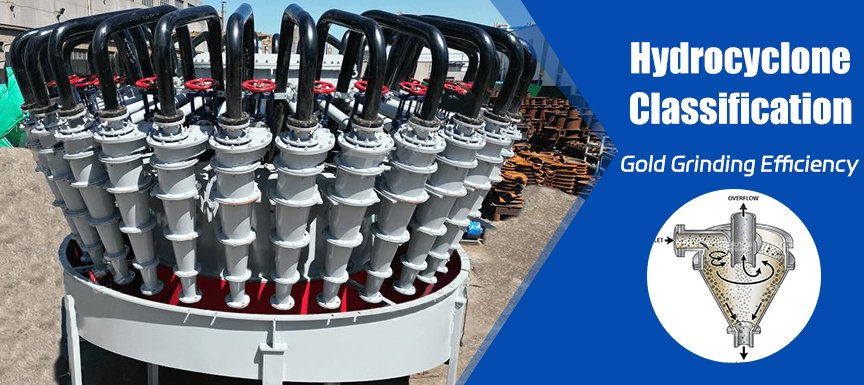
How Classification Affects Gold Grinding Efficiency
800In gold ore grinding circuits, attention is often focused primarily on ball mill capacity, power consumption, and grinding media; however, in actual operation, classification plays an equally critical role in determining grinding efficiency. …
-
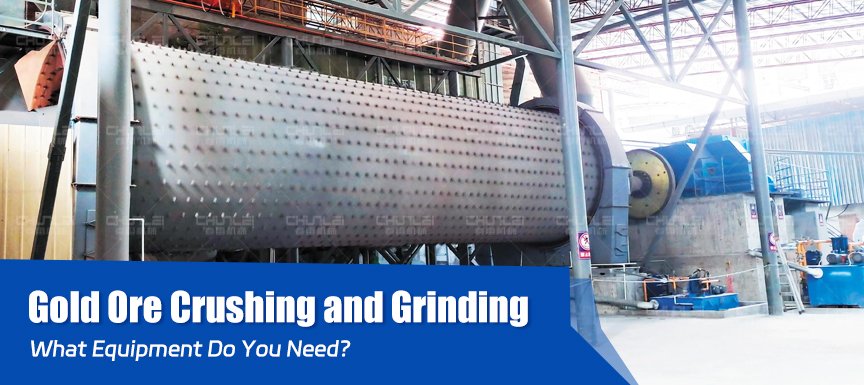
Gold Ore Crushing and Grinding: What Equipment Do You Need?
800When designing a gold ore processing line, my clients often ask which crushers and mills to purchase. However, the equipment selection should actually be based on a thorough understanding of the ore characteristics. Issues in many projects do…
-
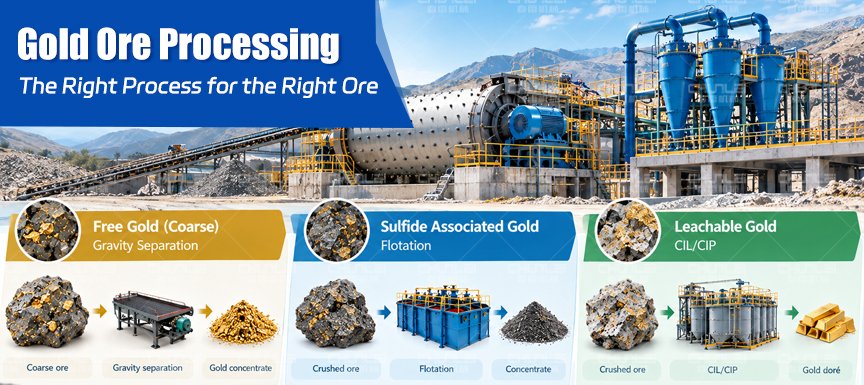
How to Select the Right Gold Processing Plant for Your Ore
800When selecting a gold processing plant, simply assuming that a full suite of equipment is all that is needed can lead to issues such as low recovery rates, high energy consumption, and failure to meet production targets.Different ores require d…
loading…
已经是到最后一篇内容了!