 Chunlei Mining Machinery

What Is The Difference Between Dry Grinding And Wet Grinding In A Ball Mill?
Divided into dry and wet grinding, a ball mill is a rotating cylindrical drum, usually with steel balls, ceramic or rubber filling the interior. As the drum rotates, the balls fall and crush the material, creating a fine powder.
Wet ball mill is a kind of grinding equipment widely used in mineral processing, building materials, chemical industry, etc. Its working principle is based on the combined effect of impact, grinding and shear force, and crushing is realized through the wet collision between steel balls and materials.
Dry ball mill does not use liquid at all, only rely on the impact of steel balls and friction for grinding. However, the disadvantage is that the material is easy to stick to the wall due to electrostatic effect or grinding dead space, which affects the uniformity of grinding.
Dry ball mill is more suitable for materials that will be deteriorated by water (such as cement, marble) or projects that need to obtain powder directly.
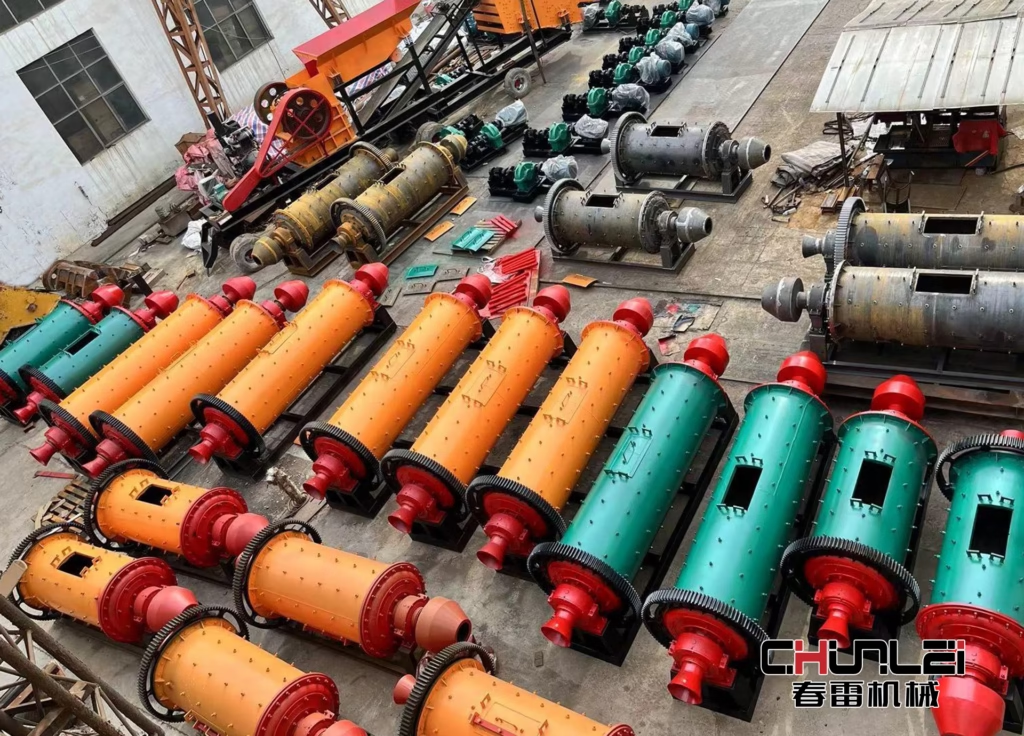
Advantages and Disadvantages of Wet Grinding VS Dry Grinding
1. Advantages of wet ball mill
Wet ball mill uses liquid grinding aid, which can effectively disperse the material, make the material evenly mixed, and improve the fineness of grinding. Because it is wet grinding, so there is no dust pollution, suitable for scenes that require high cleanliness, such as laboratory research or food processing. Of course, it is only suitable for those materials that will not react when encountering water, especially suitable for the grinding of complex mixtures. However, it is worth noting that wet grinding requires precise control of the proportion of liquid, otherwise it will lead to sedimentation or equipment clogging, and need to add additional drying equipment.
2. Advantages of dry ball mill
Dry ball mill does not require liquid handling equipment, the process is shorter, suitable for rapid experiments or small-scale production. It is especially suitable for cement powder or those materials that will react with water. Dry milling does not require additional drying process and produces powder directly. It is worth noting that dry milling is prone to uneven grinding due to static electricity or dead space, and requires additional equipment to deal with dust contamination.
How to choose between dry grinding and wet grinding?
- If the material is easy to oxidize, easy to bond or need to mix a variety of ingredients, preferred wet grinding. If the material will be deteriorated by water or need to be stored in powder form, choose dry grinding.
- If pursuing high fineness and uniformity of grinding, choose wet grinding; if only simple mixing or cost reduction, dry grinding is more suitable.
- Wet milling has high efficiency, but there is drying cost; dry milling has low cost but limited efficiency and need to consider dust pollution. For example, an enterprise saves 30% of energy consumption by replacing wet milling with dry milling.
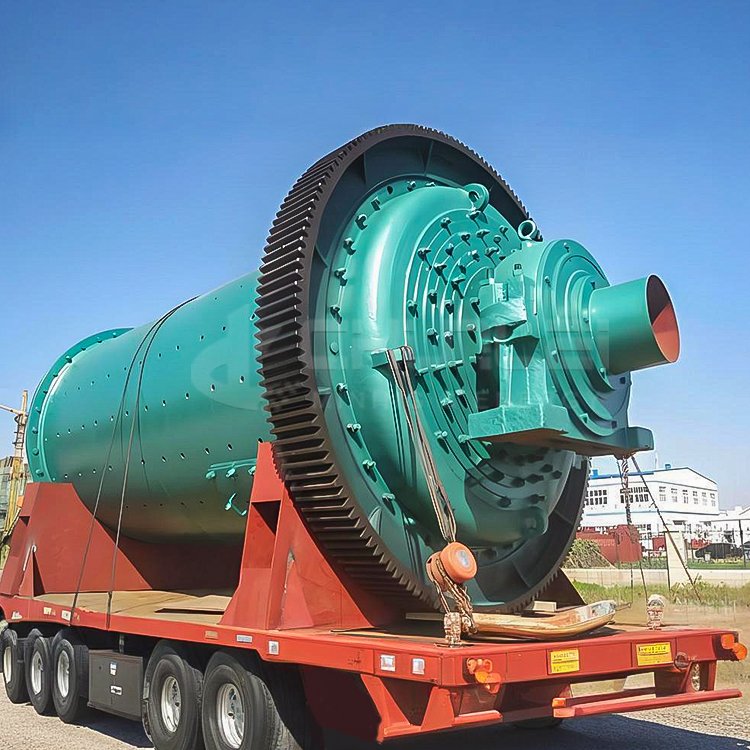

Wet grinding and dry grinding have their own merits, wet ball mill compared to dry can reduce dust, reduce over-crushing, suitable for subsequent flotation or wet process, but higher energy consumption and need to deal with wastewater. Dry mill is more suitable for small-scale rapid production projects, if you are not sure how to choose, you can contact us to get a free production program.
Chunlei Machinery factory is located in Mazhai Industrial Park, Erqi District, Zhengzhou City, Henan Province, covering a large area with advanced production equipment and technology. The factory is well organized, the production process is highly efficient, modern factory facilities and efficient production process let customers have a deep impression on our production capacity and management level. If you have any questions, please feel free to contact CHUNLEI engineers.
Latest News

Small-Scale Gold Processing Plant: A Complete Guide to Equipment and Processes
800Setting up a small-scale gold processing plant sounds simple, but choosing the wrong equipment can lead to increasingly higher operating costs and negatively impact gold recovery rates. Many clients initially focus only on capacity, equipment…
-
The Role of Cyanide in Gold Mining: Process Flow and Mineral Processing Management
800In gold ore processing, cyanide is a commonly used leaching agent; it directly influences the gold leaching rate, overall recovery, and production costs. However, cyanide leaching is not merely a matter of adding chemicals—factors such as ore c…
-
How should you choose equipment for pre-desliming in gravity separation?
800Many operators struggle with low recovery rates when using shaking tables, sluice boxes, or centrifugal concentrators—even when the equipment itself is high-quality—only to find that valuable minerals are being lost in the tailings. The root ca…
-
How can the mineral processing method be preliminarily determined based on the appearance of tin ore?
800When you receive a batch of tin ore samples, what should you look at first? Is it the color, the particle size, or the clay content? While these visual characteristics can provide some initial insights, relying solely on the naked eye is not …
loading…
已经是到最后一篇内容了!