 Chunlei Mining Machinery
What are the Ball Mills used for?
How do you transform hard ore into powder as fine as flour? How do you uniformly blend different raw materials down to the molecular level? Do you need to achieve extremely fine particle sizes for mineral extraction or industrial applications? Are you curious about the role of grinding in mineral processing? Indeed, these are all tasks performed by the unsung hero—the ball mill. Today, let’s lift the veil on this “grinding powerhouse” and explore its extensive and vital applications.
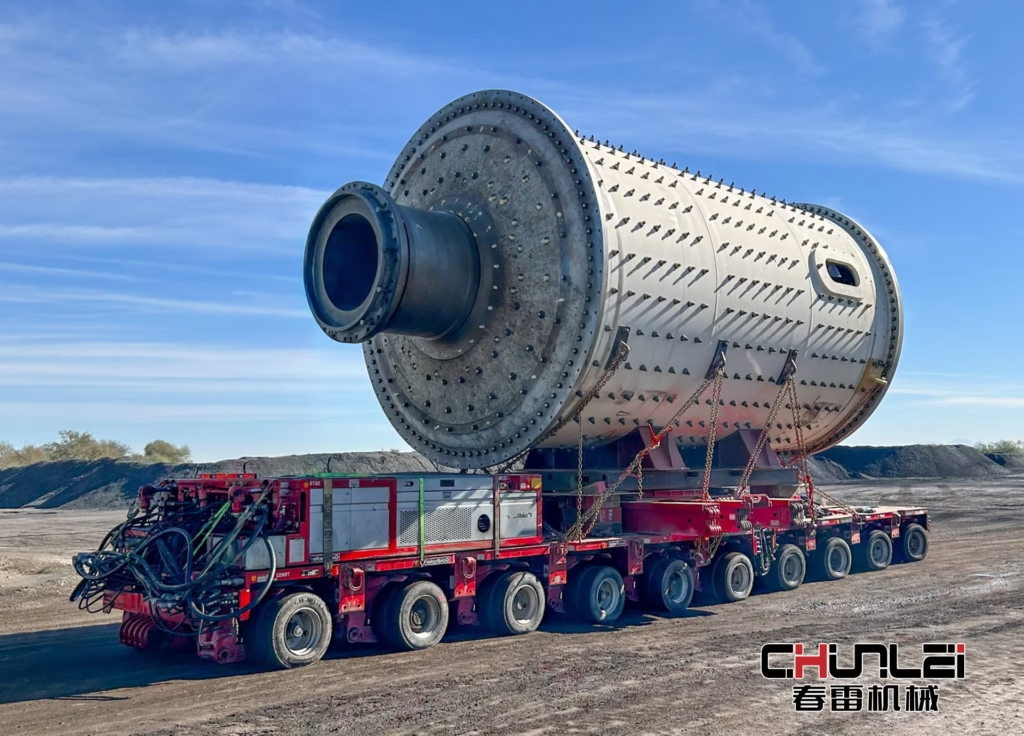
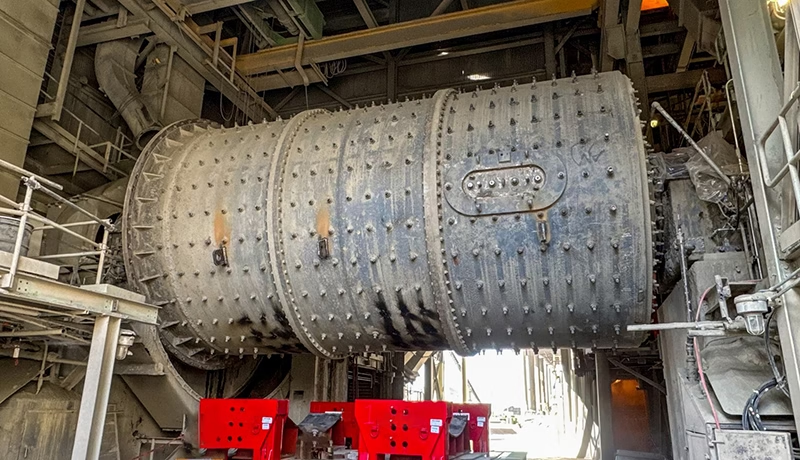
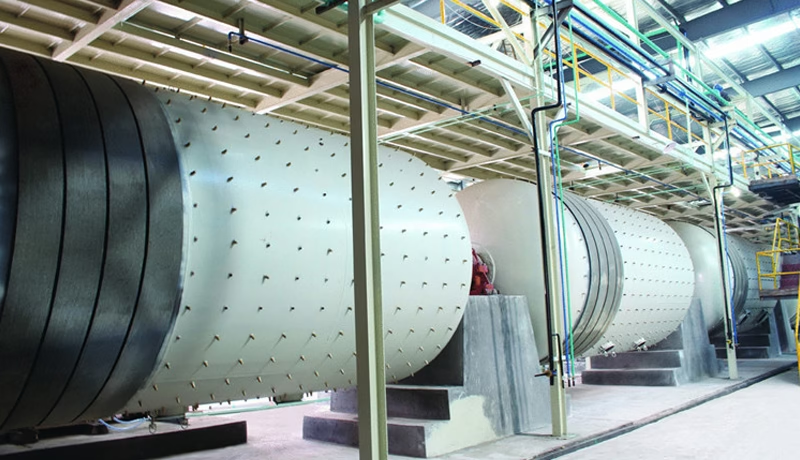
Simply put, a ball mill functions like a giant, high-speed rotating “drum.” It relies on internal grinding media—such as steel balls or ceramic balls—to rapidly impact and grind materials, achieving pulverization and refinement.
Primary Applications of Ball Mills: The Journey from Coarse to Fine
Ever wonder how ball mills transform lumpy materials into fine powder? What happens inside?
The core of a ball mill is a hollow drum-like shell mounted on a frame. Driven by an electric motor and gearbox, it rotates around its axis. The interior is filled with grinding media, which can be customized as needed—typically steel balls. Both the material and grinding media are loaded into the drum through the feed inlet. As the motor drives the shaft, the drum begins rotating. The grinding media is lifted to a height and then falls abruptly, delivering a powerful impact to the material. Simultaneously, the grinding media and material roll against each other, generating intense friction. Under the combined effects of impact and friction, the material is ground into a fine powder.
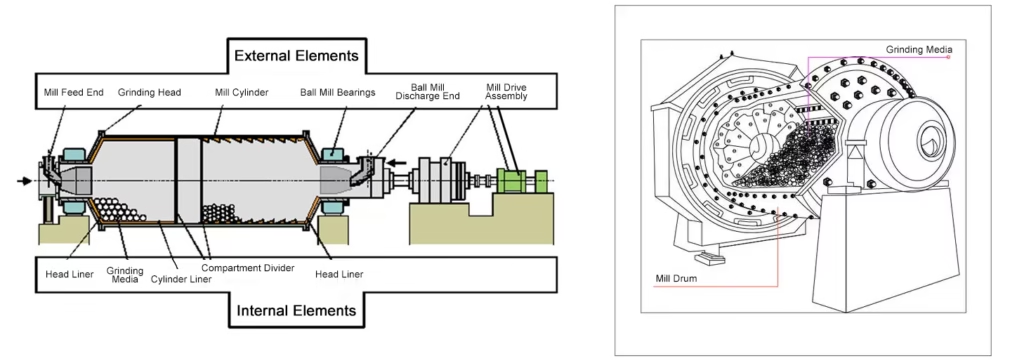
Internal Motion Patterns in Ball Mills
The internal motion patterns within a ball mill are determined by the rotational speed of the cylinder, directly influencing the movement state of grinding media (such as steel balls) and their pulverizing effect on materials. Below are the three primary motion patterns within a ball mill:
- Parabolic Motion
When the cylinder operates at an optimal rotational speed (typically 65%–85% of critical speed), grinding media rise along the cylinder wall to a certain height due to friction forces before falling in a parabolic trajectory. This generates intense impact and grinding forces on the material, representing the most ideal and efficient operating state of the ball mill. - Sliding Motion
At lower rotor speeds (generally below 65% of critical speed), grinding media cannot ascend sufficiently high. Upper layers slide or roll down the inclined surface like an avalanche. Due to the low impact height, the force is limited. This is suitable for fine grinding or brittle materials but has poor crushing capability for coarse lumps. - Centrifugal Motion
This is an ineffective state that must be avoided.
When the shell speed reaches or exceeds the critical speed, the grinding media begins to move in a circular path with the shell without falling. Consequently, neither throwing nor cascading occurs. This provides almost no grinding effect on the material. In actual operation, it is essential to ensure the speed remains below the critical speed.
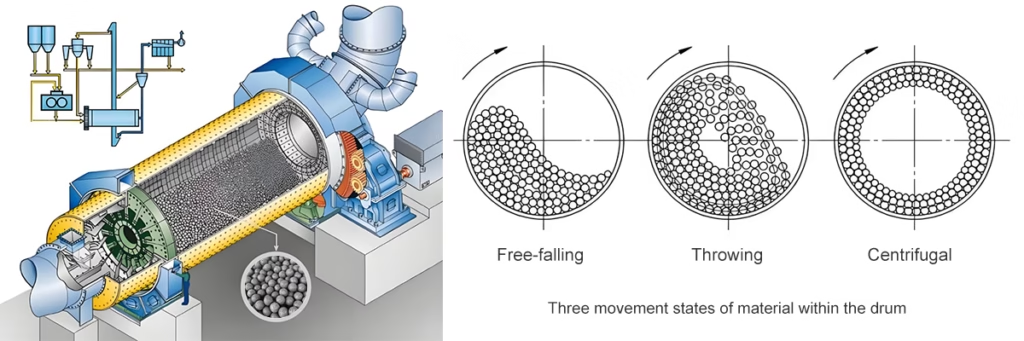
In practice, the internal motion of a ball mill may combine multiple states. The movement of grinding media also varies with different loading levels or liner configurations. Therefore, precise speed control is essential to maintain stable operation within the “throwing” zone, ensuring efficient ball mill performance.
Critical Speed Calculation Formula for Ball Mills
The theoretical formula for critical speed is derived from the condition that “the centrifugal force acting on the media at the highest point within the cylinder equals its own gravitational force.”
The most commonly used formula is as follows:
n₀ = 42.3 / √D
- n₀: Theoretical critical rotational speed of the ball mill, measured in revolutions per minute (rpm). This represents a theoretical limit determined by the cylinder diameter D.
- D: Effective inner diameter of the ball mill cylinder, measured in meters (m).
- 42.3: A derived constant incorporating gravitational acceleration and the mathematical constant pi.
Assuming a ball mill has an inner cylinder diameter of 2.5 meters, its theoretical critical speed is calculated as follows:
n₀ = 42.3 / √2.5
n₀ = 42.3 / 1.581
n₀ ≈ 26.75 rpm
The actual operating speed of a ball mill is typically around 76% of the critical speed, adjusted within the range of 65% to 85% based on specific operating conditions.
What industries are ball mills suitable for?
As a widely used fine grinding equipment, ball mills have made significant strides in numerous industries beyond mining.
I. Mining and Mineral Processing Industry
This represents the earliest, most classic, and most extensive application area for ball mills.
After primary and secondary crushing of mined ores (such as iron, copper, or gold ores) using crushing equipment, the material is fed into ball mills for further grinding. This process separates valuable minerals from waste rock (gangue). Ball mills typically employ wet grinding, incorporating water and grinding aids to thoroughly disaggregate useful minerals from gangue (useless rock). This process achieves the required fine particle size for subsequent mineral processing methods like flotation and magnetic separation, ultimately producing concentrate. CHUNLEI delivers robust ball mill solutions for diverse mining applications.
II. Building Materials and Cement Industry
In this sector, ball mills handle massive throughput, representing large-scale production.
Cement Production: Within cement plants, ball mills serve two primary functions: first, as raw material mills grinding proportioned ingredients like limestone, clay, and iron powder into cement raw meal; second, as clinker grinding mills processing sintered cement clinker with gypsum into finished cement products. Large ball mills are standard components in cement grinding circuits.
Ceramic Production: Used to grind ceramic raw materials like feldspar, quartz, and kaolin into extremely fine slurries. This produces highly uniform, ultra-fine-grained bodies and glazes—essential for ensuring the density and smoothness of ceramic products.
III. Chemical Industry
These sectors demand exceptionally high standards for material fineness, purity, and uniform mixing.
Various chemical processes require ball mills to grind and blend pigments, dyes, coatings, pesticides, fertilizers, and other chemical raw materials. This ensures consistent product color, stable composition, and enhanced chemical reactivity.
IV. Power and Energy Industry
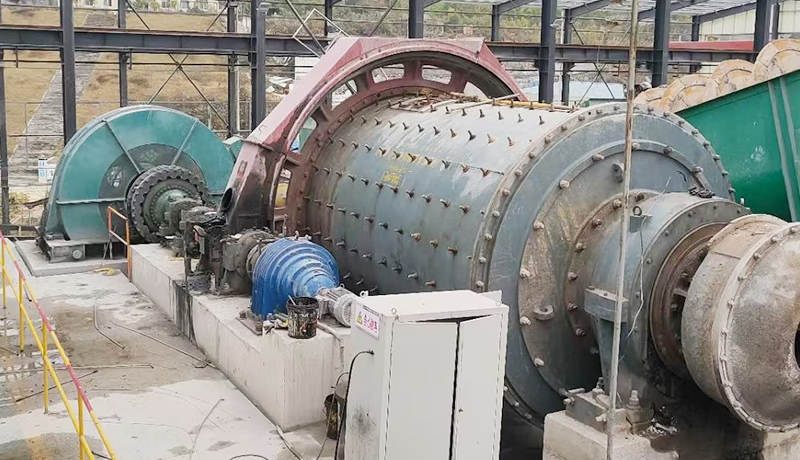
Coal-fired power plants typically require ball mills to grind coal into fine powder (coal dust), which is then blown into boilers for combustion. The ground coal dust increases surface area, enabling thorough mixing with air for rapid and efficient burning. This enhances boiler combustion efficiency and power generation efficiency.
V. New Materials and High-Tech Fields
This represents a new frontier for ball mill technology applications.
In advanced manufacturing and scientific research, ball mills are employed for preparing nanomaterials, solid waste recycling, and alloy production. High-energy ball milling not only yields ultrafine powders but also enables the synthesis of novel alloys that are difficult to produce through conventional methods.
These examples demonstrate that ball mills serve as indispensable “universal pulverizing and mixing reactors” in modern industry: breaking down mineral walls for liberation in mining, pulverizing materials into fine particles for building materials, enhancing efficiency through coal pulverization in power generation, and achieving uniformity and excellence in chemical and new materials processing. If you are interested in ball mills or have any inquiries, pleasecontact us—we are available 24 hours a day to address your questions. your free solution now!
Latest News

Gold Ore Processing: From Crushing to Final Gold Recovery
800A gold processing plant is not merely a simple assembly of crushers, ball mills, and gold recovery equipment; rather, the goal is to determine the optimal process flow based on factors such as mineral composition, gold particle size,…
-
Ball Mills and Gold Ore Mills: Are They Really the Same?
800When searching for gold ore grinding equipment, customers often encounter various terms such as “Ball Mill,” “Gold Mill,” “Gold Milling Machine,” and “Gold Ore Grinding Machine.” Many buyers assume that a “Gold Mill” is a specialized mill de…
-
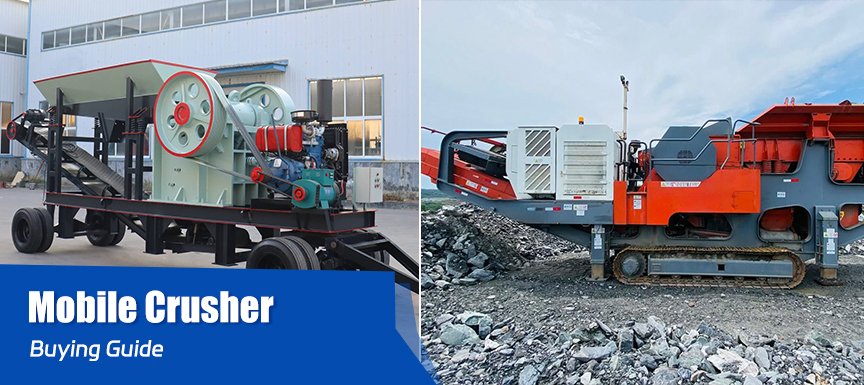
Mobile Crusher Buying Guide: Wheeled or Tracked?
800Many customers focus solely on portability when purchasing a mobile crusher, viewing it merely as the acquisition of a single piece of equipment. In reality, selecting the wrong model can lead to either insufficient output or excessive wear and…
-
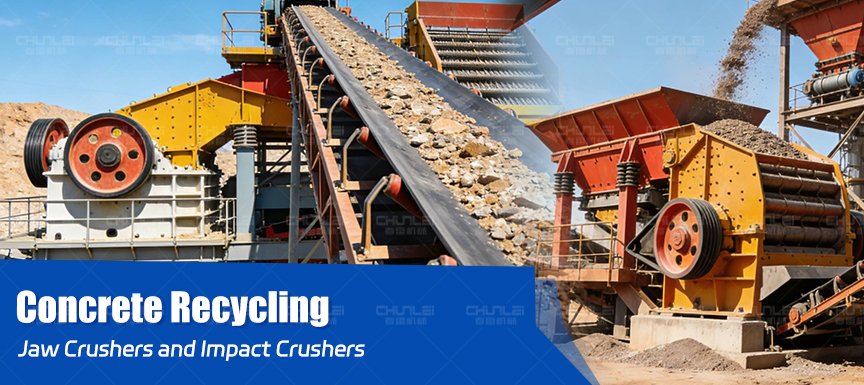
Jaw Crushers and Impact Crushers: Turnkey Solutions for Concrete Recycling
800Demolishing old buildings and roads generates vast amounts of waste concrete; direct landfilling not only consumes valuable space but also incurs high transportation costs. The real challenge lies in transforming this waste concrete into reusab…
loading…
已经是到最后一篇内容了!