 Chunlei Mining Machinery
A Complete Comparison and Selection Guide: Ball Mill vs SAG Mill vs AG Mill
Grinding is one of the most crucial steps in a mineral processing production line, directly impacting subsequent beneficiation results. Whether processing metallic ores like gold, copper, and iron, or industrial raw materials such as limestone, gypsum, and cement clinker, suitable grinding equipment is essential.
Below is an introduction to three common types of grinding equipment:
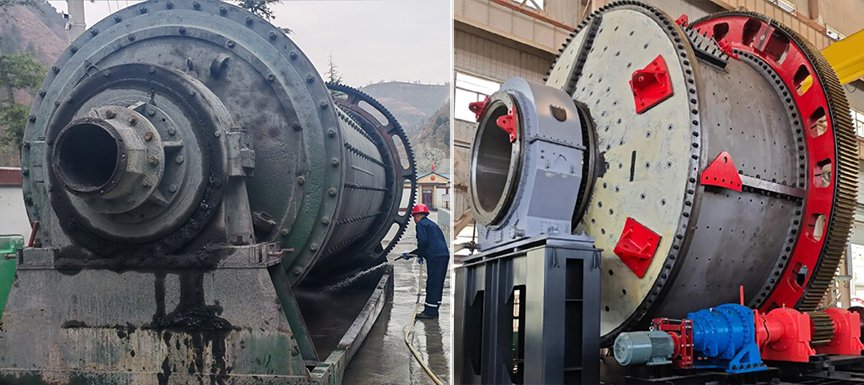
What are ball mills, AG autogenous mills, and SAG semi-autogenous mills?
1. Ball Mill
A ball mill is a grinding equipment that uses steel balls as the main grinding media. It achieves material crushing through the impact and grinding action between the steel balls and the ore. It produces fine particles, is highly adaptable, and is widely used in mining, building materials, and chemical industries. It is currently the most widely used grinding equipment.
2. Autogenous Grinding Mill (AG Mill)
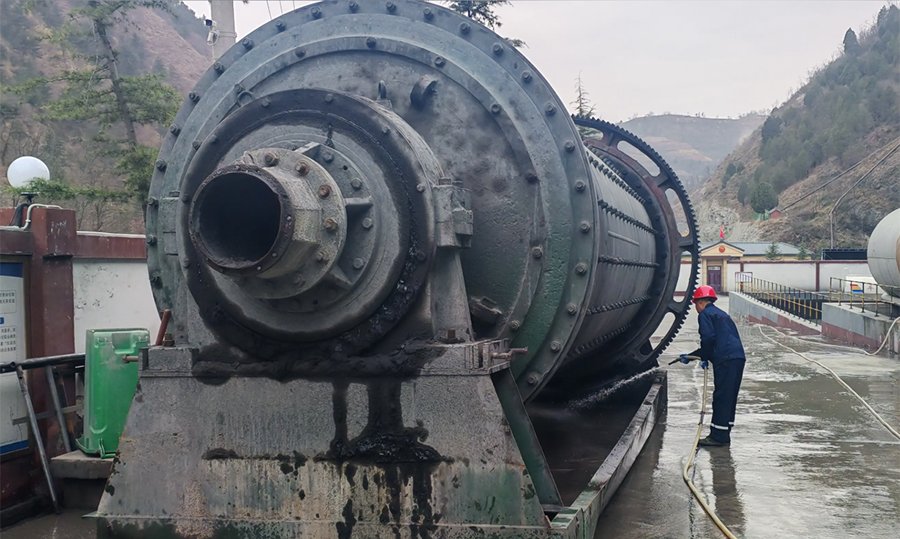
An autogenous grinding mill does not require additional steel balls. It mainly relies on the ore itself as the grinding media, completing the grinding process through the mutual impact, compression, and grinding between the ore particles and between the ore and the liner. It can reduce steel consumption costs, but it has higher requirements for ore properties and is more suitable for large mines with ore particles of uniform size and moderate hardness.
3. Semi-Autogenous Grinding Mill (SAG Mill)
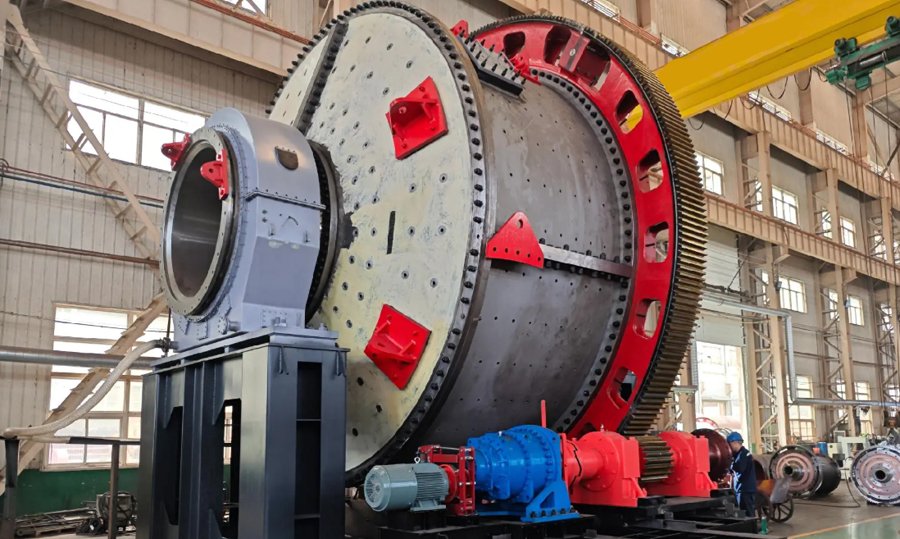
A semi-autogenous grinding mill uses ore as the main grinding media inside the cylinder, while adding a small amount of steel balls to assist in crushing and grinding. It combines the grinding methods of autogenous grinding and ball milling. It solves the problem that fully autogenous mills cannot crush refractory pebbles, has a large processing capacity, can replace some crushing processes, and is often used in large gold mines, copper mines, and iron ore beneficiation plants.
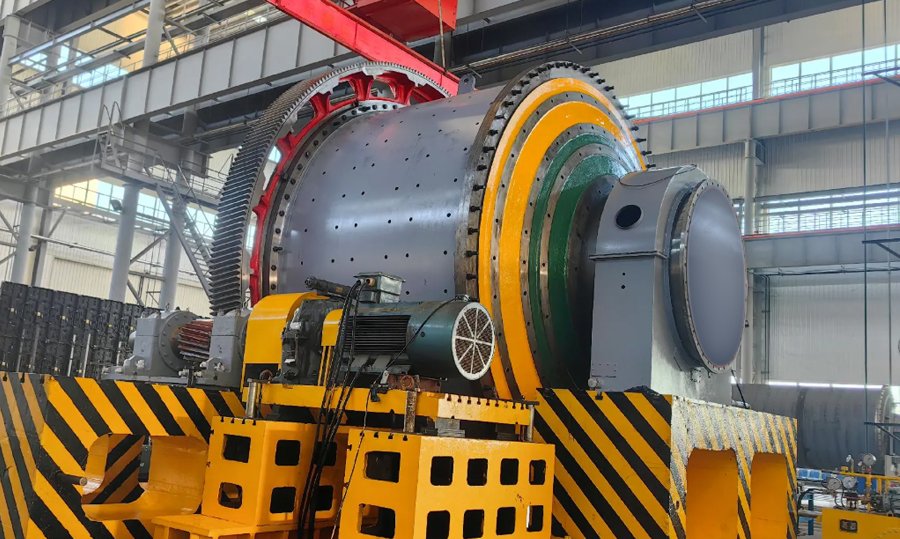
Internal structure comparison:
| Internal Structure Comparison | Ball Mill | SAG Mill | AG Mill |
| Grinding Media | Large quantity of steel balls (main grinding media) | Ore + small quantity of steel balls | Ore itself (no steel balls) |
| Cylinder Dimensions | Large length-to-diameter ratio, relatively long cylinder | Large cylinder diameter, short length | Large cylinder diameter, short length |
| Internal Liners | Corrugated liners, stepped liners, etc., to increase the lifting height of steel balls | Heavy-duty wear-resistant liners, to improve the ore and steel ball drop effect | Heavy-duty wear-resistant liners, to improve the ore autogenous grinding efficiency |
| Steel Ball Loading | Approximately 30%–40% of the effective cylinder volume | Approximately 5%–15% of the effective cylinder volume | No steel balls added |
| Ore loading | Relatively low, mainly relying on steel ball grinding | Higher, ore-dominant | Largest, ore is both the material being ground and the grinding medium |
| Lifting method | The liner lifts the steel balls to a certain height and then drops them. | The liner simultaneously lifts the ore and steel balls for impact grinding. | The liner lifts large pieces of ore, which collide with each other to complete the grinding. |
| Discharge method | Overflow or grate type discharge | Mostly grate type discharge | Overflow or grate type discharge |
| Transmission system | Motor + reducer (or synchronous motor) drive | High-power ring motor or gear drive | High-power ring motor or gear drive |
| Internal characteristics | Large number of steel balls, strong impact and grinding effect, fine product particle size | Large pieces of ore work together with the steel balls, balancing high output and grinding efficiency | Grinding relies entirely on the mutual impact and friction between the ore particles, with the lowest steel consumption. |
Comparison of Working Principles
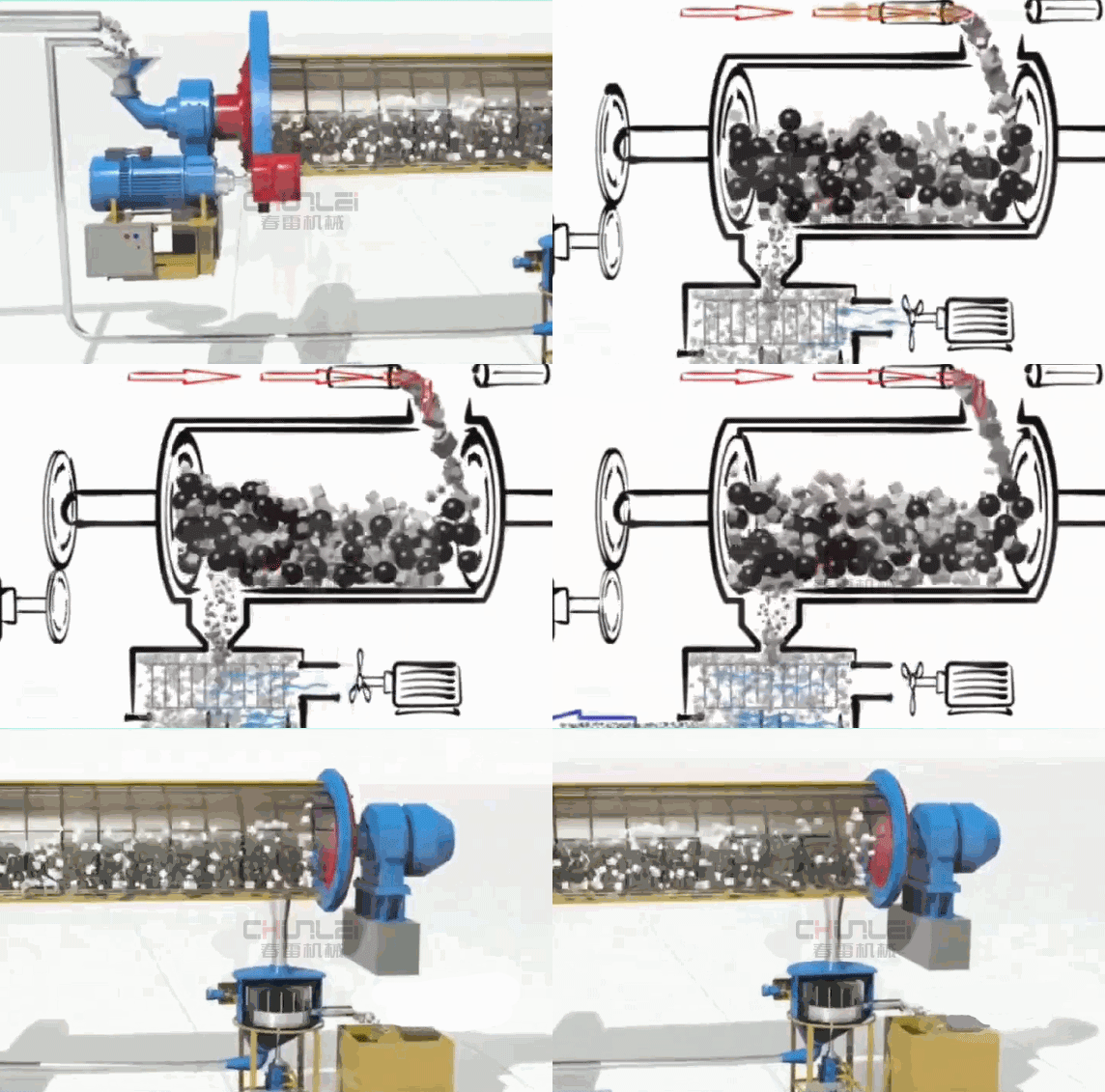
1. Ball Mill Working Principle
The motor drives the cylinder to rotate slowly. Steel balls are lifted to a certain height under centrifugal force and gravity before falling, generating a strong impact and grinding effect on the ore. This gradually crushes the ore to the required particle size. Qualified fine slurry is discharged through the overflow port or grate plate, while coarse particles remain inside the cylinder for further grinding. A hydrocyclone is used to form a closed-loop fine grinding system. Feed limit: ≤25mm; Discharge fineness: 0.074~0.89mm.
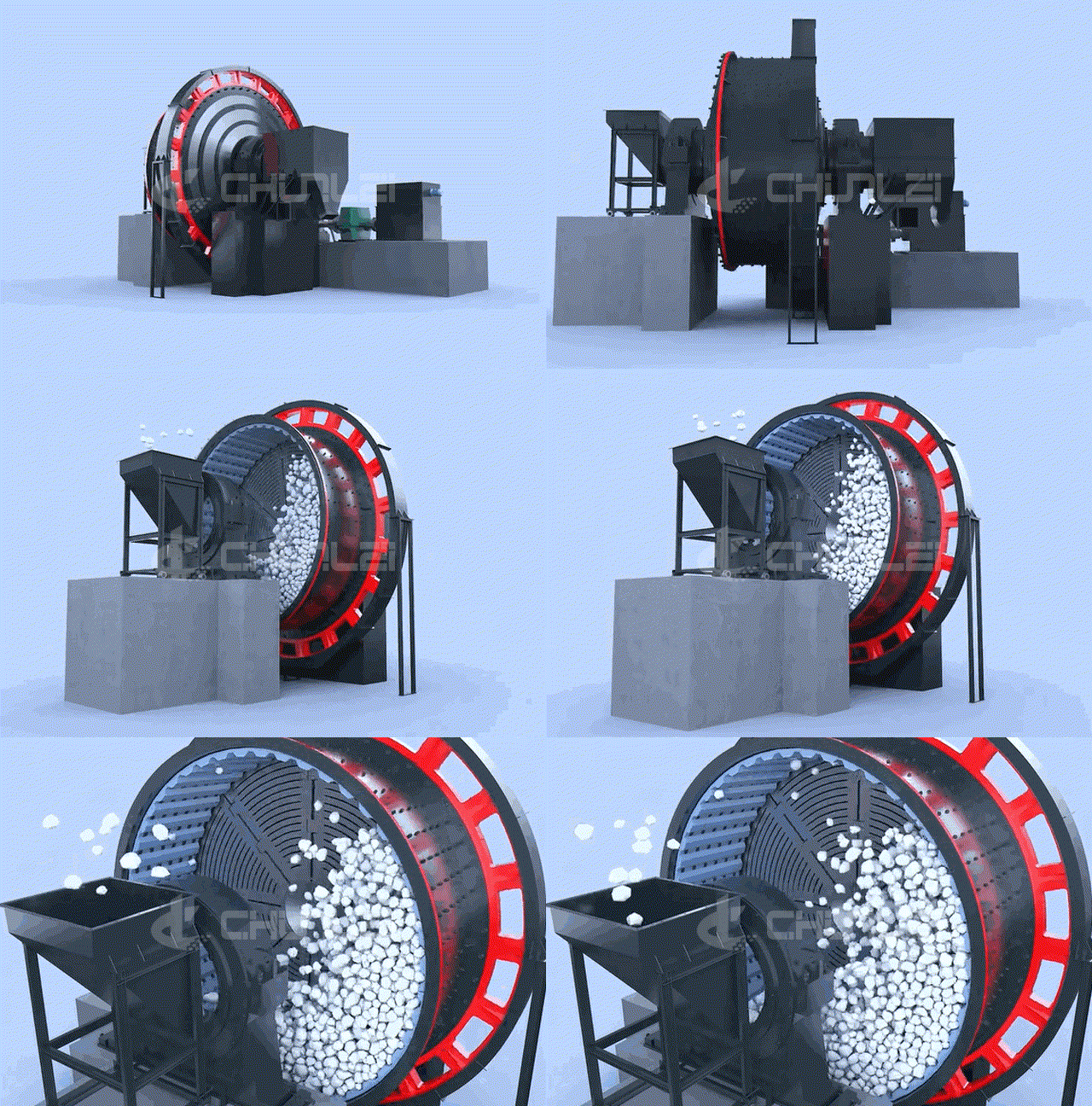
2. AG Mill Working Principle
When the cylinder rotates, large pieces of ore are lifted and fall freely. Crushing and grinding are achieved through collisions, impacts, and friction between the ore particles. Since there are no steel balls involved, the operating cost is lower, but it has higher requirements for ore particle size distribution and grindability. Only ore with uniform texture, medium hardness, and sufficient large pieces can be stably autogenously ground; if the ore has too much fine mud or is too soft, the impact force is insufficient, and the throughput will drop significantly. The maximum feed size can reach 300mm, and the raw ore can be directly fed into the mill after coarse crushing.
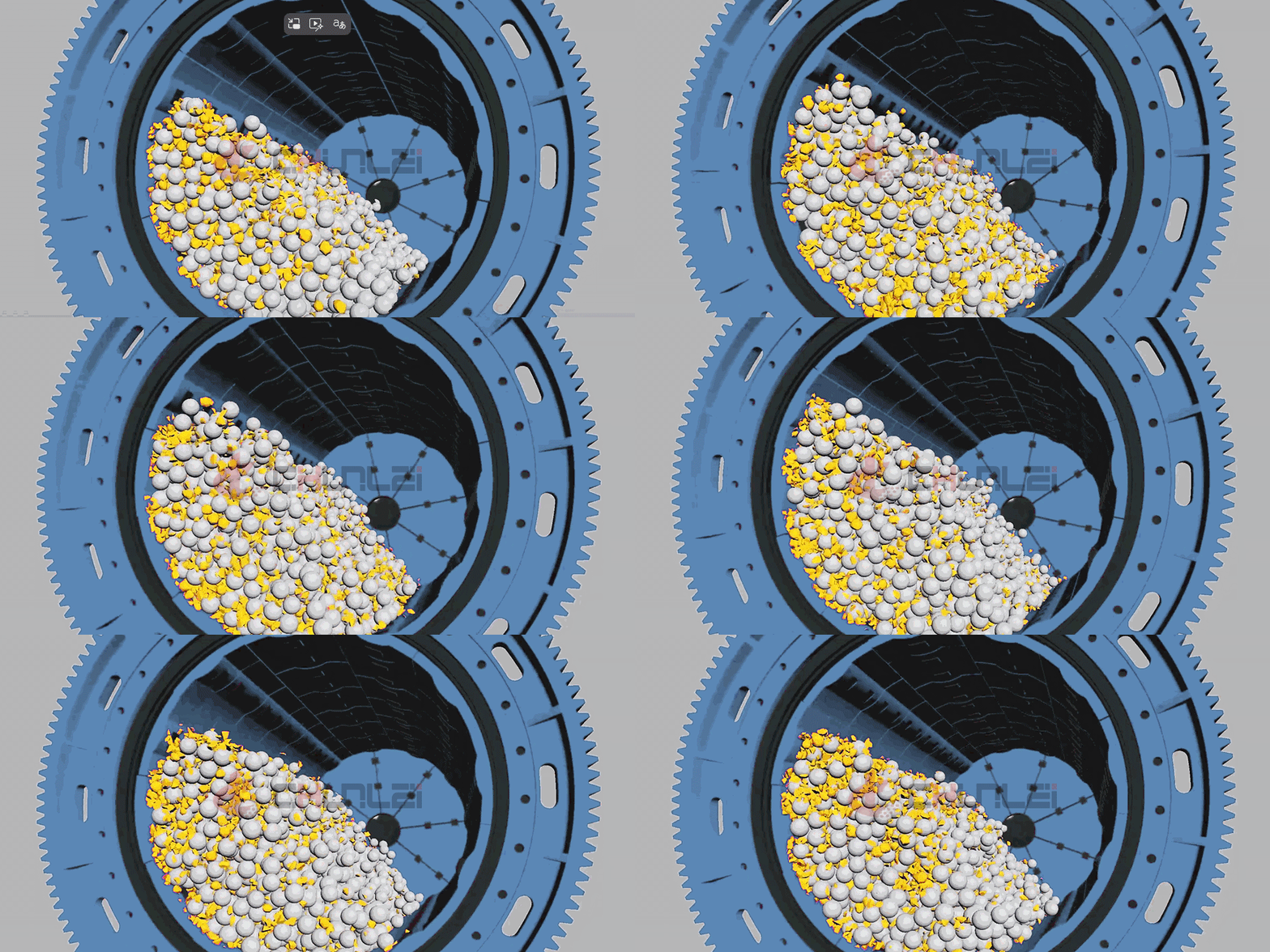
3. SAG Mill Working Principle
The motor drives the cylinder to rotate, and the ore collides and impacts with each other inside the cylinder. Simultaneously, a small number of steel balls enhance the crushing capacity, rapidly crushing large pieces of ore. Oversized pebbles are discharged through the cylinder’s grate plates and can be sent to a pebble crusher or returned to the semi-autogenous mill for regrinding. This balances production capacity and grinding fineness, making it suitable for complex hard rock ores. The maximum feed size is 250~300mm, and it is often paired with a ball mill to form a standard SAB grinding circuit.
Comparison of Applicable Ore, Feed and Discharge Particle Size Ranges
1. Ball Mill
- Applicable Ore: Gold ore, copper ore, iron ore, lead-zinc ore, cement clinker, kaolin, quartz, and other metallic/non-metallic ores
- Ore Hardness: Soft to medium hard rock
- Feed Particle Size: ≤25mm (must undergo multi-stage crushing pretreatment)
- Discharge Fineness: Standard 200 mesh fine grinding
- Limitations: Cannot directly process large pieces of raw ore; only suitable for two-stage fine grinding
2. AG Mill
- Applicable Ore: Homogeneous medium hard iron ore, limestone, low clay ore
- Ore Hardness: Medium homogeneous rock
- Feed Particle Size: Maximum 300mm
- Discharge Particle Size: 0.5~5mm (coarse grinding product)
- Limitations: Extremely poor autogenous grinding effect for soft ores with high mud content and mixed texture.
3. SAG Mill
- Applicable Ore: Vein gold ore, altered rock gold ore, porphyry copper ore, complex hard rock containing pebbles
- Ore Hardness: Medium-hard to hard mixed ore
- Feed Size: 250~300mm
- Output Size: 1~3mm (semi-finished product, requires secondary fine grinding in ball mill)
- Limitations: The unit power consumption of the whole machine is higher than that of a fully autoclaved abrasive mill.
Comparison of Process Flows and Application Scenarios
1. Traditional Three-Stage Crushing + Ball Mill Loop
- Process Flow: Jaw Crusher → Cone Crusher → Vibrating Screen → Ball Mill + Hydrocyclone Closed-Circuit Grinding
- Applicable to: Small and medium-sized mineral processing plants, cement plants, non-metallic powder processing plants
- Advantages: Low initial equipment purchase cost, mature and stable process
- Disadvantages: Many crushing stage equipment, large footprint, high labor and maintenance costs
2. SAB Loop (Semi-Autogenous Grinding + Ball Mill)
- Process Flow: Primary Jaw Crusher → Semi-Autogenous Grinding Mill → Undersize Product fed into closed-circuit ball mill for fine grinding
- Applicable to: Medium and large-sized gold mines, copper mines
- Advantages: Eliminates the need for two and three stages of crushing, simplifying the layout of the entire production line
- Disadvantages: Higher power consumption per semi-autogenous grinding mill
3. SABC Loop (Semi-Autogenous Grinding + Ball Mill + Pebble Crusher)
- Process Flow: Coarse crushing → Semi-autogenous grinding; large pebbles screened out are fed into the crusher, crushed, and returned to the semi-autogenous grinding mill; fine material enters the ball mill.
- Suitable for: Large-scale mines with ultra-hard materials and high pebble content.
- Advantages: Eliminates pebble accumulation inside the mill, maximizing hourly throughput.
4. Single-stage fully autogenous grinding loop
- Process Flow: Coarse crushing → Full autogenous mill + hydrocyclone closed-circuit grinding
- Suitable for: Large-scale homogeneous iron ore and limestone mines
- Advantages: No steel ball consumables, lowest long-term operating cost.
Comparison of three types of grinders
| Comparison Items | Ball Mill | Autogenous Mill (AG) | Semi-Autogenous Mill (SAG) |
| Grinding Media | Steel Balls / Ceramic Balls | Ore Only, No Steel Balls | Ore + 3%-15% Steel Balls |
| Core Crushing Method | Steel Ball Impact + Material Grinding | High-Altitude Self-Impact of Ore | Ore Impact + Steel Ball Assisted Crushing |
| Maximum Feed | ≤25mm | ≤300mm | ≤250~300mm |
| Discharge Particle Size | 0.074~0.89mm Fine Powder | 0.5~5mm Coarse Material | 1~3mm Semi-Coarse Material |
| Unit Power Consumption | Medium | Lowest | Higher |
| Equipment Procurement Cost | Low | Medium-High | Highest |
| Daily Maintenance Workload | Small | Medium | Big |
| Steel Ball Consumption | High, Requires Regular Replenishment | Zero Consumption | Medium, Regular Replenishment |
| Suitable Mine Scale | Small to Medium-Sized Mining Plants | Homogeneous Large Iron Ore / Limestone Mine | Large to Medium-Sized Hard Rock Gold, Silver, and Copper Mine |
| Standard Matching Circuit | Multi-Stage Crushing + Ball mill closed circuit | Single-stage autogenous mill closed circuit | SAB/SABC combined circuit |
Classic Mining Grinding Production Cases
SAB Grinding Loop in a Medium-Sized African Gold Mine
A medium-sized African gold mine uses the SAB (semi-autogenous mill + ball mill) grinding process to process altered rock oxidized-sulfide mixed gold ore with medium hardness. The production line configuration is a jaw crusher + Φ4.8×7.2 m semi-autogenous mill + vibrating screen + Φ3.6×6.0 m overflow ball mill + hydrocyclone closed-loop circulation. This scheme eliminates two cone crushers, reducing the plant area by approximately 32% and improving mineral liberation, ultimately increasing the gold recovery rate by approximately 2.1%.
Single-Loop Fully Autogenous Mill in a Large Central Asian Iron Mine
A large Central Asian iron mine processes homogeneous magnetite with low mud content, using a coarse crushing + Φ7.3×10.4 m fully autogenous mill + hydrocyclone closed-loop process. Because fully automated grinding mills utilize the ore itself as the grinding media, there is virtually no need to add steel balls, resulting in significant annual savings in grinding media procurement costs. Simultaneously, it reduces unit ore power consumption, helping mines achieve lower long-term operating costs.
Traditional Ball Mill Circuit in a Small Southeast Asian Copper Mine
A Southeast Asian copper mine processes approximately 1200 tons of soft copper ore per day, employing a traditional grinding process of two-stage crushing + Φ2.4×4.8 m ball mill + closed-circuit classification. This solution features relatively low equipment investment, mature and stable technology, and simple operation and maintenance, making it ideal for small to medium-sized mining projects. Local operators can complete daily operation and maintenance work after simple training.
How to find the right grinding equipment for your mine?
No single type of grinding equipment is suitable for all mines. The choice between a ball mill, a semi-autogenous grinding mill (SAG mill), and an automated grinding mill (AG mill) should be based on a comprehensive consideration of ore characteristics, production scale, and process requirements. We recommend focusing on the following aspects:
- For small to medium-sized concentrators or those requiring finer product particle sizes: ball mills are the preferred choice.
- For large metal mines seeking high throughput and simplified processes: semi-autogenous grinding mills (SAG mills) are recommended.
- For ores suitable for autogenous grinding and where reducing steel ball consumption is desired: automated grinding mills (AG mills) are a good option.
If you are unsure which grinding equipment is best suited for your project, please provide the following information:
- Ore type (e.g., gold, copper, iron, etc.)
- Maximum particle size of raw ore
- Target processing capacity (t/h)
- Finished product particle size requirements
- Dry or wet grinding
- Subsequent beneficiation processes (flotation, magnetic separation, gravity separation, etc.)
Based on these parameters, CHUNLEI engineers can recommend a more suitable grinding equipment configuration for your mine and provide a complete grinding production line solution. Contact us now for a free solution!
Latest News

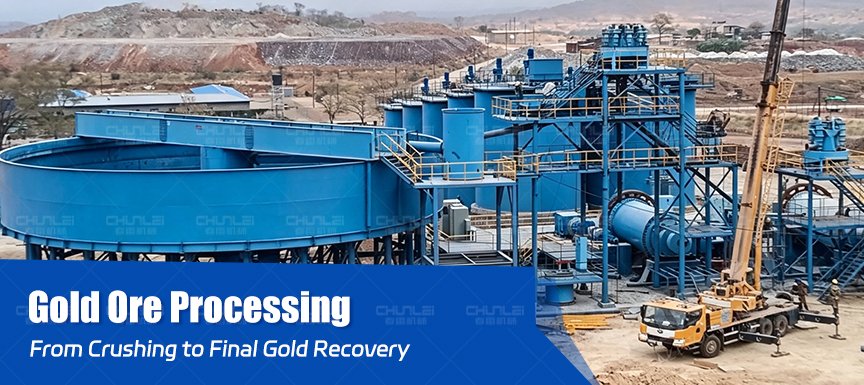
Gold Ore Processing: From Crushing to Final Gold Recovery
800A gold processing plant is not merely a simple assembly of crushers, ball mills, and gold recovery equipment; rather, the goal is to determine the optimal process flow based on factors such as mineral composition, gold particle size,…
-
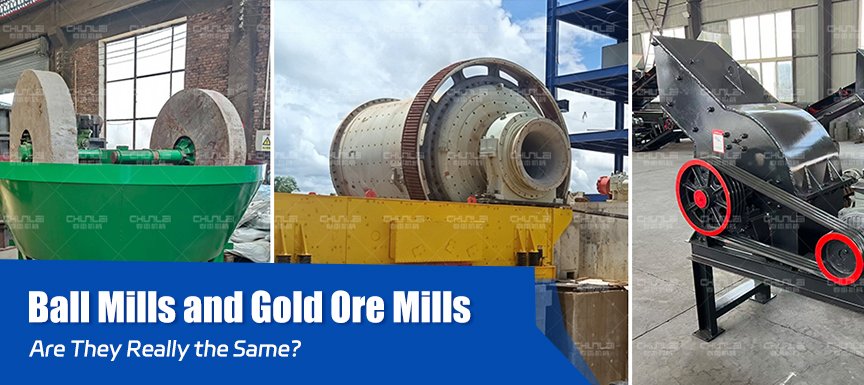
Ball Mills and Gold Ore Mills: Are They Really the Same?
800When searching for gold ore grinding equipment, customers often encounter various terms such as “Ball Mill,” “Gold Mill,” “Gold Milling Machine,” and “Gold Ore Grinding Machine.” Many buyers assume that a “Gold Mill” is a specialized mill de…
-
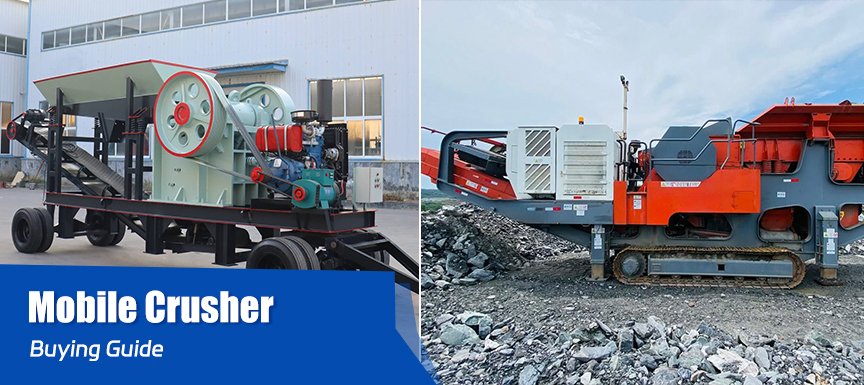
Mobile Crusher Buying Guide: Wheeled or Tracked?
800Many customers focus solely on portability when purchasing a mobile crusher, viewing it merely as the acquisition of a single piece of equipment. In reality, selecting the wrong model can lead to either insufficient output or excessive wear and…
-
Jaw Crushers and Impact Crushers: Turnkey Solutions for Concrete Recycling
800Demolishing old buildings and roads generates vast amounts of waste concrete; direct landfilling not only consumes valuable space but also incurs high transportation costs. The real challenge lies in transforming this waste concrete into reusab…
loading…
已经是到最后一篇内容了!