 Chunlei Mining Machinery
How to Achieve Stable Profitability in Gold Mine Tailings Reprocessing
Long ago, outdated beneficiation equipment, insufficient grinding fineness, and crude classification management led to many tailings becoming waste. However, these tailings often contain a significant amount of encapsulated gold residue.
But not all tailings are worth investing in reprocessing. The key judgment is: the value of recoverable gold > the total equipment investment + long-term operating costs. Even if the average grade of the tailings is low, as long as the quantity is large and the processing cost is low, the project will still be profitable; conversely, even if the grade is high, with the gold completely embedded within the minerals, reprocessing will continue to result in losses.
Whether tailings are worth reprocessing should not be judged solely by historical test reports from early beneficiation plants. Old data only represents the recovery level of outdated processes at that time. Modern grinding, gravity separation, and flotation equipment can recover far more gold than historical records suggest.
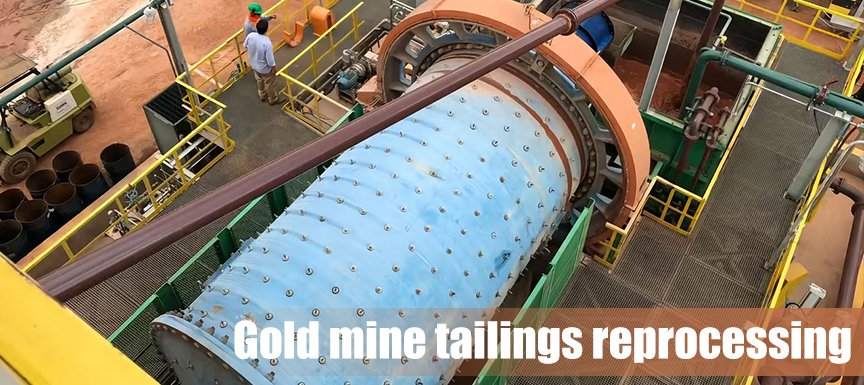
The core factors determining the profitability of tailings reprocessing projects
In tailings reprocessing projects, equipment price is not the key factor determining profitability. What truly affects profitability are the amount of recyclable minerals remaining in the tailings, the recycling process used, and the final recovery rate achieved.
| Evaluation Indicators | Core Impacts on Project Profitability |
| Average Gold Grade in Tailings | Directly determines the metal output value per ton of tailings |
| Total Tailings Storage Capacity | Determines the project’s operating cycle and amortizes fixed equipment investment |
| Gold Particle Size | Determines the choice of gravity separation/flotation/leaching process, directly impacting operating expenses |
| Gold Mineral Distribution Relationship | Determines whether secondary regrinding is needed, significantly increasing electricity costs |
| Actual Overall Process Recovery Rate | Real data from small-scale laboratory tests; subjective estimations are prohibited |
| Comprehensive Cost per Ton of Tailings Treatment | Total cost of electricity, reagents, labor, consumables, and tailings disposal |
| Plant Supporting Infrastructure Conditions | Existing plant buildings, water and electricity supply can significantly reduce initial investment |
We recommend conducting tailings sampling and beneficiation tests before investing to understand the ore properties and then configuring appropriate equipment based on the processing capacity and site conditions. This avoids blind investment and makes it easier to achieve long-term stable profits. If needed, CHUNLEI can provide you with free process advice and equipment configuration solutions based on your tailings samples.
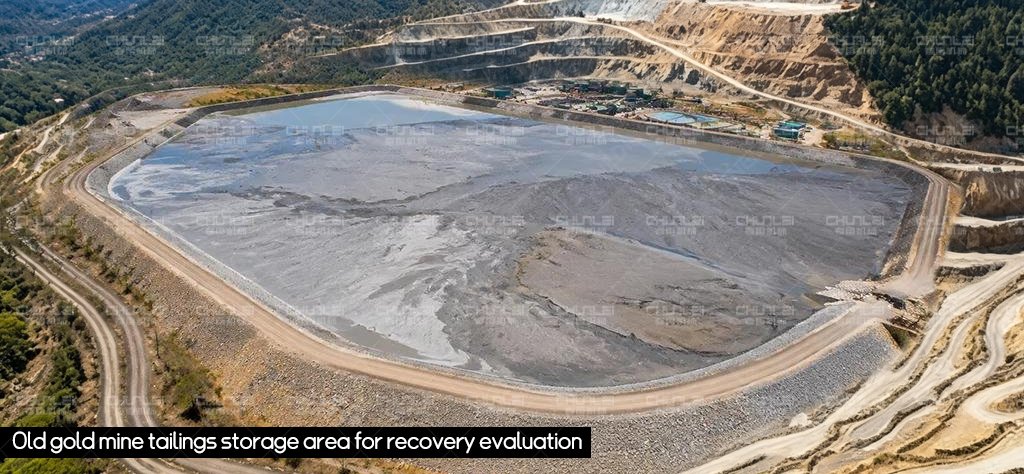
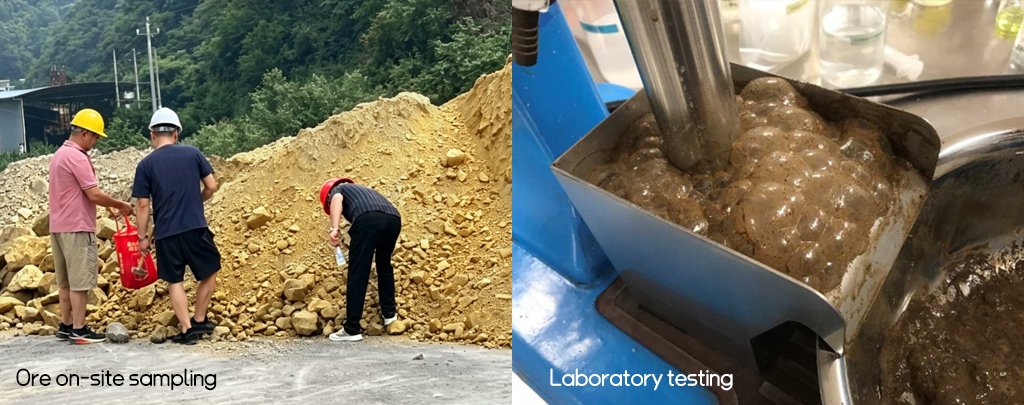
Before tailings can be put into production, a complete set of tests and analyses must be completed
The root cause of losses in most tailings reprocessing projects is that investors fail to conduct systematic testing, blindly purchase complete sets of equipment, and encounter problems such as mismatched capacity, completely unsuitable processes, and recovery rates far below expectations. A standardized tailings testing process includes 8 items:
Sampling Key Reminder: The grade of ore varies greatly between the surface, middle, and bottom layers of a tailings dam. A single sample cannot represent the overall reserves. Layered drilling and sampling are necessary to obtain accurate data and avoid overestimating project returns. The core purpose of testing is not only to know the gold content, but more importantly, to confirm whether this portion of gold can be extracted at low cost. Particle size and liberation degree directly determine the direction of the entire process flow.
Many clients immediately ask me: “Can this batch of tailings still be processed? What equipment do I need to buy?” My advice has always been: Don’t rush to buy equipment; first, understand the tailings.
Tailings are different from ore. Some tailings still contain some value of gold, while others have almost no recovery value. Without prior testing, blindly launching a production line could result in wasted money and equipment purchases, with no chance of recouping the investment.
Generally, it’s recommended to test the following aspects first:
- Multi-point grid stratified sampling (single-point sampling is prohibited, as long-term tailings dam discharges often result in severe grade stratification)
- Average gold grade analysis of the entire dam
- Gold particle size analysis (to differentiate between coarse, fine, and micro-fine gold)
- Mineral phase analysis (to determine if gold is free/encapsulated in pyrite/silicate)
- Gold particle liberation testing
- Small-scale comparative beneficiation tests (comparison of multiple methods including gravity separation/flotation/leaching)
- Reagent consumption calculation (essential for flotation and cyanidation processes)
- Testing of tailings content for mud, clay, and impurities
In my experience, a professional tailings testing report is often more valuable than rushing to buy equipment. After obtaining the test results, designing the process flow and selecting equipment based on the tailings properties can not only improve gold recovery rates but also avoid unnecessary investment.
If you are unsure whether your tailings still have recycling value, you can send us your tailings testing report, ore sample information, or existing production process. CHUNLEI engineers can recommend more suitable tailings reprocessing processes and equipment configurations based on the testing results, helping you reduce trial-and-error costs.
Comparison of Applicable Scenarios for 4 Mainstream Tailings Extraction Processes
No single process is suitable for all gold tailings projects. The correct approach is to select the appropriate process based on the gold grain size, embedding pattern, and tailings mud content. The advantages, disadvantages, and suitable operating conditions of the four mainstream solutions are as follows:
| Tailings Mineral Characteristics | Recommended Recovery Process | Core Applicable Advantages |
| Coarse-grained free single gold (>0.074mm) | Gravity Concentration Process (Jig + Spiral Concentrator + Shaking Table) | No chemical reagents, low water and electricity consumption, simple operation and maintenance |
| Gold embedded in sulfide minerals such as pyrite | Flotation Process | Enriches gold-bearing sulfide concentrate, significantly reducing subsequent processing volume |
| Fine-grained free gold oxide (without sulfide encapsulation) | Carbon Leaching / Heap Leaching & Cyanide Process | Dissolves and recovers fine gold, with a high overall recovery rate |
| Deeply encapsulated gold, extremely poor liberation | Regrinding + Flotation / Regrinding & Leaching Combined Process | Secondary grinding opens the encapsulation layer, improving metal liberation rate |
| Complex tailings with mixed coarse and fine gold | Gravity Concentration + Flotation / Gravity Concentration + Leaching Combined Process | Simultaneously recovers coarse and fine gold, reducing loss |
1. Gravity Separation (Preferred for Gold Recovery from Tailings)
Relying on gravity difference for separation, this process requires no reagents and is suitable for coarse tailings discharged from early gravity separation and flotation processes. Common equipment includes spiral sluices, jigs, and 6S shaking tables. Limitations: Poor recovery of fine gold (below 0.074mm), and significantly reduced separation efficiency for high-clay tailings, necessitating a pre-treatment desliming process.
2. Flotation (Specifically for Sulfide-Bearing Gold Tailings)
For pyrite-associated tailings, gold-bearing sulfides are floated using collectors and frothers to produce high-grade gold-sulfur concentrate for sale or subsequent leaching. Limitations: Requires continuous purchase of beneficiation reagents; reagent consumption increases sharply for highly oxidized and fine-sludge tailings, raising the cost per ton of ore.
3. Cyanide Carbon Leaching/Heap Leaching (For Fine Oxidized Tailings)
Suitable for fine gold tailings without sulfide coatings. Fine gold is extracted through cyanide dissolution and activated carbon adsorption. Disadvantages: Strict environmental regulations require complete tailings neutralization and wastewater treatment systems; approval thresholds for small mines are high.
4. Re-grinding Combined Process (Difficult-to-process encapsulated tailings)
Gold in tailings is completely embedded in the gangue, which cannot be separated by simple separation. A small ball mill is required for secondary grinding to open the encapsulation layer before flotation/leaching. Disadvantages: Significantly increased power consumption and steel ball consumption; only suitable for large tailings ponds with high reserves and high grades.
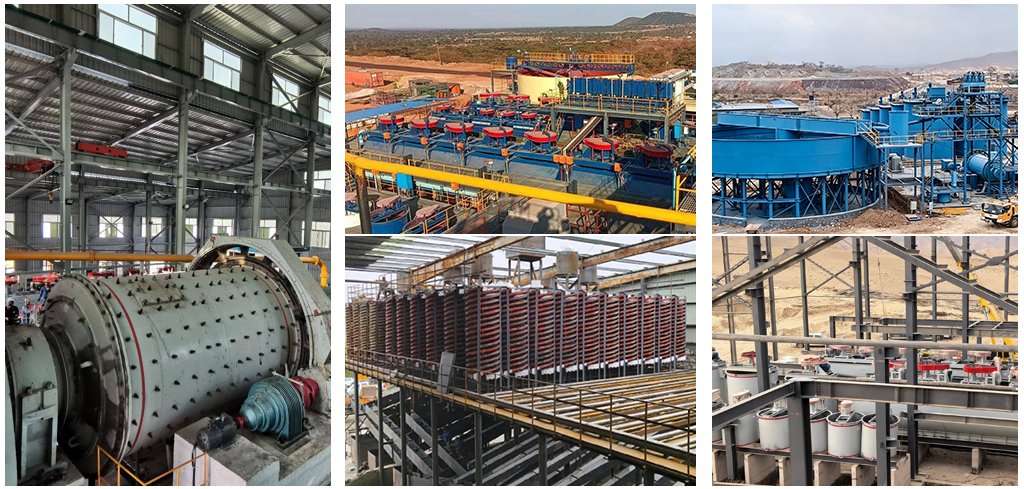
Complete Standard Equipment List for Tailings Reprocessing
Equipment selection is entirely based on preliminary ore analysis results. Different processes require different supporting units, with the following complete and universal equipment categories:
- Feeding and Conveying: Slurry pump, belt conveyor, variable frequency vibrating feeder
- Pretreatment Screening: Rotary drum screen, high-frequency desliming vibrating screen, hydrocyclone
- Grinding: Small overflow ball mill (only for regrinding process)
- Sorting: Jig, spiral chute, mineral processing shaking table, flotation machine, leaching tank
- Solid-Liquid Separation: Thickener, filter press, vacuum dewatering machine
- Auxiliary Equipment: Circulating water tank, reagent mixing tank, dust collector, seepage-proof tailings pile
Primary gold ore crushing and grinding equipment cannot be directly applied to tailings production lines. Tailings have already undergone one grinding cycle, and most operating conditions do not require coarse crushing equipment. Blindly configuring ball mills will lead to over-grinding and soaring electricity costs. Hydrocyclone classification is essential for tailings production lines, separating coarse sand and fine mud, improving sorting efficiency.
Four Methods to Reduce Costs and Increase Tailings Profits
High recovery rates do not necessarily equate to high profits. A project can only be profitable if costs and recovery rates are well-controlled.
◎ Conduct pilot tests before production to avoid over-engineering
Use small-scale pilot tests of multiple processes to identify the lowest-cost solution, avoid installing unnecessary equipment, and reduce procurement costs.
◎ Maximize the use of existing plant infrastructure
Existing buildings, water supply pipes, power lines, and tailings storage facilities can be retrofitted and reused to reduce operating costs. Before reuse, impermeabilization and electrical safety inspections must be performed.
◎ Do not blindly pursue recovery rates
In some projects, efforts to increase recovery rates have led to higher chemical consumption and electricity usage, resulting in a decline in net profit; a stable, moderate recovery rate combined with a low-cost process yields higher long-term returns.
◎ Optimize the grinding and classification systems to minimize energy consumption
Grinding is the primary source of electricity consumption in the entire production line. Precise classification using hydrocyclones helps avoid unnecessary over-grinding. Selecting wear-resistant steel balls and liners reduces the frequency of consumable replacements, thereby continuously lowering O&M expenses.
Extended reading:《How to Effectively Increase Ball Mill Production Capacity》
Common Mistakes in Gold Mine Tailings Reprocessing Projects
Having worked on numerous gold mine tailings reprocessing projects over the years, I’ve found that many clients don’t buy the wrong equipment, but rather their approach is fundamentally flawed from the outset. The following are some of the most common pitfalls encountered on-site:
1. Buying Equipment Without Tailings Testing
Many clients assume their tailings contain gold and immediately buy equipment to begin processing. However, the gold content, particle size, and occurrence state of different tailings vary greatly. Without testing and beneficiation trials, recovery rates will fall short of expectations. Testing must be conducted first, followed by process design, and finally, equipment selection.
2. Copying Processes from Other Mines
People often ask, “Others are using centrifuges with great results, can I buy one too?” In reality, the properties of tailings differ from mine to mine. What works for others might be better suited for your mine through flotation or leaching. A solution that works for one mine may not work for yours.
3. Focusing Only on Equipment Price, Ignoring Operating Costs
Equipment price is important, but long-term costs are even more crucial. Power consumption, wear parts, maintenance frequency, and labor input all affect project profitability. Sometimes, equipment purchased for tens of thousands of yuan less can have higher maintenance costs later on.
4. Assuming tailings necessarily have high recycling value
Not all tailings are worth reprocessing. Economic considerations are crucial, not just whether there’s gold content.
5. Ignoring changes in tailings mud content and particle size
Many tailings have been stockpiled for years, resulting in high mud content and fine particle size. Directly feeding them into mineral processing equipment can easily affect sorting efficiency and even cause blockages. For these types of tailings, washing, grading, or desliming processes are usually required before subsequent recovery.
6. Failing to consider the actual operating conditions of the tailings dam
Tailing reprocessing is not like building a new mineral processing plant; site space, water supply, power supply, and transportation conditions may all be limited. Before selecting equipment, the actual conditions of the tailings dam must be considered, not just equipment parameters.
How to evaluate gold mine tailings reprocessing projects?
Some tailings still have recycling value after years of storage, while others have very low residual gold content, and blind investment in them can easily lead to losses. Whether a project is worth investing in is usually determined after ore testing, process trials, and cost calculations, before deciding whether to build a production line.
| Project Assessment | Why is it important? | Recommendations |
| Remaining Gold Grade in Tailings | Determines the project’s recovery value. | Sampling and testing are crucial to confirm the remaining gold content. |
| Gold Occurrence Status | Determines whether gold can still be effectively recovered | Analyze whether the gold is free or encased in sulfide minerals to determine whether gravity separation, flotation, or leaching processes should be used. |
| Tailings Particle Size | Affects whether re-grinding is needed | If the gold has not been fully liberated, re-grinding may be necessary before further processing. |
| Tailings Reserves | Determines the project’s sustainable operating time | More stable reserves are more beneficial for long-term investment and equipment configuration. |
| Tailings Sludge Content | Affects sorting efficiency and equipment selection | High-sludge tailings are recommended to incorporate washing or desliming processes to improve subsequent recovery efficiency. |
| Water, Electricity, and Infrastructure | Affects operating costs | Assess water, electricity, and transportation conditions in advance to avoid exceeding budget later on. |
| Environmental and Policy Requirements | Determine the project’s successful implementation | Understand local tailings reuse, environmental emissions, and mining policy requirements. |
| Investment Payback Period | Assessing Project Economics | Evaluate the investment payback period by considering equipment investment, operating costs, and expected recovery value. |
Whether tailings reprocessing is profitable depends not on the equipment, but on the ore sample testing and the process design. Conducting beneficiation trials first, followed by selecting suitable equipment and processes, significantly reduces risk.
If you are planning a gold mine tailings reprocessing project, please contact CHUNLEI. We can provide process analysis, flow design, and equipment configuration suggestions based on your tailings samples to help you more accurately assess project feasibility.
Frequently Asked Questions
Q1: Is there still a chance to profit from old gold mine tailings ponds?
A: Many early concentrators experience gold loss in their tailings. As long as small-scale testing shows a positive net profit per ton of ore, production can commence. The key factors are tailings reserves, gold occurrence, and processing costs. Low-grade, large-capacity projects can also be profitable.
Q2: What ore tests are necessary before tailings production?
A: Layered multi-point sampling, full-pond gold grade, particle size analysis, mineral phase analysis, gold liberation degree, multi-process small-scale comparative tests, and reagent consumption testing. All equipment selection is based on test data.
Q3: Which tailings recovery process yields the highest overall return?
A: There is no single optimal solution: coarse free gold is separated by gravity separation (zero reagents, low cost); sulfide-coated gold is separated by flotation; fine oxide gold is separated by carbon leaching; deeply coated gold requires a combined regrinding process.
Q4: Is secondary grinding with a ball mill always necessary for tailings reprocessing?
A: No, regrinding is only necessary when phase analysis shows a large amount of gold embedded in the gangue; most weathered and oxidized tailings do not require grinding and can be directly sorted.
Q5: What does a complete tailings reprocessing equipment set include?
A: The equipment includes feeding, desliming screening, sorting equipment (gravity separation/flotation/leaching), and dewatering thickener units, depending on the process; ball milling units are only added for difficult-to-process tailings.
Q6: How to avoid losses in tailings reprocessing projects?
A: Precise stratified sampling + complete mineral processing pilot tests + comprehensive economic calculations; avoid simply copying the primary ore process, avoid blindly pursuing high recovery rates, and control core expenses such as grinding and reagents.
Conclusion
If you are evaluating gold mine tailings recovery projects in Africa, South America, or other regions, we recommend against purchasing equipment based solely on experience. Conducting tailings sampling and analysis first to understand the gold deposits before determining the process flow can often prevent significant investment waste.
CHUNLEI has extensive experience in manufacturing mining equipment and can provide complete solutions, including crushing, grinding, classification, gravity separation, flotation, concentration, and tailings treatment, tailed to the specific characteristics of different gold mine tailings.
Whether you are building a new gold concentrator or looking to improve the utilization rate of existing tailings resources, we can recommend the most suitable equipment configuration based on your ore conditions and production needs.
Contact us for your gold mine tailings recovery process recommendations and equipment solutions.
Latest News

Gravity Concentration vs. Flotation for Gold: Which Process Should You Choose?
800In gold beneficiation projects, many mining engineers face a critical question: Why does the final gold recovery rate consistently fall short of expectations, even when grinding fineness and reagent regimes are strictly maintained according t…
-
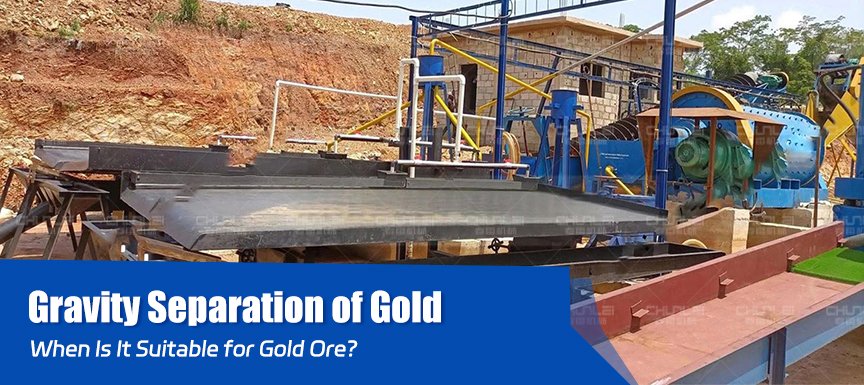
Gravity Separation for Gold: When Is It Suitable for Gold Ore?
800Many people immediately associate “gold ore” with gravity separation, yet not all gold deposits are suitable for recovery using gravity methods alone. Gravity separation is appropriate for liberated native gold or other heavy minerals that ex…
-
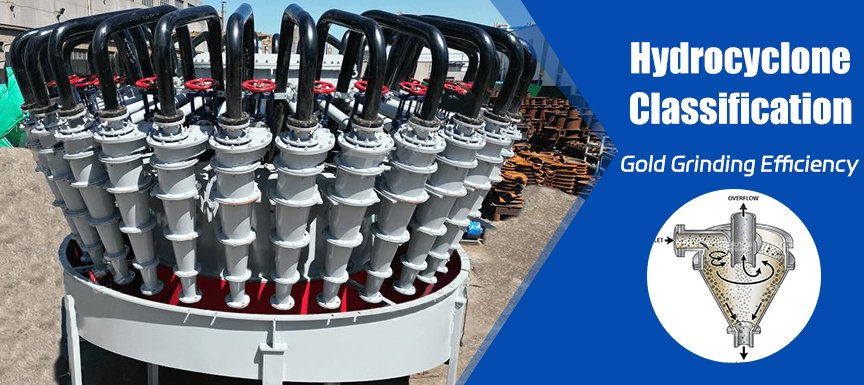
How Classification Affects Gold Grinding Efficiency
800In gold ore grinding circuits, attention is often focused primarily on ball mill capacity, power consumption, and grinding media; however, in actual operation, classification plays an equally critical role in determining grinding efficiency. …
-
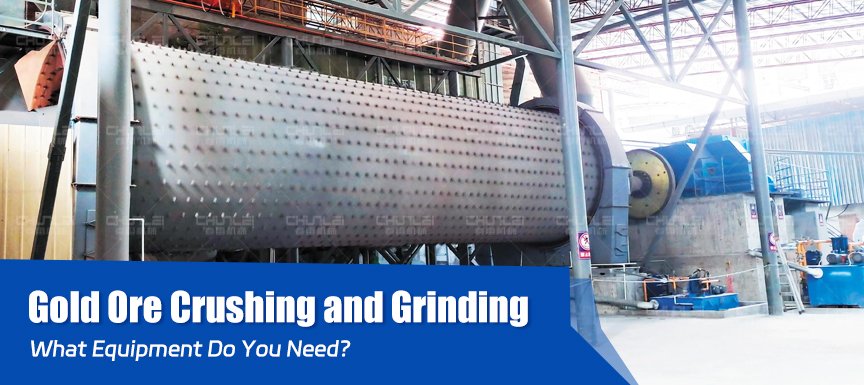
Gold Ore Crushing and Grinding: What Equipment Do You Need?
800When designing a gold ore processing line, my clients often ask which crushers and mills to purchase. However, the equipment selection should actually be based on a thorough understanding of the ore characteristics. Issues in many projects do…
loading…
已经是到最后一篇内容了!