 Chunlei Mining Machinery
Investment and Equipment for Lithium Ore Beneficiation Plants
Building a lithium ore beneficiation plant is not simply a matter of purchasing a few crushers, ball mills, and flotation equipment. Different types of lithium ores (such as spodumene, lepidolite, and petalite) require different beneficiation processes due to their varying mineral properties and content.
A reasonable lithium ore processing scheme typically includes: ore crushing, grinding and liberation, classification control, flotation purification, and concentrate dewatering. Before deciding to invest in building a plant, it is crucial to conduct comprehensive ore testing and beneficiation trials.
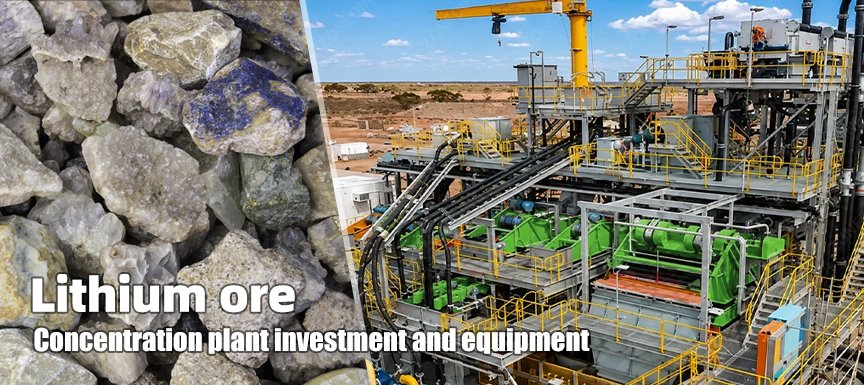
What do you need to know before building a lithium ore beneficiation plant?
When planning a lithium mining project, investors should not only focus on equipment prices but also consider ore conditions. Before designing a lithium ore beneficiation plant, the following three core pieces of information need to be clarified:
1. Ore Type
Common hard rock lithium ores include spodumene, lepidolite, and petalite. Different ores correspond to different beneficiation difficulties:
- Spodumene: Usually processed using traditional processes such as crushing, grinding, and flotation.
- Lepidolite: Due to its high mud content, it usually requires multiple stages of separation.
2. Raw Ore Properties
The Li₂O content, associated mineral composition, ore hardness, maximum feed particle size, and mud content must be accurately measured. These data will directly affect the selection of crushing equipment, the configuration of grinding equipment, and the design of the flotation process.
3. Production Objectives
Clearly define the output and finished ore grade. Without clear production objectives, it is impossible to formulate a reasonable equipment selection plan.
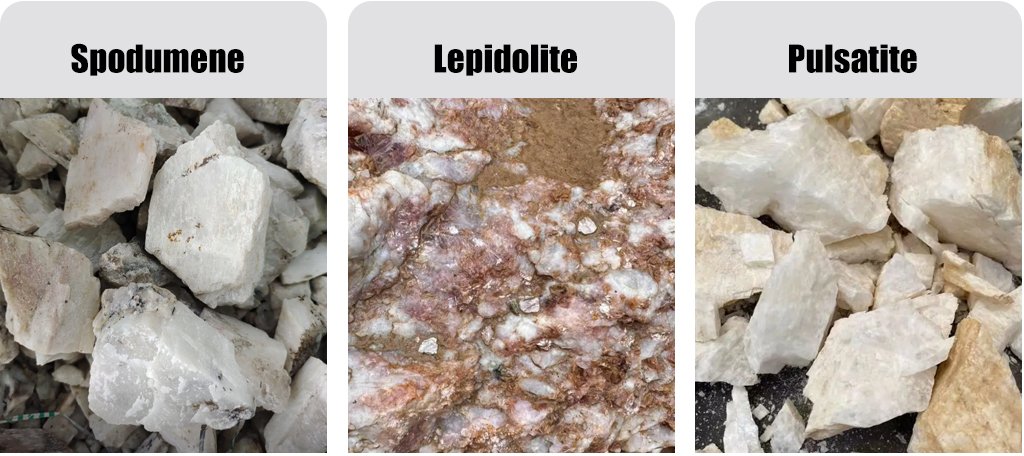
Common Lithium Ore Types and Beneficiation Challenges
1. Spodumene
Spodumene is one of the most widely used lithium resources in industry. It is characterized by relatively high lithium grade and hardness, and is usually associated with minerals such as quartz and feldspar.
Common Process Flow: Raw ore → Crushing → Grinding → Classification → Flotation → Concentration and Dewatering → Lithium Concentrate
Main Equipment: Jaw crusher, cone crusher, ball mill, hydrocyclone, flotation machine, filter press.
2. Lepidolite
Compared to spodumene, lepidolite is generally more difficult to process, mainly due to: significant ore mudification, complex mineral composition, and higher requirements for separation precision.
Common process flow: Raw ore → Crushing → Grinding → Desliming → Flotation → Concentrate dewatering
Specific equipment requirements: Typically requires the addition of hydrocyclone desliming units, multi-stage flotation cells, and a more sophisticated automated reagent control system.
3. Petalite
Petalite is also an important lithium-bearing mineral. Its beneficiation scheme needs to be customized based on the mineral composition, intercalation relationship, and impurity types (such as iron and aluminum content).
Complete Process Flow and Core Equipment of a Lithium Ore Beneficiation Plant
A typical complete process flow for hard rock lithium ore processing is as follows:
Raw Ore → Vibrating Feeder → Coarse Crushing → Medium and Fine Crushing → Screening → Grinding → Hydraulic Classification → Flotation/Magnetic Separation → Concentration → Filtration Press → Lithium Concentrate
1. Feeding and Crushing Stage
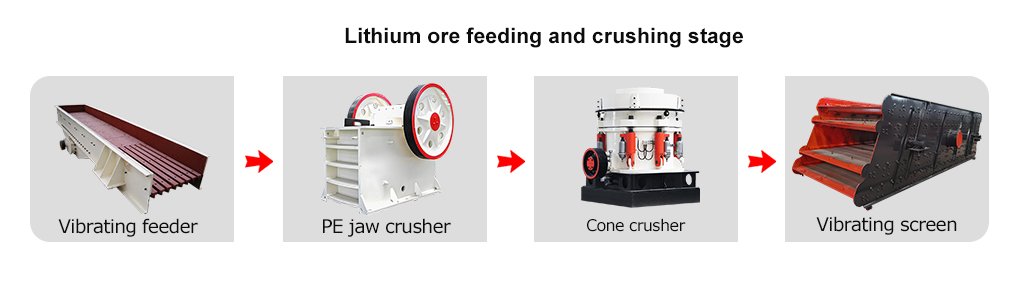
Vibrating Feeder: Provides uniform, continuous, and stable feeding, reducing the risk of material blockage.
PE Jaw Crusher: Serves as the primary coarse crusher, crushing large pieces of raw ore (100–150 mm and above) mined underground to a suitable particle size for subsequent processing.
Single-Cylinder Cone Crusher: Used in the secondary medium and fine crushing stage, further reducing the ore particle size to 5–15 mm, providing qualified feed for the grinding section.
Circular Vibrating Screen: Enables closed-circuit screening, returning large pieces of material to secondary crushing.
2. Grinding and Classification Stage
Wet Overflow Ball Mill: The core equipment for lithium ore processing. Lithium minerals are fully liberated from gangue minerals through impact and grinding with steel balls. The grinding fineness directly determines the recovery rate of subsequent flotation.
Hydrocyclone group: Controls the particle size of the grinding product, separates coarse and fine particles, and forms a closed-loop circulation with the ball mill to reduce over-grinding.
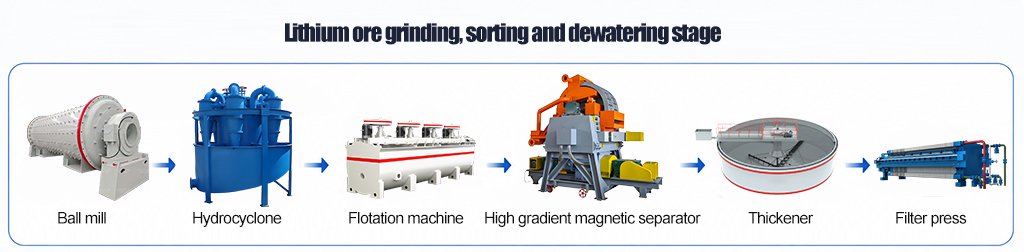
3. Separation Stage
Mechanical stirred flotation machine: The core link in lithium ore beneficiation. Through reagent adjustment, it separates lithium minerals from gangue minerals such as quartz and feldspar, significantly improving the grade of lithium concentrate.
High-gradient magnetic separator: Some lithium ores contain high levels of iron impurities, requiring pre-treatment through magnetic separation to reduce the iron content of the concentrate and increase the added value of the product.
4. Concentrate Dewatering Stage
High-efficiency thickener: Increases the concentration of the lithium concentrate slurry after flotation.
Disc/plate and frame filter press: Significantly reduces the moisture content of the concentrate, facilitating subsequent transportation and sales.
What factors influence the investment cost of a lithium ore beneficiation plant?
1. Why is there no standardized price for lithium ore beneficiation plants?
Even two spodumene beneficiation plants with identical plans will have different investment and operating costs due to differences in ore distribution characteristics, grinding and liberation requirements, and separation processes. To determine “how much a set of lithium beneficiation equipment costs,” first clarify the type of lithium ore, production capacity, and finished concentrate grade, then match the process flow, and finally calculate the investment cost.
2. Components of equipment investment in a lithium beneficiation plant
| Cost Categories | Includes Equipment/Engineering Works |
| Feeding and Crushing Section | Vibrating feeder, jaw crusher, cone crusher, vibrating screen, belt conveyor |
| Grinding and Classification Section | Ball mill, hydrocyclone, spiral classifier |
| Core Separation Section | Flotation unit, high-gradient magnetic separation equipment (selected according to ore testing) |
| Concentrate Dewatering Section | High-efficiency thickener, vacuum/plate and frame filter press, slurry pump |
| Auxiliary Systems | Belts, slurry pipelines, frequency converter control cabinet, lubrication station |
| Civil Engineering and Steel Structure | Equipment concrete foundation, operating platform, protective steel frame |
| Engineering and Technical Services | Process flow drawing design, on-site installation, commissioning, and operation training |
3. Comparison of core investment influencing factors
| Influencing Factors | Specific Impacts on Investment and Costs |
| Ore Type | The processes for spodumene and lepidolite differ significantly, with lepidolite requiring higher investment in equipment and reagents. |
| Raw Ore Processing Capacity | Directly determines the overall equipment size and the scale of supporting electrical control and piping. |
| Ore Hardness and Feed Size | Determine the number of crushing stages and the type of jaw crusher/cone crusher. Higher hardness increases the cost of wear-resistant parts. |
| Concentrate Grade and Recovery Rate | Determine the number of flotation stages and cells. Higher requirements necessitate larger flotation units and civil engineering platforms. |
| Automation Level | Automated electrical control and automatic reagent addition systems can significantly reduce manual labor but increase initial investment. |
| Infrastructure and Geographical Location | Remote overseas mines require consideration of higher shipping, on-site installation, and water and electricity costs. |
How to reduce investment risks and operating costs in ore processing plants?
- Avoid directly copying others’ processes: Even with the same spodumene ore, slight differences in grade, impurities, and particle size can lead to drastically different processes.
- Adhere to the principle of “testing first, then design”: Determine the optimal grinding fineness, flotation reagent system, and equipment parameters through professional ore testing.
- Match equipment scale to needs: Avoid blindly pursuing ultra-large equipment; consider current capacity and future expansion plans to avoid idle and wasted funds.
| Practical Solution | Cost Reduction Benefits and Effects | |
| 1. Pre-production Pilot Test | Conduct a full-process ore analysis pilot test to accurately determine process parameters. | Eliminate process redundancy and avoid additional investment for secondary modifications later. |
| 2. More Crushing, Less Grinding | Enhance the fine feed output from secondary crushing, significantly reducing the load on the ball mill. | Electricity cost per ton of ore for grinding can be reduced by 15%–25%. |
| 3. Strict Control of Over-grinding | Precisely adjust the grinding particle size to prevent the generation of large amounts of fine sludge. | Significantly reduce flotation reagent consumption and improve concentrate grade. |
| 4. Optimized Hydraulic Classification | Timely discharge and separation of qualified fine feed, reducing repeated re-grinding of coarse sand. | Reduce useless circulating load and power consumption of the ball mill. |
| 5. Matched Load Operation | Rationally allocate equipment according to actual production capacity to avoid large units operating at low loads. | Reduce overall plant reactive power consumption. |
| 6. Industrial Water Circulation | All clarified water from the thickener and filter press is returned to the production system for recycling. | Significantly reduces the cost of fresh water intake and environmental pressure. |
Frequently Asked Questions
Q1: Is there a standardized total price for lithium ore beneficiation plants?
A: No. Ore properties, processing scale, and supporting infrastructure vary greatly. Accurate investment can only be calculated after customizing the process based on ore analysis data.
Q2: Is there a significant difference in investment between spodumene and lepidolite beneficiation equipment?
A: The difference is significant. Lepidolite, due to its severe mudification, requires multiple stages of desliming equipment and more flotation cells. The equipment and operating reagent costs are higher than for spodumene.
Q3: Does a larger production line capacity mean lower investment per ton of ore?
A: Theoretically, there is an economies of scale. However, if the designed capacity far exceeds the actual ore supply, the equipment will be idle for a long time, resulting in a significant increase in overall costs.
Q4: Does every lithium mine need flotation equipment?
A: The vast majority of hard rock spodumene and lepidolite rely on flotation to separate gangue. A few extremely high-grade weathered lithium ores can use a combined gravity and magnetic flotation process to simplify the process, but this must be determined through beneficiation tests.
Q5: Can a lithium beneficiation plant directly produce battery-grade lithium carbonate?
A: No. Beneficiation only produces lithium concentrate (physical process); lithium carbonate requires chemical processes such as roasting, acid leaching, and purification (chemical process), belonging to completely different industrial sectors.
Q6: How to reduce operating costs without reducing lithium concentrate production?
A: Implement four measures simultaneously to control the two core expenses: electricity and chemicals, including “more crushing and less grinding,” strict control of over-grinding, recycling and reusing plant water, and precise control of reagents.
Q7: Should I differentiate between turnkey equipment and single-unit quotes when requesting a price?
A: Yes, you must. Quotes for single-unit equipment do not include conveyors, electrical control cabinets, steel structures, and installation and commissioning; subsequent additional investments often far exceed initial estimates.
Conclusion
The biggest investment risk in building a lithium ore beneficiation plant is not equipment price, but whether the process is suitable for your ore. For spodumene, the focus is on liberation and flotation; for lepidolite, the focus is on desliming and separation; and for complex ores, testing and verification are essential.
CHUNLEI specializes in manufacturing mining beneficiation equipment and can provide complete lithium ore beneficiation solutions, from crushing, grinding, separation to dewatering, tailored to the client’s ore characteristics, processing capacity, and site conditions.
If you are planning a lithium ore beneficiation plant project, please contact us and provide your ore information. Our engineering team will assess the most suitable process flow, equipment configuration, and investment budget for you.
Latest News

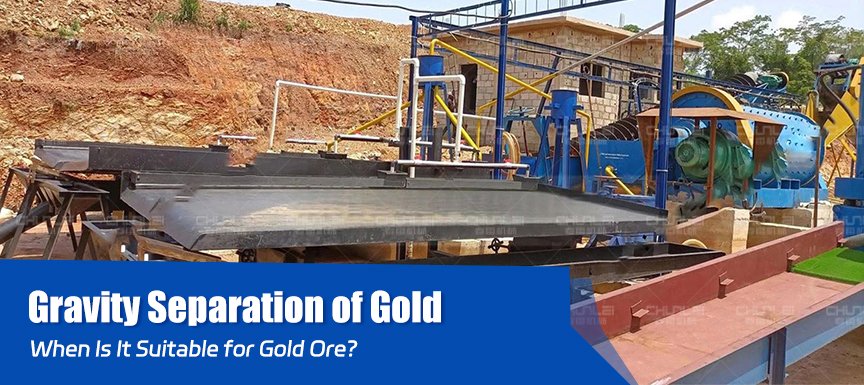
Gravity Separation for Gold: When Is It Suitable for Gold Ore?
800Many people immediately associate “gold ore” with gravity separation, yet not all gold deposits are suitable for recovery using gravity methods alone. Gravity separation is appropriate for liberated native gold or other heavy minerals that ex…
-
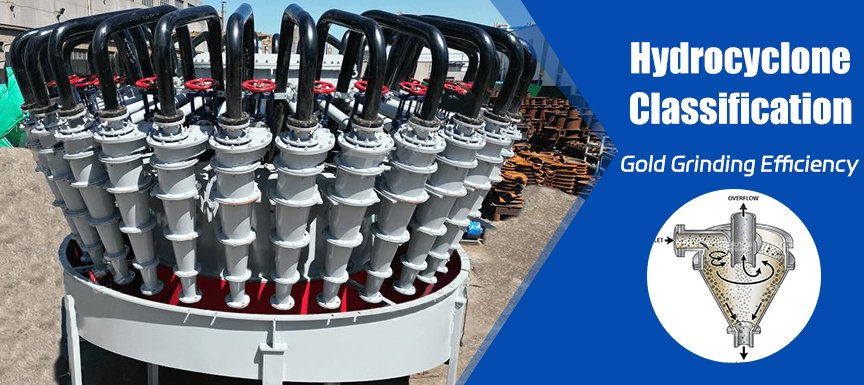
How Classification Affects Gold Grinding Efficiency
800In gold ore grinding circuits, attention is often focused primarily on ball mill capacity, power consumption, and grinding media; however, in actual operation, classification plays an equally critical role in determining grinding efficiency. …
-
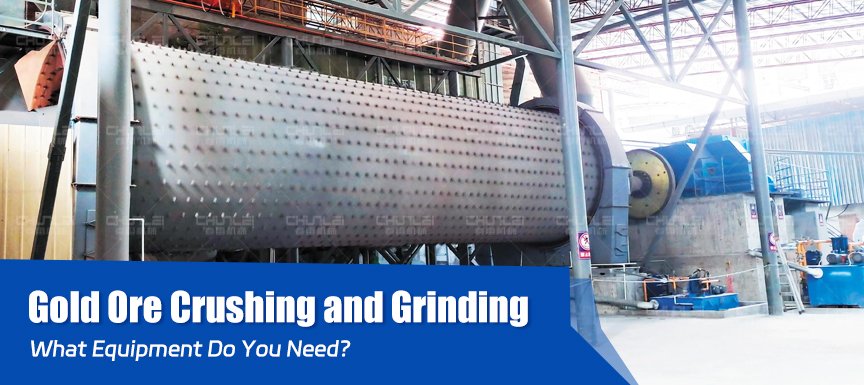
Gold Ore Crushing and Grinding: What Equipment Do You Need?
800When designing a gold ore processing line, my clients often ask which crushers and mills to purchase. However, the equipment selection should actually be based on a thorough understanding of the ore characteristics. Issues in many projects do…
-
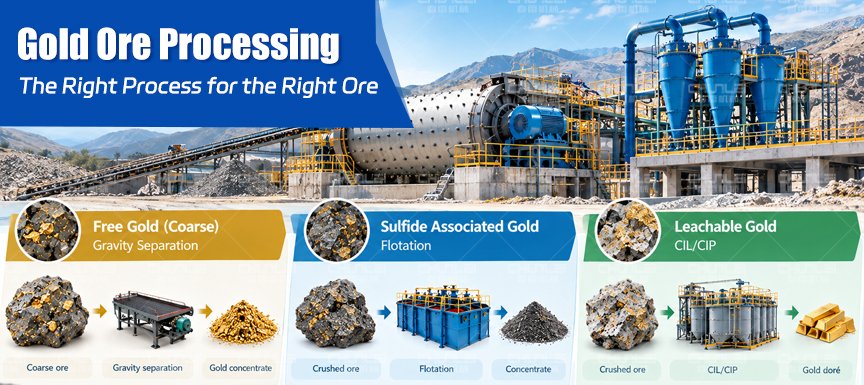
How to Select the Right Gold Processing Plant for Your Ore
800When selecting a gold processing plant, simply assuming that a full suite of equipment is all that is needed can lead to issues such as low recovery rates, high energy consumption, and failure to meet production targets.Different ores require d…
loading…
已经是到最后一篇内容了!