 Chunlei Mining Machinery
How to Identify Gold Ore: 10 Practical Methods
Gold has always been one of the most valuable resources, but identifying gold ore is not easy. Many people believe that anything that shines with a golden luster is gold ore, but in reality, many genuine gold ores have a very ordinary surface.
Whether you are a small-scale mine investor or preparing to build a gold processing plant, learning how to correctly identify gold ore can help you avoid unnecessary investment losses.
This article will introduce several simple and practical methods for identifying gold ore, explain how to distinguish between genuine and fake gold mines, and what further steps should be taken after discovering a gold mine.
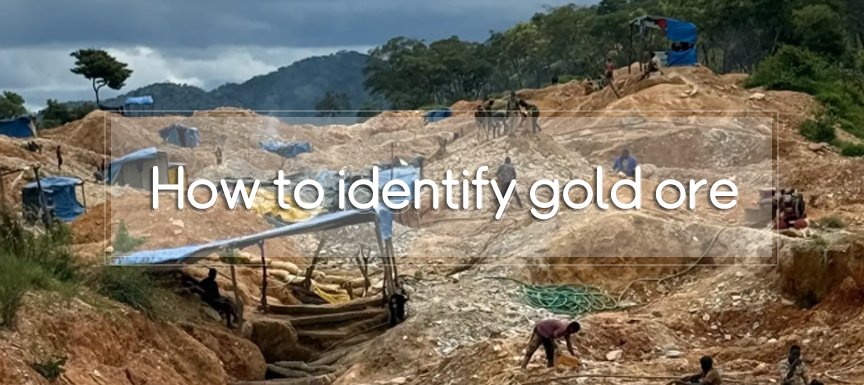
What does gold ore look like?
Many people imagine natural gold ore to be glittering and shiny, but in reality, most gold in natural gold mines exists in the surrounding rock as fine particles, gold threads in quartz veins, fissure fillers, or microscopic disseminated material.
Common gold ores typically have the following characteristics:
- White or grayish-white quartz veins
- Rust-colored or yellowish-brown oxidation zones
- Containing sulfide minerals such as pyrite and chalcopyrite
- Alteration zones in volcanic or metamorphic rocks
Some gold mines show visible native gold particles, but more often, laboratory testing is needed to confirm the gold content. Visual inspection can only provide a preliminary assessment.
Where are gold mines typically located?
Gold mines are found all over the world, but they are usually concentrated in specific geological environments.
- Quartz veins: One of the most common environments for the occurrence of natural gold.
- Oxidation zones: Weathered rocks that are reddish-brown or yellowish-brown, often an important indicator of mineralization.
- River placer gold deposits: Gold grains tend to accumulate in riverbeds, gravel layers, etc., after long-term weathering and transportation.
- Sulfide-rich ore bodies: Minerals such as pyrite, arsenopyrite, and chalcopyrite are often associated with gold.
- Historic gold mining areas: Areas where gold has been mined in the past, where undeveloped ore bodies may still exist.
10 Practical Ways to Identify Gold Ore
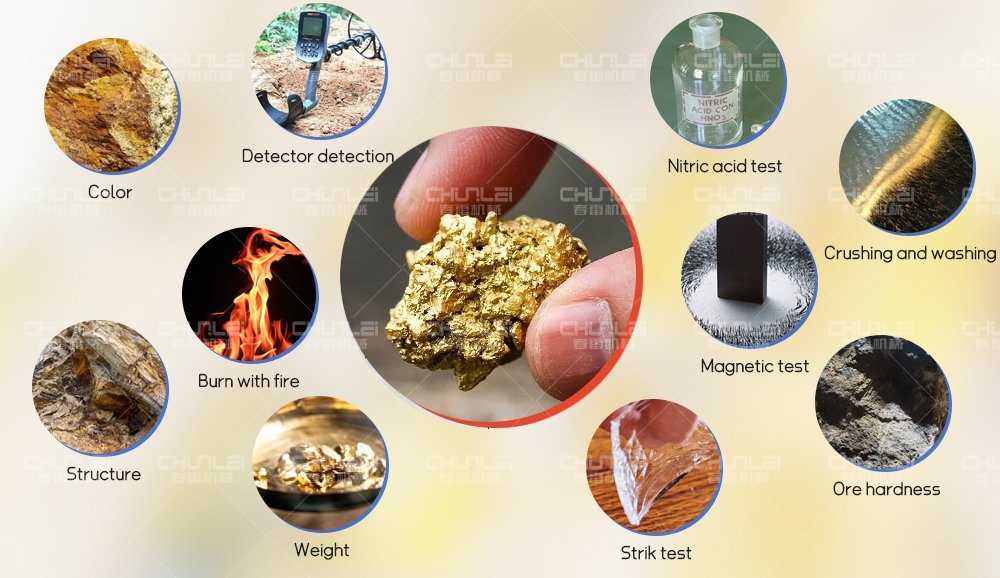
1. Observe the color
Natural gold usually presents a stable golden yellow color, and the color is relatively stable even if the viewing angle is changed. Pyrite is mostly light brass in color, and its luster changes significantly when viewed from different angles. The gold particles in most gold ores are invisible to the naked eye, and the color can only be used as a reference.
2. Look for quartz vein structures
Quartz is one of the common associated minerals in gold mines, but not all quartz contains gold and requires testing to determine its value. When looking for gold mines, you can focus on observing:
- White or off-white quartz veins
- Metal minerals in quartz cracks
- Rust-colored oxidized areas near quartz
3. Determine weight
Gold has a very high density and is significantly heavier than ordinary rocks of the same volume. If a piece of ore feels unusually heavy in your hand, it is of value for further testing.
4. Streak test
Gently rub the ore on the unglazed porcelain plate and observe the color of the powder left behind:
Natural gold usually leaves yellow streaks; while pyrite is mostly black-green or brown-black streaks; other sulfide minerals will have different colors. This is one of the simplest identification methods on site.
5. Check the hardness of the ore
Gold is a soft metal and can usually be scratched by a steel knife; while pyrite has a higher hardness and is not easily scratched, so the hardness test can effectively distinguish between the two.
6. Magnetic test
Pure gold is not magnetic. If the ore is attracted to a magnet, it means that the main component is not gold.
Of course, the lack of magnetism does not prove that it must contain gold, it can only exclude some minerals.
7. Crushing and washing
If it is suspected that the ore contains fine-grained gold, a small sample can be taken, crushed, and then panned using a gold pan.
If obvious gold particles appear after panning, it means that the ore is worthy of further testing.
8. Nitric acid test
Nitric acid can dissolve many common metals but will not corrode pure gold.
Since acid is dangerous, please pay attention to safety when handling it.
9. Metal detector detection
Modern metal detectors can detect natural gold or placer gold near the surface, and are particularly suitable for river sediments, shallow gold mines or small-scale gold mine exploration.
Metal detectors can only detect metal targets and cannot determine the grade of ore.
10. Laboratory tests
The most reliable method remains laboratory testing.
Common detection methods include:
- Fire Assay
- Atomic Absorption Spectroscopy (AAS)
- ICP analysis
These methods can accurately measure the gold content in the ore, which is an important basis for judging whether it has economic value.
What are the differences between gold, pyrite, and chalcopyrite?
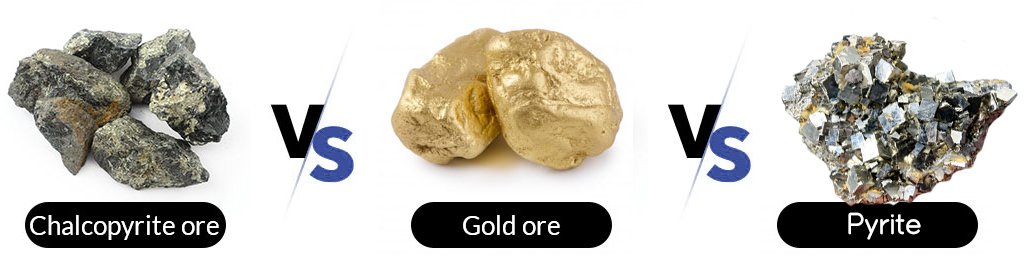
Many beginners mistake gold for pyrite or chalcopyrite. The following comparison can help you quickly distinguish between the three.
| Comparison Items | Natural Gold | Pyrite | Chalcopyrite |
| Color | Golden Yellow | Light Brass Yellow | Golden Yellow with Rainbow Oxidation |
| Hardness | Relatively Soft | Very Hard | Medium |
| Density | Very High | Medium | Medium |
| Crystal Morphology | Irregular Grains | Commonly Cubic Crystals | Mostly Massive |
| Stretch Color | Yellow | Blackish Green | Dark Green or Black |
| Economic Value | Very High | Generally Low | Copper Ore, May Be Associated with Gold |
It should be noted that although pyrite itself has limited value, some pyrite ores may contain recoverable gold, so the value of an ore cannot be judged solely by its mineral type.
What should you do after discovering a gold deposit?
Many mining projects fail because they immediately begin mining after discovering a suspected gold-bearing ore. The correct approach is to first confirm the ore’s properties, grade, and suitable processing technology before proceeding.
Before commencing mining or purchasing equipment, it is highly recommended to follow these steps:
- Collect representative ore samples.
- Send the samples to a professional laboratory to test the gold grade.
- Determine if the ore is an oxide gold ore, a sulfide gold ore, or a mixed ore.
- Assess the economic viability of mining the ore.
- Select an appropriate beneficiation process based on the ore’s properties.
For example:
- Oxide gold ores typically use gravity separation or cyanide leaching;
- Sulfide gold ores generally require flotation followed by cyanidation;
- Complex gold ores may require a combination of gravity separation, flotation, and leaching.
The appropriateness of the initial process selection directly impacts gold recovery rates and subsequent operating costs.
What equipment is typically needed for gold ore beneficiation?
Many clients, when undertaking their first gold mining project, ask me, “After finding a gold mine, can I start production just by buying a few pieces of equipment?”
It’s not that simple. Gold beneficiation cannot be accomplished with a single piece of equipment; rather, it requires a complete process flow configured based on the ore properties, the state of gold occurrence, and the target yield. Different gold mines are suitable for gravity separation, flotation, and CIP/CIL leaching, so the equipment configuration will also differ.
Based on our years of experience with gold mining projects, a typical gold ore beneficiation production line usually includes the following types of equipment:
1. Crushing Equipment – Processing Large Ore Pieces
Newly mined gold ore is usually large in size and cannot be directly fed into grinding equipment; it needs to be crushed first.
Common equipment includes:
- Jaw Crusher: Responsible for the first stage of coarse crushing, breaking large ore pieces into suitable particle sizes;
- Cone Crusher: Used for medium and fine crushing, improving crushing efficiency, suitable for gold ores with higher hardness.
A well-executed crushing stage leads to higher grinding efficiency and reduces equipment wear.
2. Grinding Equipment – Releasing Gold from Ore
In many gold mines, gold is not exposed but encased in minerals such as quartz and sulfides. Grinding is necessary to fully liberate the gold particles.
Common Grinding Equipment:
- Ball Mill
- Semi-Autogenous Grinding Mill (SAG Mill)
- Autogenous Grinding Mill (AG Mill)
For most small and medium-sized gold mining projects, ball mills remain a widely used choice due to their mature technology, ease of maintenance, and extensive operational experience.
3. Classification Equipment – Controlling Grinding Fineness
The slurry after grinding needs to be classified. Qualified particles proceed to the next stage of mineral processing, while coarser particles are returned to the mill for further grinding.
Common Equipment:
The classification effect directly affects the degree of gold release. Poor fineness control may result in insufficient gold liberation, affecting the final recovery rate.
4. Gravity Concentration Equipment – Recovering Coarse Gold Particles
If the ore contains coarse native gold, gravity concentration can be prioritized.
Common Equipment:
The advantages of gravity concentration are its simple process and lower cost. Many gold mines add a gravity concentration stage at the front end to recover some gold in advance, improving overall economic efficiency.
5. Flotation Equipment – Processing Fine-Grained and Sulfide Gold Ores
For fine-grained gold or gold associated with sulfide minerals, gravity separation alone is often insufficient, requiring flotation.
Main Equipment:
- Flotation machine
- Leaching tank
- Reagent addition system
Flotation can effectively enrich gold-bearing minerals, improving subsequent processing efficiency, and is a commonly used process for many sulfide gold ores.
6. Leaching and Gold Recovery Equipment
For some oxidized gold ores or flotation concentrates, further leaching processes are required.
Common Equipment:
- Leaching tank
- Adsorption tank
- Desorption electrolysis equipment
- Tailings treatment equipment
CIP (Carbon-In-Pulse) and CIL (Carbon-Leach-In) processes are mature technologies currently used in many large-scale gold mines.
Advice to customers:
When it comes to gold mining projects, more equipment is not better, nor is it more expensive.
We have contacted many customers who initially only focused on the equipment price, but what really affects the project revenue is:
- Whether the ore type is accurately determined;
- Whether the grinding fineness is appropriate;
- Whether the mineral processing technology matches;
- Whether the equipment operates in coordination.
Therefore, before determining the equipment, it is recommended to conduct ore testing and mineral processing tests first, and then design the process according to the actual situation.
Conclusion
The core of a good gold ore beneficiation solution is not simply piling on equipment, but ensuring that each piece of equipment functions effectively to recover gold from the ore as efficiently as possible. If you have such needs, please contact CHUNLEI immediately. We will provide a complete solution from crushing and grinding to beneficiation and recovery, tailored to your specific requirements.
Latest News

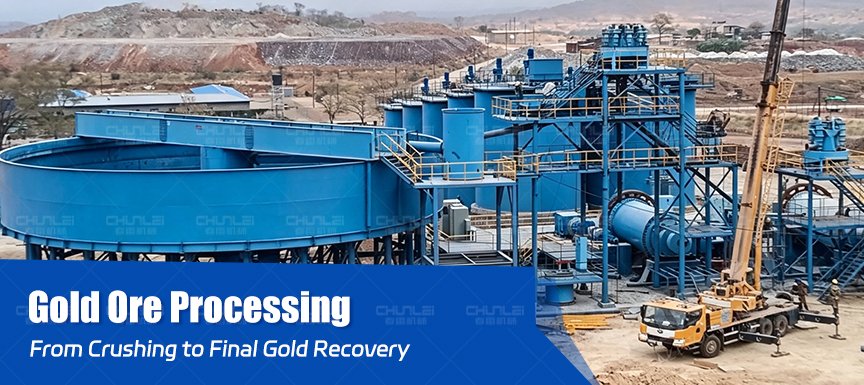
Gold Ore Processing: From Crushing to Final Gold Recovery
800A gold processing plant is not merely a simple assembly of crushers, ball mills, and gold recovery equipment; rather, the goal is to determine the optimal process flow based on factors such as mineral composition, gold particle size,…
-
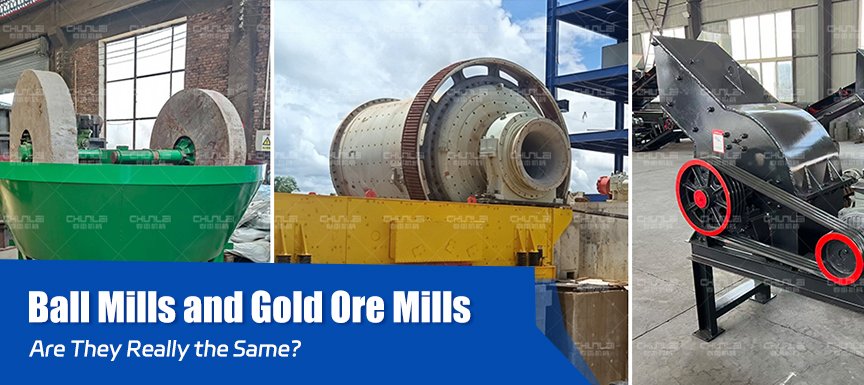
Ball Mills and Gold Ore Mills: Are They Really the Same?
800When searching for gold ore grinding equipment, customers often encounter various terms such as “Ball Mill,” “Gold Mill,” “Gold Milling Machine,” and “Gold Ore Grinding Machine.” Many buyers assume that a “Gold Mill” is a specialized mill de…
-
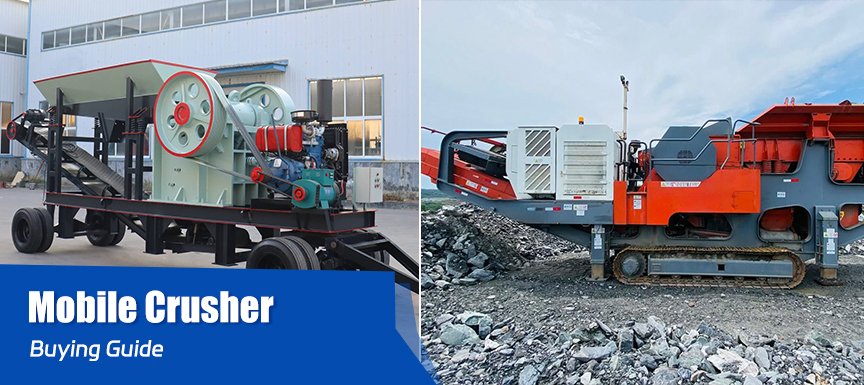
Mobile Crusher Buying Guide: Wheeled or Tracked?
800Many customers focus solely on portability when purchasing a mobile crusher, viewing it merely as the acquisition of a single piece of equipment. In reality, selecting the wrong model can lead to either insufficient output or excessive wear and…
-
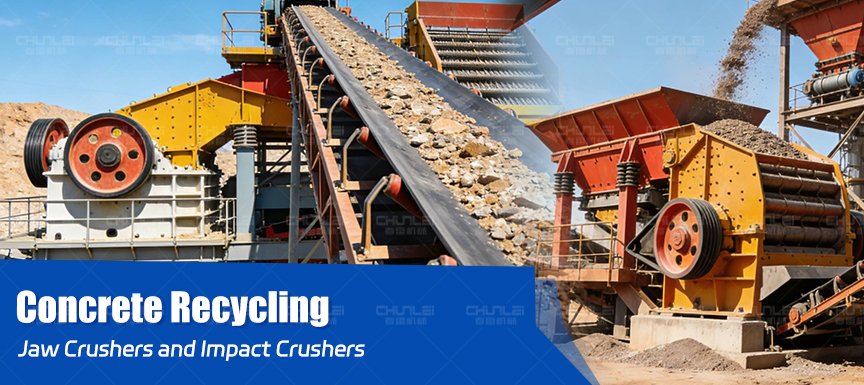
Jaw Crushers and Impact Crushers: Turnkey Solutions for Concrete Recycling
800Demolishing old buildings and roads generates vast amounts of waste concrete; direct landfilling not only consumes valuable space but also incurs high transportation costs. The real challenge lies in transforming this waste concrete into reusab…
loading…
已经是到最后一篇内容了!